
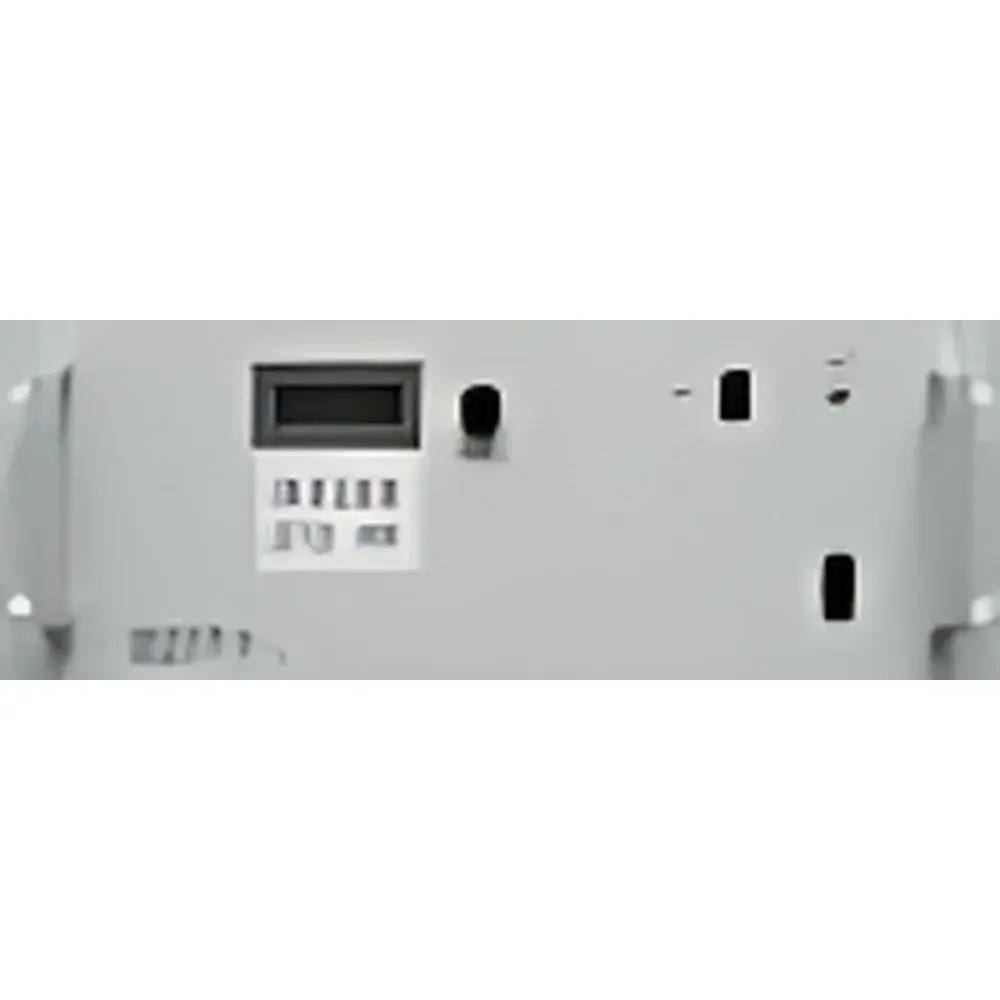
Ekspla PS5050 NL300D Flashlamp Driver Power Supply for Pulsed Lasers
| Brand | Ekspla |
|---|---|
| Origin | Imported (Lithuania) |
| Manufacturer Type | Authorized Distributor |
| Model | PS5050 NL300D |
| Output Power | Up to 3.2 kJ/s (at 10 Hz) |
| Max. Peak Charge Rate | < 6.8 kJ/s |
| Charging Voltage Options | 1000 V / 1400 V / 1800 V |
| Pulse Repetition Rate | Up to 150 Hz |
| Output Voltage Regulation | ±0.1 % |
| Pulse-to-Pulse Stability | 0.1 % |
| Load Regulation | 0.1 % |
| Linearity | 0.2 % |
| Voltage Resolution | 1 V |
| Ignition Pulse Voltage | 16 kV (optional up to 30 kV) |
| Ignition Pulse Duration | > 1000 ns |
| Simmer Current | 0.6 A |
| Simmer Voltage | < 300 V |
| Striking Voltage | < 900 V |
| Max. Capacitance Supported (CPFN) | < 240 µF |
| Input Mains | Single-phase 230 V (−10%, +5%) or three-phase 380 V (−10%, +5%) |
| Power Consumption (avg./peak) | < 4 kW / < 6 kW |
| Operating Temperature | 0–40 °C |
| Humidity | 10–90 % RH (non-condensing) |
| Compliance | EN 61010-1, EN 55011 |
| Remote Interfaces | RS-232, CAN |
| Housing | 19" rack-mountable (standard 4U) |
Overview
The Ekspla PS5050 NL300D is a high-performance, microprocessor-controlled flashlamp driver power supply engineered specifically for flashlamp-pumped solid-state pulsed lasers. It operates on the fundamental principle of capacitor discharge through a xenon or krypton flashlamp to optically pump gain media such as Nd:YAG, Nd:YLF, or alexandrite crystals. Unlike continuous-wave or diode-pumped architectures, this system delivers precisely timed, high-energy optical pulses by controlling the charging, simmering, and triggering sequence of the lamp—enabling stable, repeatable laser output essential for scientific, industrial, and medical applications. The PS5050 replaces and enhances the legacy PS5010 platform with improved voltage regulation (< ±0.1 %), expanded repetition rate capability (up to 150 Hz), and enhanced thermal and electrical robustness. Its modular architecture—comprising independent charging modules, a dedicated discharge and simmer circuit, and an integrated control unit—ensures scalability, serviceability, and long-term operational reliability under demanding laboratory or production-floor conditions.
Key Features
- Microprocessor-based real-time control with backlit LCD interface for local monitoring of voltage, current, repetition rate, and fault status
- High-precision output voltage regulation better than ±0.1 %, ensuring consistent flashlamp energy deposition and laser pulse stability
- Three standard charging voltage options (1000 V, 1400 V, 1800 V), configurable per application requirements; custom voltages available upon request
- Simmer mode operation (0.6 A, <300 V) to reduce electrode erosion and improve lamp lifetime and pulse-to-pulse reproducibility
- Dual ignition capability: standard 16 kV trigger pulse (>1000 ns duration); optional 30 kV version for high-pressure or aged lamps
- Comprehensive protection suite including overvoltage, overtemperature, flashlamp arc detection, interlock monitoring, and HV connector fault sensing
- Rack-mountable 19″ 4U chassis compliant with industrial mechanical and cooling standards; designed for integration into multi-unit laser systems
- Power factor correction (PFC) available as an option to meet IEC 61000-3-2 harmonic emission limits
Sample Compatibility & Compliance
The PS5050 NL300D is compatible with a broad range of commercially available linear and helical flashlamps used in Q-switched and mode-locked solid-state laser systems. It supports capacitive energy storage units (CPFN) up to 240 µF and is optimized for use with Ekspla’s NL300D series lasers, though interoperability with third-party flashlamp-pumped oscillators and amplifiers has been validated across multiple OEM platforms. All units are manufactured and tested in accordance with EN 61010-1 (safety requirements for electrical equipment for measurement, control, and laboratory use) and EN 55011 (EMC emissions for industrial, scientific, and medical equipment). The design incorporates reinforced insulation, double-pole mains switching, and redundant interlock paths to satisfy Class I safety classification and support GLP-compliant laser facility operations.
Software & Data Management
Remote operation is supported via industry-standard RS-232 serial communication and Controller Area Network (CAN) bus—enabling seamless integration into automated test benches, laser manufacturing lines, or centralized lab control systems. Communication protocols are fully documented and include ASCII command sets for setting voltage, repetition rate, enabling/disabling simmer, reading real-time parameters, and retrieving diagnostic logs. Error reporting includes discrete codes for “No Simmer Current”, “No Charge”, “HV Interlock Open”, and “Flashlamp Breakdown”, facilitating rapid troubleshooting. While the PS5050 does not include embedded data logging or cloud connectivity, its deterministic response time (<10 ms command latency) and full audit trail capability (via host-side logging) make it suitable for environments requiring traceability under FDA 21 CFR Part 11 or ISO/IEC 17025 frameworks when paired with validated host software.
Applications
- Scientific research: Pump source for tunable dye lasers, optical parametric oscillators (OPOs), and ultrafast amplifier front-ends
- Materials processing: Ablation, surface texturing, thin-film removal, and selective laser sintering where precise pulse energy control is critical
- Medical device development: Pumping of dermatological and ophthalmic Nd:YAG systems requiring regulatory-grade repeatability
- LIDAR and remote sensing: High-repetition-rate illumination sources for atmospheric profiling and wind speed measurement
- Calibration laboratories: Reference-grade flashlamp drivers used in photometric and radiometric standardization workflows
- Defense and aerospace: Ruggedized deployment in field-deployable laser rangefinders and countermeasure systems
FAQ
What is the maximum recommended CPFN capacitance for the PS5050 NL300D?
The unit is rated for a maximum total capacitance of 240 µF. Exceeding this value may compromise charge/discharge timing accuracy and thermal management.
Can the PS5050 operate from three-phase 208 V mains?
Yes—three-phase 208 V input is available as an optional configuration; specify at time of order.
Is Power Factor Correction (PFC) included as standard?
PFC is optional and must be selected during ordering; it is recommended for installations subject to utility harmonic distortion limits.
Does the PS5050 support external synchronization (e.g., TTL trigger input)?
No—the unit is internally triggered and synchronized via its internal clock; external sync requires custom firmware adaptation and is not part of the standard product offering.
How is lamp lifetime affected by simmer operation?
Continuous simmer reduces cathode sputtering and cold-start stress, typically extending flashlamp service life by 2–3× compared to non-simmered operation under identical energy loading conditions.





