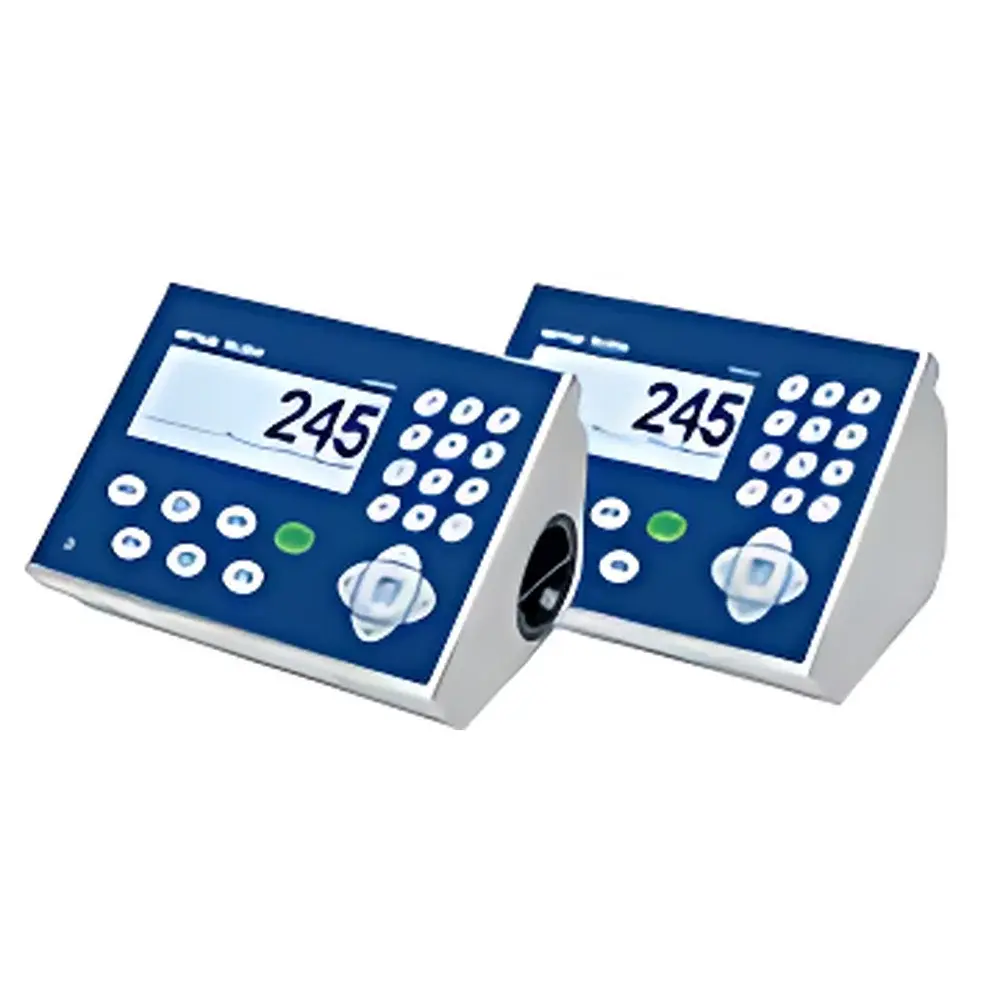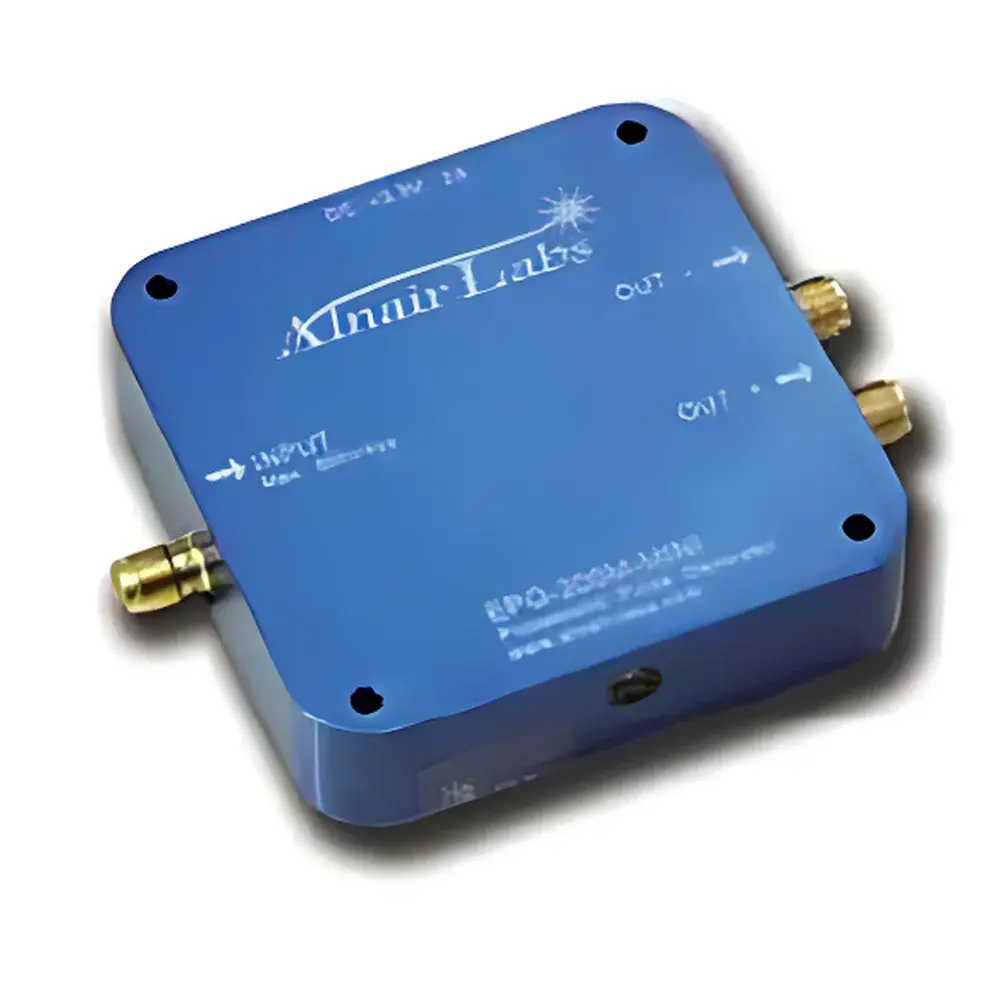
EPG-210 Picosecond Electrical Pulse Generator
| Origin | Japan |
|---|---|
| Manufacturer Type | Authorized Distributor |
| Origin Category | Imported |
| Model | EPG-210 |
| Price Range | USD 20,000 – 27,000 |
| Pulse Width (FWHM, standard) | 30 ±5 ps |
| Adjustable Pulse Width Option | 40–200 ps |
| Rise Time (20–80%) | 12–19 ps |
| Fall Time (20–80%) | 11–17 ps |
| Output Voltage (standard) | 0.5 ±0.1 Vpp |
| High-Voltage Option | 5 Vpp |
| Repetition Rate Range | 1 MHz – 5 GHz |
| Input Signal Type | Sine or Square Wave |
| Input Level | 0.3–0.5 Vpp |
| Excess Timing Jitter | ≤0.5 ps |
| Output Impedance | 50 Ω |
| Connector Type | Advanced SMA |
| Operating Temperature | 15–35 °C |
| Storage Temperature | −20–70 °C |
| Output Configuration | Single-ended or Differential |
Overview
The EPG-210 Picosecond Electrical Pulse Generator is a high-performance, benchtop-grade instrument engineered for precision generation of ultrafast electrical transients in scientific, photonic, and RF test environments. Based on advanced solid-state pulse-shaping architecture—employing low-jitter clock distribution, impedance-matched transmission lines, and optimized GaAs or SiGe driver stages—the EPG-210 delivers sub-30-ps full-width-at-half-maximum (FWHM) pulses with exceptional temporal fidelity. Its core functionality centers on deterministic, repeatable excitation of electro-optic modulators (e.g., LiNbO₃ Mach–Zehnder devices), gain-switched laser diodes, and RF sampling gates. Unlike arbitrary waveform generators limited by memory depth and sampling rate constraints, the EPG-210 leverages dedicated analog pulse synthesis to achieve true picosecond resolution without interpolation artifacts. Designed for integration into time-resolved spectroscopy setups, ultrafast laser seeding architectures, and high-speed photonic characterization benches, it operates reliably under laboratory conditions compliant with IEC 61000-4 electromagnetic compatibility standards.
Key Features
- Sub-30-ps FWHM pulse width (standard configuration), extendable to 200 ps via optional adjustable pulse-width module
- Rise and fall times of 12–19 ps and 11–17 ps respectively (20–80% definition), enabling precise control over edge steepness for critical timing applications
- Ultra-low excess timing jitter ≤0.5 ps RMS, essential for pump-probe experiments, time-of-flight measurements, and coherent RF synthesis
- Wide repetition rate tuning from 1 MHz to 5 GHz—fully programmable via external clock or trigger input; supports single-shot (pulse-on-demand) operation
- Dual output modes: single-ended and differential, both with 50 Ω impedance matching and Advanced SMA connectors for minimal signal degradation up to 25 GHz
- High-voltage option delivering 5 Vpp output, sufficient to directly drive commercial gain-modulated laser diodes and high-Vπ LiNbO₃ modulators without external amplification
- Robust thermal management ensuring stable pulse parameters across ambient temperatures from 15 °C to 35 °C
Sample Compatibility & Compliance
The EPG-210 interfaces seamlessly with industry-standard electro-optic components including broadband LiNbO₃ intensity and phase modulators (e.g., Thorlabs LN series, iXblue MPX-LN-0.1), gain-switched DFB and VCSEL laser drivers (e.g., PicoLAS LPD series), and high-bandwidth photodetectors (e.g., Newport 818-BB-xx). Its output spectral content extends beyond 25 GHz, making it suitable for RF frequency comb generation where comb-line spacing corresponds directly to the user-defined repetition rate. The instrument complies with CE marking requirements (EMC Directive 2014/30/EU and LVD Directive 2014/35/EU), RoHS 2011/65/EU, and meets Class A emissions per CISPR 11. It is compatible with GLP/GMP-aligned lab environments when used with traceable calibration records and documented operating procedures.
Software & Data Management
While the EPG-210 operates primarily in hardware-defined mode—ensuring minimal latency and maximum timing integrity—it supports SCPI-compliant remote control via USB 2.0 and optional Ethernet interface (TCP/IP). LabVIEW™, Python (PyVISA), MATLAB®, and C/C++ drivers are provided for integration into automated test systems. All operational parameters—including repetition rate, pulse width selection, output polarity, and amplitude scaling—are programmable and logged with timestamped metadata. Audit trails can be exported in CSV or HDF5 format for compliance with FDA 21 CFR Part 11 requirements when deployed in regulated R&D or preclinical photonics development workflows.
Applications
- Seeding of mode-locked lasers and optical parametric oscillators requiring low-jitter electrical triggers
- Direct gain modulation of semiconductor lasers to generate 30–60 ps optical pulses with <100 fs timing jitter relative to RF reference
- Time-domain reflectometry (TDR) and ultrafast impedance mapping of microwave circuits and PCB interconnects
- RF frequency comb generation for antenna pattern measurement, channel sounding, and millimeter-wave component characterization
- Synchronization of multi-channel ultrafast acquisition systems (e.g., streak cameras, time-correlated single-photon counting modules)
- Calibration source for oscilloscope bandwidth verification and jitter analysis tools (e.g., Keysight DSAZ series)
FAQ
What is the minimum achievable pulse width, and is it factory-calibrated?
The standard EPG-210 delivers 30 ±5 ps FWHM pulses, verified using calibrated high-bandwidth sampling oscilloscopes (e.g., Tektronix DSA8300 with 80E10 modules) and referenced to NIST-traceable timing standards.
Can the EPG-210 drive a 40-Gbaud LiNbO₃ modulator directly?
Yes—when equipped with the 5 Vpp high-voltage option and operated at ≤20 GHz repetition rates, it meets the Vπ requirement of most commercial 40-Gbaud IQ modulators without external amplification.
Is the output AC-coupled, and what is the baseline DC stability?
All outputs are AC-coupled via integrated high-reliability ceramic capacitors; DC offset drift remains below ±1 mV over 8 hours at constant temperature.
Does the unit support synchronization to an external 10-MHz reference clock?
Yes—via the dedicated REF IN port, supporting phase-locking with <100 fs residual jitter when using low-noise distribution amplifiers.
What maintenance or recalibration intervals are recommended?
Annual performance verification is recommended per ISO/IEC 17025 guidelines; no field recalibration is required due to fully compensated internal timing paths.