
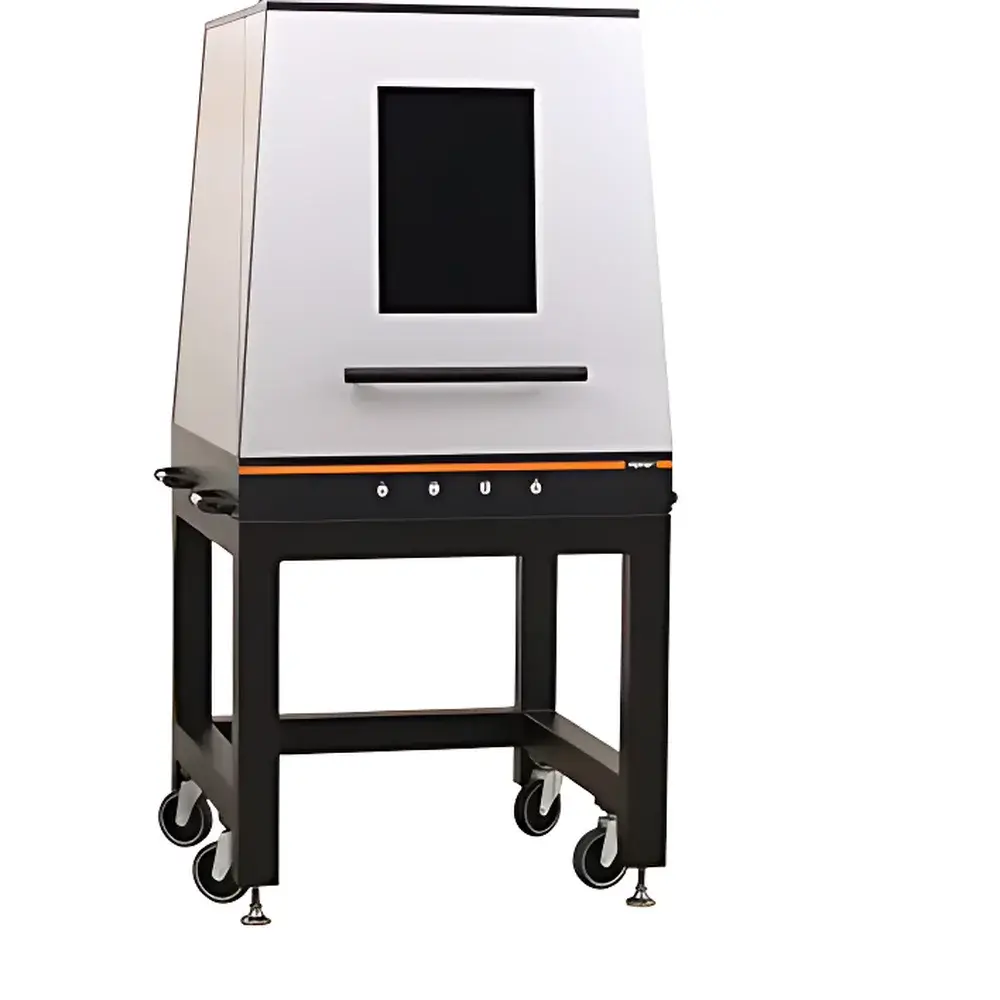
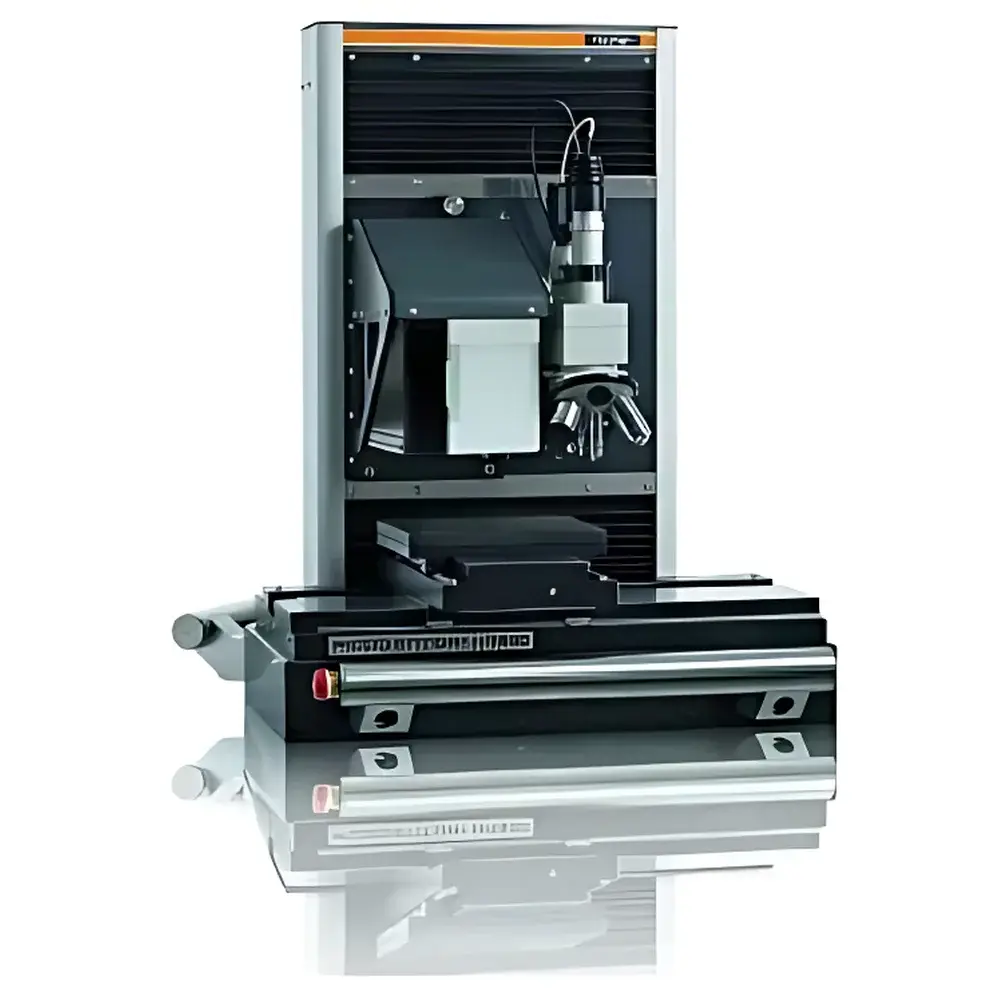
Fischer PICODENTOR HM500 Nanoindentation Tester
| Brand | Fischer |
|---|---|
| Origin | Germany |
| Model | HM500 |
| Compliance | DIN EN ISO 14577-1, DIN EN ISO 14577-2, DIN 50359 |
| Measurement Principle | Continuous Stiffness Measurement (CSM) & Depth-Sensing Indentation |
| Load Range | 0.1 mN – 1000 mN |
| Depth Resolution | ≤ 0.05 nm (sub-pm interpolation capability) |
| Load Resolution | ≤ 10 nN |
| Indenter Types | Vickers (136° diamond pyramid), Berkovich (115.2° trihedral pyramid), spherical diamond (R = 1 µm to 100 µm) |
| Stiffness Measurement Mode | Enhanced Stiffness Profiling (ESP) |
| Data Acquisition Rate | Up to 1 kHz |
| Environmental Stability | Active temperature compensation (±0.1 °C) |
| Software Compliance | FDA 21 CFR Part 11 ready, GLP/GMP audit trail enabled |
Overview
The Fischer PICODENTOR HM500 is a high-precision, depth-sensing nanoindentation tester engineered for quantitative mechanical characterization of thin films, coatings, and bulk materials at micro- and nanoscale regimes. It operates on the fundamental principle of load–displacement controlled indentation, in strict accordance with DIN EN ISO 14577-1 and ISO 14577-2 for instrumented indentation testing (IIT). During measurement, a calibrated diamond indenter—typically Vickers or Berkovich—is driven into the sample surface under precisely regulated force while simultaneously recording real-time displacement with sub-nanometer resolution. The resulting P–h (load–depth) curve serves as the primary data source for deriving physically meaningful mechanical properties, including Martens hardness (HM), instrumented hardness (HIT), reduced elastic modulus (EIT), indentation creep (CIT), and energy partitioning ratios (e.g., ηIT = Welastic/Wtotal). Its rigid, ring-supported measurement head architecture minimizes frame compliance, enabling reliable measurements even on low-stiffness substrates or ultra-thin layers (<50 nm).
Key Features
- Enhanced Stiffness Profiling (ESP) mode: Enables continuous, depth-resolved determination of EIT and HIT via partial unloading segments during loading—critical for graded interfaces and multilayer systems.
- Sub-50 pm depth resolution with active thermal drift compensation: Achieved through differential capacitive transducers and real-time environmental monitoring (±0.1 °C stability).
- Multi-indenter compatibility: Standard 136° Vickers and 115.2° Berkovich diamond indenters; optional spherical diamond tips (1–100 µm radius) for stress–strain curve reconstruction.
- Automated tip geometry calibration: Integrated reference indentation protocol quantifies indenter tip radius deviation and applies real-time correction per ISO 14577-2 Annex B.
- Zero-point detection system: High-sensitivity capacitive contact sensing ensures reproducible initial surface detection (±2 nm repeatability) independent of surface reflectivity or topography.
- Modular electronics architecture: Fully digital servo control with 1 kHz data acquisition enables high-fidelity capture of transient deformation events, including pop-in phenomena and time-dependent relaxation.
Sample Compatibility & Compliance
The HM500 accommodates a broad range of solid samples—from single-crystal wafers and amorphous metallic glasses to polymer thin films and biological mineralized tissues—without requiring conductive coating. Its open-stage design supports specimens up to 150 mm in diameter and 50 mm in height. All reported parameters comply with DIN EN ISO 14577-1 definitions and traceable metrology protocols. Hardness values are directly convertible to conventional Vickers (HV) scale using standardized conversion algorithms embedded in the firmware. The system meets requirements for GLP and GMP environments: full electronic signatures, user-access-level permissions, and immutable audit trails conforming to FDA 21 CFR Part 11. Calibration certificates are issued per DIN 50359 and include uncertainty budgets compliant with ISO/IEC 17025.
Software & Data Management
Control and analysis are performed via Fischer’s proprietary FISCHERSCOPE® Hardness Test Software (v8.x), a Windows-based platform supporting automated test sequences, multi-point mapping, and statistical process control (SPC) reporting. Raw P–h curves are stored in HDF5 format with embedded metadata (user, timestamp, environment, calibration ID). Advanced modules include: (i) Creep analysis per ISO 14577-1 Annex D; (ii) Modulus mapping with lateral resolution down to 1 µm; (iii) Cross-sectional hardness profiling for interface diffusion studies; and (iv) Export to ASTM E2546-compliant XML templates for inter-laboratory comparison. All software updates undergo version-controlled validation, and change logs are retained for regulatory review.
Applications
- Thin-film hardness and modulus profiling in semiconductor metallization stacks (e.g., Cu/Ta/NiFe bilayers).
- Quantitative assessment of thermal barrier coating (TBC) degradation after cyclic oxidation testing.
- Mechanical property gradients across laser-clad or PVD-deposited functional layers.
- Nano-mechanical screening of biodegradable polymer scaffolds for tissue engineering.
- Interfacial adhesion estimation via scratch-assisted indentation (combined with optional scratch module).
- Calibration transfer between macro-, micro-, and nano-hardness scales per ISO 6507-4 and ASTM E384.
FAQ
What standards does the HM500 comply with for instrumented indentation testing?
DIN EN ISO 14577-1, ISO 14577-2, ISO 14577-4, DIN 50359, and ASTM E2546 for data reporting consistency.
Can the HM500 measure time-dependent deformation behavior?
Yes—via constant-load hold segments (creep tests) and dynamic unloading analysis, supporting calculation of CIT, strain-rate sensitivity (m), and viscoelastic relaxation spectra.
Is tip geometry calibration required before each measurement series?
A full tip calibration is recommended before critical campaigns or after tip replacement; however, routine measurements use an auto-compensated tip radius model updated from daily reference indentations.
How is surface roughness accounted for in nanoindentation results?
The software implements a surface slope correction algorithm based on pre-test topography scans (optional motorized Z-stage with 1 nm step resolution), and applies iterative zero-depth adjustment per ISO 14577-1 Clause 7.3.
Does the system support automated hardness mapping?
Yes—programmable XY stages (optional) enable grid-based indentation arrays with fully automated positioning, dwell control, and batch analysis of >10,000 data points per session.
Related Products



