
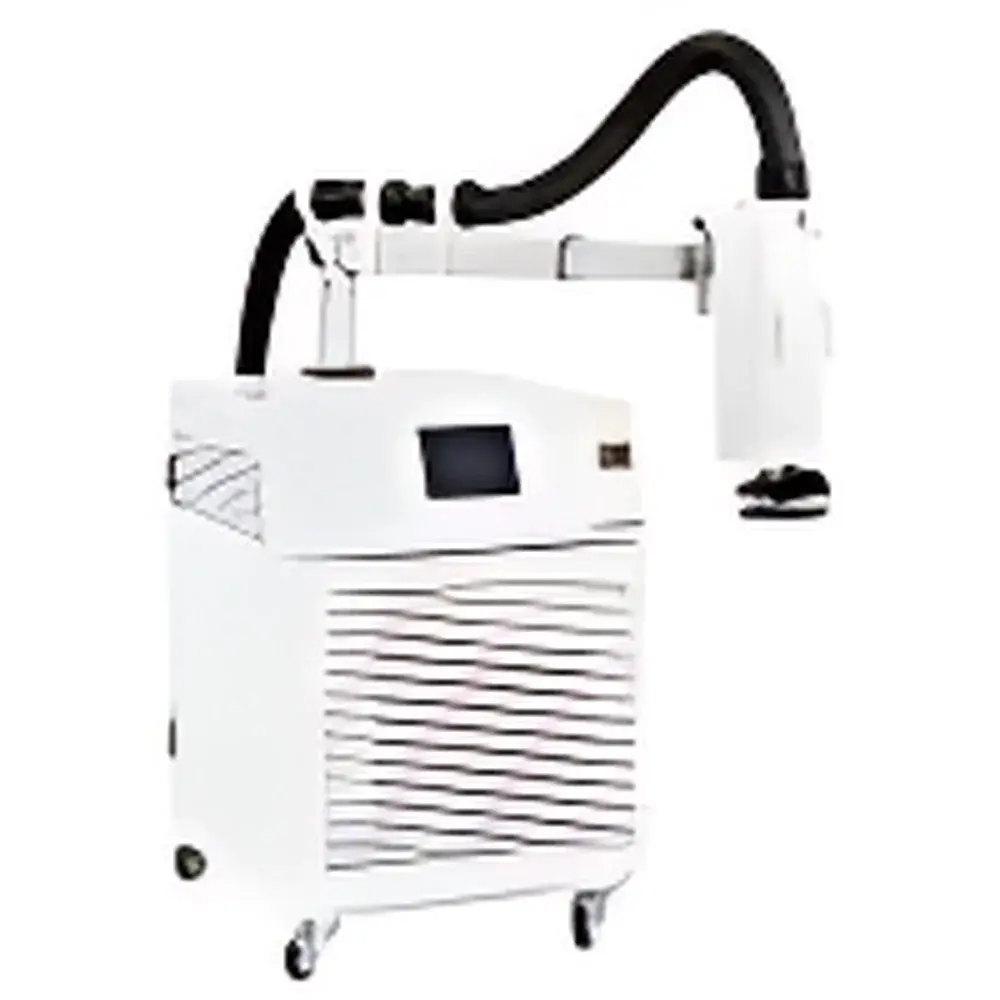
Froilabo Froilabo Thermal Shock Test Chamber
| Brand | Froilabo |
|---|---|
| Origin | Guangdong, China (Distributed by Hongzhan Technology Co., Ltd.) |
| Model | Froilabo “Jielong” Series |
| Temperature Range | −80 °C to +250 °C |
| Ramp Rates | −55 °C ↔ +125 °C in 7 s / 14 s |
| Airflow | 2.2–8.4 L/s |
| Temperature Stability | ±0.1 °C |
| Control Interface | Touchscreen HMI |
| Programmability | Up to 45 stored profiles, 20 steps per profile |
| Compliance | JEDEC JESD22-A104, MIL-STD-883 Method 1010, MIL-STD-750 Method 1037 |
| Operating Modes | Manual, Automatic, Editable Sequence Mode |
Overview
The Froilabo “Jielong” Thermal Shock Test Chamber is an engineered environmental simulation system designed for rapid, high-fidelity thermal cycling of electronic components, materials, and assemblies under controlled air-based convection. Based on dual-chamber (hot/cold) or single-chamber with dynamic airflow modulation architecture—depending on configuration—it leverages high-capacity refrigeration circuits, precision resistive heating elements, and calibrated forced-air delivery to achieve extreme temperature transitions without mechanical sample transfer. Its core measurement principle relies on thermodynamic equilibrium control via PID-regulated airflow temperature modulation, enabling reproducible thermal stress application aligned with industry-standard reliability qualification protocols.
Key Features
- Wide operational temperature range: −80 °C to +250 °C, supporting both cryogenic and high-temperature shock validation
- Exceptional thermal transition performance: −55 °C ↔ +125 °C in ≤7 seconds (heating), ≤14 seconds (cooling), verified per IEC 60068-2-14 Annex A
- Stable thermal regulation: ±0.1 °C temperature uniformity across test volume at steady-state conditions
- Adjustable convective airflow: 2.2–8.4 L/s, independently controllable to match thermal mass and geometry of DUTs (Devices Under Test)
- Three operational modes: manual setpoint control, fully automated sequence execution, and user-editable multi-step profiles
- Intuitive 7-inch capacitive touchscreen HMI with real-time graphing, alarm logging, and password-protected parameter access
- Onboard memory for up to 45 distinct thermal programs; each program supports up to 20 discrete temperature/time steps with dwell, ramp, and hold definitions
- Robust stainless-steel internal chamber construction with non-contaminating insulation and low-outgassing seals suitable for cleanroom-adjacent operation
Sample Compatibility & Compliance
The Jielong system accommodates a broad spectrum of physical form factors—including bare die, wafer-level packages, BGA substrates, PCBAs, molded plastic housings, and sealed sensor modules—without requiring custom fixtures. Its airflow design minimizes localized turbulence while ensuring uniform thermal exposure across heterogeneous surfaces. The chamber meets essential regulatory and qualification requirements for reliability testing in regulated industries: JEDEC JESD22-A104 (Temperature Cycling), MIL-STD-883 Method 1010 (Thermal Cycling), and MIL-STD-750 Method 1037 (Temperature Shock). It supports GLP-compliant data traceability when integrated with external audit-ready logging systems, and its firmware architecture permits configuration for 21 CFR Part 11–aligned electronic signatures and audit trails where required.
Software & Data Management
While the embedded HMI provides full local control and real-time monitoring, optional Ethernet/RS-485 interfaces enable integration into centralized test management platforms (e.g., NI TestStand, Keysight PathWave, or custom MES environments). All temperature setpoints, actual readings, ramp rates, dwell durations, and alarm events are timestamped and exportable in CSV or XML format. Firmware supports configurable data sampling intervals (100 ms to 5 s), and critical parameters—including chamber air temperature, DUT surface thermocouple input (via optional probe interface), and compressor discharge pressure—are logged synchronously. Optional software packages provide statistical process control (SPC) overlays, failure mode correlation tagging, and automated report generation compliant with ISO/IEC 17025 documentation frameworks.
Applications
- Qualification of solder joint integrity and intermetallic growth kinetics in automotive ECUs and ADAS modules
- Accelerated life testing of MEMS sensors and optoelectronic packaging under repeated thermal strain
- Evaluation of coefficient-of-thermal-expansion (CTE) mismatch effects in multilayer ceramic capacitors (MLCCs) and SiP assemblies
- Process validation of conformal coating adhesion and delamination resistance in aerospace avionics
- Reliability screening of power semiconductor modules prior to burn-in and final test
- Material characterization of polymer composites, encapsulants, and underfill formulations used in advanced packaging
- Compliance verification for IPC-9701, AEC-Q200, and IATF 16949 thermal stress requirements
FAQ
What standards does the Jielong Thermal Shock Chamber support out of the box?
It natively executes JEDEC JESD22-A104, MIL-STD-883 Method 1010, and MIL-STD-750 Method 1037 test profiles. Custom profiles can be configured to align with IPC-9701, AEC-Q200, or internal OEM specifications.
Is external calibration required, and how often?
Annual NIST-traceable calibration is recommended for ISO/IEC 17025 compliance. Internal reference sensors are factory-calibrated; users may perform daily verification using certified PT100 probes.
Can the system accommodate third-party thermocouples or RTDs?
Yes—the chamber includes two auxiliary analog inputs (0–5 V or 4–20 mA) compatible with standard Class A PT100, Type K, or T thermocouples for DUT-level monitoring.
Does the unit support remote monitoring and alarm notification?
Via optional Ethernet module: SNMP traps, email alerts, and Modbus TCP readout of all critical variables are supported.
What maintenance intervals are specified for refrigeration and airflow subsystems?
Compressor oil and filter replacement every 24 months; airflow path inspection and HEPA filter replacement every 12 months under continuous operation.



