
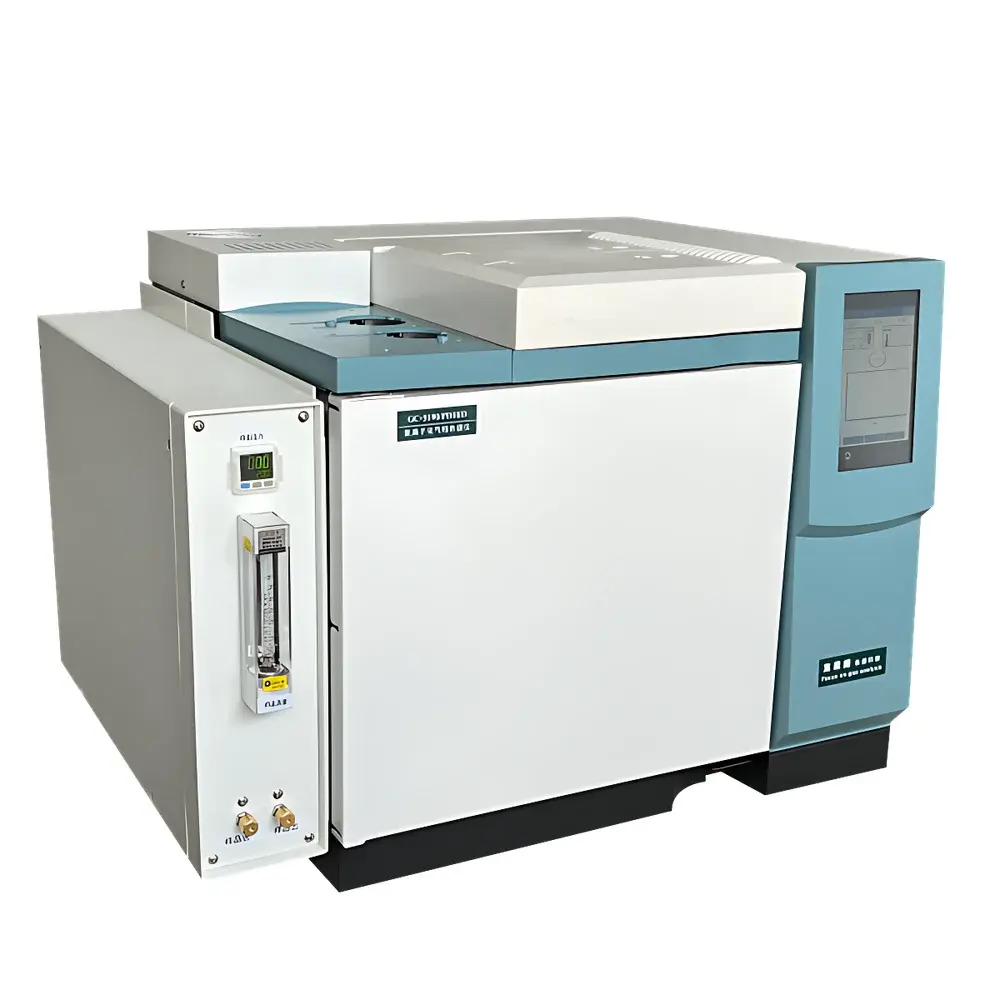
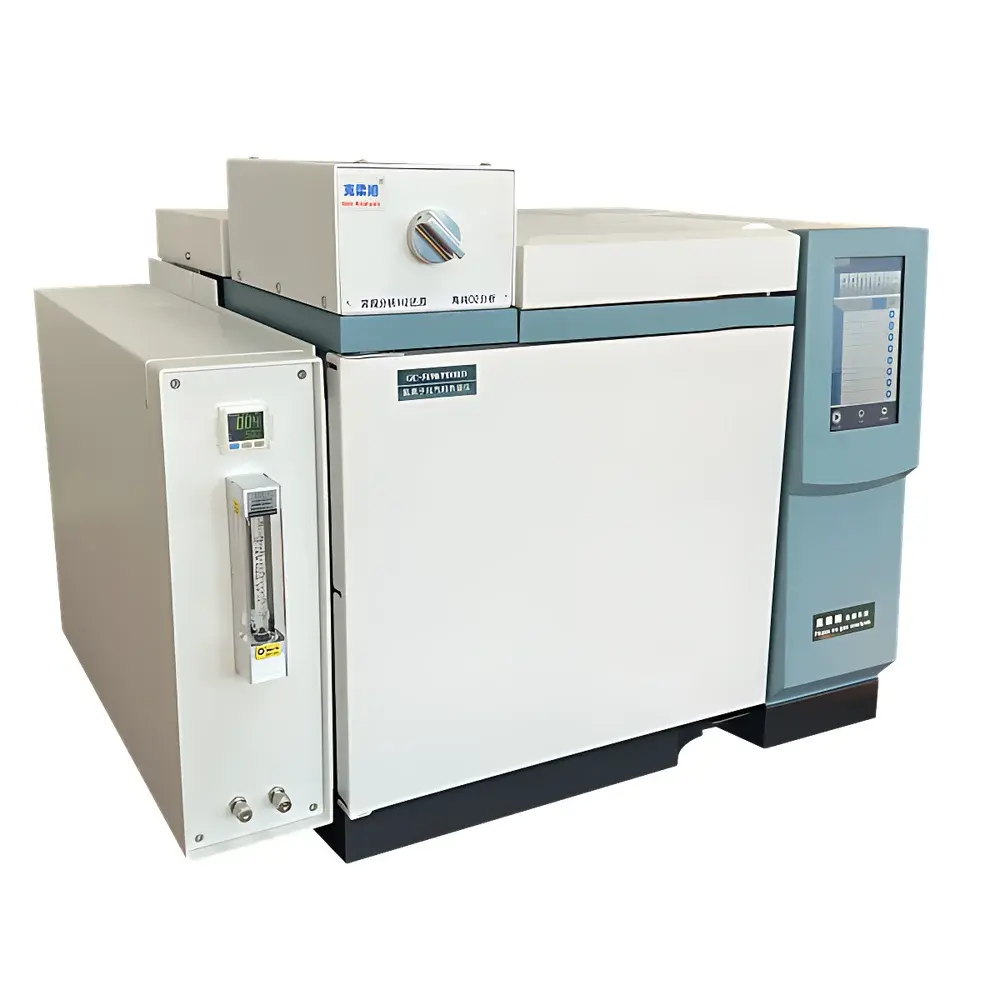
GC-5190PDD Helium Ionization Gas Chromatograph (PDHID) by Chrom
| [Brand | Chrom |
|---|---|
| Origin | Zhejiang, China |
| Model | GC-5190PDD |
| Instrument Type | Laboratory Gas Chromatograph |
| Application | Ultra-High-Purity Gas Analysis |
| Oven Temperature Range | 4°C above ambient to 450°C |
| Max. Ramp Rate | 60°C/min |
| Carrier Gas Flow Control Range | 30–35 mL/min |
| Carrier Gas Pressure Control Range | 0.35–0.55 MPa |
| Injector Max. Temp. | 450°C |
| Injector Pressure Setting Range | 0–100 psi |
| Injector Total Flow Setting Range | 0–1000 mL/min |
| PDHID Detection Limit (CH₄) | ≤3.5×10⁻¹³ g/mL |
| PDHID Dynamic Linear Range | ≥10⁷ |
| PDHID Noise | <0.1 pA |
| PDHID Drift | ≤1.0 pA/30 min |
| PDHID Repeatability (CH₄) | ≤3.0% RSD |
| Column Oven Temp. Stability | ±0.02°C |
| Programmable Temperature Steps | 9 ramps / 10 plateaus |
| Max. Program Duration | 9999.9 min] |
Overview
The GC-5190PDD is a dedicated helium ionization gas chromatograph engineered for trace-level impurity analysis in ultra-high-purity (UHP) industrial gases—including helium, hydrogen, oxygen, argon, nitrogen, carbon monoxide, methane, and carbon dioxide. It employs a pulsed discharge helium ionization detector (PDHID), a non-destructive, universal detection method based on electron capture and ionization in a metastable helium plasma. Unlike conventional TCD or FID detectors, the PDHID delivers exceptional sensitivity (sub-ppb detection limits across key impurities), wide linear dynamic range (>10⁷), and uniform response factors for permanent gases and light hydrocarbons—critical for compliance with ISO 8573-1 Class 1–2 air purity specifications and ASTM D7607 for high-purity helium testing. The system integrates a precision temperature-controlled column oven (±0.02°C stability), high-resolution pneumatic control architecture, and network-enabled embedded firmware, enabling robust operation in QC laboratories supporting semiconductor, photovoltaic, medical gas, and specialty chemical manufacturing.
Key Features
- 7-inch full-color capacitive touchscreen interface with intuitive navigation and real-time graphical display of oven, injector, and detector temperatures, pressure, and flow values.
- Dual-control architecture: simultaneous local touch operation and remote computer-based control via Ethernet (RJ45), supporting bidirectional command synchronization and live parameter updates.
- Embedded multi-core 32-bit processor with deterministic real-time OS ensures stable instrument control, low-latency event handling, and uninterrupted data acquisition at 50 ms sampling intervals.
- Integrated dual-channel A/D converter with hardware-level baseline correction and digital filtering for high-fidelity peak resolution and quantitative reproducibility.
- Eight programmable external event ports support timed actuation of auxiliary devices—e.g., multi-port valves, thermal desorbers, or auto-samplers—with user-defined sequence logic and microsecond-level timing accuracy.
- Comprehensive self-diagnostic suite with automatic fault identification, error logging, and status flagging for critical subsystems (pneumatics, detector voltage, oven heater, communication link).
- Standard Ethernet connectivity enables centralized deployment in multi-instrument networks, remote monitoring, and integration into LIMS or MES environments via TCP/IP protocols.
Sample Compatibility & Compliance
The GC-5190PDD is optimized for gas-phase analysis of UHP matrices with certified purity ≥99.999% (5.0 grade) and higher. It meets analytical requirements defined in ISO 8573-5 (testing of oil-free compressed air), ASTM D7607 (specification for helium purity), and SEMI F63 (standard for electronic-grade gases). Its PDHID detector complies with IEC 61000-4 electromagnetic compatibility directives and operates within safety-rated voltage isolation boundaries per UL 61010-1. All firmware and data handling routines adhere to ALCOA+ principles (Attributable, Legible, Contemporaneous, Original, Accurate, Complete, Consistent, Enduring, Available) and support audit-ready electronic records under FDA 21 CFR Part 11 when deployed with validated software configurations and access-controlled user roles.
Software & Data Management
The GC-5190 workstation software is a Windows-native application (compatible with Windows 7 32-bit and Windows 10) designed for regulated laboratory environments. It provides full instrument control, automated batch sequencing, and integrated data processing without third-party dependencies. Key capabilities include: automatic file naming with customizable metadata tags (sample ID, operator, method, timestamp); retention time locking for multi-day method transfer; quantitative workflows compliant with USP and EP 2.2.46 chromatographic validation guidelines; customizable report templates supporting PDF export with embedded chromatograms, peak tables, calibration curves, and system suitability summaries. Data files follow AIA/ANDI standard format (ASTM E1947), enabling cross-platform interoperability with LIMS, CDS, and statistical process control (SPC) tools. Built-in data browser supports hierarchical project organization, versioned method storage, and secure export to text or CSV formats.
Applications
- Trace moisture (H₂O), oxygen (O₂), nitrogen (N₂), carbon monoxide (CO), methane (CH₄), carbon dioxide (CO₂), and hydrogen (H₂) quantification in helium carrier gas used in GC-MS and ICP-MS systems.
- Residual impurity profiling in electronic-grade argon and nitrogen for semiconductor etching and CVD processes.
- Quality release testing of medical oxygen and nitrous oxide per USP and Ph. Eur. 2.2.47.
- Monitoring of cryogenic distillation column off-gas streams in air separation units (ASUs).
- Validation of gas purification system performance (e.g., getter beds, catalytic converters) through longitudinal trend analysis of breakthrough profiles.
- Supporting ISO/IEC 17025-accredited testing laboratories requiring documented uncertainty budgets, system suitability verification, and method-specific detection limit confirmation per ISO 11843-1.
FAQ
What detection technology does the GC-5190PDD use, and why is it preferred for high-purity gas analysis?
It utilizes a pulsed discharge helium ionization detector (PDHID), which offers superior sensitivity for permanent gases and low-molecular-weight compounds without requiring hydrogen or air supply—eliminating combustion-related safety concerns and baseline instability common in FID systems.
Can the instrument be integrated into an existing laboratory network and controlled remotely?
Yes—via standard RJ45 Ethernet interface, the GC-5190PDD supports remote configuration, real-time monitoring, and data retrieval using industry-standard TCP/IP protocols; no proprietary drivers or gateways are required.
Does the system support regulatory compliance for pharmaceutical or medical gas testing?
When configured with appropriate validation documentation, user access controls, and audit-trail-enabled software settings, it fulfills core technical requirements of FDA 21 CFR Part 11, EU Annex 11, and ISO/IEC 17025 for GMP-aligned gas purity testing.
What is the typical detection limit for common impurities such as H₂O, O₂, and CH₄?
Based on standardized test conditions (1 mL gas loop, 30 m PLOT column, He carrier), typical detection limits range from 10–25 ppb for H₂O, O₂, N₂, CO, CH₄, and CO₂, consistent with ISO 8573-1 Class 1 purity grading.
Is method development and validation support available from the manufacturer?
Chrom provides application notes, certified reference gas protocols, column selection guidance, and SOP templates aligned with ASTM and ISO standards—available upon request for qualified laboratory personnel.
Related Products




