
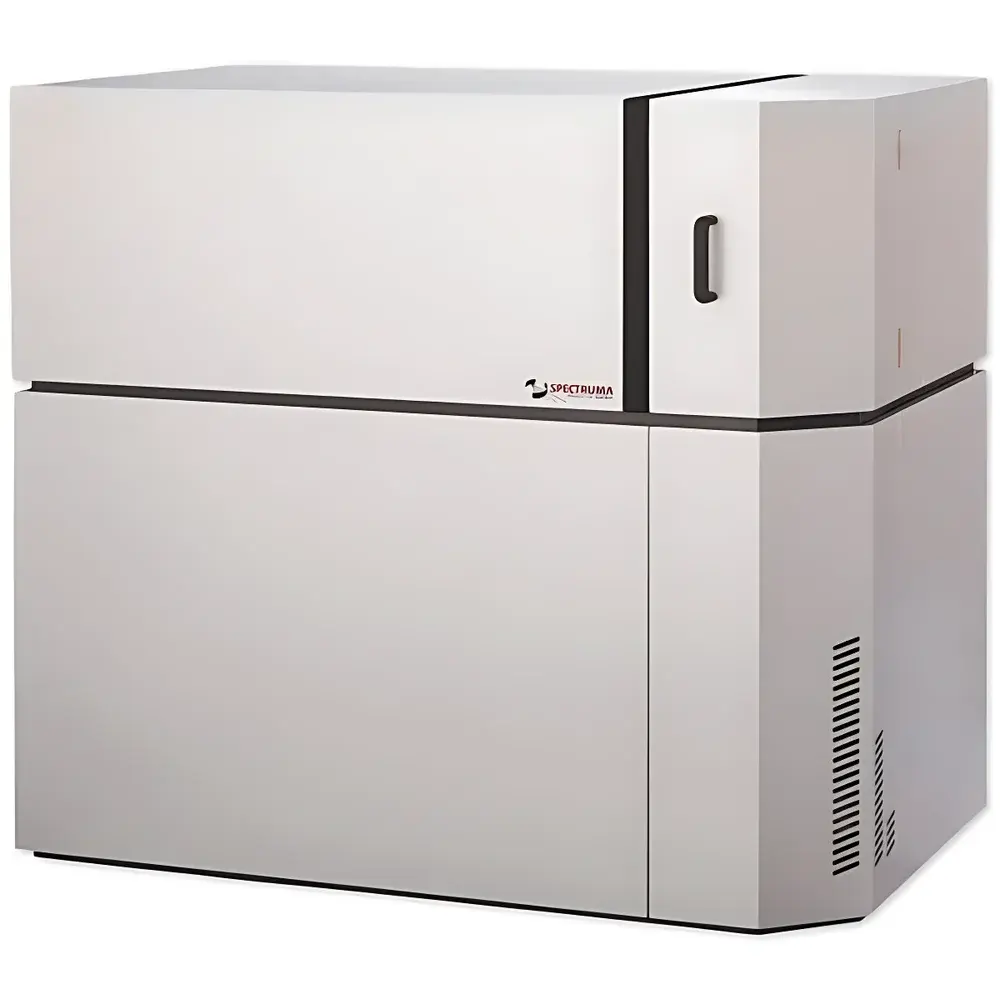
GDA 650 HR Glow Discharge Optical Emission Spectrometer
| Origin | Germany |
|---|---|
| Manufacturer Type | Authorized Distributor |
| Origin Category | Imported Instrument |
| Model | GDA 150 HR |
| Price Range | USD 210,000 – 280,000 |
Overview
The GDA 650 HR Glow Discharge Optical Emission Spectrometer (GD-OES) is a high-performance, dual-mode analytical instrument engineered for quantitative depth profiling and bulk compositional analysis of solid conductive and non-conductive materials. Operating on the principle of radiofrequency (RF) or direct-current (DC) glow discharge plasma sputtering coupled with high-resolution CCD-based optical emission spectroscopy, the system enables precise, layer-by-layer elemental quantification from surface to substrate—without requiring matrix-matched standards in many cases. Unlike conventional techniques such as SIMS or XPS, GD-OES delivers rapid, reproducible depth resolution down to sub-nanometer increments per data point while maintaining robust signal-to-noise ratios across major, minor, and trace elements (ppm-level detection for selected analytes). The GDA 650 HR is designed for continuous operation in industrial QA/QC laboratories and R&D environments, featuring thermally stabilized optical pathways, automated gas flow control (Ar or Ne), and a modular vacuum architecture compliant with ISO 27025 calibration traceability requirements.
Key Features
- Multi-mode excitation: Supports both DC mode for conductive samples (metals, alloys, conductive ceramics) and RF mode for insulating materials (oxides, nitrides, polymers, glass coatings)
- High-resolution SPECTRUMA CCD spectrometer with fixed grating and 3648-pixel linear array detector—enabling simultaneous multi-element acquisition across 130–800 nm spectral range
- Thermally stabilized optical bench (±0.05 °C) ensuring long-term wavelength stability and inter-run reproducibility
- Universal sample chamber accommodating irregular geometries—including pipes, spheres, and curved substrates—via adjustable sample stage and custom holders
- Integrated vacuum system with turbomolecular pump and capacitance manometer, achieving base pressure <5×10⁻⁷ mbar prior to sputtering
- Automated gas dosing and pressure regulation (0.1–10 Pa Ar/Ne), optimized for controlled sputter rates (0.1–10 nm/s typical)
- Compliant with ASTM E2717-21 (Standard Practice for Calibration of Glow Discharge Optical Emission Spectrometers) and ISO 14707:2022 (Metallic materials — Glow discharge optical emission spectrometry)
Sample Compatibility & Compliance
The GDA 650 HR accepts flat, curved, or irregularly shaped solid samples up to Ø100 mm × 50 mm height. Conductive samples (e.g., steel, aluminum, Cu alloys, Ni-based superalloys) are analyzed directly in DC mode; non-conductors (e.g., Al2O3, SiO2, TiN, DLC coatings, anodized layers) require RF excitation. Light element analysis—including C, N, O, and H—is enabled via vacuum UV optics and specialized window materials (MgF2 or LiF), with detection limits of ~10–50 ppm depending on matrix and sputter conditions. All measurement protocols support GLP/GMP-aligned documentation: full audit trails, electronic signatures, and raw spectral data archiving per FDA 21 CFR Part 11 requirements.
Software & Data Management
Controlled by LECO’s GDOES Suite v5.x, the system provides intuitive workflow-driven operation—from method setup and real-time spectral monitoring to automated depth calibration (using certified reference materials or step-height profilometry). Quantitative analysis employs relative sensitivity factors (RSFs) derived from CRM libraries (e.g., BAM, NIST SRMs) or user-defined standards. Data export supports ASTM E1392-compliant .csv, .txt, and .gdos formats; integration with LIMS via OPC UA or SQL database connectors ensures seamless traceability in regulated environments. Batch reporting includes depth-concentration plots, layer thickness calculations, interface sharpness metrics (FWHM), and statistical process control (SPC) charts.
Applications
- Depth profiling of diffusion-treated surfaces (carburizing, nitriding, boriding) in heat-treated steels
- Quantitative evaluation of PVD/CVD hard coatings (TiN, CrN, AlCrN, DLC) for thickness, stoichiometry, and interfacial mixing
- Analysis of galvanized, electroplated, and hot-dip coated substrates (Zn, Zn-Al, Sn, Ni) including spangle structure and Fe-Zn alloy layer identification
- Incoming material verification of metallic feedstock (slabs, wires, foils) for residual elements and segregation
- Corrosion layer characterization (oxide scales, passive films) on stainless steels and Ni alloys
- Light element mapping in battery electrode materials (Li, C, F, O) and semiconductor thin films
FAQ
What is the difference between GDA 150 HR and GDA 650 HR?
The GDA 150 HR is optimized for conductive-only samples and features a compact optical train ideal for production-floor deployment; the GDA 650 HR adds RF capability for non-conductors, extended spectral coverage, and enhanced vacuum performance for ultra-trace light element analysis.
Can the instrument analyze hydrogen in metals?
Yes—when equipped with vacuum UV optics and appropriate calibration standards, hydrogen quantification is achievable at detection limits of ~20–100 ppm in steel and titanium matrices.
Is method validation supported for regulatory submissions?
Yes—the software includes IQ/OQ/PQ templates aligned with ISO/IEC 17025 and ASTM E2717, and all raw spectra, parameter logs, and calibration records are stored with time-stamped, tamper-evident metadata.
What maintenance intervals are recommended?
Daily: Plasma torch inspection and argon line purge; quarterly: CCD detector dark current verification and vacuum gauge recalibration; annually: complete spectrometer alignment and RF generator performance check per manufacturer service protocol.
Related Products





