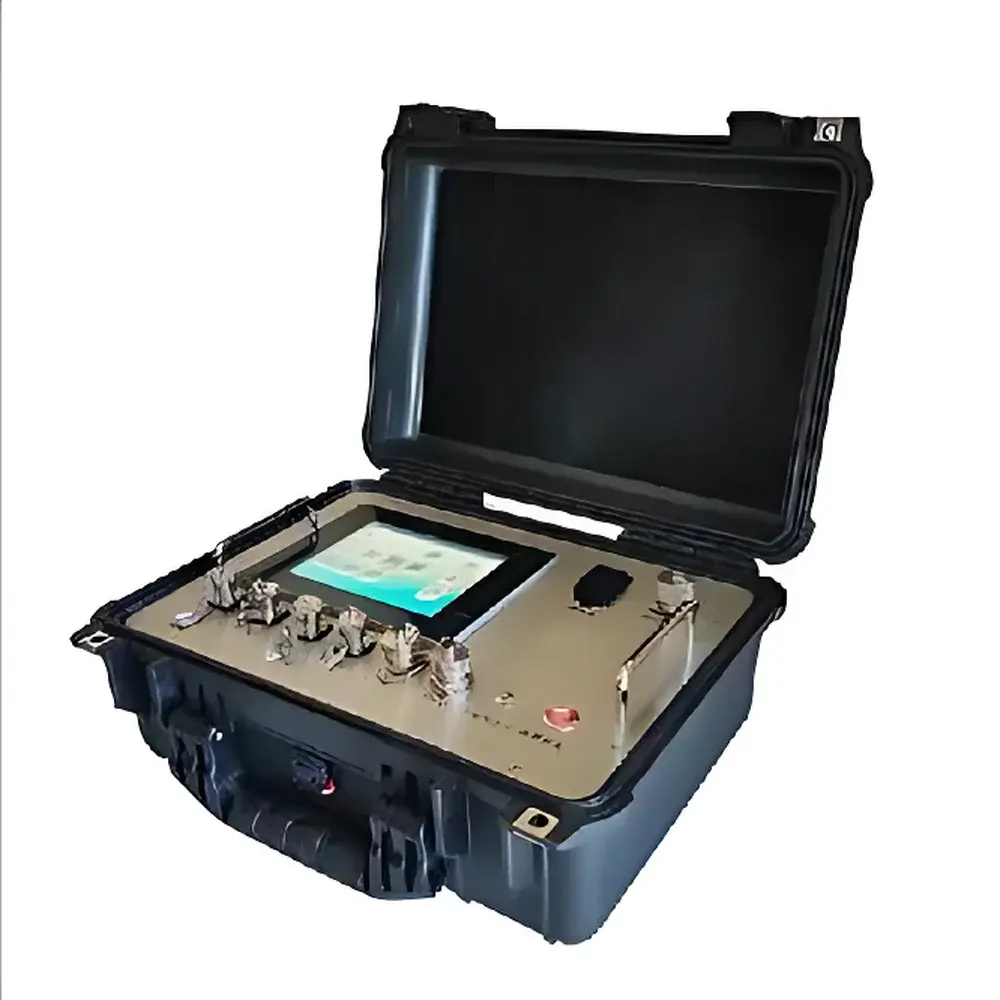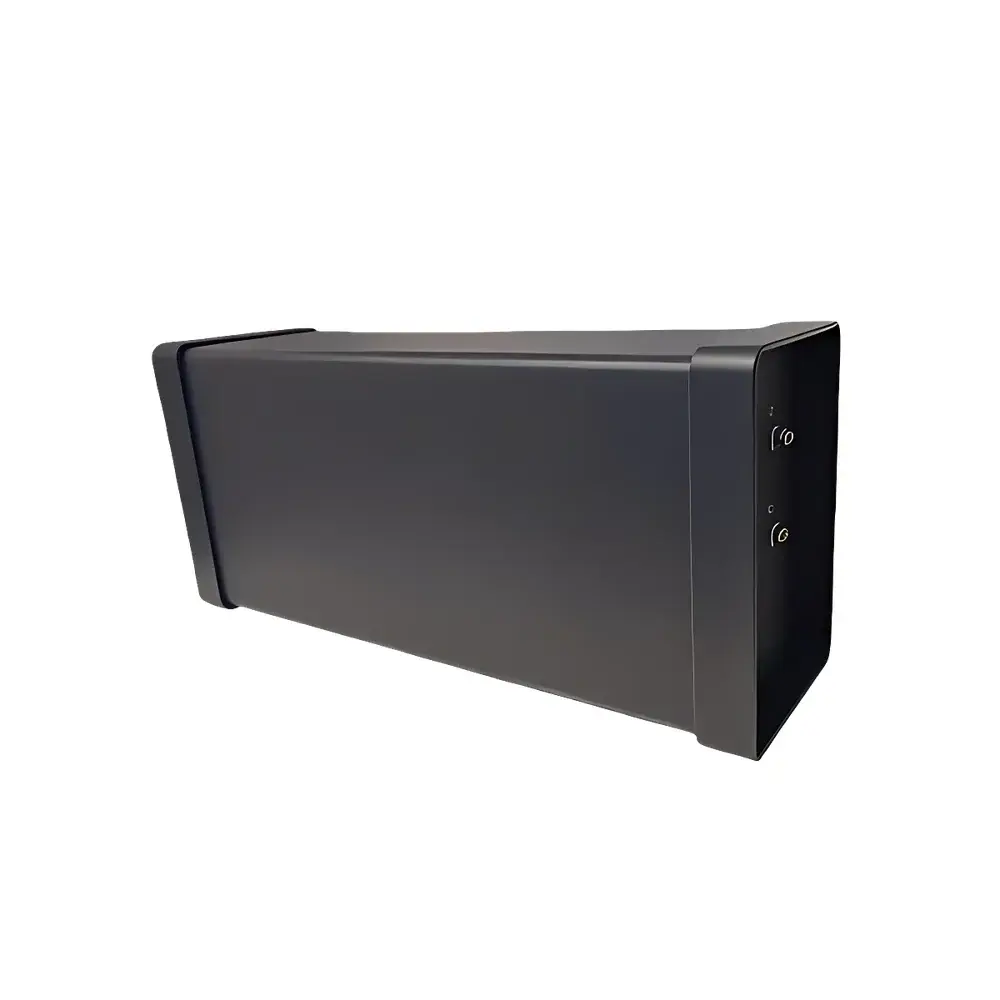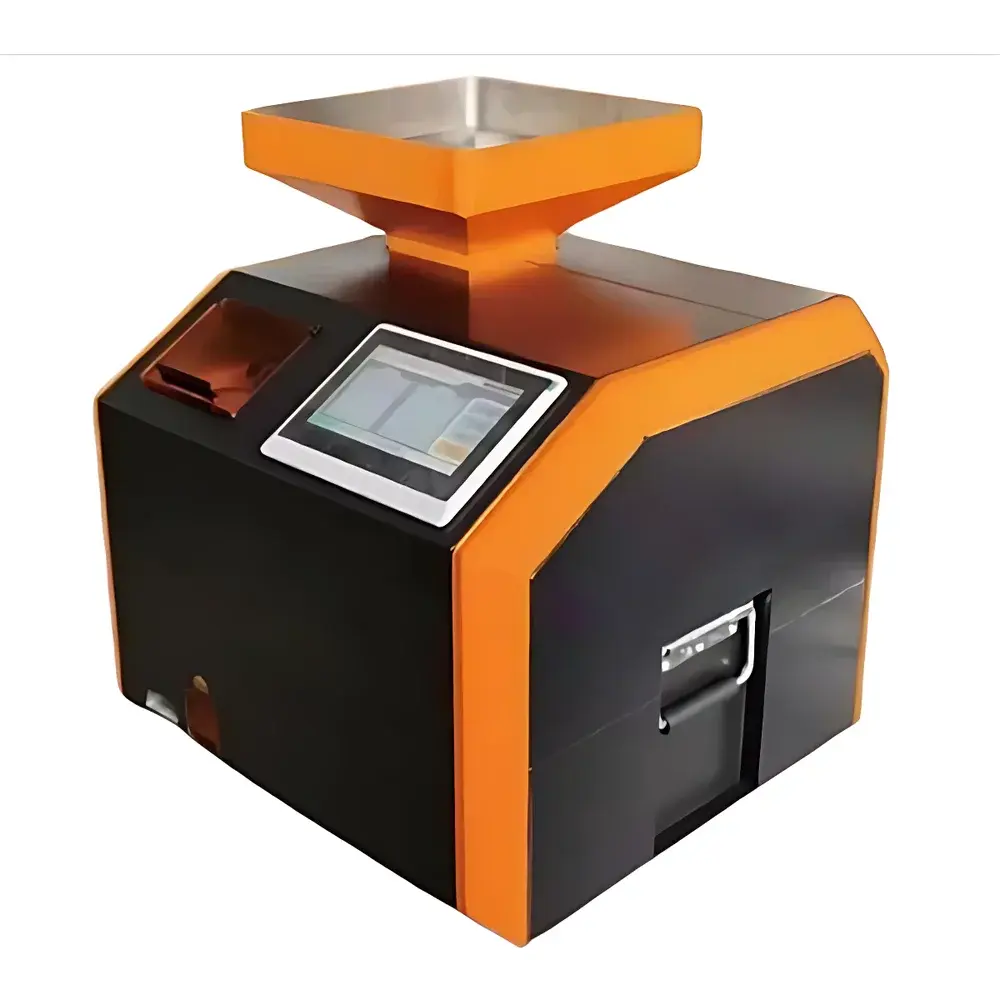
Guangzhou Jingying BEAD Bead Screening System
| Brand | Guangzhou Jingying |
|---|---|
| Origin | Guangdong, China |
| Manufacturer Type | Direct Manufacturer |
| Country of Origin | China |
| Model | BEAD |
| Price Range | USD 42,000 – 56,000 |
| Sieve Aperture Range | Φ0.5 mm to Φ12 mm |
| Drying Batch Capacity | ≤6 L |
| Metal Detection Resolution | ≤Φ0.5 mm |
| Throughput | ≤10 L/hr |
| Separation Efficiency | ≥98% |
| Compatible Materials | Ferrous & non-ferrous metals (e.g., Fe, Cu, Al, Mg, Zn, Sn, Pb, stainless steel), alloys, and non-metallic solids (e.g., plastics) |
Overview
The Guangzhou Jingying BEAD Bead Screening System is an integrated forensic and materials processing platform engineered for the high-fidelity recovery and classification of micro-scale metallic and non-metallic particulates from complex physical evidence matrices—such as fire debris, soil samples, industrial residues, or post-explosion residues. Its operational architecture is founded on a sequential tri-module workflow: automated aqueous rinsing, controlled thermal drying, and electromagnetic induction–based metal discrimination. Unlike conventional sieving or manual sorting methods, the BEAD system applies eddy-current and magnetic susceptibility contrast principles to distinguish conductive and ferromagnetic species at sub-millimeter resolution, enabling reliable detection of beads as small as 0.5 mm in diameter without mechanical contact or sample degradation. Designed for compatibility with forensic laboratory workflows, it supports traceable, repeatable sample preparation aligned with ISO/IEC 17025 requirements for testing laboratories.
Key Features
- Three-stage modular design: rinse → dry → electromagnetic separation — each stage independently controllable and interlock-monitored for process integrity.
- Electromagnetic separation module utilizing dual-mode sensing: low-frequency AC excitation for ferromagnetic response (Fe, Ni, Co, stainless steels) and high-frequency eddy-current detection for non-ferrous conductivity contrast (Cu, Al, Zn, Pb, Mg).
- Interchangeable stainless-steel sieve stack with precision-machined apertures ranging from Φ0.5 mm to Φ12 mm; all sieves comply with ASTM E11-22 specifications for test sieves.
- Forced-convection drying chamber with PID-controlled temperature (ambient to 120 °C) and programmable dwell time; batch capacity up to 6 liters of wet residue.
- Non-contact metal detection with real-time signal amplitude and phase analysis; detection threshold validated per IEC 62536 for electromagnetic material identification systems.
- IP54-rated enclosure with corrosion-resistant internal surfaces; CE-compliant electrical architecture and grounded RF-shielded sensor housing.
Sample Compatibility & Compliance
The BEAD system accommodates heterogeneous solid samples containing mixed particulate fractions—including oxidized iron beads, copper slag fragments, aluminum alloy splatter, zinc-coated debris, lead shot remnants, tin solder droplets, and stainless-steel micro-shavings—as well as non-conductive matrix components such as polymeric residues, mineral grains, and charred organic matter. It is routinely deployed in forensic fire investigation labs (per NFPA 921 Chapter 15), metallurgical QA/QC environments, and environmental soil screening applications. All hardware and firmware meet RoHS 2011/65/EU directives. Data acquisition logs support audit-ready documentation compliant with GLP and ISO/IEC 17025 Clause 7.5 (technical records). Optional integration with LIMS via RS-232 or Modbus TCP enables full chain-of-custody tracking.
Software & Data Management
The embedded control interface provides intuitive touchscreen navigation with multilingual support (English, Spanish, Mandarin). Each run generates a timestamped metadata file including sieve configuration, drying profile, detection voltage thresholds, and separation efficiency metrics. Raw sensor waveforms (amplitude vs. phase angle) are exportable in CSV format for third-party spectral analysis. Firmware supports secure user roles (operator, supervisor, administrator) with password-protected parameter lockout and 21 CFR Part 11–compliant electronic signature capability when paired with optional PKI authentication modules. Audit trails record all configuration changes, calibration events, and user logins with immutable timestamps.
Applications
- Forensic fire debris analysis: isolation and classification of molten metal beads indicative of ignition source temperature profiles.
- Post-blast residue characterization: recovery of metallic fragments from detonation byproducts for compositional fingerprinting.
- Recycling feedstock pre-sorting: rapid segregation of mixed scrap streams prior to smelting or spectroscopic assay.
- Quality assurance in powder metallurgy: verification of particle size distribution and metallic purity in sintered preforms.
- Environmental site assessment: quantification of anthropogenic metal contamination in soil cores or sediment slurry.
- Archaeometallurgical research: non-destructive extraction of ancient metalworking residues from excavation matrices.
FAQ
What detection principle does the metal separation module use?
It employs combined electromagnetic induction: low-frequency magnetic field excitation for ferromagnetic materials and high-frequency eddy-current generation for non-ferrous conductors.
Can the system differentiate between stainless steel grades?
Yes—through comparative phase lag and conductivity ratio analysis; austenitic (non-magnetic) and ferritic/martensitic (magnetic) grades yield distinct signal signatures.
Is calibration required before each use?
A daily verification using certified reference beads (Φ0.5 mm Fe, Φ1.0 mm Cu, Φ2.0 mm Al) is recommended; full calibration is performed annually or after major maintenance.
Does the system support regulatory reporting formats?
Yes—CSV and PDF reports include NIST-traceable instrument ID, operator ID, environmental conditions, and pass/fail flags per user-defined acceptance criteria.
What maintenance intervals are specified for the rinse and drying modules?
Sieve cleaning after each batch; dryer filter inspection every 200 hours; electromagnetic sensor alignment verification every 6 months.