
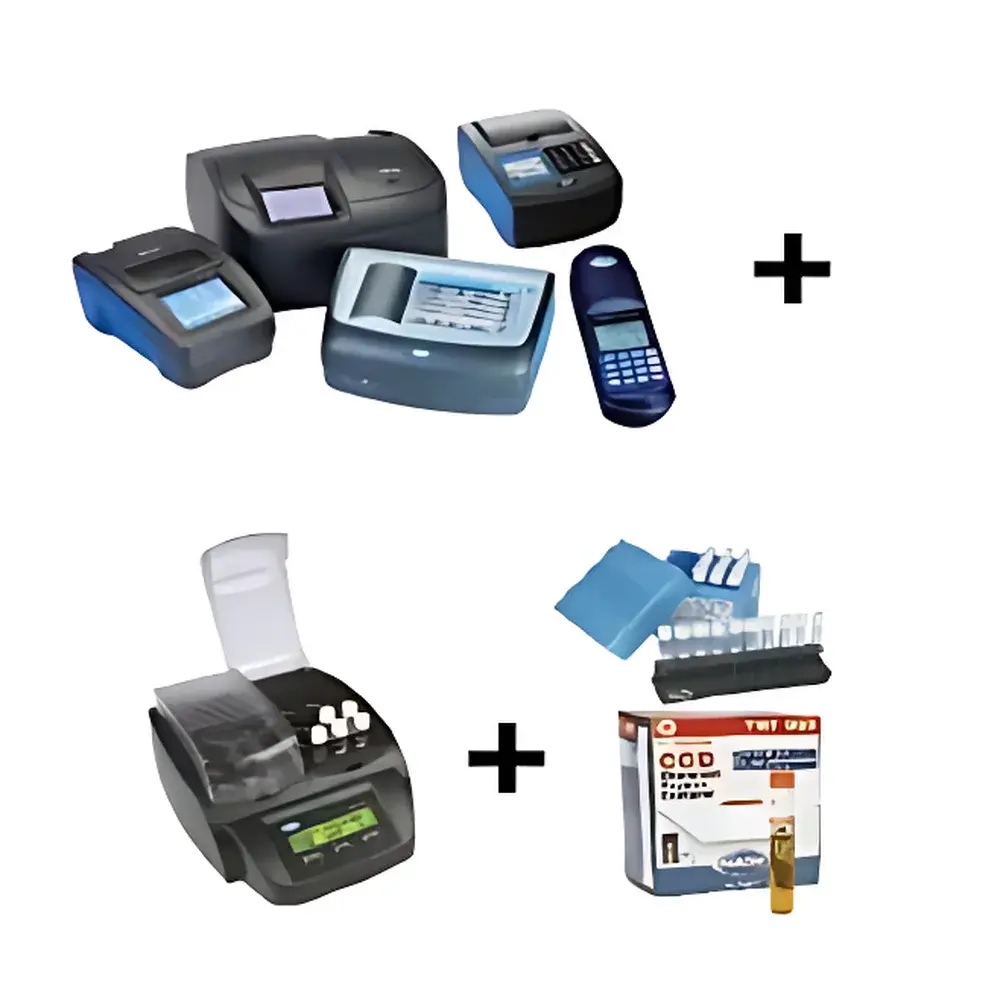
Hach COD Analysis System (UV Absorption Method)
| Brand | Hach |
|---|---|
| Origin | Imported |
| Manufacturer Type | Manufacturer |
| Instrument Type | Laboratory |
| Measurement Principle | UV Absorption Spectrophotometry (Portable) |
| Wavelength | 420 nm |
| Range | 0.7–15,000 mg/L COD |
| Accuracy | ≤ ±10% |
| Repeatability | ≤ ±5% |
| LOD | 0.1 mg/L |
| Analysis Time | 20 min per batch |
| Batch Capacity | 15 or 30 samples |
Overview
The Hach COD Analysis System is a laboratory-grade, UV absorption-based spectrophotometric platform engineered for rapid, reliable, and environmentally responsible determination of Chemical Oxygen Demand (COD) in wastewater, surface water, and industrial effluents. Unlike classical dichromate reflux methods—which require hazardous reagents, extended digestion times (>2 hours), and generate chromium-laden waste—the Hach system implements a standardized micro-reflux protocol compliant with ISO 15705:2002 and aligned with U.S. EPA Method 410.1 for COD estimation. The system operates on the principle that oxidizable organic matter in acidic solution reacts with pre-dosed potassium dichromate under controlled thermal conditions; residual dichromate is then quantified via absorbance at 420 nm, enabling direct calculation of oxygen demand without manual titration. This optical endpoint detection eliminates subjective endpoint interpretation, improves inter-operator reproducibility, and supports audit-ready digital data capture when paired with Hach’s GLP-compliant instruments.
Key Features
- Pre-filled, factory-calibrated COD vials—eliminates on-site reagent preparation and minimizes analyst exposure to concentrated sulfuric acid and Cr(VI)
- Integrated thermal management: DRB200 Digester delivers precise, programmable heating (37–165 °C) with ±2 °C stability and pre-stored digestion protocols (e.g., 150 °C for 120 min per ISO 15705)
- High-throughput capability: dual-block DRB200 configurations support simultaneous digestion of up to 30 samples (16-mm vials) or 24 samples (13-mm vials using adapter 2895805)
- Optimized optical path: Hach spectrophotometers (DR5000, DR2800, DR890) feature fixed-wavelength photometry at 420 nm with built-in COD calibration curves traceable to NIST-certified standards
- Reduced secondary pollution: micro-volume chemistry (3 mL reagent + 0.2–2 mL sample) cuts total acid and heavy metal waste by >90% versus conventional open-reflux methods
- Full method validation support: includes documented performance verification data for accuracy, linearity, and matrix interference across municipal and industrial wastewater matrices
Sample Compatibility & Compliance
The system accommodates raw, filtered, or centrifuged aqueous samples—including domestic sewage, food processing effluent, pharmaceutical wastewater, and landfill leachate—with minimal pretreatment. Chloride interference is mitigated up to 2,000 mg/L Cl⁻ using mercury-free sulfate-based masking agents included in high-range vials (200–15,000 mg/L). All components meet IEC 61010-1 safety requirements for laboratory equipment. Data integrity complies with FDA 21 CFR Part 11 when used with Hach’s AquaTrack™ software (optional), enabling electronic signatures, audit trails, and secure user access control. The methodology satisfies ISO/IEC 17025:2017 requirements for testing laboratories and supports regulatory reporting under China’s GB 11914–89, U.S. Clean Water Act discharge monitoring, and EU Urban Wastewater Treatment Directive Annex I parameters.
Software & Data Management
When interfaced with Hach’s DR series spectrophotometers, the COD system leverages embedded firmware with method-specific prompts, automatic wavelength selection, and concentration readout in mg/L COD. Raw absorbance values, date/time stamps, operator IDs, and instrument serial numbers are logged internally and exportable via USB or RS232 to LIMS or Excel. Optional AquaTrack™ software provides full GLP/GMP workflow support—including calibration history, QC flagging (e.g., blank drift >5%), outlier detection per ISO 5725-2, and automated report generation compliant with ISO 17025 clause 7.8. All instrument firmware updates are distributed through Hach’s validated release process, with version-controlled change logs archived for regulatory audits.
Applications
- Wastewater treatment plant process control: real-time monitoring of influent/effluent COD to optimize aeration basin loading and sludge retention time
- Industrial pretreatment compliance: verification of discharge limits per local environmental permits (e.g., EPA NPDES, China’s “Discharge Standard of Pollutants for Municipal Wastewater Treatment Plants” GB 18918–2002)
- Research & development: kinetic studies of biodegradability using sequential COD measurements during BOD₅ incubation
- Environmental consulting: field-deployable screening (via DR2800/DR890) followed by lab confirmation using DR5000 for accreditation-grade results
- Educational laboratories: standardized teaching kits with step-by-step SOPs, safety documentation, and uncertainty budget templates aligned with ISO/IEC 17025 training modules
FAQ
Is this system compliant with ISO 15705:2002?
Yes—the micro-reflux digestion protocol, vial chemistry, and photometric measurement procedure are fully aligned with ISO 15705:2002 for unfiltered wastewater samples.
Can chloride interference be corrected without mercury sulfate?
Yes—high-range vials (200–15,000 mg/L) incorporate proprietary non-mercuric chloride-complexing agents validated to <2,000 mg/L Cl⁻ per ASTM D1253.
What is the shelf life of the COD vials?
Unopened vials retain stability for 2 years when stored at 15–25 °C; refrigeration is not required but recommended for extended storage beyond 12 months.
Does the system support multi-point calibration verification?
Yes—each DR spectrophotometer includes a built-in verification mode using NIST-traceable neutral density filters and certified COD standards (e.g., Hach 24159–25 reference set).
Are consumables supplied with full lot traceability and CoA?
Yes—all reagent vials ship with Certificate of Analysis listing batch number, expiration date, LOD/LOQ verification, and ISO/IEC 17025-accredited assay data.
Related Products







