
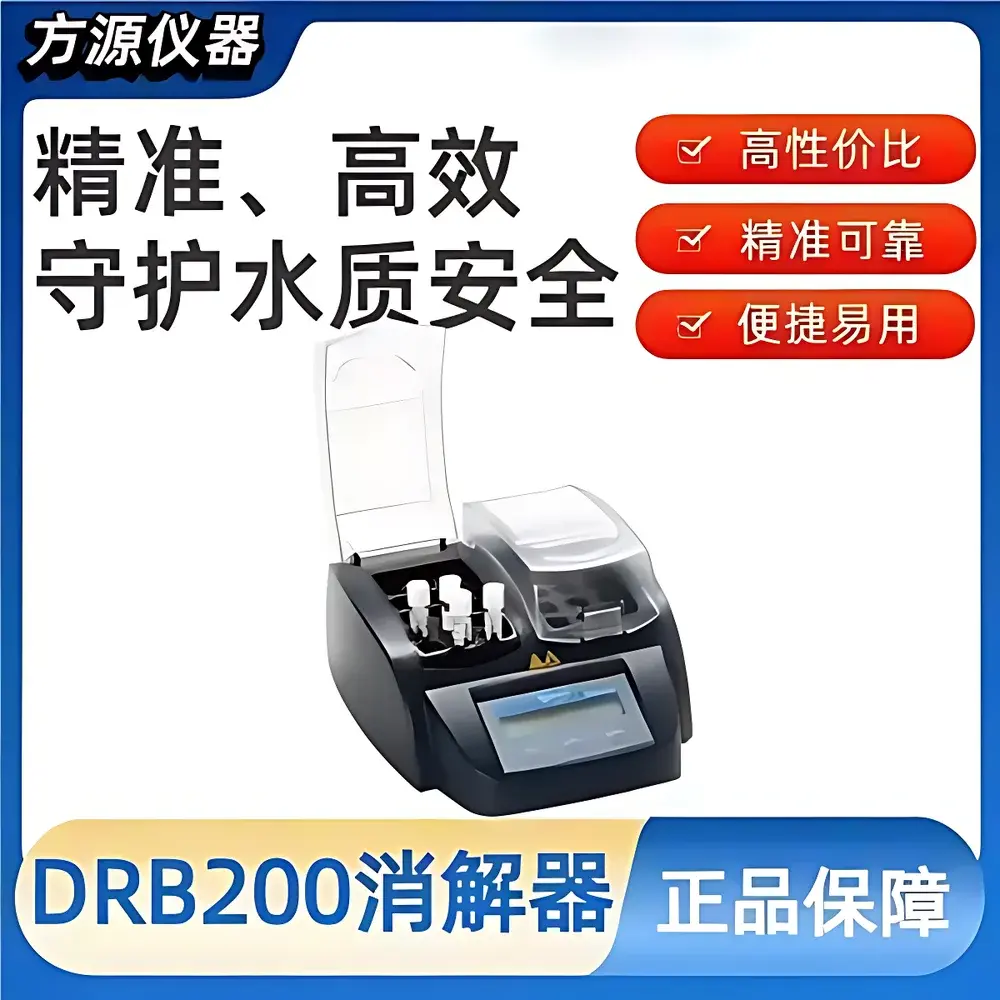
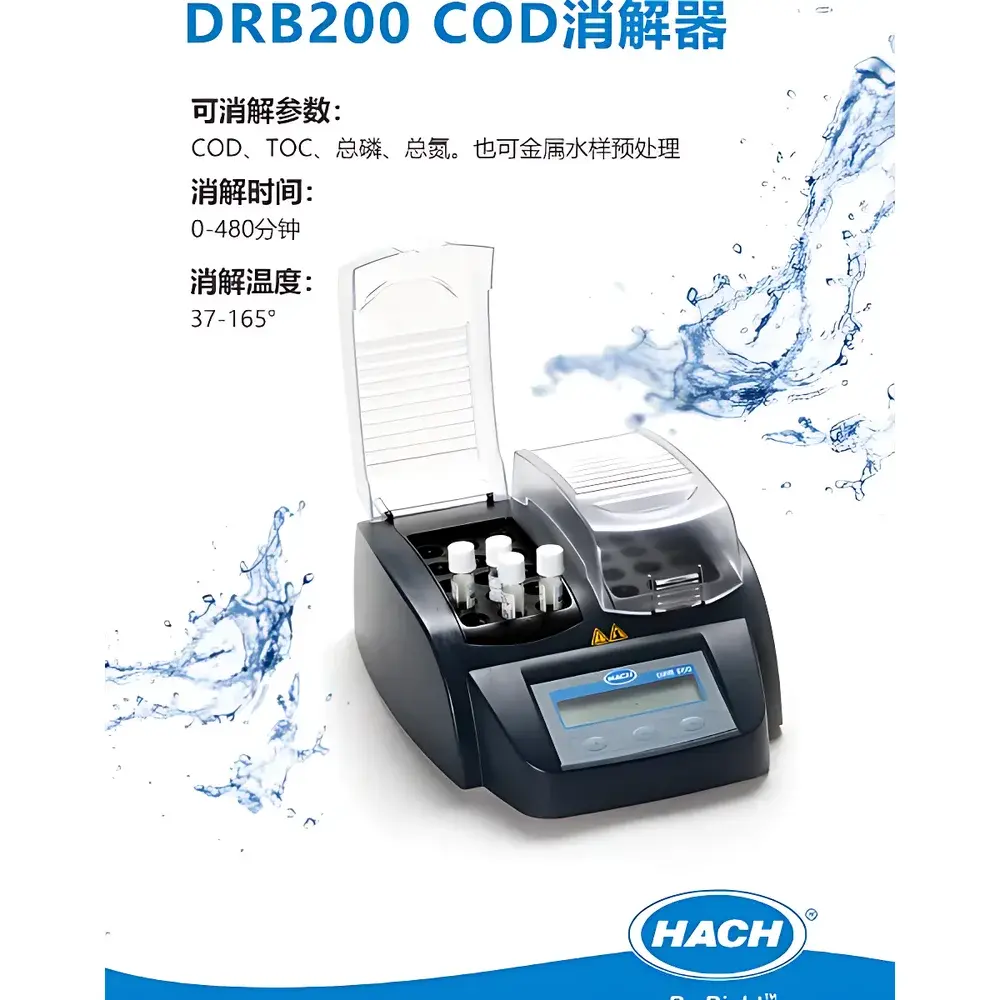
HACH DRB200 Digital Block Digestor
| Brand | HACH |
|---|---|
| Origin | USA |
| Model | DRB200 |
| Digestion Temperature Range | 37–165 °C |
| Digestion Time Range | 0–480 min |
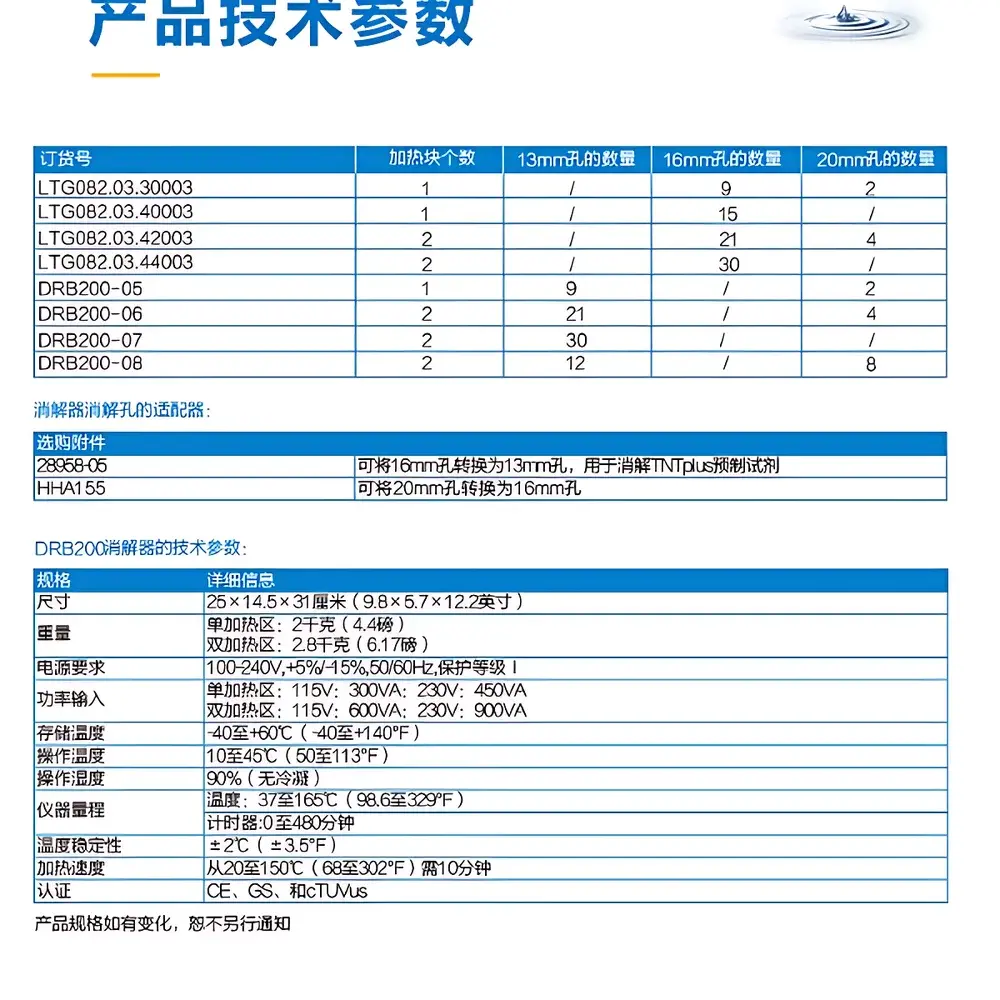
| Sample Capacity | Up to 30 samples simultaneously |
| Compatible Parameters | COD, TOC, Total Phosphorus, Total Nitrogen, Heavy Metal Pre-treatment |
| Heating Module Configuration | Single or Dual Block |
| Temperature Uniformity | ±0.3 °C |
| Certifications | Compliant with ASTM D1252 (COD), ISO 6060 (COD), EPA 410.4, and Standard Methods 5220D |
Overview
The HACH DRB200 Digital Block Digestor is a precision-engineered thermal digestion system designed for reproducible, traceable sample preparation in environmental water quality laboratories. It operates on the principle of controlled conductive heating within calibrated aluminum heating blocks, ensuring uniform thermal transfer across all sample positions—critical for method-compliant oxidation of organic and inorganic analytes prior to spectrophotometric or instrumental analysis. Unlike open-bath or ceramic plate digesters, the DRB200 employs microprocessor-regulated PID temperature control with real-time feedback, minimizing thermal overshoot and maintaining stability within ±0.3 °C across its full operating range (37–165 °C). This level of thermal fidelity supports standardized digestion protocols required for regulatory compliance in wastewater, drinking water, and surface water monitoring programs governed by U.S. EPA, ISO, and ASTM frameworks.
Key Features
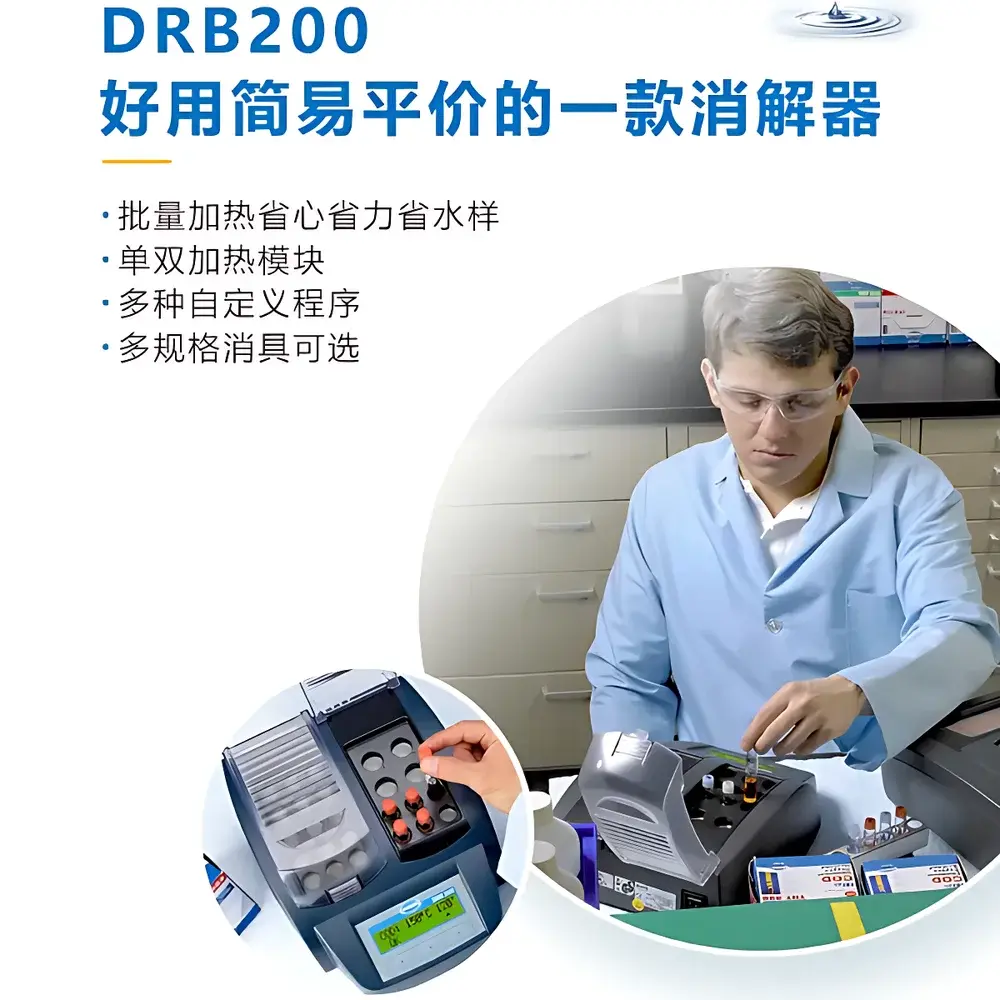
- Dual independent heating blocks (optional configuration) enable parallel digestion of two different methods—for example, COD at 150 °C and total phosphorus at 120 °C—without cross-contamination or procedural delay.
- Programmable digestion cycles with up to 9 user-defined methods stored locally; each includes temperature setpoint, ramp rate, hold time (0–480 min), and audible/visual end-of-cycle alerts.
- Pre-validated method templates aligned with EPA 410.4 (COD), Standard Methods 4500-P E (total phosphorus), and ISO 11908 (total nitrogen), reducing method development time and operator error.
- Aluminum block construction with corrosion-resistant anodized finish ensures long-term dimensional stability and resistance to acidic reagents (e.g., K₂Cr₂O₇/H₂SO₄, persulfate, or alkaline peroxide solutions).
- Integrated safety features include overtemperature cutoff, auto-shutdown after idle timeout, and non-slip rubber feet for secure benchtop operation in high-throughput QC environments.
Sample Compatibility & Compliance
The DRB200 accommodates standard 16-mm round-bottom glass digestion tubes (including HACH TNTplus vials) and 20-mm square quartz cuvettes used in UV-Vis spectrophotometry. Its thermal profile meets the stringent spatial uniformity requirements of ISO/IEC 17025-accredited laboratories for method validation. When paired with HACH’s certified reagent kits (e.g., LCK test kits or TNTplus vials), the system fulfills data integrity requirements under FDA 21 CFR Part 11 when operated within a validated LIMS environment—including electronic audit trails for method selection, parameter entry, and cycle execution timestamps. It is routinely deployed in facilities subject to GLP audits for environmental monitoring and municipal wastewater compliance reporting.
Software & Data Management
While the DRB200 operates as a standalone instrument with intuitive front-panel navigation, it integrates seamlessly with HACH’s SC1000 controller platform and Laboratory Information Management Systems (LIMS) via RS232 or optional USB-to-serial interface. All digestion events—including start time, target temperature, actual block temperature log (sampled every 10 s), and completion status—are exportable as CSV files for QA review. Method parameters are protected by password-locked configuration mode, preventing unauthorized modification during routine operation—a requirement for ISO 17025 Clause 7.7 (method validation) and EPA Contract Lab Program (CLP) documentation standards.
Applications
- Chemical Oxygen Demand (COD) determination per EPA 410.4 and ISO 6060 using dichromate reflux in sealed vials.
- Total Organic Carbon (TOC) persulfate oxidation at 120 °C for low-conductivity matrices prior to NDIR detection.
- Total phosphorus quantification via molybdate blue reaction following alkaline persulfate digestion (Standard Methods 4500-P E).
- Total nitrogen measurement using alkaline potassium persulfate digestion followed by UV digestion or reduction to ammonium.
- Pretreatment of metal-spiked water samples for ICP-OES or AAS analysis, including digestion of Cr, Ni, Cu, Zn, and Pb using HNO₃/HCl mixtures at elevated temperatures.
FAQ
Does the DRB200 support GLP-compliant audit trails?
Yes—when connected to a validated LIMS or HACH SC1000 system, all method executions, parameter changes, and cycle logs are timestamped and attributable to individual users.
Can I use non-HACH digestion vials?
The DRB200 accepts any 16-mm round-bottom borosilicate glass tube meeting ASTM E1573 specifications; however, HACH-certified vials guarantee optimal thermal coupling and pressure rating for sealed digestion protocols.
Is calibration verification required between uses?
Per ISO/IEC 17025, daily verification using an NIST-traceable thermometer (e.g., Fluke 1523) at three points across the operating range (e.g., 50 °C, 100 °C, 150 °C) is recommended before critical sample batches.
What maintenance does the DRB200 require?
Annual inspection of heating element continuity and block surface flatness is advised; no routine lubrication or consumable replacement is needed due to solid-state thermal design.
How does the DRB200 compare to microwave digestion systems?
The DRB200 provides superior batch-to-batch reproducibility for high-volume routine testing but lacks the rapid ramp rates and closed-vessel pressure control of microwave platforms—making it ideal for EPA-compliant, high-throughput environmental labs rather than research-scale elemental speciation.







