
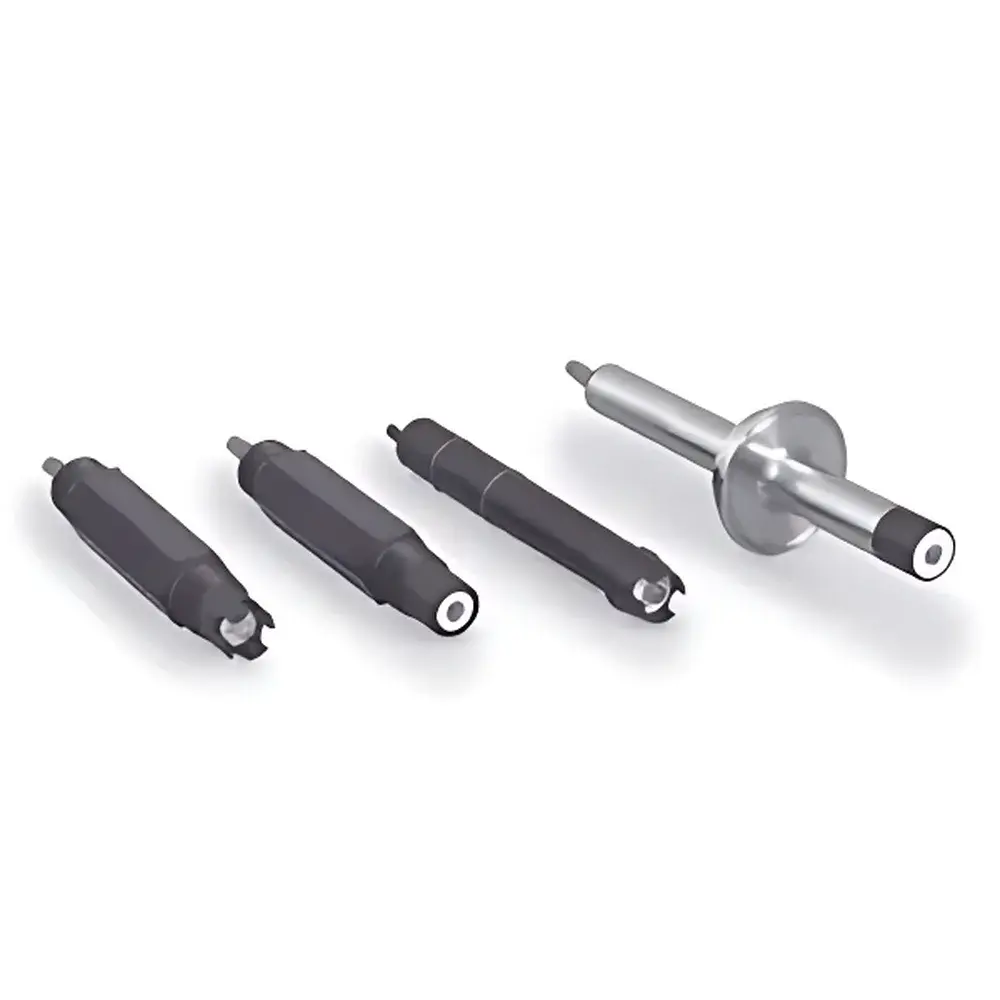
HACH GLI 3/4″ Composite pH/ORP Electrode
| Brand | HACH |
|---|---|
| Origin | Imported |
| Manufacturer Type | Manufacturer |
| Instrument Type | Pen-style |
| Parameter Type | Multiparameter |
| Measurement Range | pH: 0–14 |
| ORP | −2000 to +2000 mV |
| Calibration Buffers | pH 4.01, 7.00, 10.01 |
Overview
The HACH GLI 3/4″ Composite pH/ORP Electrode is an industrial-grade electrochemical sensor engineered for continuous, reliable measurement of hydrogen ion activity (pH) and oxidation-reduction potential (ORP) in demanding aqueous process streams. Based on potentiometric principle, the electrode integrates a glass pH sensing element and a noble metal (typically platinum or gold) ORP sensing surface within a single robust housing. Its dual-sensing architecture eliminates inter-sensor alignment errors and ensures synchronized temporal response—critical for real-time process control in wastewater treatment, chemical manufacturing, and effluent monitoring applications. Designed for direct integration with HACH’s family of online analyzers (e.g., SC1000, CL17, or HQ40d platforms), the probe operates under variable flow, pressure, and temperature conditions without requiring recalibration between routine maintenance intervals.
Key Features
- Composite construction: Simultaneous pH and ORP measurement from one physical sensor—reducing installation footprint and cross-calibration drift.
- Dual-junction reference system: A secondary salt bridge isolates the internal Ag/AgCl reference element from aggressive sample matrices (e.g., sulfide-rich sewage or high-chloride brines), significantly extending service life and improving long-term stability.
- Chemically resistant body materials: Standard versions use Ryton® (PPS) for general corrosion resistance; PVDF variants provide enhanced compatibility with oxidizing agents and moderate HF exposure (up to 0.5% v/v at ambient temperature).
- Integrated temperature compensation: Built-in Pt1000 RTD enables automatic temperature correction per NIST-traceable algorithms, compliant with ISO 7888 and ASTM D1293.
- Grounded design: Internal grounding point minimizes electrical noise in electrically noisy plant environments—essential for stable mV output in high-EMI settings such as pump stations or electroplating lines.
- Modular mechanical interface: 3/4″ NPT male thread allows direct insertion into standard sanitary or industrial piping; optional insertion-style and hygienic clamp-mount configurations support uninterrupted process operation during sensor exchange.
Sample Compatibility & Compliance
This electrode is validated for use in municipal wastewater influent/effluent, cooling tower blowdown, pulp & paper white water, food & beverage CIP rinse streams, and pharmaceutical process water systems. It meets material compliance requirements per USP , FDA 21 CFR Part 11 (when paired with HACH’s audit-trail-enabled controllers), and EU Regulation (EC) No 1935/2004 for indirect food contact. The double-junction reference system satisfies ISO 11277 recommendations for reference electrode longevity in non-ideal electrolytes. For applications involving hydrofluoric acid, only designated HF-resistant models (with specialized glass formulation and ceramic frit) are recommended—and require verification against site-specific concentration and temperature profiles.
Software & Data Management
When connected to HACH’s SC1000 Universal Controller or HQ Series Portable Analyzers, the electrode supports full digital diagnostics including junction impedance monitoring, glass membrane asymmetry voltage logging, and slope/offset trending. All calibration events—including buffer recognition (pH 4.01, 7.00, 10.01)—are timestamped and stored with user ID and environmental metadata. Data export conforms to CSV and MODBUS TCP protocols for integration into SCADA, MES, or LIMS platforms. Firmware updates maintain alignment with evolving regulatory expectations for data integrity, including electronic signature capability and ALCOA+ (Attributable, Legible, Contemporaneous, Original, Accurate, Complete, Consistent, Enduring, Available) principles.
Applications
- Municipal wastewater treatment: Monitoring biological nutrient removal (BNR) basins, disinfection contact tanks, and digester supernatant streams.
- Industrial pretreatment: Control of neutralization reactors handling acidic or alkaline process discharges prior to sewer discharge.
- Power generation: Boiler feedwater pH assurance and condensate polishing ORP verification.
- Chemical manufacturing: Batch reaction endpoint detection via ORP inflection points (e.g., chlorine dioxide generation, redox titrations).
- Food & beverage: Sanitation validation through post-CIP rinse water ORP verification (>650 mV indicates effective oxidative residual).
FAQ
What calibration buffers are required for routine operation?
Standard calibration requires traceable pH 4.01, 7.00, and 10.01 buffer solutions at 25 °C. ORP verification may be performed using Zobell’s solution (225 mV) or quinhydrone standard (≈+470 mV at pH 7).
Can this electrode be used in high-suspended-solids or viscous media?
Yes—the flat-surface pH element and open-junction design resist clogging; however, periodic manual cleaning with dilute HCl (0.1 M) or enzymatic cleaner is recommended for sludge-laden applications.
Is the electrode compatible with non-HACH transmitters?
It outputs standard mV and RTD signals (±1500 mV, Pt1000); compatibility depends on the transmitter’s input specifications and impedance matching—consult technical documentation prior to integration.
How often should the reference electrolyte be refilled?
For continuously immersed operation in flowing streams, electrolyte replenishment is typically required every 3–6 months; frequency increases in stagnant or high-temperature installations.
Does the electrode support FDA 21 CFR Part 11 compliance?
The sensor itself is hardware-only; Part 11 compliance is achieved at the system level when used with HACH controllers configured for electronic signatures, audit trails, and role-based access control.
Related Products




