
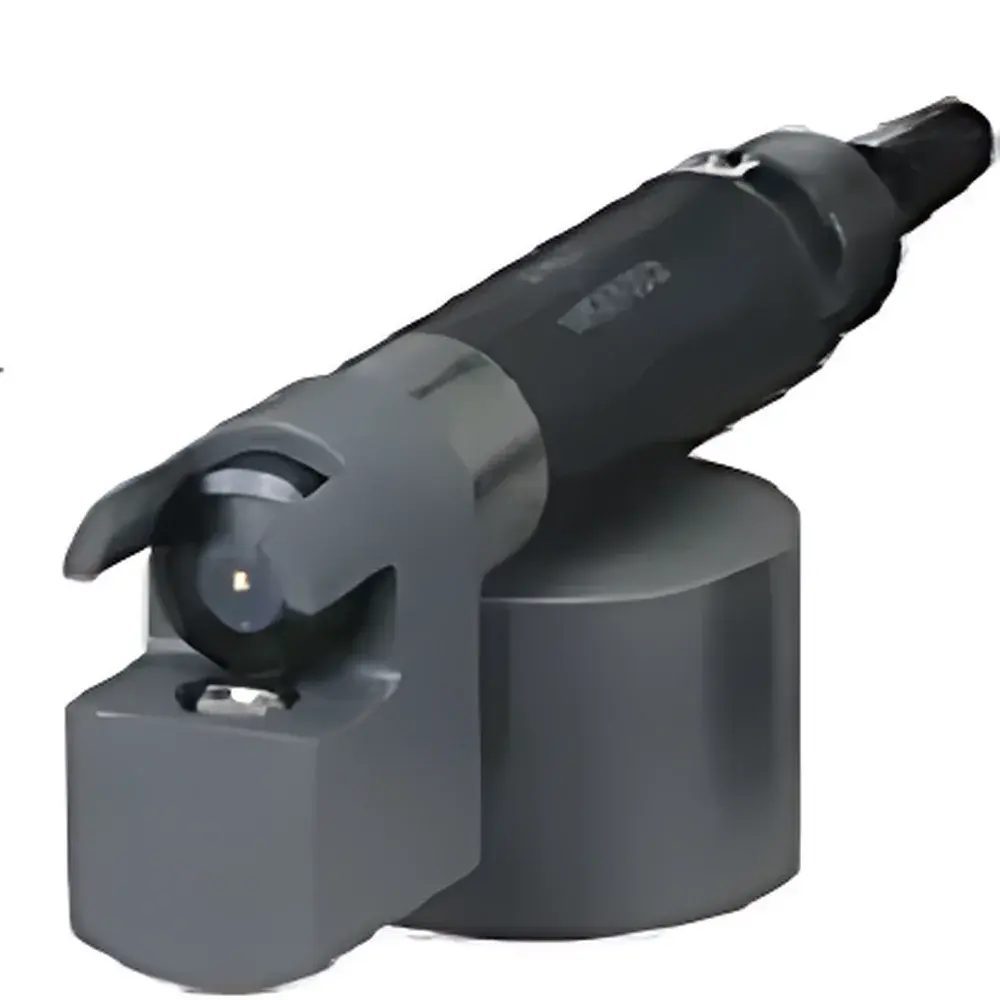
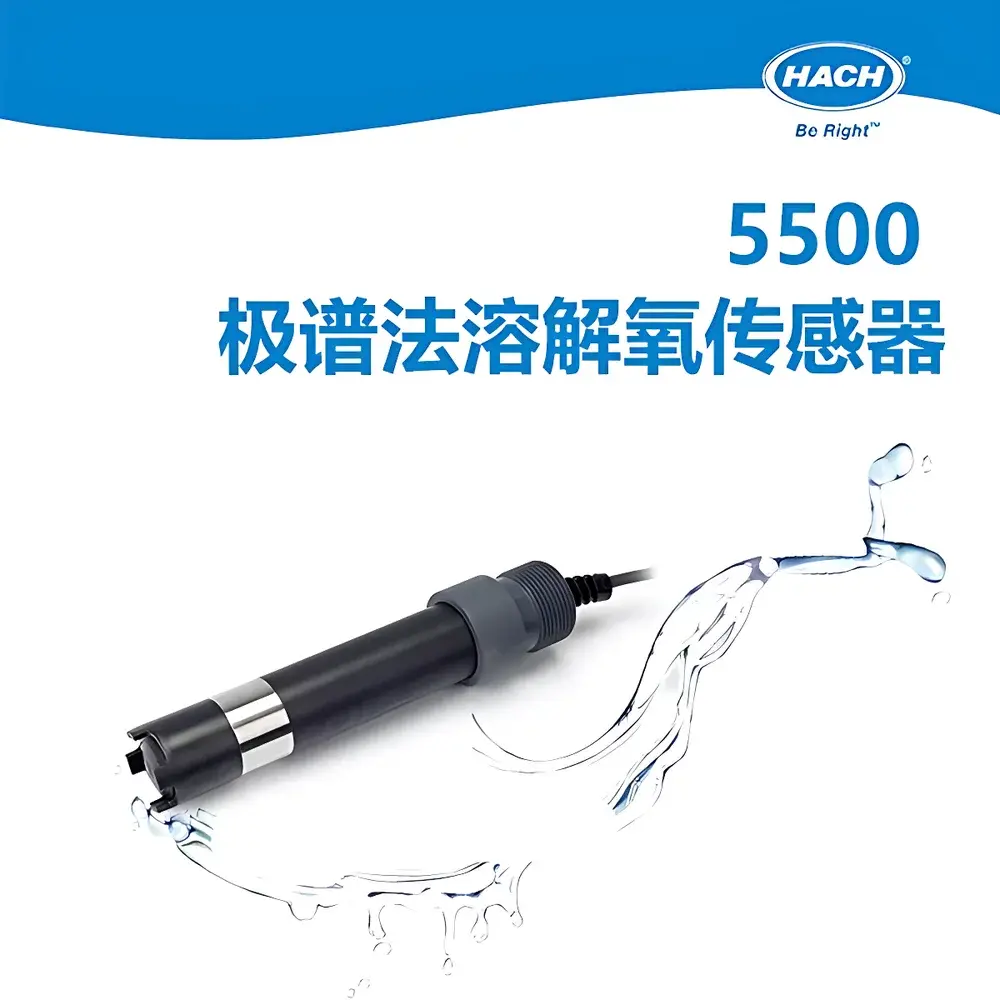
HACH GLI 5500 Polarographic Dissolved Oxygen Sensor
| Brand | HACH/GLI |
|---|---|
| Origin | USA |
| Manufacturer Type | Original Equipment Manufacturer (OEM) |
| Product Category | Imported Instrument |
| Model | 5500 |
| Pricing | Available Upon Request |
Overview
The HACH GLI 5500 Polarographic Dissolved Oxygen (DO) Sensor is an industrial-grade, in-line electrochemical sensor engineered for continuous, high-reliability measurement of dissolved oxygen concentration in aqueous environments. It operates on the polarographic Clark cell principle—a well-established, NIST-traceable electrochemical method widely adopted in environmental monitoring and process control applications. The sensor employs a three-electrode configuration (gold cathode, silver anode, and silver reference electrode), where the reference electrode is maintained at a constant polarization potential to eliminate drift and suppress interference from background currents. This architecture ensures long-term baseline stability, reduced calibration frequency, and superior signal reproducibility—critical attributes for compliance with regulatory reporting requirements under EPA Method 4500-O G and ISO 5814. Designed for permanent submersion or flow-through installation, the 5500 sensor delivers robust performance across varying temperatures (0–50 °C), salinities (0–35 g/L), and pressure gradients typical of wastewater treatment plants, drinking water distribution systems, and industrial effluent streams.
Key Features
- Three-electrode polarographic design with gold cathode, silver anode, and actively polarized silver reference electrode—enabling stable zero-point and improved long-term accuracy
- Modular, field-replaceable membrane cap assembly: pre-filled with electrolyte, calibrated electrode set, and gas-permeable Teflon® membrane—minimizing downtime and operator error during maintenance
- Integrated air-pulse self-cleaning option: programmable compressed-air actuation cycle to remove biofilm, silt, or organic fouling from the membrane surface without manual intervention
- IP68-rated housing with chemically resistant PEEK and stainless-steel wetted parts—suitable for aggressive municipal and industrial wastewater matrices
- Compatible with GLI D63, D53, D33, and PRO-D3 transmitters—supporting 4–20 mA analog output, Modbus RTU/ASCII, and HART® 7 communication protocols
- Temperature compensation via integrated Pt1000 RTD—ensuring accurate DO concentration reporting across dynamic thermal conditions
Sample Compatibility & Compliance
The 5500 sensor is validated for use in raw sewage, activated sludge, digester supernatant, chlorinated effluent, brackish estuarine water, and low-conductivity surface waters. Its selective polytetrafluoroethylene (PTFE) membrane exhibits minimal interference from chloride, sulfide, hydrogen sulfide, and common redox-active ions—making it suitable for both aerobic and anoxic zone monitoring per US EPA Wastewater Treatment Plant Design Manual guidelines. The sensor meets IEC 61298-2 for electrical safety and conforms to EN 61326-1 for electromagnetic compatibility (EMC) in industrial environments. When deployed with GLI transmitters supporting audit trail and user access control, the system supports GLP/GMP-aligned data integrity frameworks and satisfies FDA 21 CFR Part 11 requirements for electronic records when paired with compliant SCADA or LIMS platforms.
Software & Data Management
While the 5500 itself is an analog/digital sensor module without embedded firmware, its integration with GLI’s D-series transmitters enables comprehensive data handling capabilities. Transmitter firmware supports configurable linearization algorithms (BOD-based, % saturation, mg/L, or partial pressure), automatic temperature compensation curves per Winkler-derived solubility models, and dual-point calibration logging with timestamped operator ID. All calibration events, sensor diagnostics (e.g., membrane integrity check, electrolyte depletion warning), and fault codes are stored locally and accessible via HART handheld or Modbus master systems. For centralized deployment, the transmitter can feed real-time DO values into plant-wide DCS or cloud-based asset management platforms using OPC UA or MQTT—facilitating predictive maintenance scheduling based on historical polarization stability trends.
Applications
- Aeration basin control in municipal wastewater treatment—enabling dynamic blower modulation to optimize energy consumption while maintaining target DO setpoints (typically 1.5–3.0 mg/L)
- Monitoring dissolved oxygen profiles across multi-zone activated sludge basins (anoxic/anaerobic/aerobic) for nutrient removal process validation
- Effluent quality assurance prior to discharge—meeting NPDES permit limits for residual DO and avoiding fish kill risk in receiving waters
- Biological digestion monitoring in mesophilic and thermophilic anaerobic digesters—where sub-0.1 mg/L DO detection sensitivity is critical to prevent nitrification interference
- Intake and finished water monitoring in drinking water facilities—verifying oxidative stability and chlorine demand relationships
- Field-deployed limnological surveys in lakes, rivers, and coastal zones—leveraging its broad salinity tolerance and rapid response time (<60 s to 90% step change)
FAQ
What is the recommended calibration frequency for the 5500 sensor in continuous wastewater service?
Calibration should be performed at least once every 7–14 days in high-fouling environments; membrane cap replacement is advised every 3–6 months depending on suspended solids load and cleaning cycle effectiveness.
Does the 5500 require zero-oxygen calibration using sodium sulfite solution?
Yes—two-point calibration (zero in nitrogen-saturated water or sodium sulfite solution, and span in air-saturated water at known temperature and barometric pressure) is required to maintain traceable accuracy per ISO 5814 Annex A.
Can the sensor operate reliably in seawater or high-chloride industrial effluents?
Yes—the PTFE membrane and Ag/AgCl reference system provide proven resistance to chloride-induced drift up to 35 g/L total dissolved solids.
Is the air-pulse self-cleaning option compatible with all GLI transmitter models?
Self-cleaning functionality is supported exclusively on D63 and PRO-D3 transmitters with programmable relay outputs and integrated timer logic.
How does the three-electrode design improve measurement stability compared to conventional two-electrode DO sensors?
The dedicated reference electrode maintains a fixed potential independent of cathodic current draw, eliminating polarization hysteresis and reducing sensitivity to electrolyte depletion—resulting in <±0.05 mg/L drift over 30 days under steady-state conditions.
Related Products







