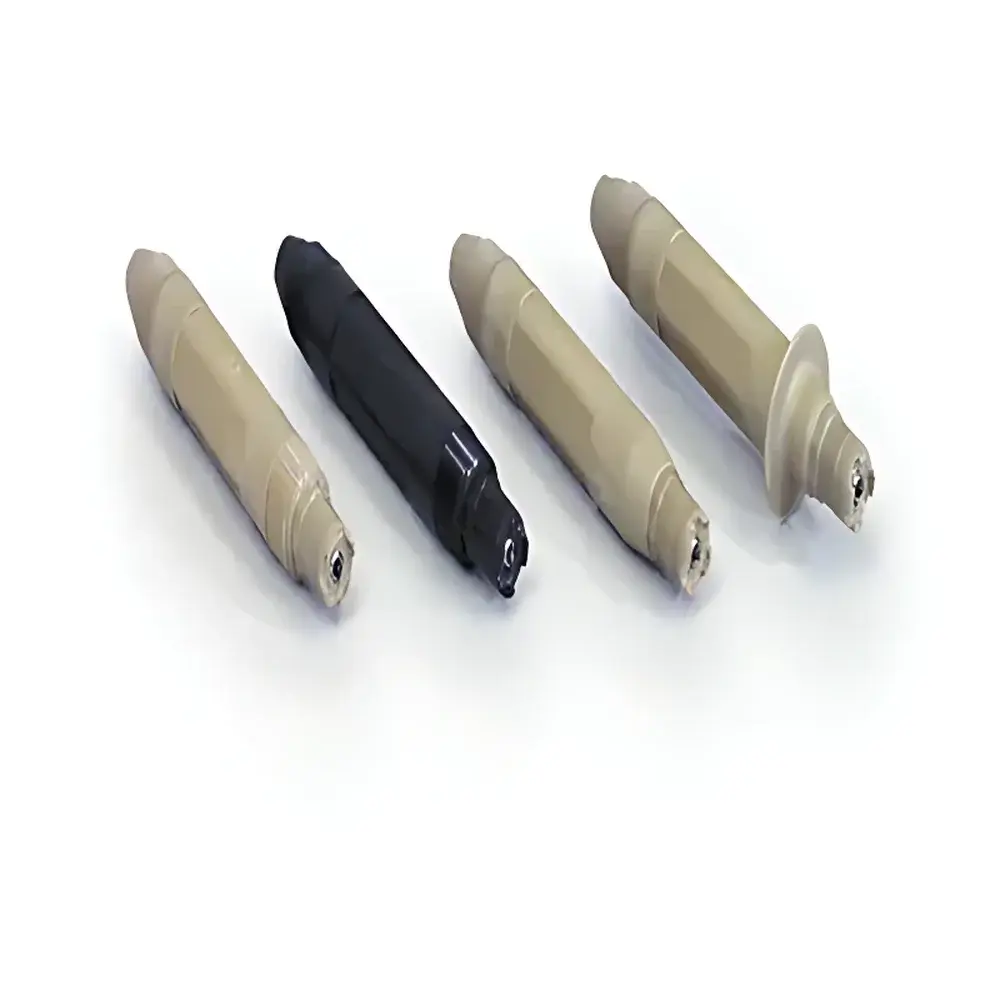
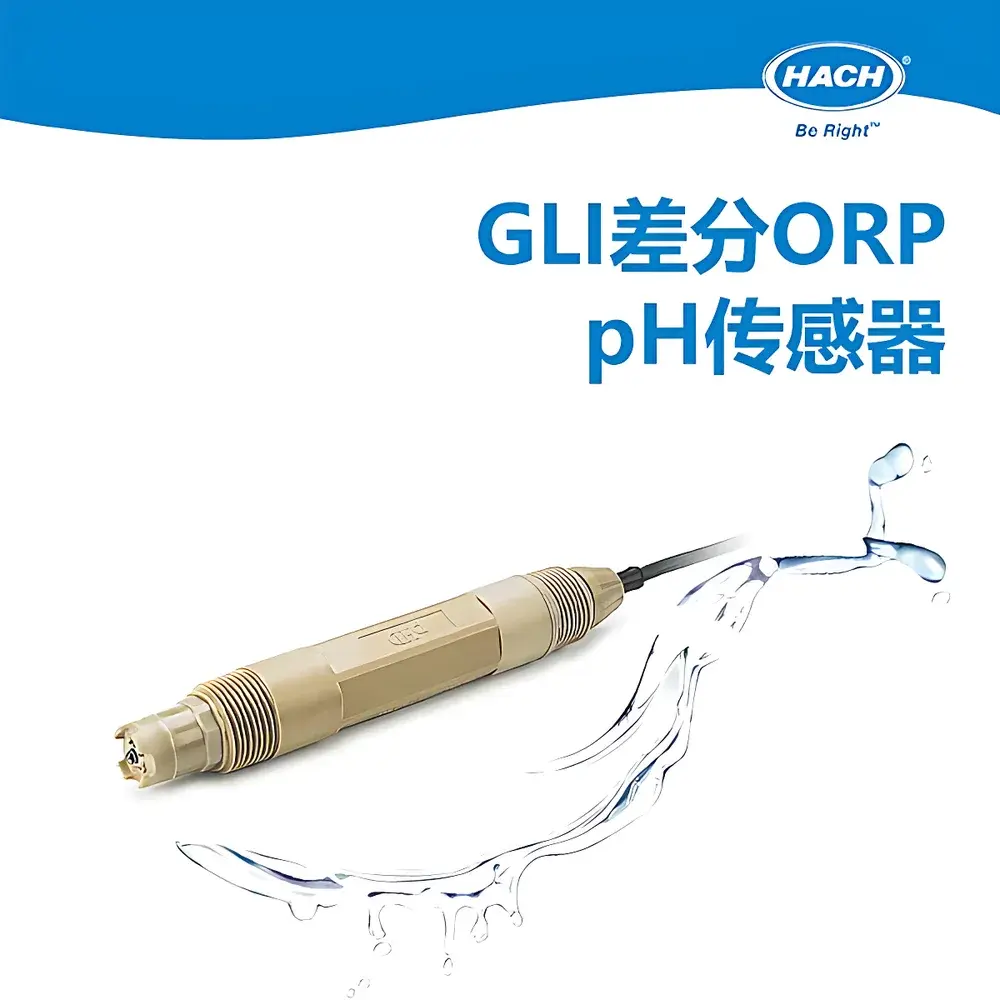
HACH GLI Differential pH/ORP Electrode
| Brand | HACH |
|---|---|
| Origin | Imported |
| Manufacturer Type | Manufacturer |
| Model | GLI pH/ORP |
| Price | Upon Request |
| pH Range | 0–14 |
| ORP Range | −2000 to +2000 mV |
| Temperature Range | −5 to 95 °C |
| Max Pressure | 100 psig |
| pH Sensitivity | < 0.005 pH |
| ORP Sensitivity | < 0.5 mV |
| Wetted Materials | Liquid Crystal Polymer (LCP) body, PVDF connector, Viton O-rings, glass pH sensing element |
| Weight | 0.6 kg |
Overview
The HACH GLI Differential pH/ORP Electrode is an industrial-grade, encapsulated process sensor engineered for high-stability, long-term pH and oxidation-reduction potential (ORP) measurement in aggressive and variable chemical environments. Unlike conventional two-electrode pH sensors—comprising a single pH-sensitive glass electrode and a reference electrode—the GLI differential architecture employs a three-electrode configuration: two identical measuring electrodes and one stable background reference electrode. This design enables measurement of the voltage difference between the two sensing elements relative to the common reference, effectively canceling out common-mode drift caused by junction potential instability, liquid junction contamination, or electrolyte depletion. The result is a robust, drift-resistant signal with enhanced immunity to ground loops, cable capacitance effects, and electrochemical noise—critical for continuous monitoring in flue gas desulfurization (FGD) slurry, caustic soda production, ethanol fermentation, hydrocarbon processing, and aromatic/ester/ketone synthesis streams.
Key Features
- Differential three-electrode architecture eliminates reference electrode drift and minimizes maintenance frequency by reducing clogging and fouling at the liquid junction.
- Integrated signal-conditioning preamplifier housed within the electrode body ensures low-noise transmission over extended distances—up to 914 meters (3000 ft) without signal degradation.
- Thermally stable Liquid Crystal Polymer (LCP) sensor body resists thermal expansion-induced misalignment and maintains dimensional integrity across wide temperature excursions (−5 to 95 °C).
- Chemically resistant wetted materials: PVDF connector, Viton O-rings, and specialized glass formulation compatible with strong alkalis (Ryton-compatible variants available), hydrofluoric acid (HF-tolerant antimony electrode option), and organic solvents including alcohols, esters, ketones, and aromatics.
- Modular, field-serviceable design includes replaceable salt bridge cartridges—extending operational life and reducing total cost of ownership compared to sealed, non-repairable electrodes.
- Rated for continuous operation at up to 100 psig (6.9 bar) pressure, suitable for pressurized pipelines, scrubber recirculation loops, and high-solids slurry applications such as limestone slurry pH control in power plant FGD systems.
Sample Compatibility & Compliance
The GLI Differential pH/ORP Electrode demonstrates proven performance in chemically heterogeneous and particulate-laden process streams where conventional electrodes fail prematurely. It meets material compatibility requirements outlined in ASTM D1293 (Standard Test Method for pH of Water) and supports compliance with ISO 7888 (Water quality — Determination of pH) when integrated into validated process analyzers. Its construction adheres to NEMA-4X ingress protection standards and supports installation in hazardous locations when paired with appropriate barrier-certified transmitters. While not intrinsically safe on its own, the electrode is routinely deployed in Class I, Div 2 environments per NEC Article 500 when used with HACH SC1000 or PHC101 controllers configured for explosion-proof compliance.
Software & Data Management
When connected to HACH’s SC1000 Universal Controller or PHC101 Smart Transmitter, the electrode supports full digital diagnostics—including electrode impedance monitoring, asymmetry potential tracking, and slope validation history. All calibration events, diagnostic alerts, and raw sensor outputs are timestamped and stored locally with optional cloud synchronization via HACH Insight™ platform. Audit trails comply with FDA 21 CFR Part 11 requirements when enabled with electronic signature and role-based access controls. Firmware updates and configuration backups are managed through HACH Link software, ensuring traceability and version control across multi-site deployments.
Applications
- Flue Gas Desulfurization (FGD): Real-time pH monitoring of limestone/lime slurry to optimize SO₂ removal efficiency and prevent scaling in absorber towers.
- Chemical Manufacturing: Continuous ORP control in redox-critical reactions involving nitric acid, chromic acid, or hydrogen peroxide dosing.
- Bioethanol Production: Fermentation broth pH stabilization during yeast propagation and saccharification stages.
- Wastewater Neutralization: pH feedback control in lime- or caustic-based treatment trains handling acidic industrial effluents.
- Pharmaceutical Process Water Systems: Monitoring of purified water (PW) and water-for-injection (WFI) loop conductivity-pH correlation per USP .
FAQ
What is the warranty coverage for the GLI Differential pH/ORP Electrode?
HACH provides a 12-month limited warranty covering defects in materials and workmanship under normal use and proper installation conditions.
Can this electrode be used in high-solids slurry applications?
Yes—the rugged LCP body, large-area glass membrane, and differential architecture provide superior resistance to coating and abrasion in slurries containing up to 30% solids by weight.
Is temperature compensation automatic?
When paired with a compatible HACH transmitter equipped with Pt100 or RTD input, automatic temperature compensation (ATC) is applied using NIST-traceable algorithms per DIN 19267.
How often does the salt bridge require replacement?
Under typical FGD or wastewater service, salt bridge replacement intervals range from 6 to 12 months depending on chloride concentration and flow velocity; diagnostic alerts notify users prior to depletion.
Does the electrode support digital communication protocols?
Yes—it delivers analog 4–20 mA output with HART® 7 protocol support for remote configuration, diagnostics, and firmware updates via standard HART-enabled host systems.
Related Products