
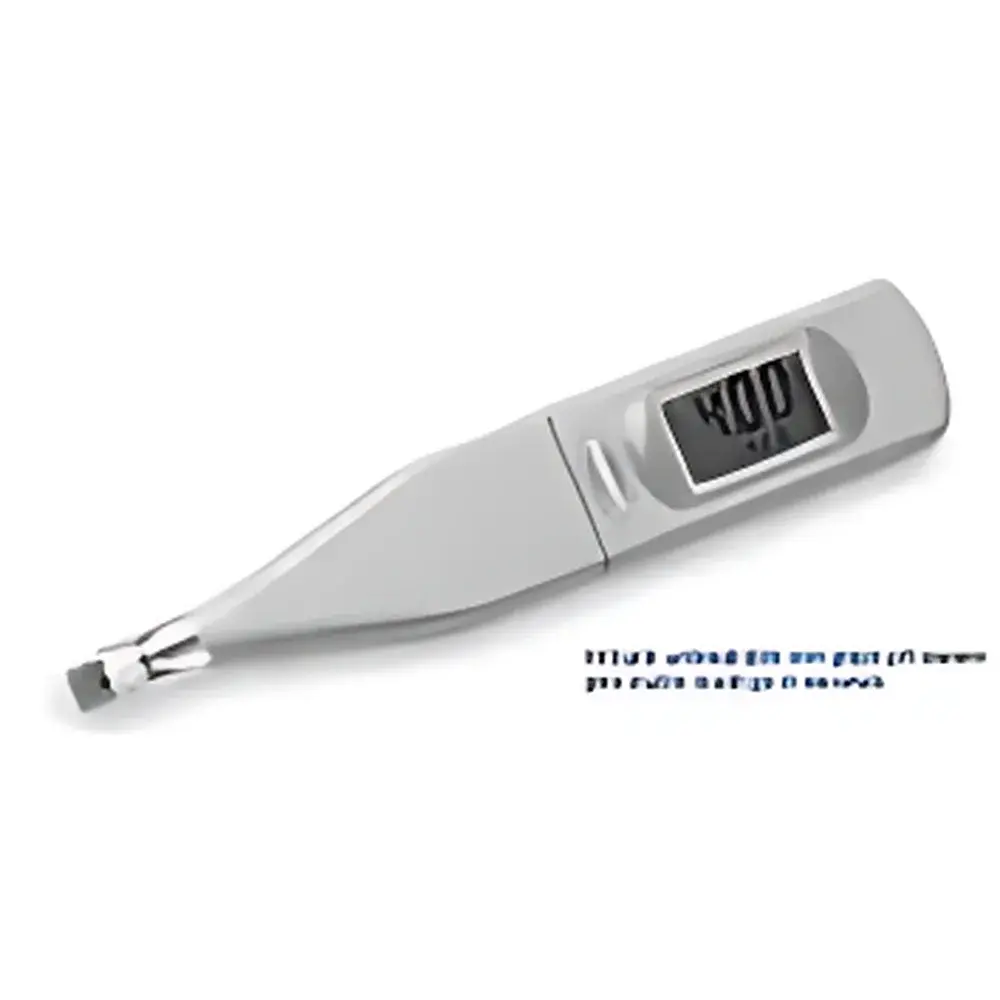
HACH miniLab Portable pH Meter
| Brand | HACH |
|---|---|
| Origin | Imported |
| Manufacturer Type | Manufacturer |
| Model | miniLab pH Meter |
| Instrument Type | Portable |
| Parameter Types | Multi-parameter |
| Sensor Technology | ISFET (Ion-Sensitive Field-Effect Transistor) |
| Housing | IP67-rated waterproof enclosure |
| Temperature Compensation | Automatic (ATC) |
| Electrode Design | Replaceable reference electrode |
| Storage | Dry storage compatible (no electrolyte filling required) |
| Calibration | 1–3 point calibration with standard buffers (pH 4.01, 7.00, 10.01) |
| Display | LCD with backlight |
| Power Source | CR2032 coin cell battery (typical life >1,000 measurements) |
| Compliance | Designed to support GLP-compliant data recording when used with optional software interface |
Overview
The HACH miniLab Portable pH Meter is a compact, rugged electrochemical analyzer engineered for rapid, reliable pH measurement in field and benchtop environments where conventional glass-electrode meters face operational or safety constraints. Unlike traditional pH meters relying on fragile glass membrane electrodes, the miniLab employs solid-state ISFET (Ion-Sensitive Field-Effect Transistor) sensor technology. This architecture integrates a silicon-based semiconductor transducer with a proprietary multi-layered sensing surface—terminating in a hydrogen-ion-selective membrane. Hydrogen ion activity at the interface modulates the gate potential of the underlying FET, generating a voltage signal linearly correlated to pH across the operational range. The absence of liquid-filled junctions, internal electrolytes, or fragile glass eliminates risks of breakage, leakage, or clogging—making it especially suitable for high-throughput sampling, harsh industrial settings, or educational labs requiring student-safe instrumentation.
Key Features
- ISFET-based non-glass pH sensor: Eliminates breakage risk and enables dry storage without maintenance-intensive electrolyte refills
- IP67-rated housing: Fully protected against dust ingress and immersion in water up to 1 m for 30 minutes
- Automatic temperature compensation (ATC): Integrated thermistor ensures accurate pH readings across 0–50 °C without manual correction
- Replaceable reference electrode module: Extends instrument service life and maintains measurement stability over extended use cycles
- One-touch calibration: Supports 1-, 2-, or 3-point calibration using NIST-traceable pH buffer standards (4.01, 7.00, 10.01)
- Low-power design: Powered by a single CR2032 coin cell with >1,000 typical measurements per battery
- Ergonomic, pocket-sized form factor: Dimensions of 150 × 35 × 20 mm enable operation in confined spaces or glove-box environments
Sample Compatibility & Compliance
The miniLab demonstrates robust performance across diverse sample matrices—including viscous food slurries, turbid environmental waters, low-ionic-strength rainwater, and aggressive cleaning solutions—where conventional glass electrodes exhibit slow response, drift, or junction fouling. Its solid-state architecture avoids sodium error at high pH (>12) and exhibits minimal drift in low-conductivity samples (<50 µS/cm). While not certified for regulatory submission under FDA 21 CFR Part 11 out-of-the-box, the device supports audit-ready workflows when paired with HACH’s compliant data logging accessories and software platforms compliant with ISO/IEC 17025 and ASTM D1293 guidelines. All units undergo factory verification per IEC 61000-4 electromagnetic compatibility standards and meet RoHS Directive 2011/65/EU material restrictions.
Software & Data Management
The miniLab operates as a standalone meter but interfaces via optional IR or Bluetooth dongle with HACH’s LabStation™ desktop application for traceable data export. Software features include timestamped measurement logs, calibration history tracking, user-defined ID fields, and PDF report generation with embedded calibration certificates. Audit trail functionality records operator ID, calibration events, and sensor replacement dates—supporting GLP/GMP documentation requirements. Raw data exports comply with CSV and Excel-compatible formats for integration into LIMS or statistical process control (SPC) systems.
Applications
- Food & beverage QA/QC: Rapid pH checks of dairy products, sauces, and fermented beverages without cross-contamination risk
- Environmental monitoring: On-site testing of wastewater effluents, stormwater runoff, and soil leachates in compliance with EPA Method 150.1
- Pharmaceutical manufacturing: In-process pH verification during buffer preparation and bioreactor media adjustment
- Academic teaching labs: Safe, durable instrumentation for undergraduate electrochemistry and analytical chemistry curricula
- Agricultural extension services: Field assessment of irrigation water, compost leachate, and nutrient solution pH
- Chemical process support: Monitoring of acid/base neutralization reactions in pilot-scale reactors
FAQ
Does the miniLab require storage in KCl solution between measurements?
No. The ISFET sensor is stable in dry air; no soaking or electrolyte maintenance is needed.
Can it measure pH in high-alcohol or low-ionic-strength samples?
Yes—its solid-state design minimizes junction potential errors common in glass electrodes under such conditions.
Is calibration traceable to national standards?
Calibration uses NIST-traceable pH buffer standards; full metrological traceability documentation is available upon request.
What is the expected sensor lifetime under routine use?
With proper cleaning and protective cap usage, the ISFET chip typically delivers ≥2 years of stable performance; the replaceable reference electrode extends total system longevity.
Does it support GLP-compliant data archiving?
When used with HACH LabStation™ and configured audit settings, it meets core GLP data integrity requirements including electronic signatures and immutable calibration logs.
Related Products




