
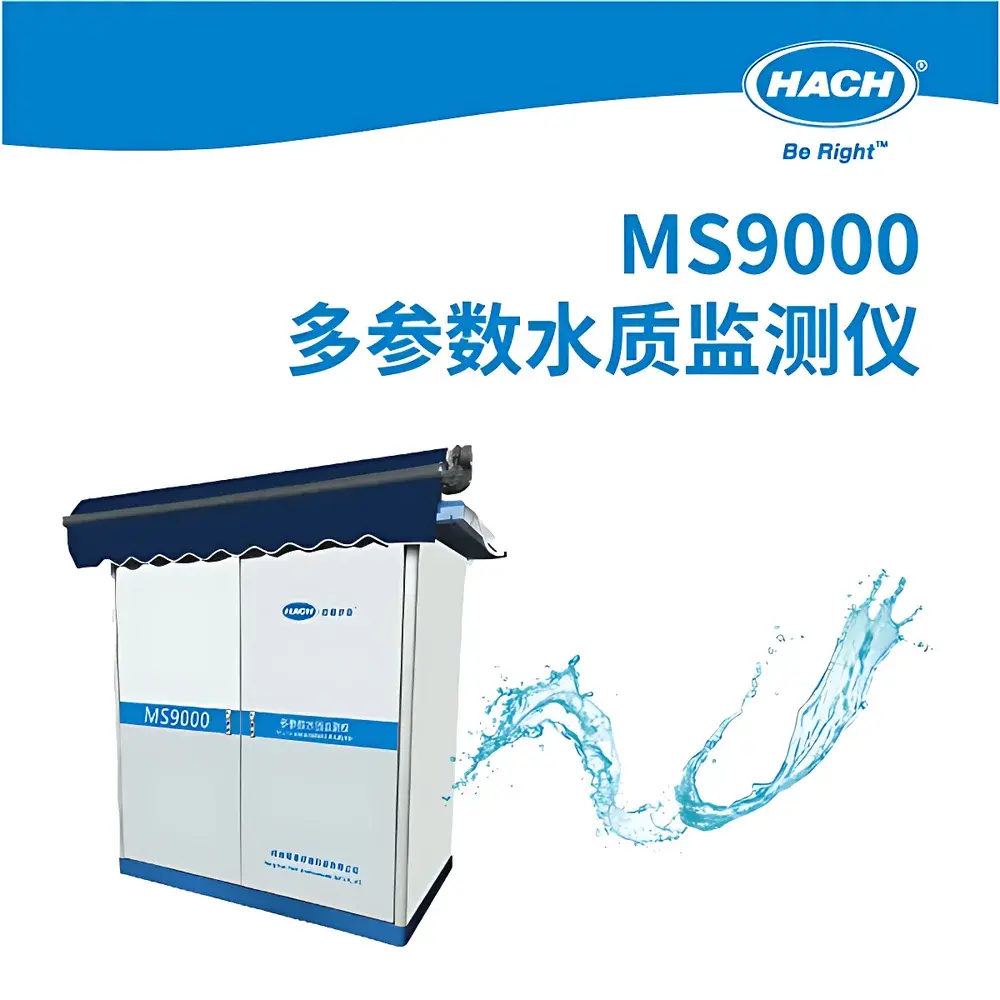
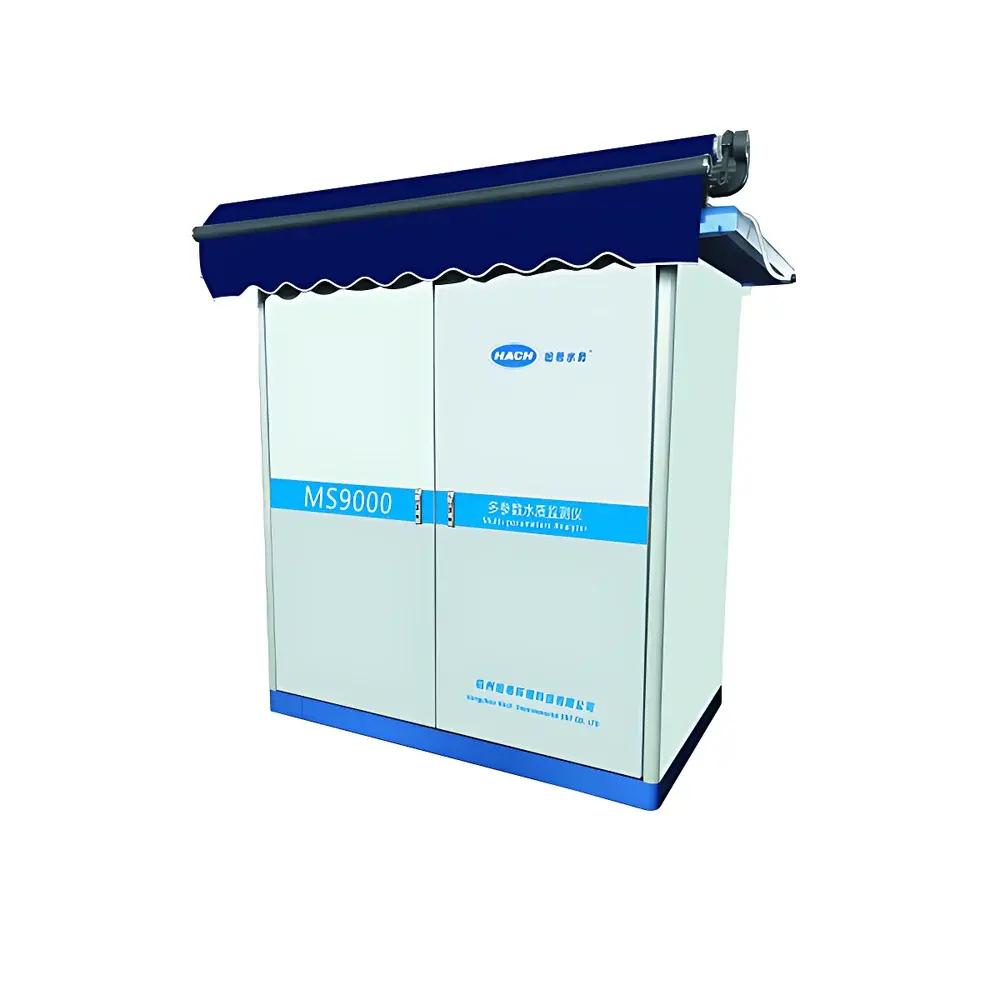
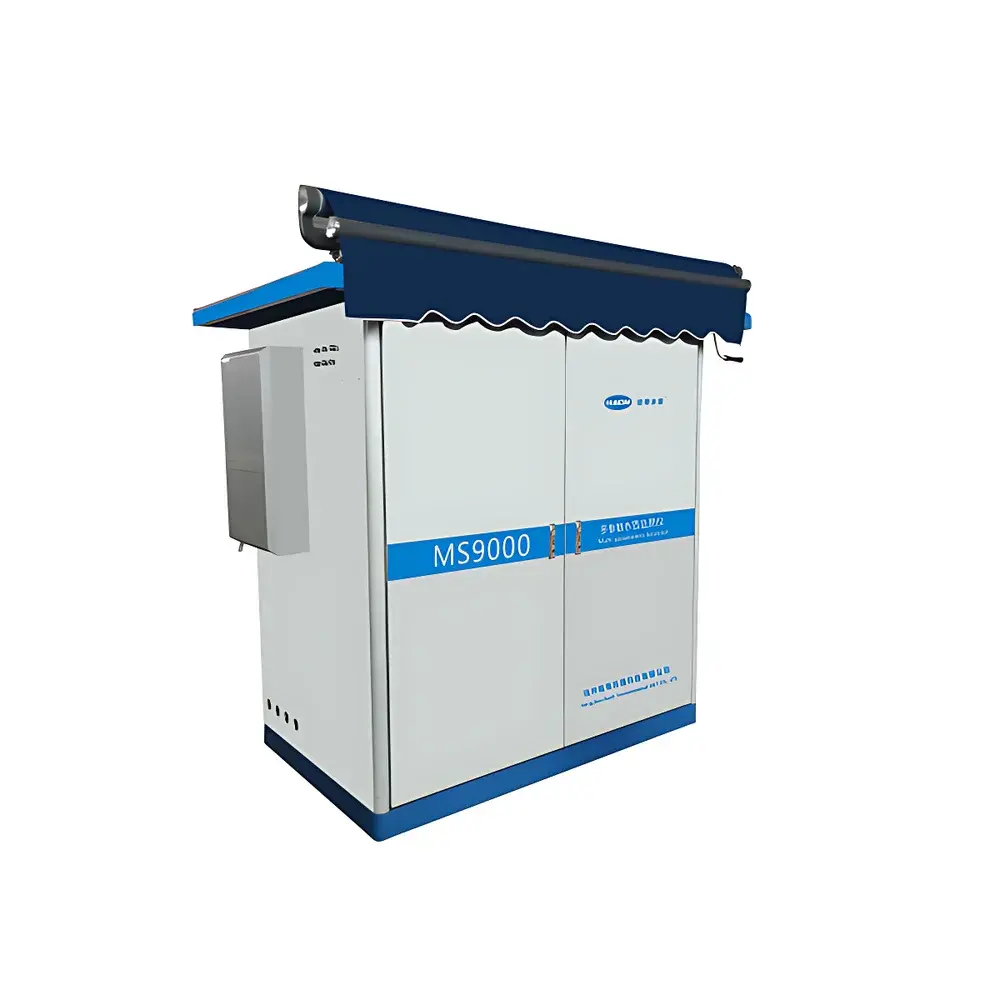
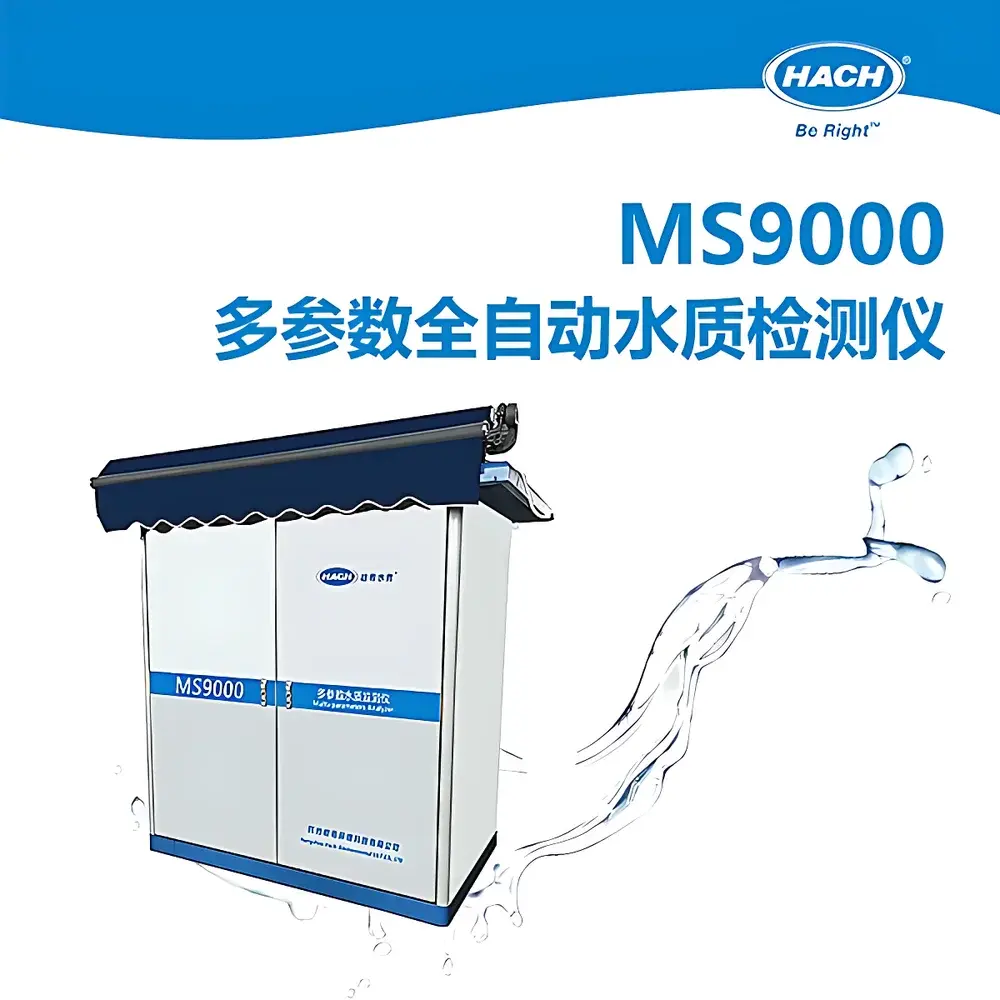
HACH MS9000 Multi-Parameter Online Water Quality Analyzer
| Brand | HACH |
|---|---|
| Origin | Imported |
| Manufacturer Type | Original Equipment Manufacturer (OEM) |
| Model | MS9000 |
| Instrument Type | Online Water Quality Analyzer |
| Measured Parameters | pH, Dissolved Oxygen (DO), Electrical Conductivity (EC), Turbidity, Permanganate Index (COD<sub>Mn</sub>), Ammonia Nitrogen (NH<sub>3</sub>-N), Total Phosphorus (TP), Total Nitrogen (TN), Temperature |
Overview
The HACH MS9000 Multi-Parameter Online Water Quality Analyzer is an integrated, rack-mounted environmental monitoring system engineered for continuous, unattended operation in surface water, drinking water source, and urban river applications. It employs a modular sensor architecture combined with automated hydraulic management—featuring programmable sampling, on-demand pre-treatment, and compressed-air-assisted backflush cleaning—to ensure long-term measurement stability and minimal drift across all eight core parameters. The system operates on a dual-controller architecture: an industrial PC (IPC) serves as the primary human-machine interface and data processing unit, while a dedicated PLC handles real-time sequencing of pump actuation, valve switching, reagent dosing (for wet-chemistry modules), and self-cleaning cycles. All measurements comply with internationally recognized analytical principles: pH via glass electrode potentiometry; DO via optical luminescence quenching; EC via four-electrode conductivity cell; turbidity via 90° scattered light detection per ISO 7027; CODMn via spectrophotometric oxidation at boiling temperature; NH3-N, TP, and TN via segmented flow analysis (SFA) with colorimetric detection calibrated against NIST-traceable standards.
Key Features
- Integrated hydraulics: Built-in submersible sampling pump, precision metering valves, multi-stage filtration (5–10 µm cartridge + optional ultrafiltration), and automatic air-pulse backwash to prevent biofouling and particulate clogging.
- Self-maintaining design: Scheduled cleaning cycles using deionized or municipal tap water reduce manual intervention intervals to ≤30 days under typical river water conditions (turbidity < 100 NTU, chlorophyll-a < 50 µg/L).
- Robust field interface: 15-inch industrial touchscreen IPC with embedded Windows OS supports local configuration, real-time trend visualization, alarm acknowledgment, historical data browsing (up to 12 months stored locally), and CSV/PDF report export.
- Dual-protocol communications: Native support for HJ 212–2017-compliant TCP/IP data transmission to provincial/municipal environmental monitoring centers; optional Modbus RTU (RS-485) output enables integration into SCADA or third-party EMS platforms.
- Environmental resilience: IP65-rated enclosure with internal climate control (heating/ventilation) ensures stable operation across –20 °C to +50 °C ambient ranges and relative humidity up to 95% non-condensing.
Sample Compatibility & Compliance
The MS9000 is validated for use with natural freshwater matrices including low- to medium-turbidity river water (0–200 NTU), reservoir intake water, and treated drinking water sources. Sensor modules meet ISO 5667-22 for on-line water quality monitoring systems and are compatible with GLP-aligned operational protocols. Wet-chemistry analyzers (CODMn, NH3-N, TP, TN) conform to ISO 8467, ISO 7150-1, ISO 6878, and ISO 11905-1 respectively. System-level data integrity adheres to EPA Method 160.1 requirements for QA/QC documentation, and audit trails—including calibration events, maintenance logs, and fault records—are retained for ≥18 months to satisfy regulatory review under China’s MEP Order No. 8 and EU WFD Annex V reporting frameworks.
Software & Data Management
HACH DataStream™ v4.2 firmware provides embedded data validation rules (e.g., range checks, rate-of-change alarms, cross-parameter consistency logic) and automatic flagging of suspect values per HJ/T 91–2002 guidelines. All raw sensor outputs undergo linearization, temperature compensation (per NIST ITS-90), and matrix-effect correction prior to storage. Encrypted SQLite databases store second-level resolution time-series data with SHA-256 hashing for tamper-evident integrity. Remote access via HTTPS-enabled web portal allows authorized administrators to monitor uptime, view live sensor diagnostics (e.g., electrode impedance, optical window fouling index), initiate remote calibrations, and download certified data packages compliant with China’s “Online Monitoring Data Validity Review Technical Guidelines” (HJ 354–2019).
Applications
- Surface water quality surveillance at national river section monitoring stations (e.g., Yangtze, Yellow River basin networks)
- Early-warning systems for drinking water source protection zones (Class I–II surface water per GB 3838–2002)
- Urban black-and-odor river remediation performance tracking under Ministry of Housing and Urban-Rural Development (MOHURD) directives
- Compliance reporting for wastewater discharge permits requiring continuous nutrient monitoring (TP/TN)
- Research-grade longitudinal studies requiring synchronized multi-analyte datasets across hydrological seasons
FAQ
What is the recommended calibration frequency for each parameter module?
pH and DO sensors require weekly verification with traceable buffer standards; EC and turbidity modules are verified biweekly; wet-chemistry analyzers (CODMn, NH3-N, TP, TN) undergo daily standard addition checks and full calibration every 7 days.
Does the MS9000 support remote firmware updates?
Yes—secure over-the-air (OTA) updates are supported via signed firmware packages delivered through the HACH Secure Update Portal, with rollback capability and versioned changelogs meeting IEC 62443-3-3 SL2 requirements.
Can the system operate during power outages?
An optional UPS module (2 kVA, 30 min runtime) maintains controller functionality and preserves active measurements; sensor modules enter low-power hibernation mode with automatic recovery upon grid restoration.
Is the MS9000 certified for use in explosion-hazardous areas?
No—the standard configuration is rated for Zone 2/Class I Division 2 environments only; ATEX/IECEx-certified variants require custom engineering and are available upon request.
How does the system handle high-sediment or algal bloom conditions?
The adaptive backflush algorithm increases cleaning frequency based on real-time pressure differential across the filter housing and optical window transmittance decay rate, extending maintenance intervals by up to 40% compared to fixed-interval cleaning schemes.
Related Products







