
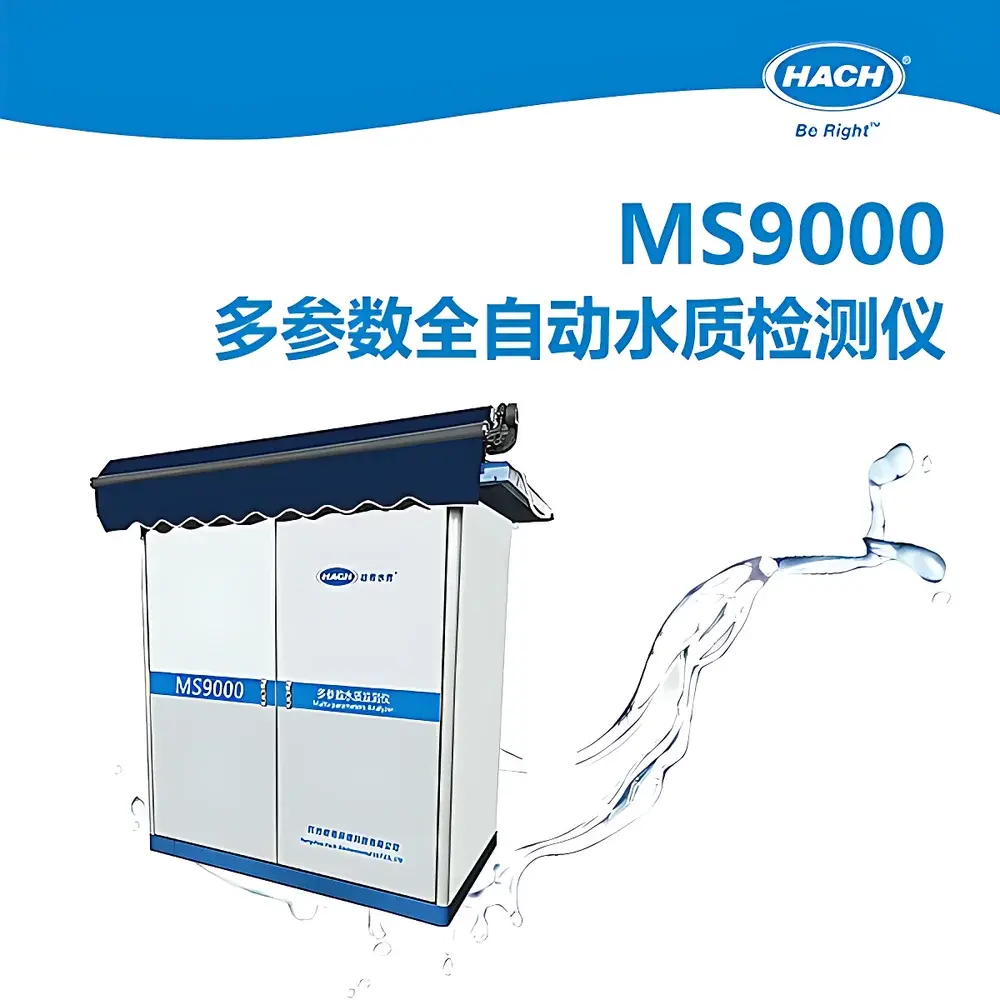
Hach MS9000 Multi-Parameter Water Quality Analyzer
| Brand | Hach |
|---|---|
| Model | MS9000 |
| Origin | Imported |
| Sample Parameters | Temperature, pH, Dissolved Oxygen (DO), Conductivity, Turbidity, Permanganate Index (CODMn), Ammonia-N, Total Phosphorus (TP), Total Nitrogen (TN) |
| Design | Integrated, All-in-One Station for Unmanned Operation |
| Compliance | Designed to support GLP/GMP-aligned data integrity workflows |
| Software Integration | Compatible with Hach EWAS (Environmental Water Analytics System) digital platform |
| Maintenance Interval | Up to 7 days in high-fouling environments |
| Pre-treatment | Integrated mechanical filtration and automatic cleaning system |
| Data Output | Real-time streaming, historical trend export (CSV/PDF), alarm-triggered notifications |
| Certifications | Meets requirements for ISO 5667-22, ASTM D1293, D888, D511, D5907, D6508, and USP <643> where applicable |
Overview
The Hach MS9000 Multi-Parameter Water Quality Analyzer is an integrated, fixed-site monitoring platform engineered for continuous, unattended operation in surface water, urban lakes, constructed wetlands, and impaired water bodies—including black-odor rivers and eutrophic reservoirs. Based on multi-sensor fusion architecture and electrochemical/optical measurement principles, the MS9000 simultaneously acquires nine core parameters: water temperature, pH, dissolved oxygen (DO), electrical conductivity, turbidity, permanganate index (CODMn), ammonia-nitrogen (NH3-N), total phosphorus (TP), and total nitrogen (TN). Each sensor module adheres to standardized detection methodologies aligned with international reference protocols—e.g., amperometric DO sensing per ASTM D888, potentiometric pH per ASTM D1293, and UV-Vis spectrophotometric TP/TN quantification traceable to EPA Method 365.3 and ISO 15681-1. The system’s modular hardware design enables field-deployable configuration without requiring civil infrastructure or permanent power grid integration, supporting solar-battery hybrid operation where needed.
Key Features
- Integrated all-in-one enclosure housing sensors, controller, industrial-grade touchscreen HMI, and embedded computing unit—minimizing footprint (<1.2 m²) and installation complexity.
- Robust anti-fouling architecture: self-cleaning wiper mechanism, ultrasonic probe agitation, and programmable air-pulse backflushing for turbidity and optical sensors.
- Adaptive pre-treatment module featuring stainless-steel mesh filtration (100 µm nominal) and sediment trap—retaining representative sample integrity while excluding macro-debris and floating organics.
- Automated calibration verification: scheduled zero/span checks against NIST-traceable standards; drift compensation algorithms applied in real time to maintain metrological continuity.
- Onboard diagnostic engine performing predictive fault detection—including sensor response lag, signal noise ratio degradation, and flow path obstruction—prior to functional failure.
- IP68-rated submersible sensor array with titanium and PEEK housings, rated for long-term deployment in anaerobic, sulfide-rich, or high-suspended-solid environments.
Sample Compatibility & Compliance
The MS9000 is validated for use across diverse aquatic matrices: oligotrophic lakes, tidal estuaries, stormwater retention basins, and heavily impacted urban canals exhibiting CODMn > 15 mg/L and turbidity > 200 NTU. Its sensor suite complies with performance criteria defined in ISO 5667-22 (water quality sampling — part 22: guidance on on-line analyzers), and individual parameter modules satisfy relevant ASTM, EN, and Chinese HJ standards (e.g., HJ 505–2009 for BOD5-correlated CODMn, HJ 535–2009 for NH3-N). Data acquisition firmware supports audit-trail logging compliant with FDA 21 CFR Part 11 requirements when deployed under GLP or environmental monitoring programs subject to regulatory inspection.
Software & Data Management
The MS9000 operates natively with Hach’s EWAS (Environmental Water Analytics System)—a cloud-enabled analytics platform built on 70+ years of empirical water quality datasets and trained using ensemble machine learning models. EWAS ingests time-series sensor data alongside contextual metadata (e.g., rainfall intensity, upstream discharge, seasonal algal bloom indices) to generate WQI (Water Quality Index) forecasts, anomaly detection alerts, and multi-parameter correlation heatmaps. All raw and processed data are stored in encrypted, timestamped archives with immutable SHA-256 hash verification. Export functions include ISO/IEC 17025-compliant PDF reports, CSV time-series dumps, and RESTful API endpoints for integration into SCADA, GIS, or municipal digital twin platforms.
Applications
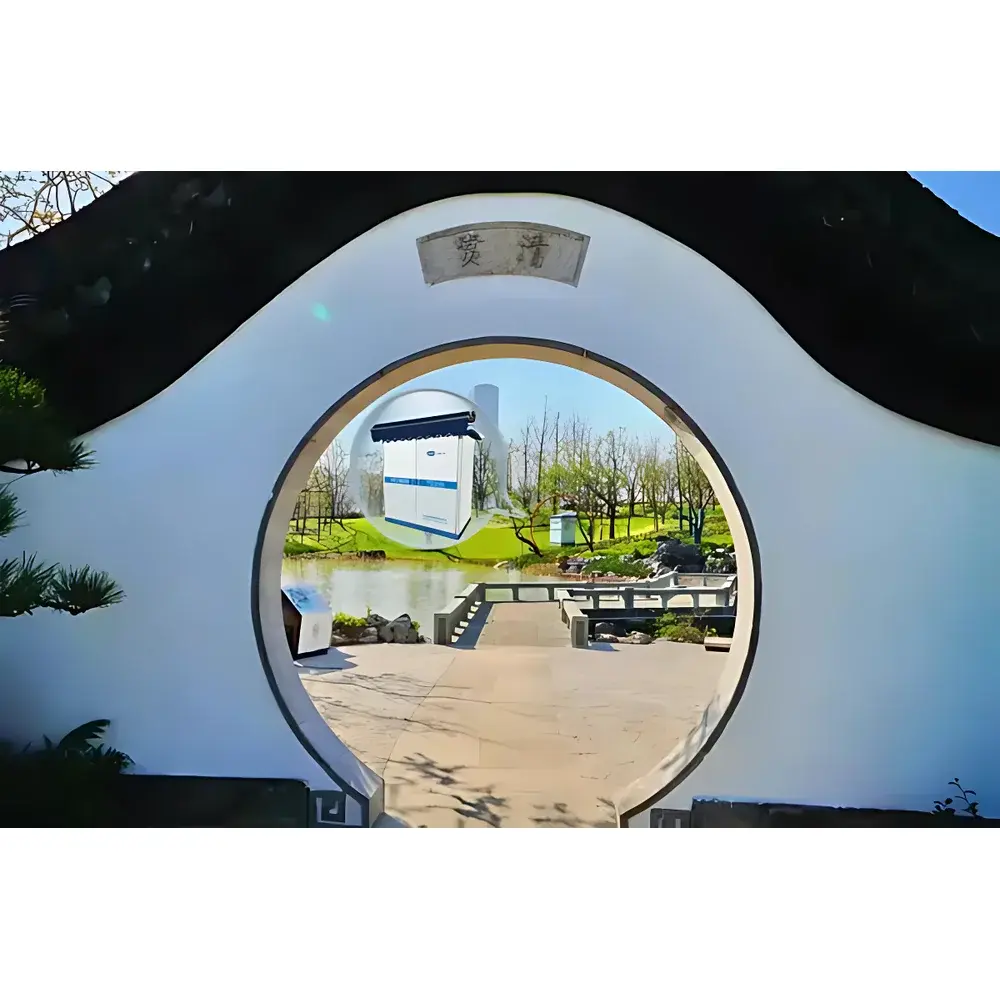
- Real-time monitoring of ecological restoration projects—such as Shanghai Expo Cultural Park’s North Lake—where dynamic feedback on nutrient loading and oxygen dynamics informs adaptive management.
- Early-warning surveillance for black-odor water body remediation programs, leveraging stable NH3-N and DO trending under low-redox conditions.
- Regulatory compliance reporting for municipal wastewater discharge points and river basin authorities operating under China’s “River Chief System.”
- Long-term trend analysis for climate-resilient infrastructure planning, including correlations between conductivity spikes and salinity intrusion events in coastal zones.
- Research-grade validation of biogeochemical models, with synchronized, sub-hourly resolution across redox-sensitive parameters (DO, NH3-N, NO3−) and organic load indicators (CODMn, TP).
FAQ
What communication protocols does the MS9000 support for remote data transmission?
Modbus TCP/IP, MQTT v3.1.1, and HTTPS-based REST API—configurable for secure TLS 1.2 tunneling and integration with third-party telemetry hubs.
Can the MS9000 be retrofitted with additional sensor modules post-installation?
Yes—its modular I/O architecture supports hot-swappable expansion slots for optional parameters including nitrate, chloride, chlorophyll-a, and ORP, subject to physical mounting compatibility and firmware version compatibility.
How is measurement traceability maintained during extended无人值守 operation?
Through periodic automated calibration verifications using onboard standard solutions, combined with digital signature-secured calibration logs that record operator ID, timestamp, reference value, and measured deviation—fully auditable per ISO/IEC 17025 Clause 7.7.
Is the MS9000 suitable for drinking water source monitoring?
While optimized for ambient and impaired waters, it meets sensitivity and precision thresholds required for raw water intake characterization per GB 3838–2002 Class III standards—particularly for TP, TN, and NH3-N screening prior to conventional treatment.
Does the system provide cybersecurity certification documentation?
Firmware v2.4.0 and later comply with IEC 62443-4-2 SL2 requirements; full security assessment reports (including penetration test summaries and secure boot validation) are available under NDA to qualified operators.



