
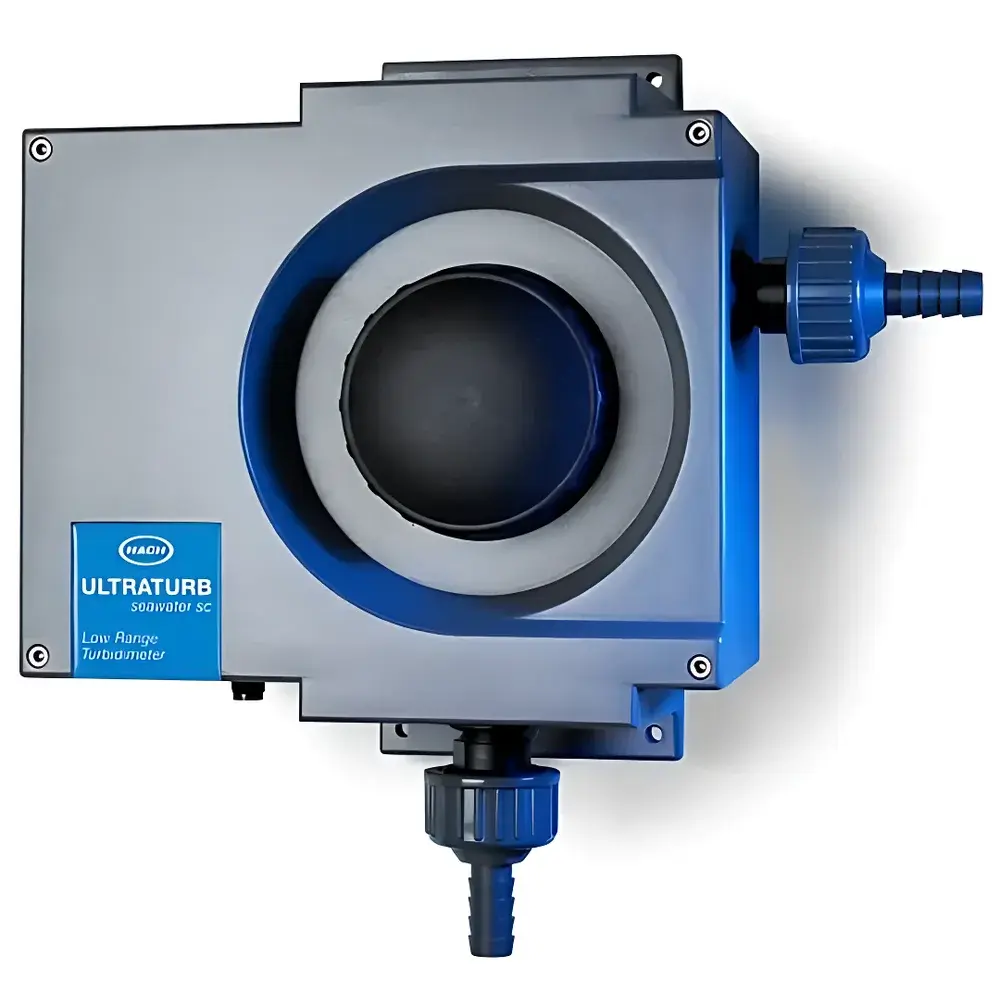
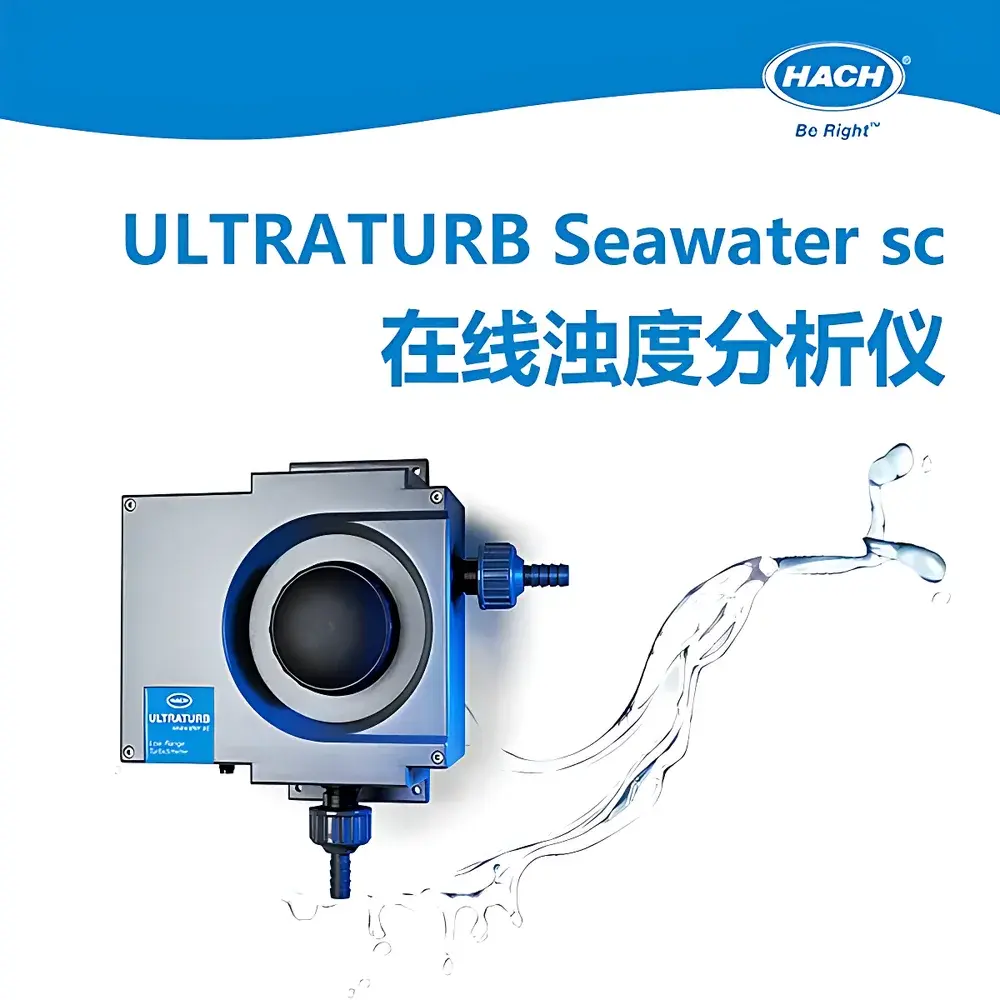
HACH ULTRATURB plus sc Turbidity Analyzer
| Brand | HACH |
|---|---|
| Origin | Imported |
| Manufacturer Type | Manufacturer |
| Model | ULTRATURB plus sc |
| Measurement Range | 0–1000 FNU (NTU) |
| Light Source | 860 nm Infrared LED |
| Detection Principle | ISO 7027 Compliant Ratio Method (90° + 180° Dual-Detector Scattering) |
| Self-Cleaning Option | Magnetic Coupling Brush System |
| Calibration Support | Dry-Check Validation Module |
| Compliance | ISO 7027, EN 27027, US EPA Method 180.1 (for turbidity), GLP/GMP-ready data logging capability |
Overview
The HACH ULTRATURB plus sc Turbidity Analyzer is an industrial-grade, submersible or flow-through turbidity sensor engineered for continuous, high-stability measurement in demanding water and wastewater applications. It operates on the fundamental principle of infrared (IR) light scattering at 860 nm, fully compliant with ISO 7027 and EN 27027 standards. Unlike single-angle nephelometric systems, the ULTRATURB plus sc employs a dual-detector ratio method: one photodetector positioned at 90° captures scattered light intensity, while a second detector at 180° measures backscattered or transmitted reference signal. This architecture inherently corrects for optical path attenuation, window fouling, and color interference—enabling accurate turbidity quantification across a broad dynamic range (0–1000 FNU), from ultrapure process water to highly variable secondary effluent streams.
Key Features
- ISO 7027–compliant optical design with 860 nm infrared LED source ensures immunity to ambient light and minimal interference from sample coloration or dissolved organics.
- Dual-detector ratio measurement eliminates drift caused by lens soiling, aging of optics, or gradual signal attenuation—delivering long-term measurement stability without frequent manual cleaning.
- Integrated magnetic-coupling self-cleaning brush system operates automatically on user-defined intervals; physically sweeps the optical window and measurement chamber without requiring disassembly or chemical agents.
- Dry-Check validation module enables traceable, zero-contact calibration verification—no liquid standards required—supporting routine QA/QC and regulatory audit readiness.
- Robust IP68-rated housing suitable for direct submersion in open-channel, wet-well, or pressurized pipe installations; compatible with HACH SC1000, SC200, and other digital controllers via Modbus RTU or HART protocols.
- Embedded bubble compensation algorithm combines hydrodynamic flow conditioning with real-time signal analysis to detect, suppress, and mathematically offset transient air entrainment artifacts.
Sample Compatibility & Compliance
The ULTRATURB plus sc is validated for use across municipal drinking water treatment, activated sludge clarifiers, membrane filtration monitoring, and industrial pre-treatment basins. It meets ISO 7027 requirements for formazin-based calibration traceability and supports field verification against NIST-traceable standards. Its measurement output is reported in Formazin Nephelometric Units (FNU), equivalent to NTU per US EPA Method 180.1. The instrument’s firmware architecture includes configurable audit trails, user-access levels, and timestamped event logs—fully aligned with GLP and GMP documentation expectations. When integrated into HACH’s SC platform, it supports 21 CFR Part 11–compliant electronic signatures and data integrity controls.
Software & Data Management
Data acquisition and configuration are managed via HACH’s LINK2SC software or native SC controller interfaces. All measurements—including raw detector voltages, compensated FNU values, cleaning cycle timestamps, and diagnostic flags—are stored locally with configurable retention (up to 30 days at 1-min intervals). Export formats include CSV and XML for integration into SCADA, LIMS, or enterprise MES platforms. Firmware updates are performed over-the-air or via USB, with version rollback capability and SHA-256 signature verification to ensure code authenticity.
Applications
- Real-time optimization of coagulation/flocculation dosing in surface water treatment plants.
- Monitoring filter breakthrough events in rapid sand or multimedia filters.
- Effluent quality assurance in tertiary treatment and disinfection stages.
- Process control feedback for membrane bioreactor (MBR) and ultrafiltration (UF) systems.
- Regulatory compliance reporting for NPDES permits and ISO 14001 environmental management systems.
- Industrial pretreatment monitoring in food & beverage, pharmaceutical, and semiconductor manufacturing facilities where particle load impacts downstream processes.
FAQ
What is the difference between FNU and NTU?
Both units quantify turbidity using nephelometric principles; FNU is defined under ISO 7027 (860 nm IR light), while NTU follows US EPA Method 180.1 (white light). For most natural waters, values are numerically equivalent.
Can the ULTRATURB plus sc be used in seawater or high-salinity applications?
Yes—the optical design and stainless-steel wetted parts (316L SS body, sapphire window) resist chloride-induced corrosion; however, biofouling mitigation requires more frequent cleaning cycles in warm marine environments.
Is the dry-check validation module certified for regulatory use?
The Dry-Check module provides documented performance verification per ISO/IEC 17025–aligned internal QA procedures but does not replace periodic calibration with traceable formazin standards as required by drinking water regulations.
How often should the self-cleaning brush cycle be scheduled?
Default interval is every 6 hours; optimal frequency depends on suspended solids concentration and organic loading—typically adjusted between 2–24 hours based on site-specific fouling history.
Does the analyzer support Modbus TCP?
No—only Modbus RTU over RS-485 and HART 7.0; Ethernet/IP or MQTT integration requires a protocol gateway or SC controller with network interface.







