
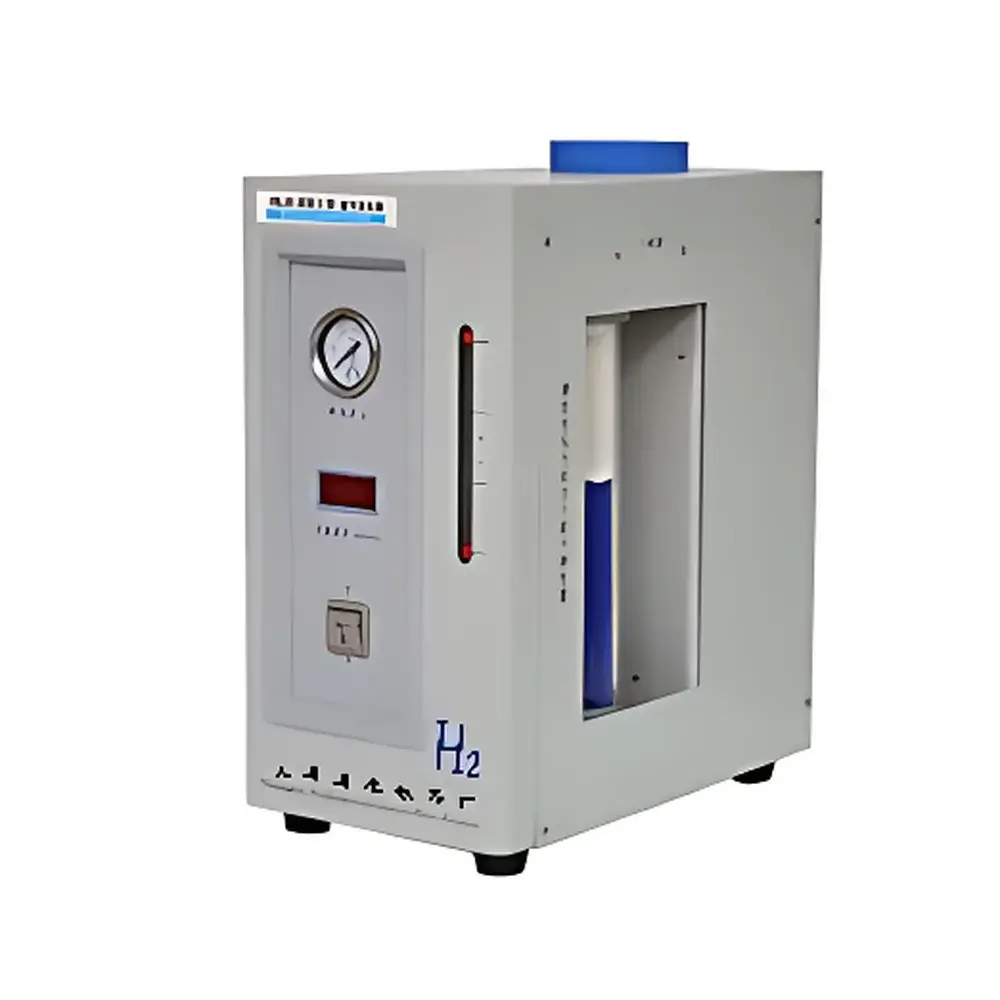
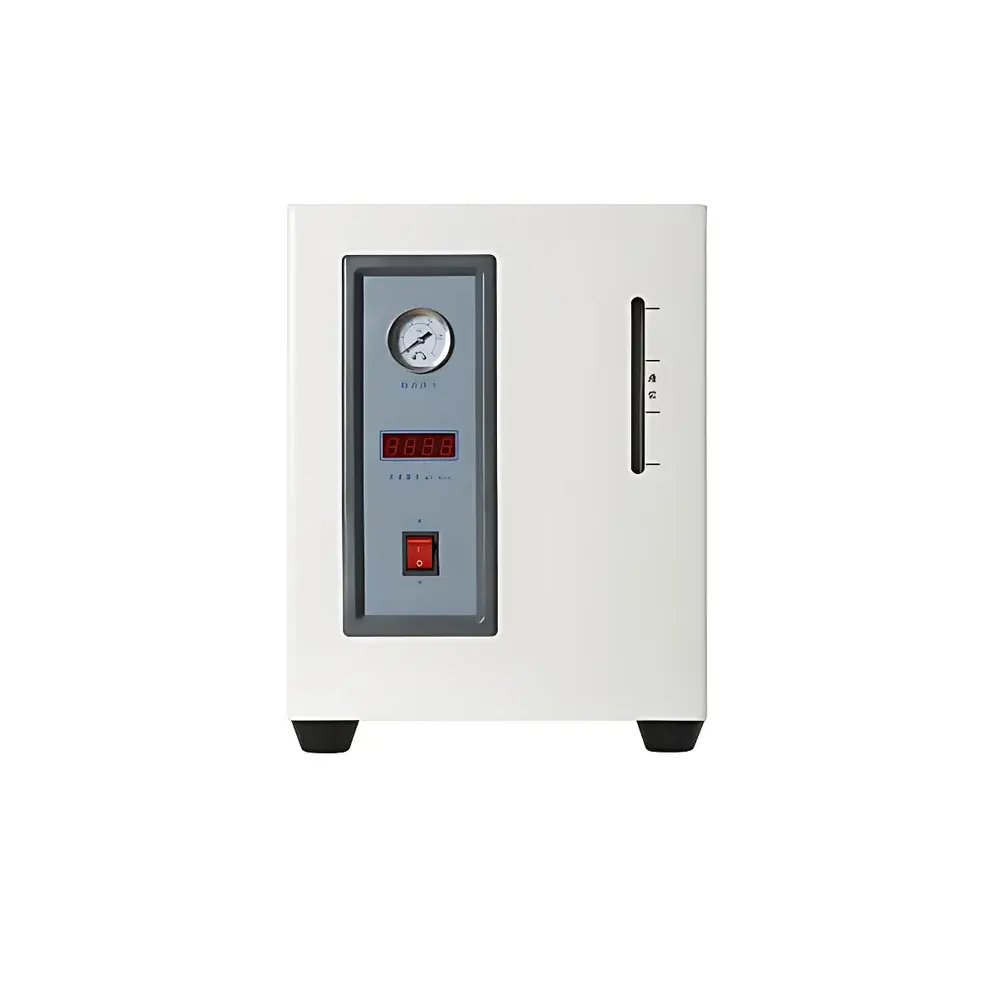
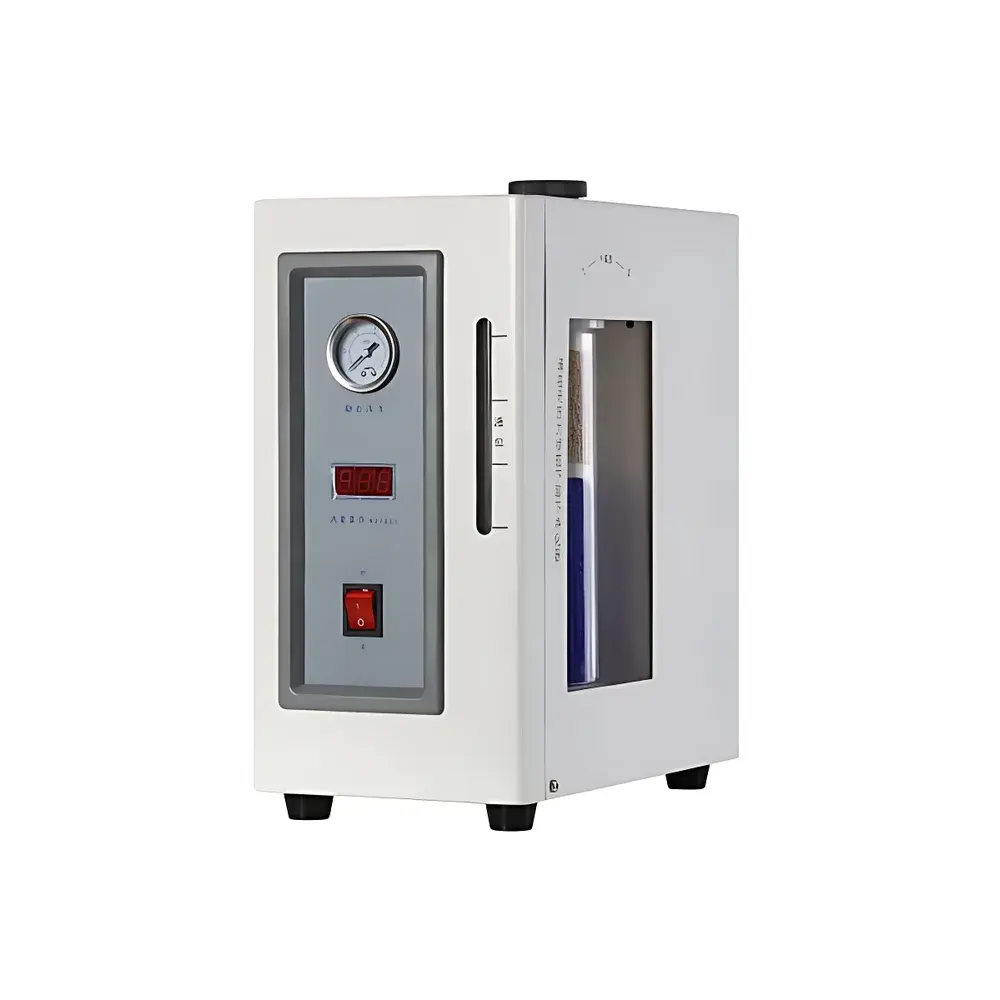
Hailong HLH-300II High-Purity Hydrogen Generator
| Brand | Hailong |
|---|---|
| Origin | Shanghai, China |
| Model | HLH-300II |
| Hydrogen Generation Principle | Alkaline Electrolysis of Deionized Water |
| Output Flow Rate | 0–300 mL/min |
| Output Pressure | 0–0.5 MPa (factory-set at 0.3 MPa) |
| Hydrogen Purity | >99.999% |
| Power Consumption | ≤150 W (220 V ±10%, 50 Hz ±5%) |
| Dimensions | 320 × 180 × 350 mm |
| Weight | 12 kg |
| Operating Environment | 10–40 °C, RH ≤85% |
| Warranty | 1-year full unit, 3-year electrolyzer |
Overview
The Hailong HLH-300II High-Purity Hydrogen Generator is an engineered solution for continuous, on-demand hydrogen supply in analytical laboratories—primarily serving gas chromatography (GC), flame ionization detection (FID), and other instrumentation requiring ultra-high-purity carrier or fuel gas. It employs membrane-separated alkaline electrolysis of deionized water, utilizing a proprietary bucket-type electrolytic cell with imported noble-metal-coated electrodes to ensure stable electrochemical performance and thermal equilibrium during operation. Unlike pressurized cylinder-based systems, this generator eliminates high-pressure storage risks, reduces logistical overhead, and delivers consistent hydrogen at purity levels exceeding 99.999% (5.0 grade per ISO 8573-1:2010 Class 1 for gaseous contaminants). Its design complies with general laboratory safety standards for low-pressure gas generation (<0.5 MPa), incorporating integrated overpressure protection, dual-stage gas purification (including catalytic oxygen removal and molecular sieve drying), and anti-backflow hardware to prevent liquid carryover into connected instruments.
Key Features
- Alkaline electrolysis architecture with temperature-stabilized bucket-type electrolyzer—engineered for long-term operational consistency and extended service life (rated for >5,000 hours under normal use conditions).
- Stainless steel fluidic path throughout the gas generation and delivery system, electropolished and ultrasonically cleaned to minimize metallic leaching and particulate generation.
- Two-stage purification: first-stage palladium-doped catalyst removes residual oxygen; second-stage 5Å molecular sieve ensures dew point < −60 °C and total hydrocarbon content < 0.1 ppmv.
- Intelligent flow tracking: output adjusts automatically from 0 to 300 mL/min in response to downstream demand—no manual throttling required, maintaining constant pressure and purity across variable load conditions.
- Fail-safe design includes pressure relief valve, current-limiting circuitry, electrolyte level sensor, and non-return check valve to eliminate backflow risk—a critical safeguard for GC injectors and detectors.
- Single-fill alkaline electrolyte reservoir; routine maintenance limited to periodic replenishment of deionized water—no chemical replacement or catalyst regeneration needed during standard operation.
Sample Compatibility & Compliance
The HLH-300II is compatible with all major GC platforms requiring hydrogen as carrier (e.g., capillary column applications) or combustion gas (e.g., FID, NPD, HID). It meets baseline requirements for ISO/IEC 17025-accredited testing environments when operated within specified ambient conditions (10–40 °C, RH ≤85%). While not certified to specific regulatory frameworks such as FDA 21 CFR Part 11 or EU GMP Annex 15 out-of-the-box, its stable output, audit-ready operational logs (via optional RS232/USB interface), and traceable maintenance intervals support integration into GLP/GMP workflows where instrument qualification (IQ/OQ/PQ) is performed by end users. Gas purity data are consistent with ASTM D7613–19 specifications for hydrogen used in analytical instrumentation.
Software & Data Management
The HLH-300II operates as a standalone hardware system with front-panel digital display showing real-time pressure, flow rate, and operating status. Optional firmware upgrade supports ASCII-protocol serial communication (RS232 or USB virtual COM port) for integration into centralized lab monitoring systems. Logged parameters—including cumulative runtime, electrolyzer voltage history, and fault event timestamps—can be exported for preventive maintenance scheduling and compliance documentation. No proprietary software installation is required; data parsing is compatible with common laboratory information management systems (LIMS) and electronic lab notebooks (ELN) via standard CSV or Modbus RTU mapping.
Applications
- Carrier gas for capillary GC separations requiring high-resolution, low-noise baselines.
- Fuel gas for flame-based detectors (FID, FPD, NPD), ensuring stable ignition and minimal baseline drift.
- Hydrogen supply for online catalytic reactors, hydrotreating test benches, and small-scale hydrogenation studies.
- Backup or primary source for labs transitioning from cylinder-based infrastructure to sustainable, just-in-time gas generation.
- Research environments where gas purity variability must be eliminated—e.g., isotope ratio MS interfacing, trace VOC analysis, or method validation per USP .
FAQ
What is the expected lifetime of the electrolyzer cell?
Rated for ≥5,000 operating hours under typical GC duty cycles (average 8–10 h/day); performance retention is verified via periodic purity and flow calibration.
Does the generator require external cooling or ventilation?
No active cooling is needed; natural convection suffices given its 150 W thermal load—installation only requires adequate ambient airflow and clearance (>10 cm on all sides).
Can it supply multiple GC instruments simultaneously?
Yes—when paired with a properly sized manifold and pressure-regulated distribution system, it supports up to three mid-range GCs with combined flow demand ≤300 mL/min.
Is deionized water quality strictly defined?
Resistivity must be ≥15 MΩ·cm (ASTM Type I); conductivity < 0.067 µS/cm. Use of substandard water accelerates electrode passivation and increases maintenance frequency.
How is compliance with laboratory safety standards demonstrated?
Built-in overpressure cutoff (0.5 MPa), leak-tested stainless manifolds, CE-marked power supply, and UL-listed internal components meet IEC 61010-1:2010 requirements for laboratory electrical equipment.



