
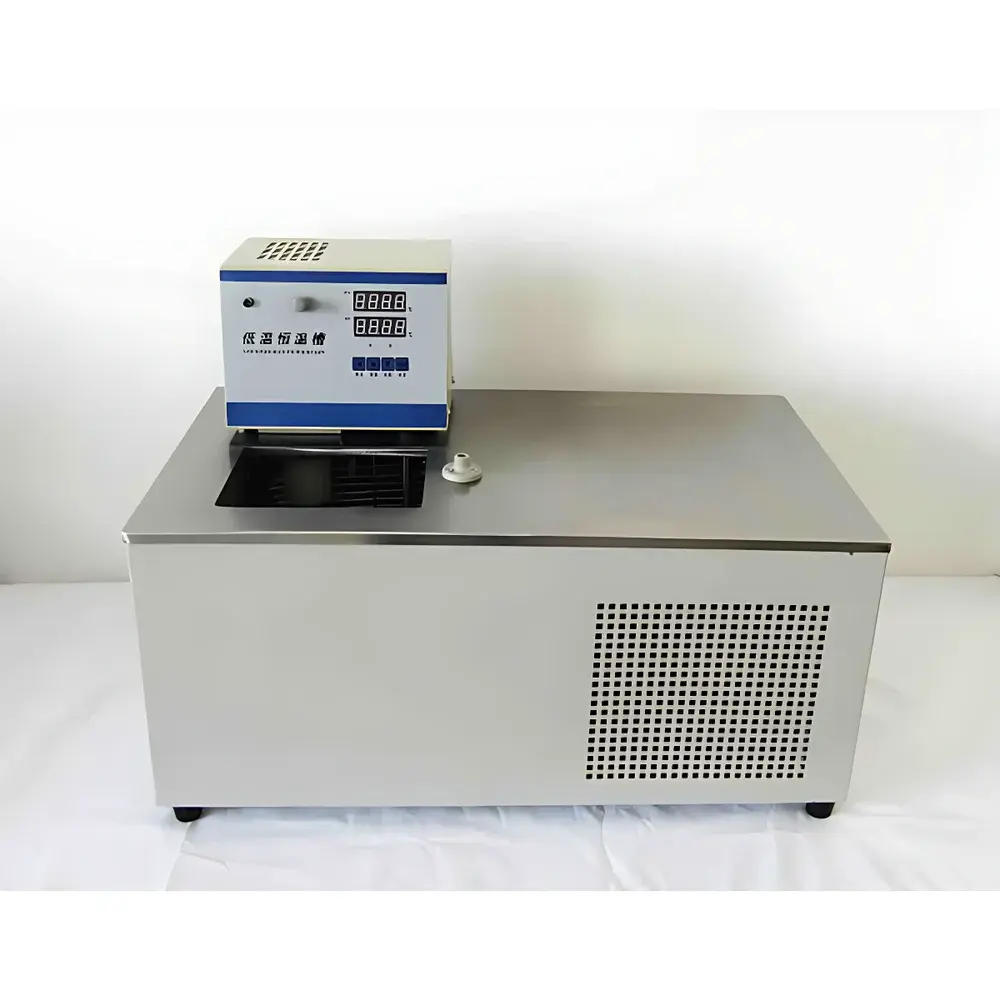
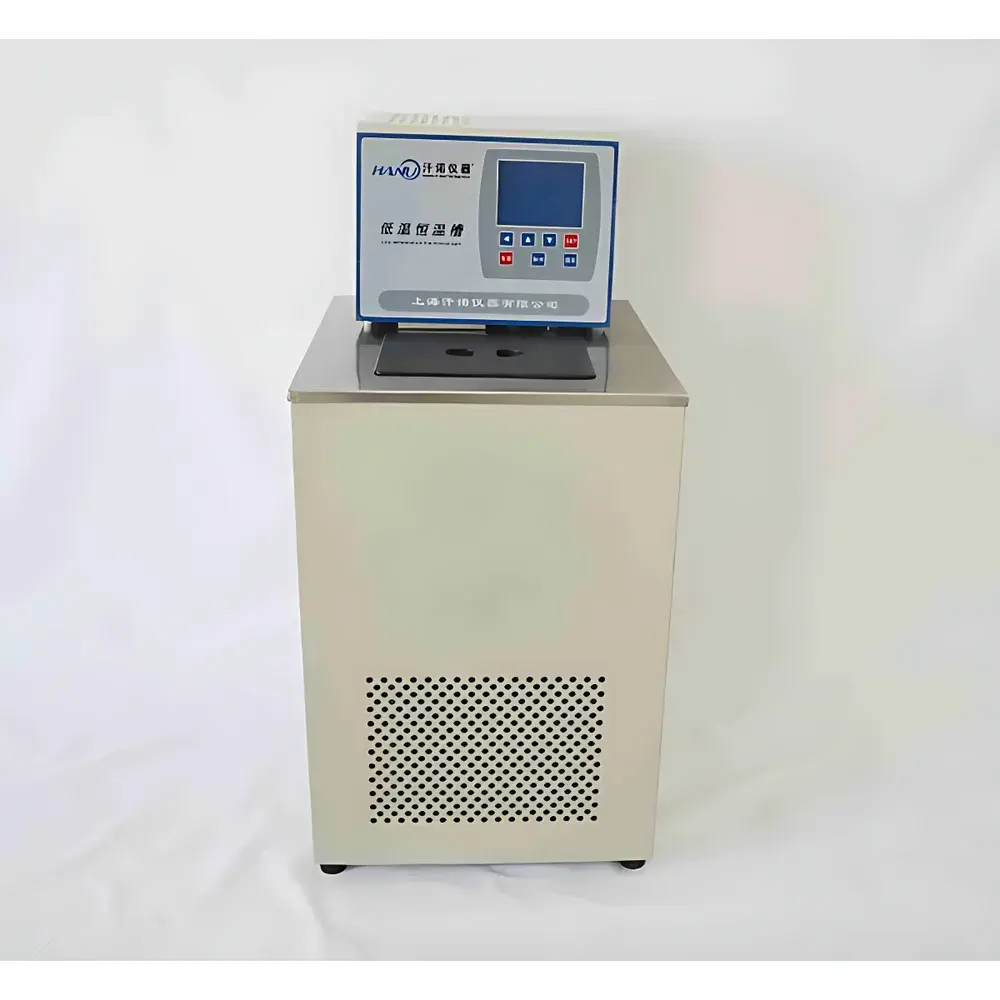
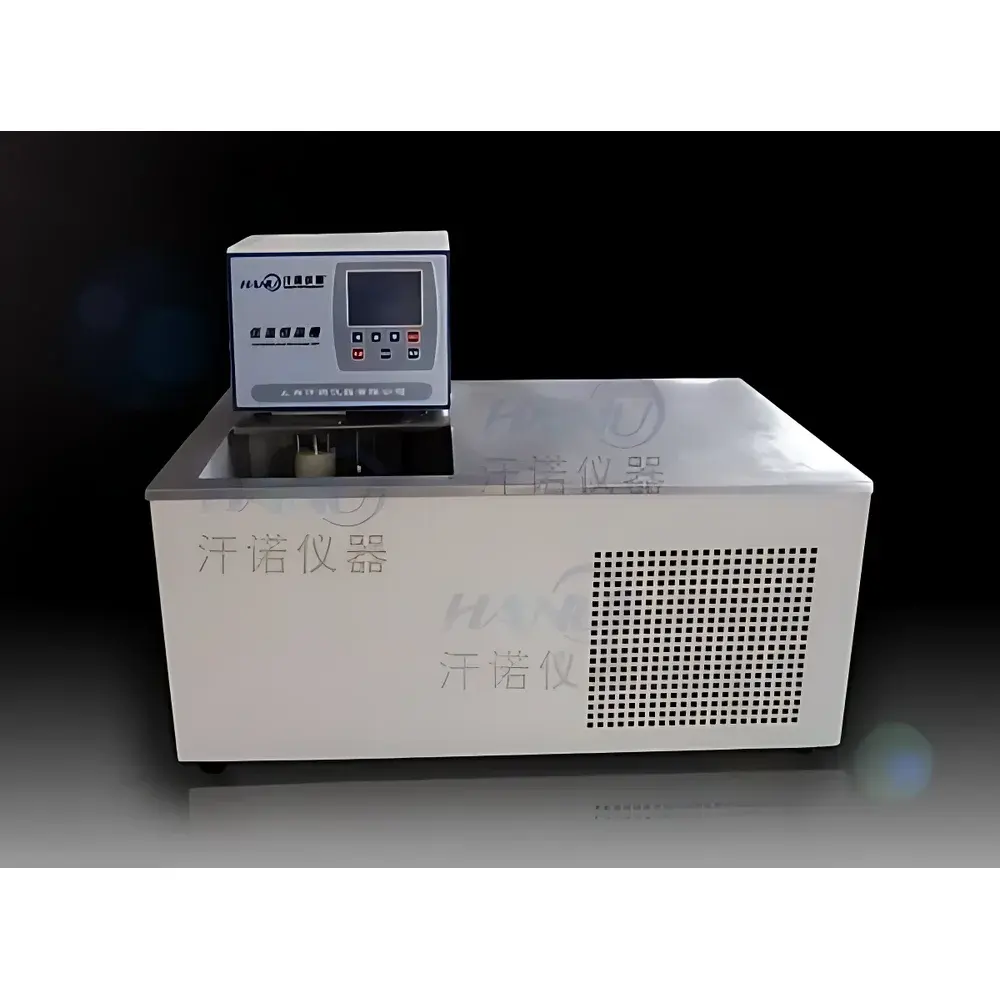
Hanuo HN-05-1L Magnetic Stirring Circulating Constant-Temperature Bath
| Brand | Hanuo |
|---|---|
| Origin | Shanghai, China |
| Model | HN-05-1L |
| Bath Volume | 1 L |
| Temperature Range | −5 °C to 100 °C |
| Temperature Stability | ±0.05 °C |
| Circulation Type | Internal |
| Temperature Control | Refrigeration & Heating |
| Instrument Type | Constant-Temperature Bath |
| Compliance | CE-marked design per IEC 61010-1 for laboratory use |
Overview
The Hanuo HN-05-1L Magnetic Stirring Circulating Constant-Temperature Bath is an integrated thermal management system engineered for precision temperature control and homogeneous mixing of samples in sealed or open vessels. It operates on the principle of forced convection via a built-in high-efficiency centrifugal circulation pump and direct-drive magnetic stirring—eliminating mechanical shaft seals, reducing contamination risk, and enabling operation under inert atmospheres or vacuum conditions. Unlike conventional water baths requiring external stirrers, this unit integrates a rare-earth magnet-coupled stirring mechanism beneath the stainless-steel bath chamber, delivering consistent rotational torque to PTFE-coated stir bars (up to 1000 mL capacity) without compromising thermal uniformity. Its dual-mode thermoregulation combines a hermetically sealed refrigeration circuit with a PID-controlled resistive heating element, allowing stable setpoint maintenance across the full −5 °C to 100 °C range with ≤±0.05 °C stability (measured at sensor location, 30 min after equilibration, ambient 25 °C).
Key Features
- Integrated magnetic stirring system with corrosion-resistant ceramic-coated drive magnet and programmable RPM control (0–1200 rpm), synchronized with temperature regulation
- Stainless-steel 304 bath chamber (1 L usable volume) with reinforced silicone gasket sealing and splash-proof top plate for compatibility with aqueous, ethylene glycol, and low-viscosity silicone oil media
- Dual-sensor feedback loop: Pt100 resistance thermometer (IEC 60751 Class B) for primary temperature measurement and redundant thermal cutoff at 110 °C for overtemperature protection
- Microprocessor-based controller with intuitive membrane keypad interface, real-time digital display (0.1 °C resolution), and adjustable ramp-soak profiles
- Internal recirculation path optimized for laminar flow dynamics—ensuring uniform thermal distribution (ΔT ≤ 0.1 °C across bath volume at 25 °C steady state)
- CE-compliant electrical architecture meeting IEC 61010-1 safety requirements for Laboratory Equipment; includes earth leakage protection and isolated power supply
Sample Compatibility & Compliance
The HN-05-1L supports standard laboratory glassware including round-bottom flasks (up to 1000 mL), beakers, and three-neck reaction vessels. Its open-bath geometry permits direct immersion of temperature probes, pH electrodes, or sampling lines without interference from external motor housings. The unit complies with ISO/IEC 17025-relevant environmental conditioning requirements for calibration labs and meets the mechanical and thermal stability prerequisites outlined in ASTM E2932 (Standard Guide for Selection and Use of Constant-Temperature Liquid Baths). While not certified for GMP production environments, its traceable temperature control, nonvolatile firmware, and absence of consumable parts make it suitable for GLP-regulated research workflows where audit-ready documentation of operating parameters is required.
Software & Data Management
The HN-05-1L operates as a standalone instrument with no proprietary software dependency. All operational parameters—including setpoint, actual temperature, stirring speed, and elapsed time—are logged locally on the front-panel LCD with timestamped history (last 50 entries). Optional RS-232 serial output (DB9 connector) enables integration with third-party data acquisition systems (e.g., LabVIEW, MATLAB, or custom SCADA platforms) for automated logging compliant with FDA 21 CFR Part 11 when paired with validated software and electronic signature protocols. No cloud connectivity or remote firmware updates are implemented—ensuring deterministic behavior and eliminating cybersecurity attack surfaces common in IoT-enabled lab hardware.
Applications
- Kinetic studies requiring simultaneous temperature control and homogenization (e.g., enzyme reaction monitoring, polymerization initiation)
- Calibration of temperature-sensitive sensors (thermocouples, RTDs) against NIST-traceable references
- Solubility determination across defined thermal gradients in pharmaceutical excipient screening
- Viscosity measurements using capillary or rotational viscometers where bath-induced thermal drift must be minimized
- Pre-conditioning of samples prior to FTIR, UV-Vis, or DSC analysis to ensure thermal equilibrium
- Low-temperature crystallization experiments using ethylene glycol/water mixtures (down to −5 °C)
FAQ
What is the maximum recommended viscosity for effective magnetic stirring in this bath?
Stirring efficiency remains optimal for Newtonian fluids up to 500 mPa·s at 25 °C. For higher-viscosity media (e.g., glycerol-water mixtures >1000 mPa·s), reduce setpoint ramp rates and verify homogeneity via independent probe measurement.
Can the unit maintain temperature stability during extended overnight operation?
Yes—tested continuous operation exceeds 120 hours at 40 °C with ≤±0.05 °C deviation. Compressor duty cycle stabilizes after initial cooldown; ambient temperature must remain between 15–30 °C with ≥10 cm rear clearance.
Is external fluid circulation supported?
No—the HN-05-1L is configured exclusively for internal recirculation. Models with external pump ports (e.g., HNJD series) are available separately.
What maintenance intervals are recommended?
Inspect bath fluid level weekly; replace heat-transfer fluid annually or after 2000 operating hours. Clean stainless-steel chamber with deionized water and mild detergent every 3 months; avoid chloride-based cleaners.
Does the unit support protocol-based automation?
Not natively—but RS-232 command syntax (ASCII protocol, 9600 baud) is documented in the technical manual for integration into automated lab systems requiring scheduled temperature ramps or event-triggered stirring activation.



