
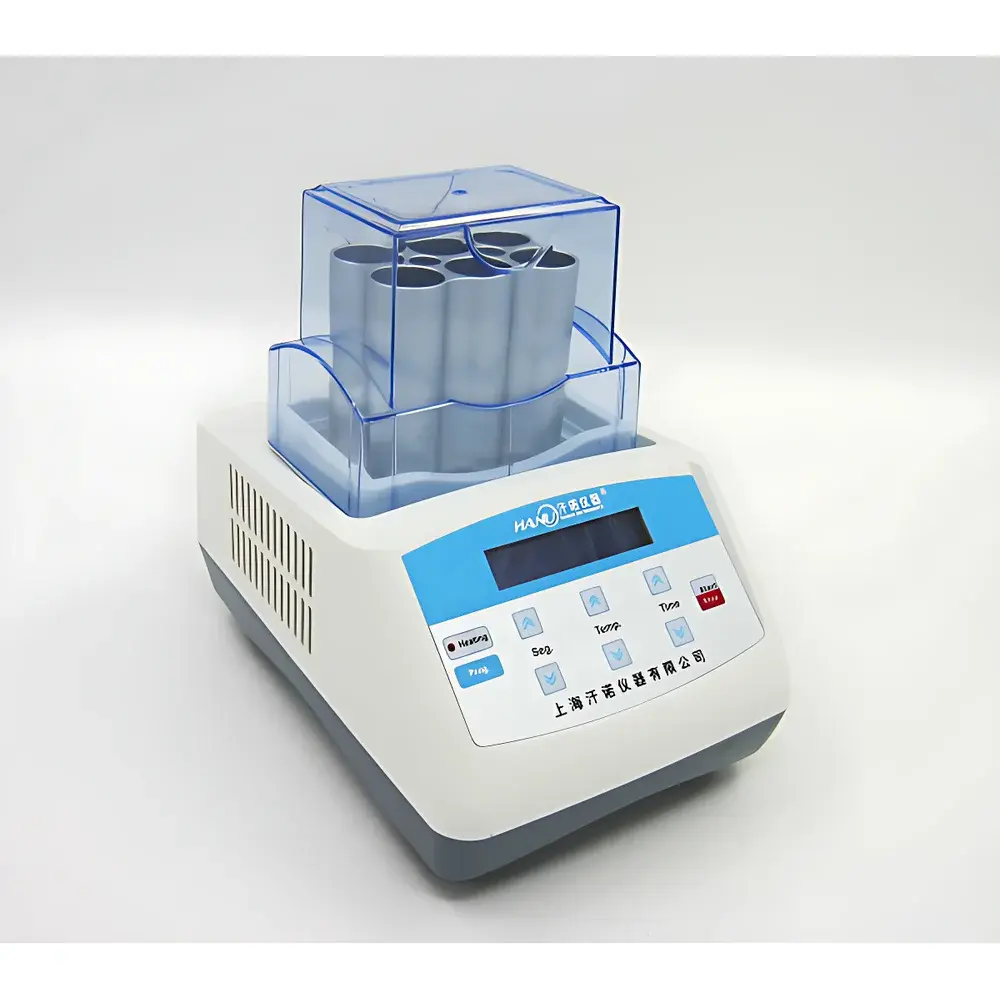
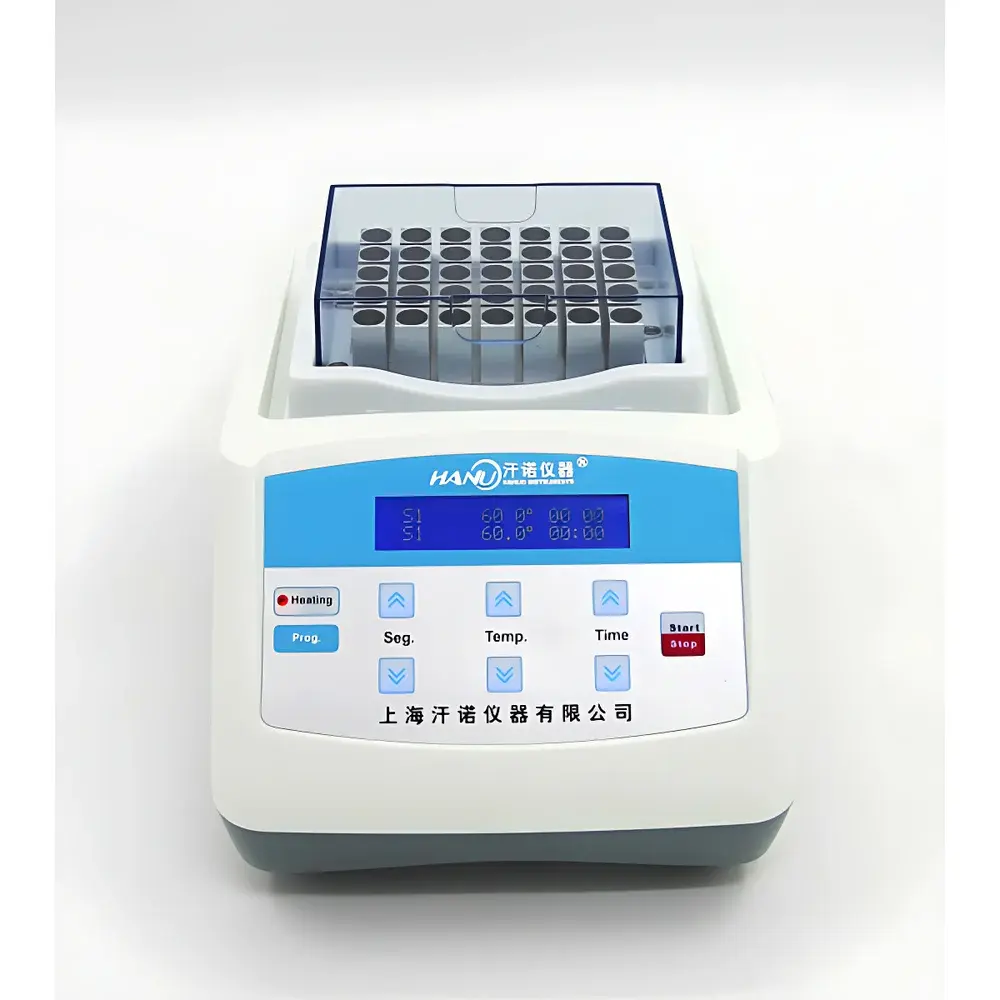
Hanuo HNMTH-100 Heated Vortex Mixer with Temperature Control
| Brand | Hanuo |
|---|---|
| Origin | Shanghai, China |
| Model | HNMTH-100 |
| Instrument Type | Heated Orbital Shaker / Incubating Mixer |
| Timer Range | 0–99 h 59 min, multi-segment programming |
| Oscillation Speed | 300–2000 rpm |
| Oscillation Amplitude | 3 mm (horizontal orbital) |
| Temperature Range | Ambient +5 °C to 100 °C |
| Temperature Uniformity | ≤ ±0.3 °C |
| Temperature Stability | ±0.3 °C |
| Temperature Display Resolution | 0.1 °C |
| Heating Rate | <15 min (20 °C → 100 °C) |
| Power Consumption | 200 W |
| Dimensions (W×D×H) | 270 × 190 × 170 mm |
| Net Weight | 6.8 kg |
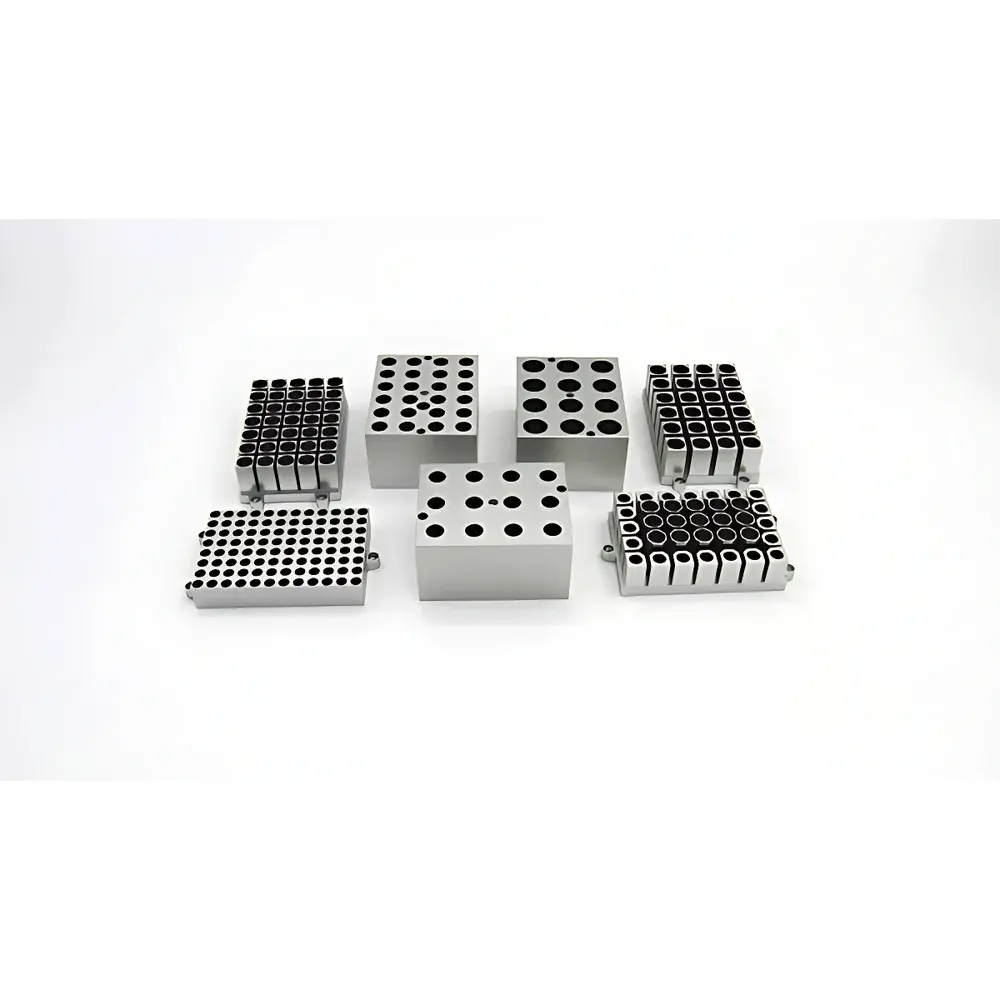
| Platform | Single interchangeable plate (multiple well-format compatible) |
Overview
The Hanuo HNMTH-100 Heated Vortex Mixer with Temperature Control is an integrated laboratory instrument engineered for precision thermal mixing and incubation of biological samples. Unlike conventional shakers or dry-block heaters, the HNMTH-100 combines three core functions—orbital shaking, precise temperature regulation, and programmable incubation—within a single compact platform. It operates on the principle of horizontal orbital motion (3 mm amplitude), delivering consistent kinetic energy transfer to samples while maintaining tight thermal control across the entire working surface. Designed specifically for life science workflows—including PCR setup, enzyme reactions, cell lysis, antibody labeling, and nucleic acid hybridization—the device supports reproducible sample homogenization under defined thermal conditions. Its microprocessor-based architecture ensures linear PID temperature control and stable rotational speed output, minimizing thermal gradients and mechanical drift during extended runs.
Key Features
- Horizontal orbital shaking at 300–2000 rpm with fixed 3 mm amplitude, optimized for uniform mixing in tubes (0.2–50 mL), PCR plates (96-well, 384-well), deep-well plates, and microtiter formats.
- Precise temperature control from ambient +5 °C to 100 °C, with stability of ±0.3 °C and uniformity ≤ ±0.3 °C across the platform—validated per ISO/IEC 17025 traceable calibration protocols.
- Multi-segment timer supporting up to 99 hours 59 minutes; enables complex incubation-mixing sequences (e.g., 10 min at 37 °C/800 rpm → hold at 95 °C for denaturation → cool to 4 °C).
- Auto-restart function after power interruption: resumes original program parameters without manual reconfiguration—critical for unattended overnight assays.
- DC brushless motor drive ensures >20,000-hour operational lifespan, zero maintenance, low electromagnetic interference, and silent operation (<45 dB(A)).
- Integrated safety system includes overtemperature cutoff, motor stall detection, lid-open detection (if applicable), and real-time thermal fault monitoring.
- User-accessible temperature calibration mode allows field adjustment against NIST-traceable reference thermometers (e.g., Fluke 1523 or equivalent).
- Quick-release platform design accommodates standardized interchangeable blocks (e.g., 96-well PCR block, 24 × 1.5 mL tube block, 12 × 15 mL conical block)—all pre-drilled for compatibility with common labware.
Sample Compatibility & Compliance
The HNMTH-100 is validated for use with standard polypropylene, polycarbonate, and glass vessels conforming to ANSI/SLAS dimensional specifications. It meets mechanical and thermal safety requirements outlined in IEC 61010-1:2010 (Laboratory Equipment Safety) and complies with electromagnetic compatibility standards EN 61326-1:2013. While not certified for GLP/GMP production environments, its programmable logging capability, temperature accuracy, and reproducibility support method validation under ISO 15197 (in vitro diagnostic devices) and USP (biological assay preparation). The instrument’s thermal performance has been verified using calibrated PT100 sensors placed at nine positions across the plate surface per ASTM E2251-22 Annex A1 (thermal uniformity testing).
Software & Data Management
The HNMTH-100 operates via an embedded LCD interface with tactile membrane keys and real-time parameter display (temperature, rpm, remaining time). Though it lacks USB or Ethernet connectivity, all operational data—including setpoints, actual readings, alarm events, and runtime logs—are stored internally for up to 1,000 cycles. Users may export event history via optional RS-232 serial interface (with provided terminal software) for audit trail generation compliant with FDA 21 CFR Part 11 requirements when paired with appropriate electronic signature controls. Firmware updates are performed locally using a micro-USB port and vendor-supplied utility—ensuring continued alignment with evolving regulatory expectations.
Applications
- Pre-PCR thermal equilibration and master mix homogenization
- Enzymatic digestion and ligase incubations requiring simultaneous agitation and heating
- Protein denaturation/refolding studies under controlled shear and thermal stress
- Cell suspension maintenance during staining or transfection protocols
- Accelerated solvent extraction from solid-phase matrices (e.g., tissue homogenates)
- Standard curve preparation in ELISA and lateral flow assay development
- Quality control testing of temperature-sensitive reagents (e.g., restriction enzymes, reverse transcriptases)
FAQ
Does the HNMTH-100 support cooling functionality?
No—it is a heated-only system operating from ambient +5 °C to 100 °C. For active cooling, consider dedicated refrigerated shakers or combined thermo-shaking platforms.
Can I use custom aluminum blocks with non-standard well patterns?
Yes—provided the block fits the mounting geometry (140 × 100 mm footprint) and maintains thermal contact integrity. Custom machining must preserve flatness tolerance (≤0.05 mm) to ensure uniform heat transfer.
Is the temperature sensor calibrated at the surface or inside the block?
The built-in PT100 sensor measures temperature at the aluminum plate surface. For accurate sample-core temperature estimation, users should perform empirical correlation using a secondary probe inserted into representative wells.
What is the maximum load capacity for the platform?
The rated load is 2.5 kg distributed evenly. Overloading may compromise temperature uniformity and accelerate mechanical wear on the drive mechanism.
How frequently should temperature calibration be performed?
We recommend annual verification against a certified reference thermometer. More frequent checks are advised if used in regulated environments or following equipment transport or mechanical impact.




