
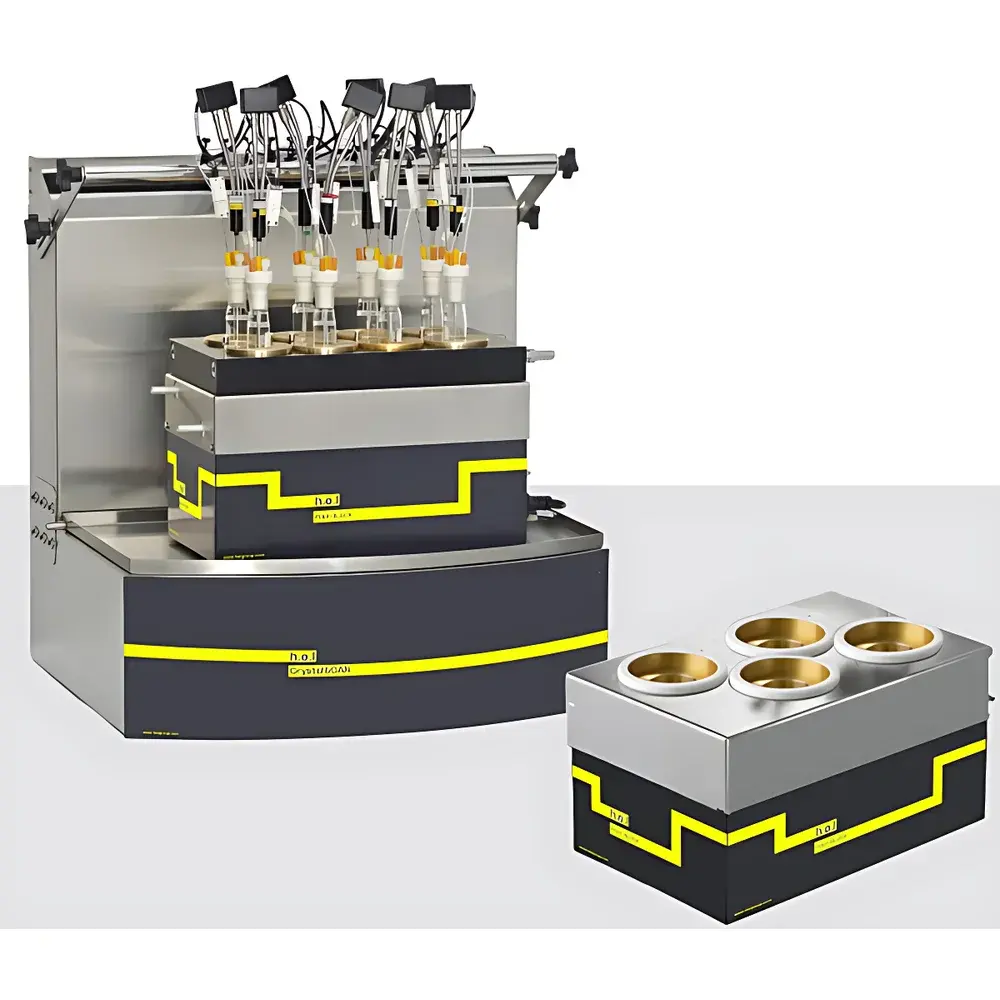
HEL CrystalSCAN & CrystalSCAN Custom High-Throughput Crystallization Reactor System
| Brand | HEL (UK) |
|---|---|
| Origin | United Kingdom |
| Model | CrystalSCAN & CrystalSCAN Custom |
| Reactor Type | Parallel Batch Crystallization Reactor |
| Construction Material | Stainless Steel (316 SS) |
| Operating Pressure | Up to 20 bar (High-Pressure Capable) |
| Working Volume Range | 2–500 mL |
| Temperature Range | –80 °C to +250 °C |
| Number of Independent Reaction Zones | 4 or 8 |
| Stirring Method | Suspended Mechanical Impeller (configurable) / Magnetic Stirring (for small vials) |
| Max. Viscosity Handling | 1000 cP |
| Compliance | Designed for GLP/GMP-aligned process development environments |
| Software Control | Integrated PC-based control with real-time data logging and audit trail capability |
Overview
The HEL CrystalSCAN and CrystalSCAN Custom are modular, high-throughput crystallization reactor systems engineered for rigorous thermodynamic and kinetic characterization of solid-form transitions in pharmaceutical, fine chemical, and materials science R&D. Built upon the proven PolyBlock parallel reaction platform, these systems implement controlled cooling, antisolvent addition, and isothermal evaporation protocols to quantitatively determine solubility curves, metastable zone width (MSZW), nucleation onset temperatures, and crystal growth kinetics across multiple samples simultaneously. Each reaction zone operates with fully independent temperature control, stirring actuation, and process monitoring—enabling statistically robust experimental design (DoE) without cross-contamination or thermal coupling. The system’s architecture supports both batch and semi-batch crystallization workflows under ambient or elevated pressure conditions, making it suitable for early-stage salt screening, polymorph assessment, and robustness testing per ICH Q5A and Q6A guidelines.
Key Features
- Fully independent thermal control per zone: ±0.1 °C stability over –80 °C to +250 °C; inter-zone ΔT >100 °C possible
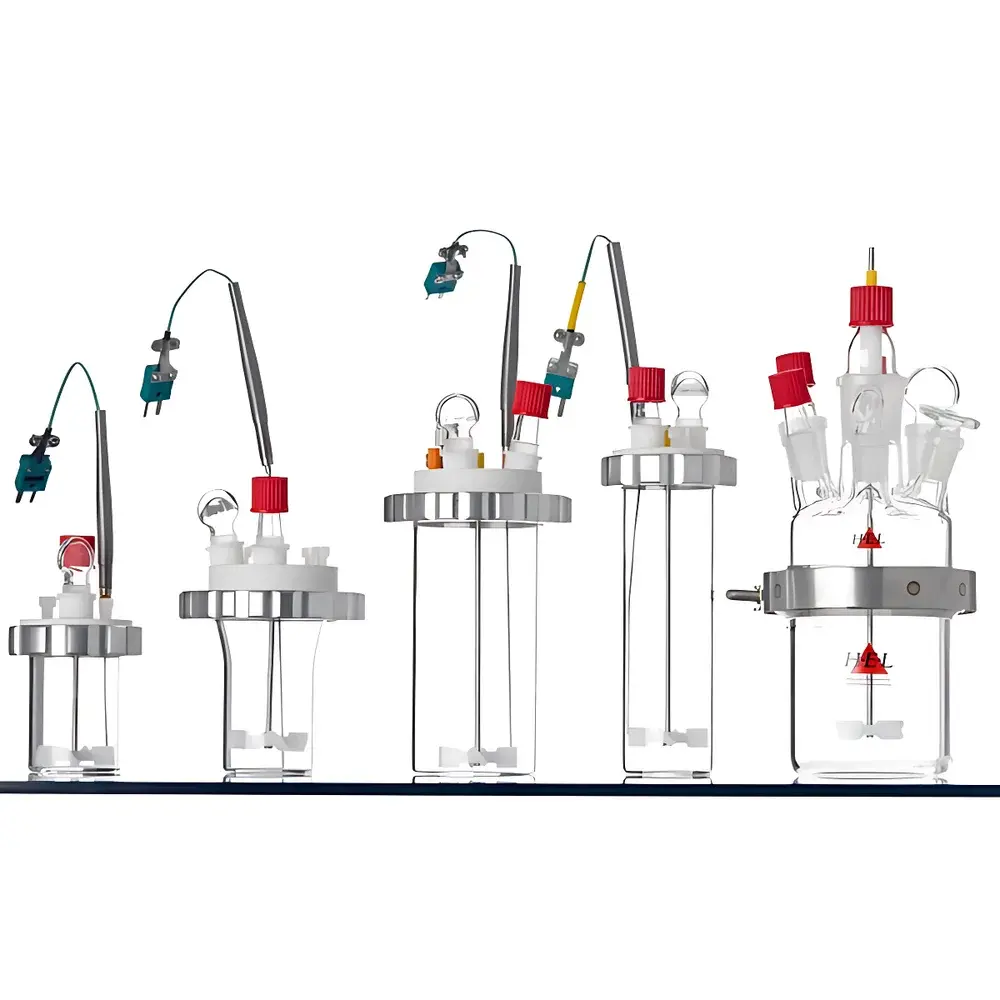
- Modular volume configuration: accommodates 2–500 mL working volumes via interchangeable vessels—micro-vials (2–5 mL), standard glass reactors (20–100 mL), and large-scale stainless-steel vessels (up to 350 mL)
- Dual-mode agitation: suspended mechanical impellers (turbine, propeller, or pitched-blade) for scalable mixing fidelity; optional magnetic stir bars for low-volume vial-based screening
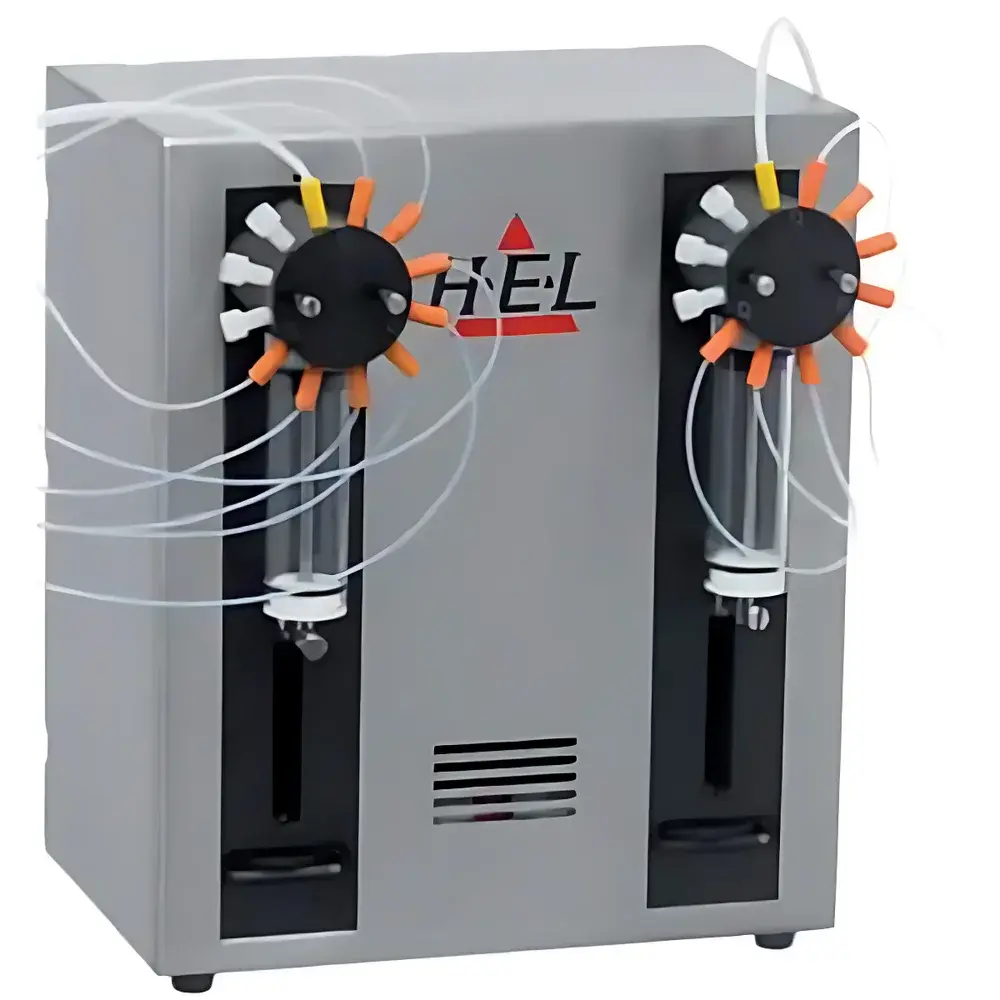
- Automated liquid handling: precision syringe pumps with multi-channel dispensing for controlled antisolvent addition, dilution, or reagent dosing—synchronized across all zones
- Integrated process analytics interface: supports plug-and-play connectivity with FBRM (focused beam reflectance measurement), ATR-FTIR, UV-Vis spectroscopy, pH probes, and turbidity sensors
- Pressure-rated operation: compatible with sealed, jacketed, or gas-purged reactors rated up to 20 bar (gauge); includes pressure relief and leak detection pathways
- GLP-compliant software architecture: full 21 CFR Part 11 compliance option with electronic signatures, user access levels, and immutable audit trails
Sample Compatibility & Compliance
The CrystalSCAN platform accepts a broad spectrum of crystallizable systems—including APIs, chiral intermediates, metal-organic frameworks (MOFs), and inorganic salts—in organic solvents, aqueous buffers, and mixed solvent systems. Vessel materials include borosilicate glass (Duran®), Hastelloy C-276 (for corrosive media), and electropolished 316 stainless steel (for high-pressure or high-temperature applications). All wetted components meet USP Class VI biocompatibility requirements. The system adheres to ISO 17025 principles for method validation and supports documentation packages aligned with FDA, EMA, and PMDA regulatory submissions. Calibration procedures follow ASTM E2847 (temperature uniformity) and ISO 8573-1 (compressed air purity, where applicable).
Software & Data Management
Control and analysis are managed through HEL’s proprietary Synthware™ software suite, running on Windows-based industrial PCs. The interface provides real-time visualization of temperature profiles, stirring torque, pump dispense logs, and sensor-derived parameters (e.g., turbidity onset, FBRM chord length distribution). Experimental methods are saved as reusable templates with embedded SOPs, version-controlled metadata, and automatic report generation (PDF/CSV). Raw data files are stored in HDF5 format for long-term integrity and third-party interoperability (e.g., MATLAB, Python pandas). Optional integration with LIMS and ELN platforms is supported via RESTful API and OPC UA protocols.
Applications
- Polymorph and hydrate screening under varied supersaturation and cooling rate conditions
- MSZW determination for crystallization process design and scale-up risk assessment
- Salt selection studies with simultaneous pKa–solubility mapping
- Kinetic modeling of nucleation and growth using in situ FBRM and Raman
- Process analytical technology (PAT) implementation for QbD-driven crystallization control strategies
- Thermodynamic modeling input generation (e.g., NRTL, UNIFAC parameter fitting)
- Crystallizer design validation against CFD-simulated mixing and heat transfer profiles
FAQ
Can the CrystalSCAN operate under inert atmosphere or elevated pressure?
Yes—each reaction zone can be individually purged, sealed, or pressurized up to 20 bar using compatible vessel lids, gas manifolds, and pressure transducers.
Is remote monitoring and control supported?
Yes—Synthware™ supports secure remote desktop access and real-time dashboard viewing via TLS-encrypted web interface.
What level of temperature uniformity is achieved within a single vessel?
Typical axial/radial gradients are ≤±0.3 °C at steady state (verified per ASTM E2847), depending on vessel geometry and thermal load.
Are validation documents (IQ/OQ/PQ) available?
Comprehensive qualification packages—including factory acceptance tests, installation protocols, and operational checklists—are provided with each system.
Can existing FBRM or spectroscopic probes be retrofitted?
Yes—the system features standardized 1/4″–28 UNF and M12 threaded ports with optical feedthroughs and IP67-rated connectors for third-party sensor integration.



