Hexagon Leica ATS600 Absolute Laser Tracker
| Brand | Leica |
|---|---|
| Model | ATS600 |
| IP Rating | IP54 |
| Operating Temperature | 0 °C to 40 °C |
| Relative Humidity | ≤95% (non-condensing) |
| Laser Class | Class 2 per IEC 60825-1:2014 |
| Environmental Monitoring | Integrated temperature, pressure, and humidity sensors |
| Power Options | Battery-powered operation supported |
| Connectivity | Smart wireless interface |
| Gravity Alignment | Built-in automatic gravity alignment |
| Enclosure Design | All-in-one ruggedized architecture |
Overview
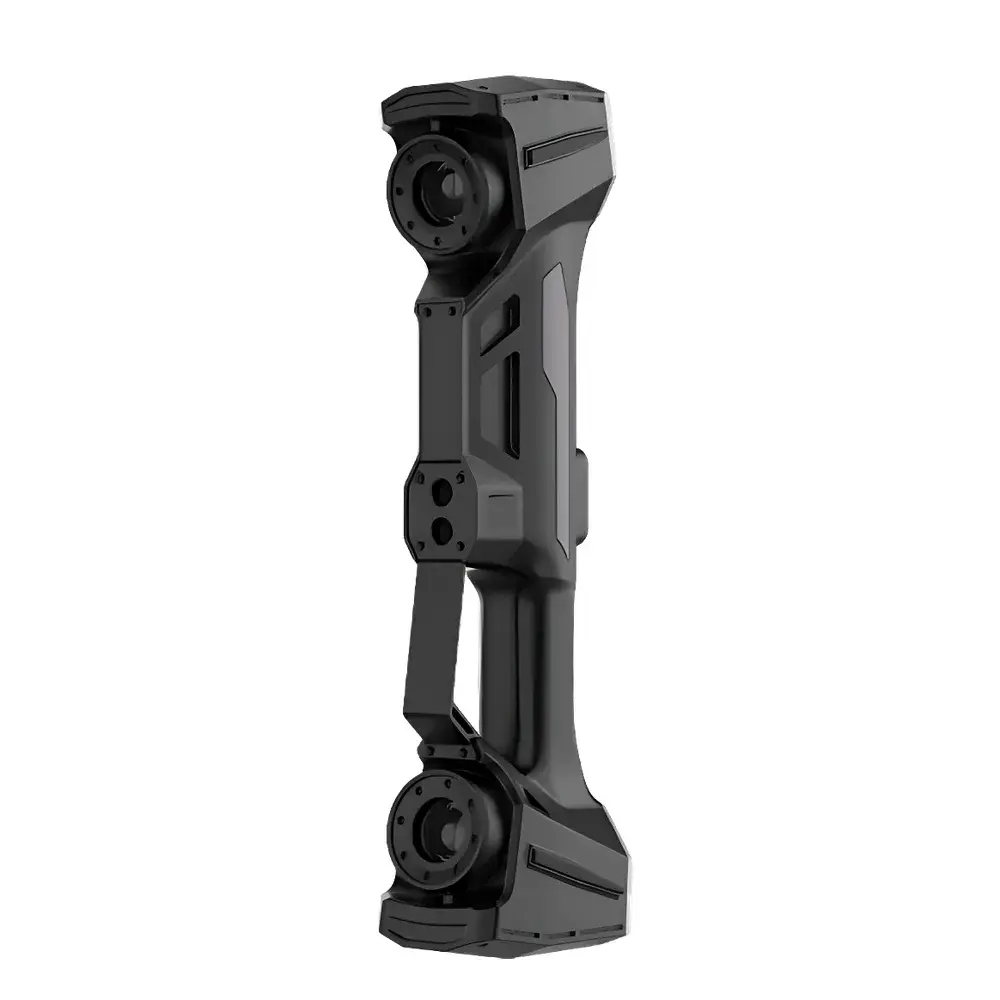
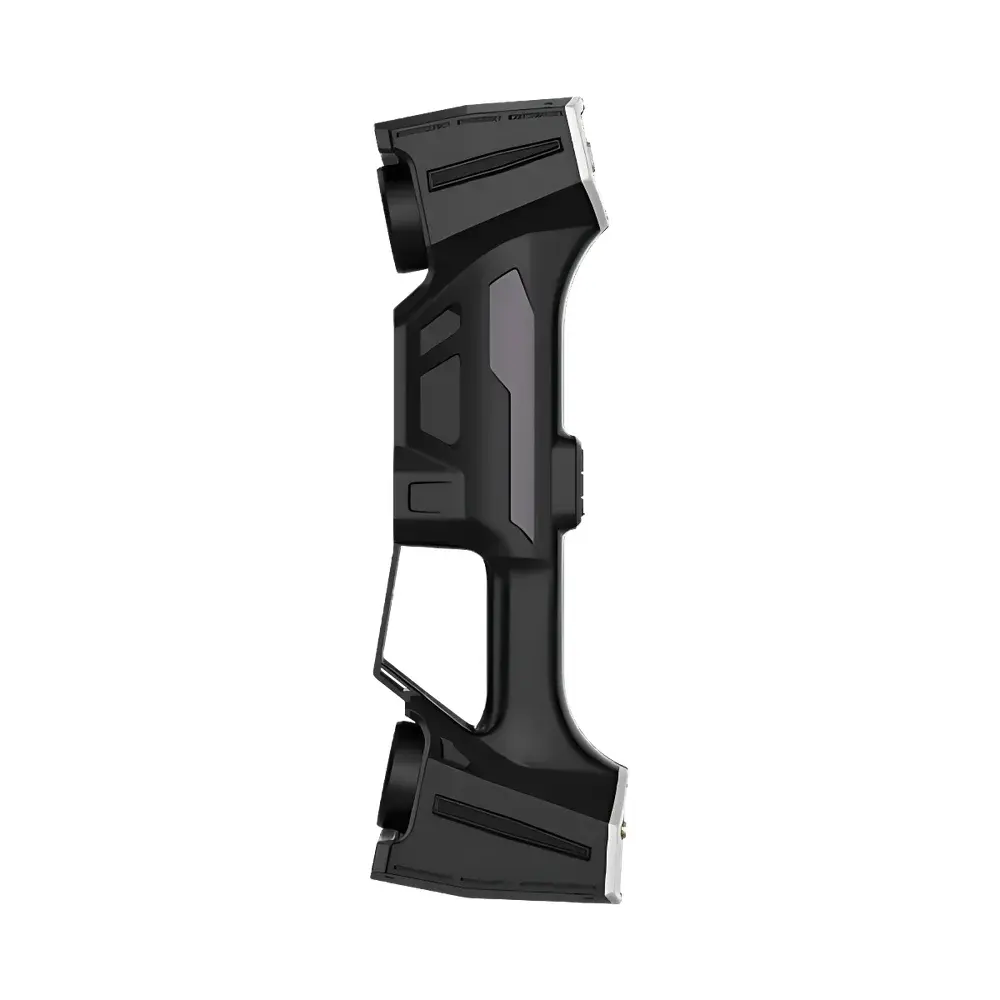
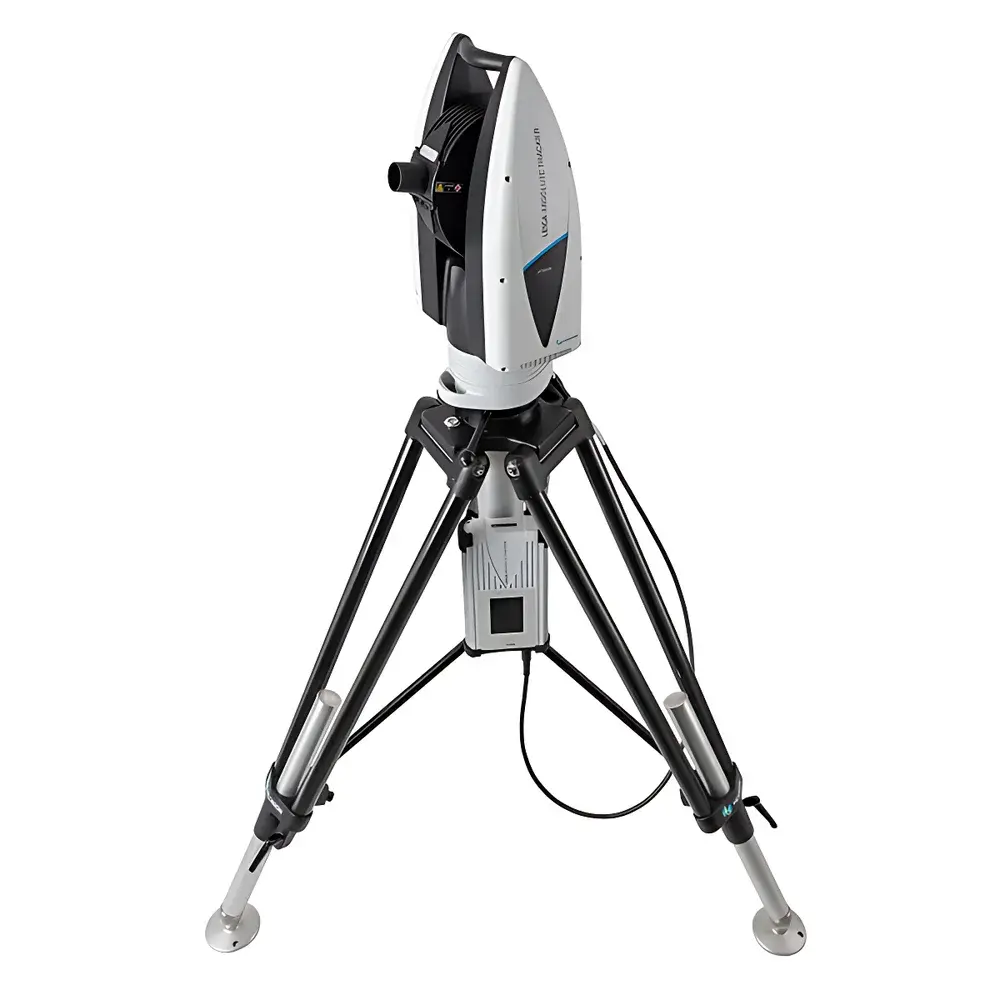
The Hexagon Leica ATS600 Absolute Laser Tracker is a metrology-grade 3D coordinate measurement system engineered for high-accuracy, large-volume geometric inspection. Unlike conventional laser trackers requiring retroreflective targets (e.g., spherically mounted retroreflectors or SMRs), the ATS600 integrates an absolute distance meter (ADM) with a high-resolution panoramic imaging system and a precision angular encoder assembly—enabling direct, targetless surface scanning at distances up to 60 meters. Its core measurement principle combines interferometric angular tracking with absolute distance measurement via phase-shift ADM technology, delivering traceable, drift-free 3D point cloud acquisition without reliance on mechanical homing or target reacquisition. Designed for aerospace, automotive, energy, and heavy machinery manufacturing, the ATS600 supports both dynamic single-point probing and dense non-contact surface digitization within a unified hardware platform—making it a foundational instrument for digital twin validation, tooling alignment, and as-built verification under ISO 10360 and VDI/VDE 2617 standards.
Key Features
- Absolute Targetless Scanning: Eliminates dependency on SMRs or handheld probes; captures surface geometry directly using integrated panoramic camera-assisted beam steering and real-time ADM feedback.
- Configurable Scan Parameters: Users define point density, scan velocity, and field-of-view region either via software selection or camera-guided ROI definition—optimizing throughput without compromising metrological integrity.
- Unified Measurement Architecture: Seamlessly alternates between high-precision SMR-based point measurement and rapid area scanning in a single workflow—reducing setup time and minimizing operator intervention.
- Ruggedized Field Operation: IP54-rated enclosure ensures reliable performance in production-floor environments; integrated environmental monitoring (temperature, barometric pressure, relative humidity) enables real-time atmospheric correction per ISO 10360-10.
- Autonomous Operational Capabilities: Features PowerLock™ target reacquisition, battery-powered mobility, smart wireless synchronization with Leica Metrology Software (LMS), and automatic gravity alignment for rapid deployment across uneven surfaces.
- All-in-One System Design: Integrates laser source, angular encoders, imaging sensor, environmental sensors, and control electronics into a single compact unit—minimizing cabling, calibration dependencies, and thermal drift sources.
Sample Compatibility & Compliance
The ATS600 is optimized for measuring metallic, composite, and painted surfaces typical of large-scale industrial components—including aircraft fuselage sections, wind turbine blades, ship hull segments, and injection molding tools. Its Class 2 laser complies with IEC 60825-1:2014 and meets occupational safety requirements for uncontrolled environments. The system adheres to international metrological standards including ISO 10360-1 (acceptance and reverification tests), ISO 10360-10 (laser tracker performance verification), and VDI/VDE 2617-12 (geometric accuracy assessment). Data acquisition workflows support GLP/GMP-aligned audit trails when used with Leica’s LMS software configured for FDA 21 CFR Part 11 compliance.
Software & Data Management
The ATS600 operates exclusively with Leica’s Metrology Software (LMS), a modular platform supporting real-time visualization, GD&T evaluation (per ASME Y14.5 and ISO 1101), comparison against CAD models, and automated reporting. Scan data is natively exported in industry-standard formats including .STL, .PLY, and .XYZ, enabling interoperability with PolyWorks, Verisurf, and Metrolog X4. LMS provides full traceability: each measurement includes timestamp, environmental conditions, instrument status logs, and user authentication metadata. Optional modules support statistical process control (SPC) integration, robotic path validation, and cloud-based collaborative review via Hexagon’s Digital Solution Platform.
Applications
- Aerospace: Tooling certification, wing spar alignment, fuselage section gap-and-flush analysis
- Automotive: Body-in-white dimensional validation, die tryout verification, battery pack housing inspection
- Energy: Wind blade root geometry verification, turbine casing concentricity checks
- Heavy Engineering: Shipyard panel alignment, crane rail straightness certification, structural steel fabrication QA
- Research & Development: Reverse engineering of legacy parts, thermal deformation studies, multi-sensor fusion calibration
FAQ
Does the ATS600 require SMRs for all measurements?
No—the ATS600 performs both targetless surface scanning and traditional SMR-based point measurement. SMRs remain optional for highest-accuracy single-point verification or when measuring highly reflective or specular surfaces.
What is the maximum effective scanning range without target assistance?
Up to 60 meters under standard ambient conditions (20 °C, 1013 hPa, 50% RH); range may vary based on surface reflectivity, ambient light, and air turbulence.
Can the ATS600 be used outdoors?
It is rated IP54 and designed for controlled industrial environments; outdoor use is possible under stable weather conditions but requires environmental monitoring and atmospheric compensation enabled in LMS.
Is battery operation certified for uninterrupted measurement cycles?
Yes—integrated lithium-ion battery supports ≥4 hours of continuous scanning or point measurement; hot-swappable battery option available for extended deployments.
How does the system handle thermal drift during long-duration scans?
Real-time environmental sensors feed atmospheric correction algorithms; combined with the all-in-one mechanical design and low-drift ADM optics, thermal stability meets ISO 10360-10 repeatability requirements over 8-hour shifts.