
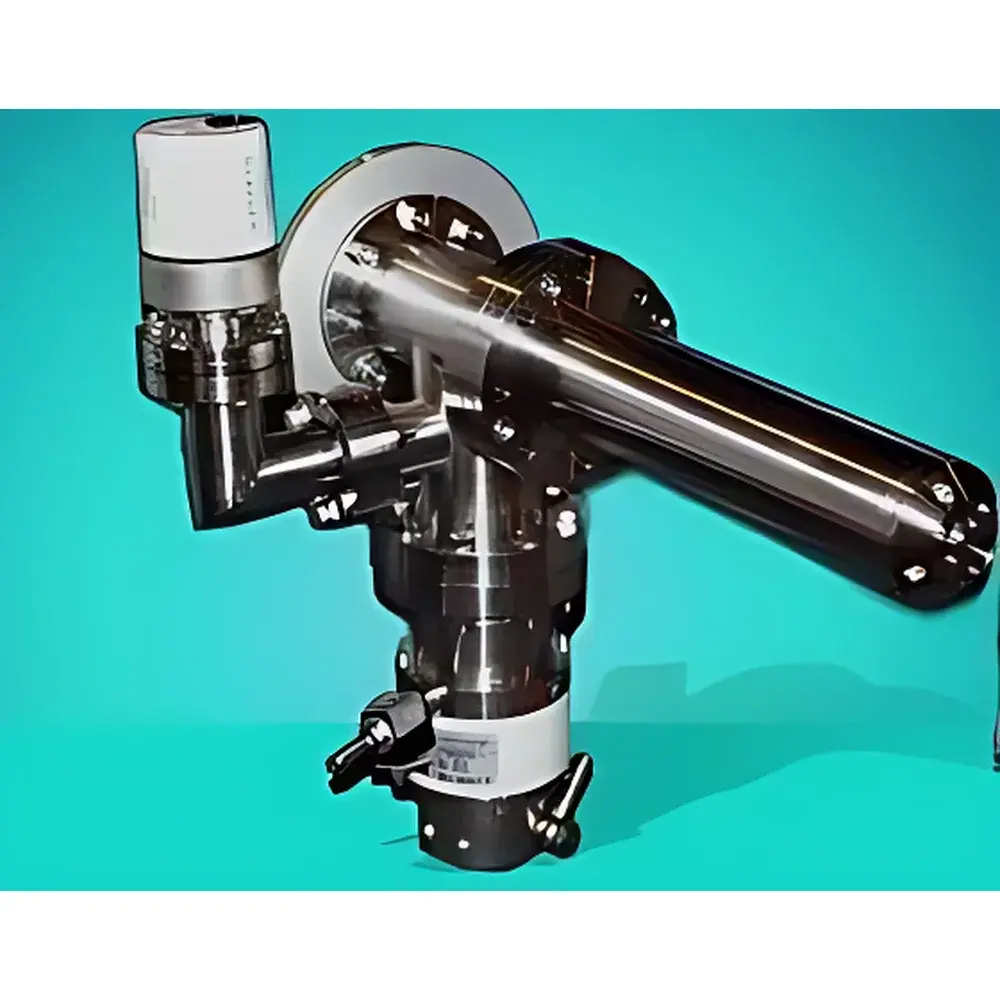
Hiden IMP Ion Milling Probe for End-Point Detection in Plasma Etching Processes
| Brand | Hiden |
|---|---|
| Origin | United Kingdom |
| Model | IMP |
| Pump Configuration | Integrated Differential Pumping Manifold |
| Mass Range | Up to 300 amu (Triple-Filtered Quadrupole) |
| Detector | Pulsed Ion Counting System |
| Energy Analyzer | Built-in with Ion Optics |
| Pressure Protection | Penning Gauge + Interlock Circuitry |
| Long-Term Stability | < ±0.5% peak height drift over 24 h |
| Communication Interfaces | RS232, RS485, Ethernet |
| Control Software | MASsoft with DDE support, Parallel Digital I/O |
| Compliance | Designed for integration into ISO/IEC 17025-compliant process monitoring environments |
| Application Scope | Real-time endpoint detection, target purity verification, residual gas analysis, leak detection, SPC-driven etch process control |
Overview
The Hiden IMP Ion Milling Probe is a purpose-engineered differential-pumping secondary ion mass spectrometer (SIMS/MS) designed for real-time, in-situ monitoring of plasma etching processes in semiconductor fabrication, MEMS development, and advanced thin-film research. Unlike conventional residual gas analyzers or standalone quadrupole mass spectrometers, the IMP integrates a robust ion optical train—including an energy-filtering analyzer and internal ion source—directly coupled to the etch chamber via a dedicated flange-mounted differential pumping manifold. This architecture enables selective detection of sputtered secondary ions and neutral species generated during ion milling, with high signal-to-noise ratio and minimal background interference from chamber wall outgassing or process gas fragmentation. Its core function—end-point detection—is achieved by tracking time-resolved intensity shifts in characteristic mass peaks (e.g., Si⁺, SiF⁺, Al⁺, or substrate-specific fragments) as the etch front transitions between layers. The system operates under dynamic vacuum conditions typical of reactive ion etching (RIE) and inductively coupled plasma (ICP) tools, maintaining stable mass calibration and quantitative reproducibility across multi-hour runs.
Key Features
- Triple-filtered quadrupole mass analyzer with standard mass range up to 300 amu, optimized for low-noise resolution of atomic and small-molecular ions relevant to etch chemistry (e.g., F⁺, Cl⁺, CFₓ⁺, SiFₓ⁺)
- Pulsed ion counting detector delivering single-ion sensitivity and linear dynamic range exceeding 10⁶, essential for detecting trace-level endpoint signatures amid high-background plasma environments
- Integrated differential pumping manifold with conductance-limited apertures and staged pumping stages, enabling direct mounting to process chambers operating at pressures from 10⁻³ to 10⁻¹ mbar without compromising analyzer vacuum integrity
- Built-in energy analyzer and electrostatic ion optics for kinetic energy discrimination—critical for suppressing metastable neutral dissociation products and enhancing spectral fidelity
- Dual-stage pressure safety architecture: Penning cold-cathode gauge monitors foreline pressure, triggering hardware interlocks to prevent overpressure damage to the quadrupole and detector
- Long-term operational stability verified at < ±0.5% peak height variation over continuous 24-hour acquisition, supporting unattended process qualification and SPC implementation
Sample Compatibility & Compliance
The IMP probe is compatible with silicon, compound semiconductor (GaAs, InP), dielectric (SiO₂, Si₃N₄), and metal (Al, Ti, Cu) etch chemistries using fluorine-, chlorine-, or bromine-based plasmas. It interfaces seamlessly with standard UHV/KF/CF flanges (ISO-KF 40 or CF 63 configurable) and supports integration into Class 100 cleanroom toolsets. From a regulatory standpoint, the IMP’s deterministic signal response, audit-trail-capable MASsoft software, and hardware-level interlock logic align with foundational requirements for GLP and GMP-aligned process analytical technology (PAT). While not a standalone FDA 21 CFR Part 11-certified system, its digital I/O and DDE protocol enable secure linkage to validated MES/SCADA platforms that enforce electronic signature, change control, and data integrity policies per ALCOA+ principles.
Software & Data Management
MASsoft, Hiden’s proprietary control and analysis suite, provides full instrument configuration, real-time mass spectral display, and time-stamped endpoint event logging. It supports programmable scan sequences (e.g., targeted ion monitoring at 100 ms dwell per mass), baseline subtraction, and automatic peak centroiding for drift compensation. Raw data are stored in vendor-neutral ASCII formats (CSV, TXT) with metadata headers compliant with ASTM E1399-22 for spectral data exchange. For factory automation, the IMP exposes parallel digital I/O lines for TTL-compatible start/stop triggers and endpoint flag outputs, while RS232/RS485/Ethernet interfaces allow bidirectional communication with PLCs or host process controllers. All software operations generate immutable timestamps and user-action logs, facilitating traceability in quality audits.
Applications
- Real-time endpoint detection during multilayer stack etching (e.g., SiO₂/SiN/Si), minimizing overetch and improving CD uniformity
- Target purity assessment via depth-profiling of sputtered impurity ions (e.g., Fe⁺, Cr⁺, Ni⁺) prior to deposition tool qualification
- In-process residual gas analysis to identify precursor decomposition pathways and detect unintended chamber contamination
- Leak detection through He⁺ or Ar⁺ tracer ion mapping during chamber bake-out and pump-down validation
- Statistical Process Control (SPC) integration: MASsoft exports key metrics (peak intensity ratios, time-to-endpoint, signal RMS noise) to external databases for control charting and capability analysis (Cpk, Ppk)
FAQ
What vacuum interface options are available for the IMP probe?
Standard configurations include ISO-KF 40 and CF 63 flanges; custom ConFlat or DN sizes can be supplied upon request.
Can the IMP operate continuously during aggressive halogen-based etches?
Yes—the differential pumping design and energy-filtered ion optics mitigate halogen-induced detector saturation and quadrupole contamination, enabling >100-hour mean time between maintenance cycles under typical RIE conditions.
Is mass calibration required before each run?
No—factory-calibrated mass scale remains stable for ≥6 months under normal operation; optional automated calibration gas injection (Ar, Ne, CO₂) is available for high-precision applications.
How is data synchronization handled when integrating with tool-level controllers?
Via hardware-triggered acquisition start/stop signals and timestamp-aligned Ethernet packet transmission, ensuring sub-millisecond alignment between etch parameter logs and mass spectral events.
Does the IMP support quantitative analysis of etch rate?
While primarily optimized for relative intensity tracking, absolute quantification is achievable using certified reference standards and matrix-matched calibration curves—common practice in metrology labs supporting ITRS-defined process windows.
Related Products




