
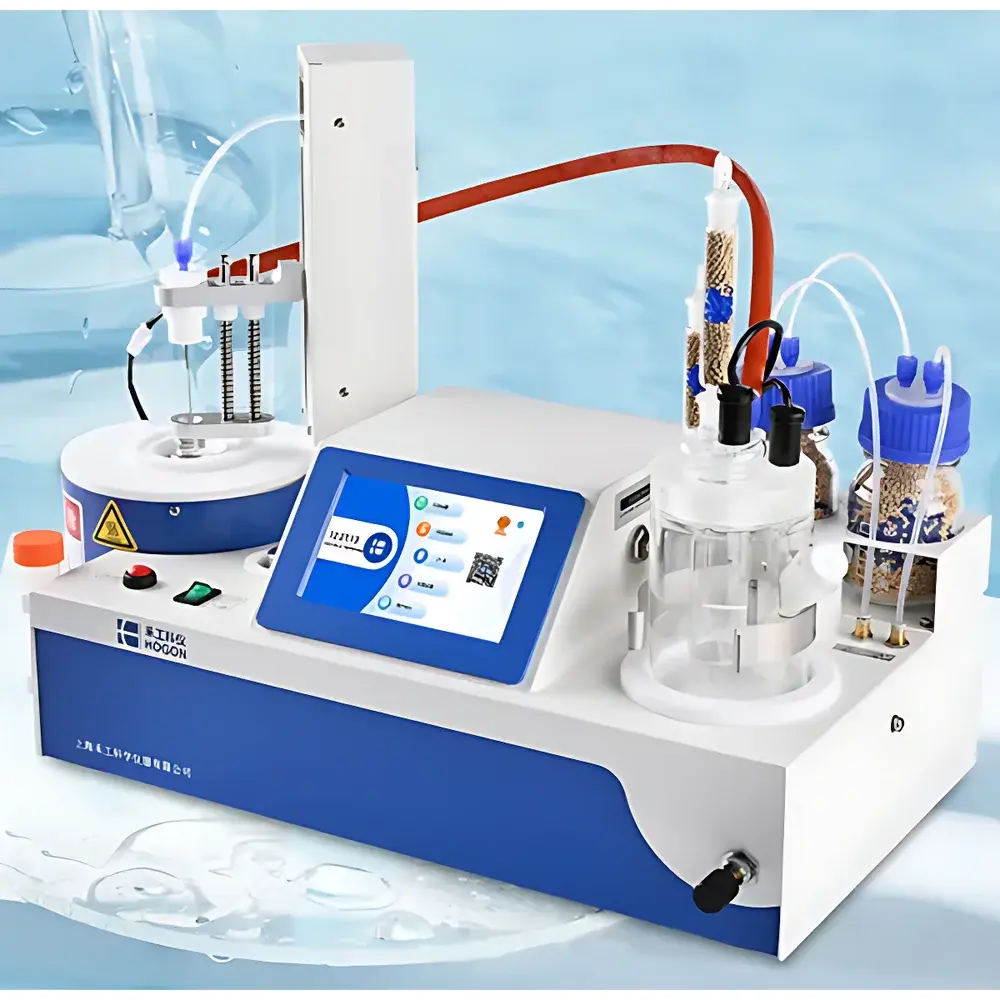
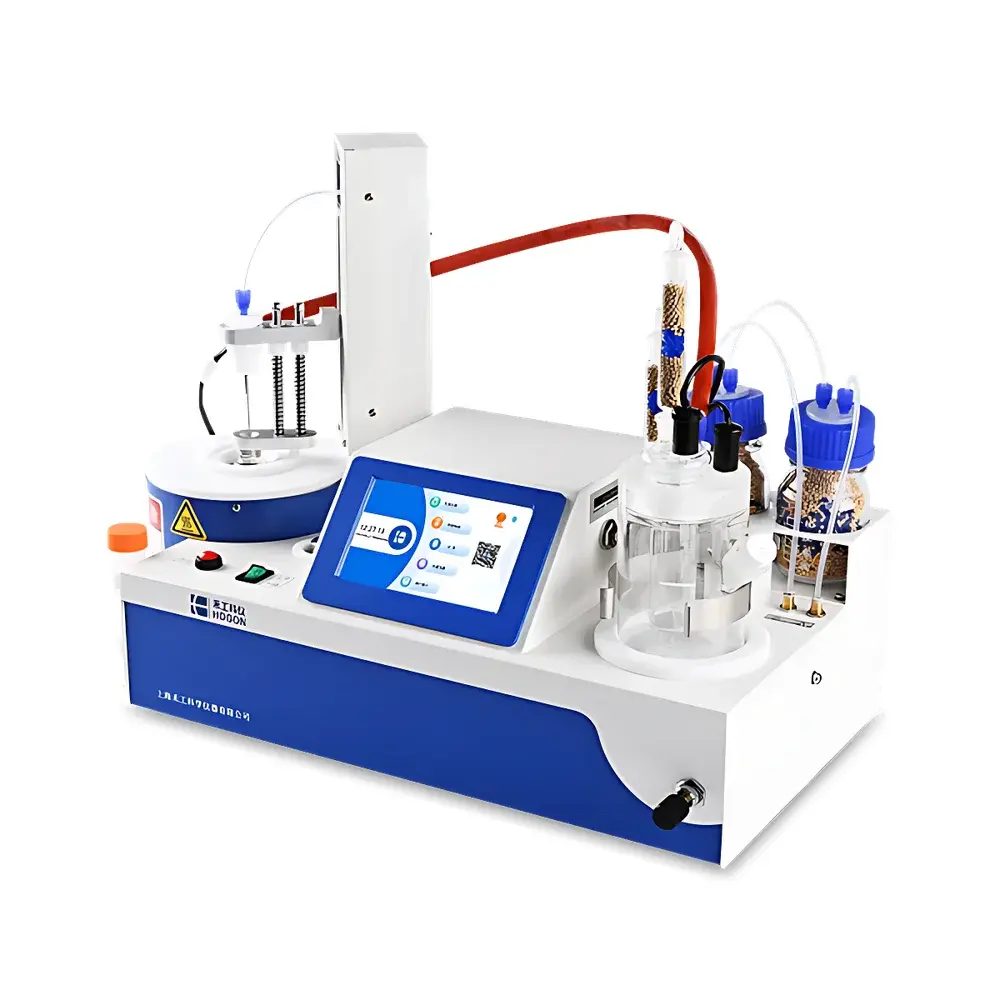
HOGON AKF-CH6 Coulometric Karl Fischer Moisture Titrator for Silicon-Based Composite Anode Materials in Lithium-Ion Battery Manufacturing
| Brand | HOGON |
|---|---|
| Origin | Shanghai, China |
| Manufacturer Type | Direct Manufacturer |
| Product Category | Domestic (China-Made) |
| Model | AKF-CH6 |
| Price | USD 9,500 (approx.) |
Overview
The HOGON AKF-CH6 is a high-precision coulometric Karl Fischer moisture titrator engineered specifically for trace water quantification in highly reactive, hygroscopic silicon-based composite anode materials used in lithium-ion battery production. Unlike volumetric KF methods, the AKF-CH6 employs coulometric generation of iodine at the anode—ensuring stoichiometric accuracy and eliminating reagent calibration drift. Its measurement principle relies on Faraday’s law: water content is calculated directly from the total electric charge required to generate iodine until endpoint detection via dual-platinum electrode polarization. This enables sub-ppm sensitivity (detection limit ≤ 0.1 ppm), essential for controlling moisture levels below critical thresholds (e.g., <200 ppm) that govern electrolyte decomposition, SEI instability, and gas evolution during cell formation.
Key Features
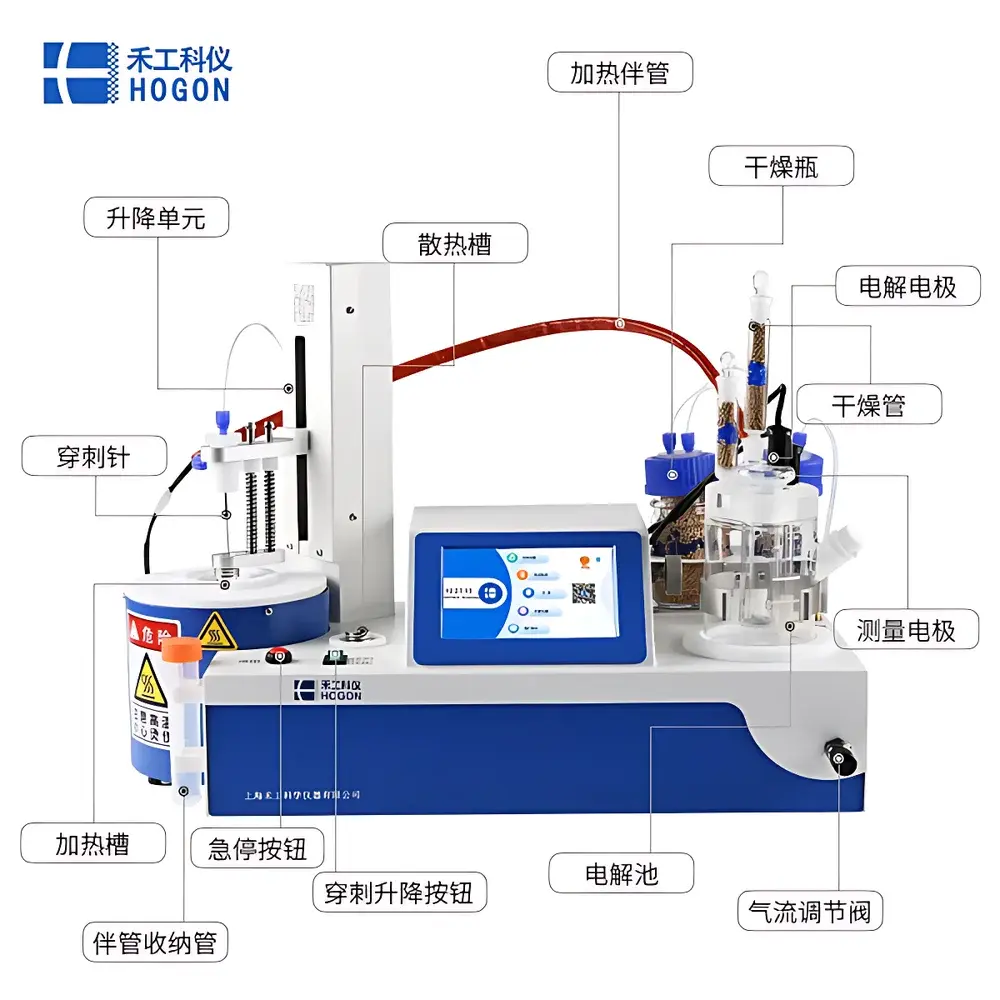
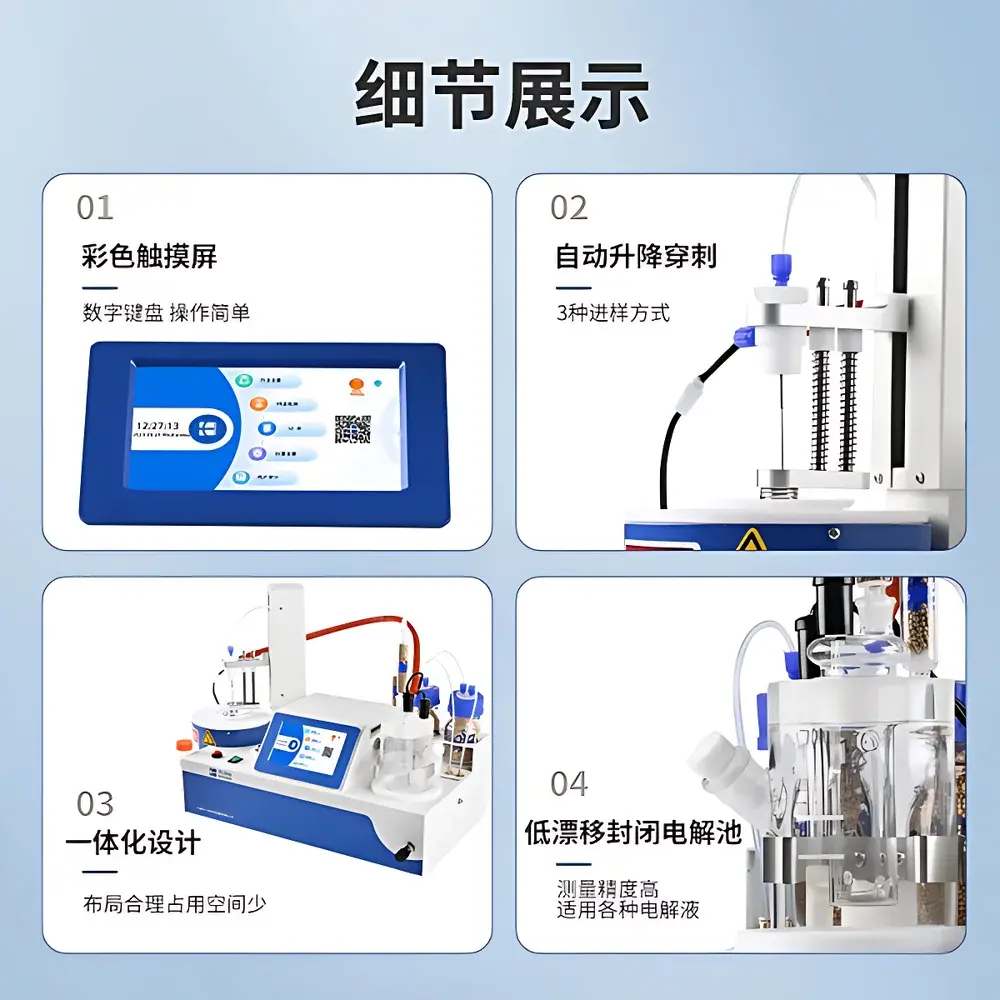
- Double-platinum electrode system with membrane-separated electrolytic cell—prevents reagent contamination and ensures long-term stability during repeated analysis of volatile or oxidizing samples.
- Fully enclosed sample introduction pathway—minimizes ambient moisture ingress and eliminates cross-contamination risks when handling air-sensitive silicon nanocomposites, Si/C blends, or surface-modified SiOx powders.
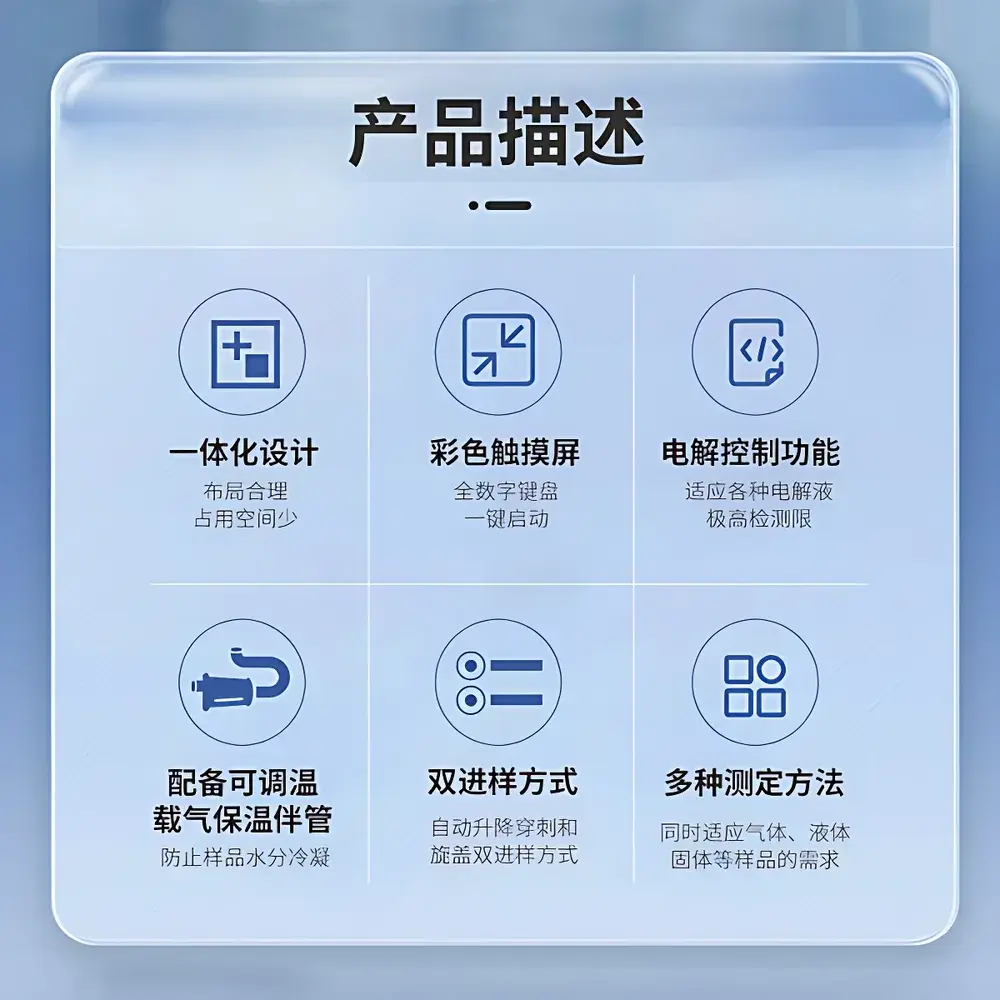
- Automated electrolyte balance algorithm—reduces pre-titration stabilization time to under 10 minutes, enhancing throughput without compromising baseline reproducibility.
- Dynamic polarization current adjustment—compensates for conductive interference from carbon additives or metallic impurities, maintaining consistent endpoint resolution across heterogeneous anode formulations.
- Integrated gravimetric interface with analytical balance coupling—supports direct mass input (0.0001 g resolution) and auto-calculates ppm values using user-defined molecular weight factors and solvent blank subtraction.
Sample Compatibility & Compliance
The AKF-CH6 accommodates solid, semi-solid, and slurry-phase anode materials—including dry silicon nanoparticles, spray-dried Si/C composites, binder-coated electrodes, and NMP-based slurries—via programmable heating oven (up to 250 °C) and carrier gas-assisted vapor extraction (N2, 5–50 mL/min). All hardware and firmware comply with ISO/IEC 17025:2017 requirements for testing laboratories, supporting audit-ready documentation including full electronic records of reagent consumption, blank correction logs, and calibration verification reports. The instrument meets GLP-compliant data integrity standards per FDA 21 CFR Part 11 when paired with HOGON’s optional secure software module (version 3.2+), featuring role-based access control, electronic signatures, and immutable audit trails.
Software & Data Management
The embedded Windows-based operating system includes HOGON MoistureCalc™ v4.1 software, enabling real-time titration curve visualization, multi-point calibration validation, and automated batch reporting compliant with IATF 16949 and UL 2580 battery safety certification workflows. Data export supports CSV, PDF, and XML formats compatible with LIMS integration. All raw signals—including current vs. time profiles, endpoint slope analysis, and residual drift metrics—are archived with timestamped metadata. Software updates are delivered via encrypted USB key or authenticated network push, ensuring continuous alignment with evolving industry test protocols (e.g., GB/T 3048.11–2023, ASTM E203–22).
Applications
- R&D screening of silicon precursor materials (e.g., SiOx, Mg2Si, Si nanowires) for intrinsic moisture uptake kinetics under controlled humidity exposure.
- In-process monitoring of drying ovens and vacuum transfer lines during electrode coating and calendering stages.
- Final QC release testing of packaged anode powders prior to slurry mixing—validating compliance with OEM moisture specifications (e.g., CATL, BYD, Panasonic internal limits).
- Root-cause analysis of cell swelling or low first-cycle Coulombic efficiency linked to residual H2O-induced HF generation.
- Method validation studies supporting regulatory submissions for UN38.3 transport certification and CE marking of battery packs.
FAQ
What is the minimum detectable water content for silicon-based anode powders?
The AKF-CH6 achieves a verified detection limit of 0.1 ppm (μg H2O/g sample) under optimized oven extraction conditions (180 °C, 20 mL/min N2 flow), validated per ASTM E203 Annex A3.
Can the system handle samples with high carbon black or CMC binder content?
Yes—the dynamic polarization algorithm automatically adjusts current thresholds to suppress false endpoints caused by conductive additives; method validation data shows RSD ≤ 1.2% across Si/C ratios from 1:1 to 1:5.
Is the instrument compatible with non-aqueous solvents other than methanol?
It supports chloroform/methanol (1:1 v/v), imidazole-based solvents, and custom KF reagents certified for low-background conductivity; solvent compatibility must be confirmed via blank drift testing prior to routine use.
How does the AKF-CH6 ensure traceability for ISO 17025 audits?
Each analysis generates a digitally signed report containing operator ID, environmental conditions (temperature/humidity), reagent lot numbers, raw titration curves, and uncertainty budgets calculated per GUM (JCGM 100:2008).




