
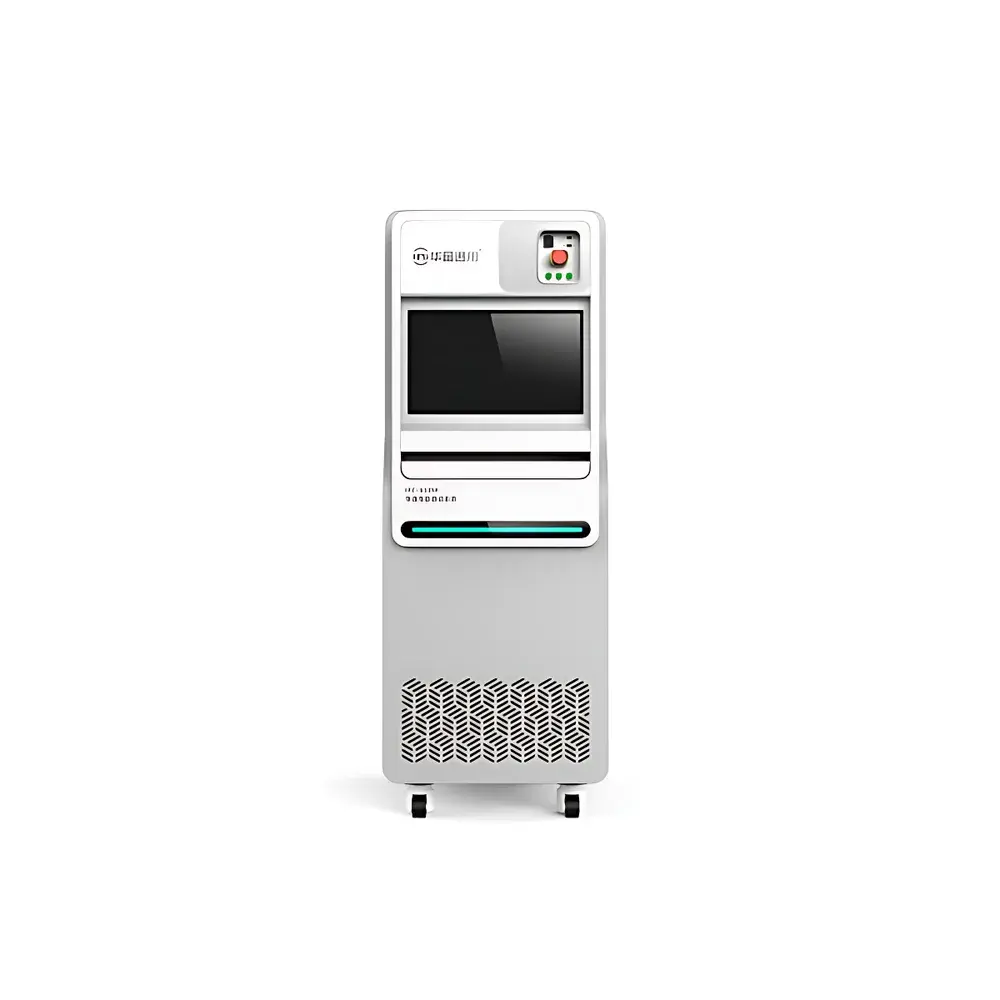
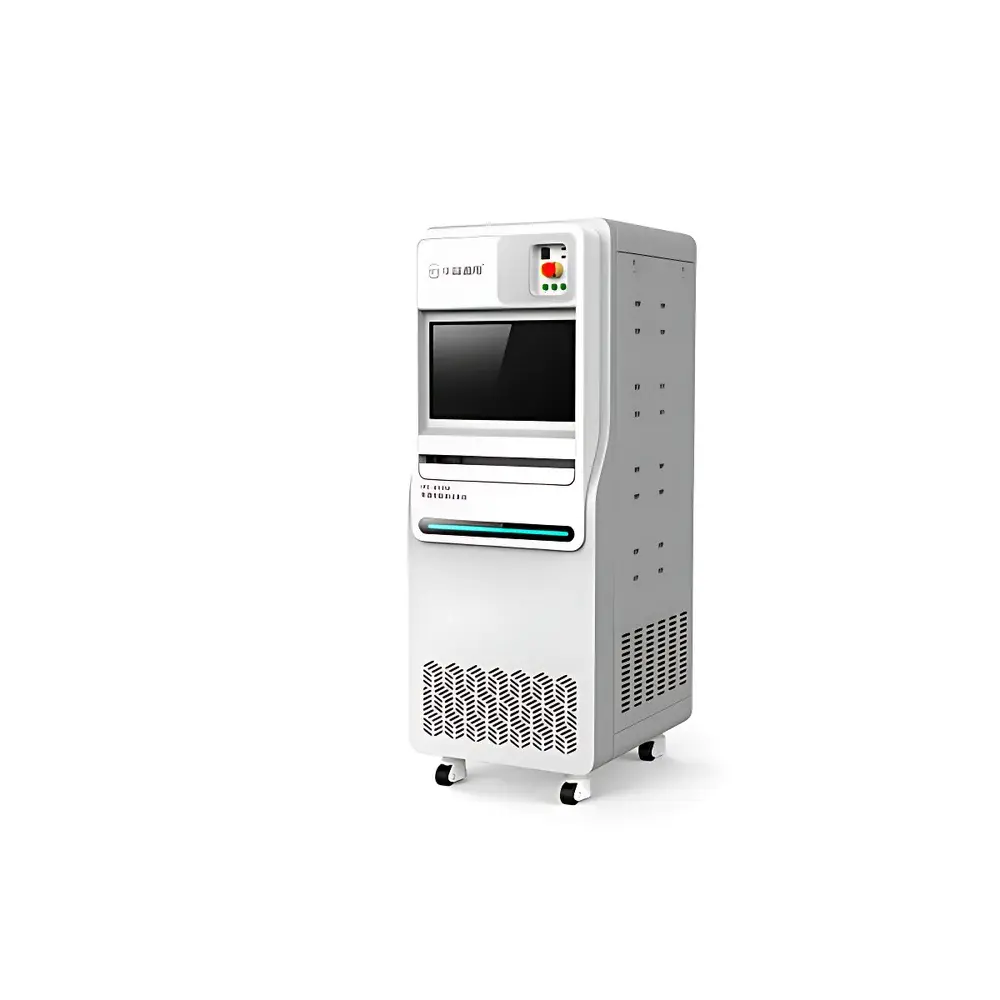
HPG IPC-650M Multi-Channel Conductive Resistance Test System
| Brand | HPG |
|---|---|
| Origin | Guangdong, China |
| Model | IPC-650M |
| Channel Capacity | 168 measurement channels |
| Temperature Channels | 10 independent thermocouple inputs |
| Module Support | Up to 8 modular units (resistance + temperature modules) |
| Test Current Range | 1 mA – 5 A (selectable per channel) |
| Measurement Method | Four-wire Kelvin sensing with bidirectional current reversal |
| Compliance | CE certified |
| Data Management | SQL-based database with timestamped audit trail |
| Power Backup | Integrated UPS support |
| Traceability | Calibration traceable to NIST-equivalent national standards |
| Regulatory Context | Designed for GLP/GMP-aligned production validation and reliability testing |
Overview
The HPG IPC-650M Multi-Channel Conductive Resistance Test System is an engineered solution for high-precision, real-time monitoring of electrical continuity and contact resistance under dynamic thermal stress conditions. It operates on the principle of four-wire (Kelvin) DC resistance measurement combined with bidirectional current reversal—a methodology specifically optimized to eliminate parasitic errors from lead resistance and thermoelectric voltages at junctions. This dual-compensation architecture ensures sub-milliohm resolution stability across extended test durations, making it suitable for evaluating solder joints, connector interfaces, PCB vias, and wire-bond integrity during thermal cycling, HALT/HASS, or burn-in qualification protocols. The system is not a generic ohmmeter but a synchronized, multi-parameter test platform integrating resistive and thermal metrology within a single time-correlated data stream.
Key Features
- 168 independently configurable resistance measurement channels, each supporting programmable test current (1 mA to 5 A) and auto-ranging voltage acquisition
- 10 dedicated thermocouple input channels (Type K/J/T), enabling concurrent temperature profiling of DUTs inside environmental chambers without signal drift or cold-junction compensation artifacts
- Modular architecture supporting up to eight hot-swappable functional modules—comprising both resistance measurement and temperature-sensing units—for scalable deployment in pilot-line or full-scale production environments
- Integrated uninterruptible power supply (UPS) interface ensuring continuous data logging and measurement integrity during grid fluctuations or brief outages
- CE-certified hardware with metrological traceability to national standards; all analog front-end components calibrated against reference standards with documented uncertainty budgets
- Real-time resistance change rate calculation (dR/dt), automatic pass/fail classification per user-defined thresholds, and statistical process control (SPC) output compatible with Minitab and JMP
Sample Compatibility & Compliance
The IPC-650M accommodates a broad range of conductive and semi-conductive samples—from discrete electronic connectors and flex circuit assemblies to automotive battery busbars and aerospace harnesses. Its 4-wire topology eliminates systematic error from probe contact resistance, while the bidirectional current method suppresses thermoelectric offset by ≥98% (per IEC 60584-2 and ASTM E230). The system meets essential requirements for ISO/IEC 17025-accredited laboratories conducting electrical safety and reliability verification. It supports audit-ready operation under FDA 21 CFR Part 11 when deployed with optional electronic signature and role-based access control modules. All firmware and calibration records are version-controlled and exportable in PDF/A-2 format for regulatory submission.
Software & Data Management
Control and analysis are performed via HPG’s proprietary TestSuite IPC software, built on a Microsoft SQL Server backend. Each measurement event is stored with microsecond-level timestamps, channel metadata, environmental chamber setpoints, and operator credentials—enabling full forensic reconstruction of any test sequence. The database enforces referential integrity and supports automated report generation compliant with ISO 10012 and MIL-STD-883H Annex G. Raw data exports are available in CSV, HDF5, and MATLAB .mat formats. Optional API integration allows synchronization with MES platforms (e.g., Siemens Opcenter, Rockwell FactoryTalk) for closed-loop quality feedback.
Applications
- Reliability screening of solder interconnects under temperature-humidity-bias (THB) and thermal shock profiles
- Continuity validation of high-current EV battery pack interconnects before and after mechanical vibration testing
- In-process monitoring of wire bonding resistance drift during wafer-level burn-in
- Qualification of RF shield gasket performance across -55°C to +150°C ranges
- Failure mode analysis of MEMS package hermeticity via resistance trend deviation from baseline
- Supplier incoming inspection of press-fit connector arrays using statistical tolerance banding
FAQ
What standards does the IPC-650M comply with for resistance measurement accuracy?
It conforms to ASTM B578 (for metallic coatings), IEC 61000-4-30 (power quality harmonics context), and the uncertainty budgeting framework defined in ISO/IEC Guide 98-3 (GUM).
Can the system operate inside a thermal chamber without signal degradation?
Yes—its differential voltage inputs and shielded twisted-pair cabling are rated for operation up to 125°C ambient; external junction boxes support cold-junction compensation at chamber entry points.
Is remote monitoring supported over industrial Ethernet or Modbus TCP?
Standard Ethernet/IP and optional Modbus TCP gateways are available for SCADA integration; no proprietary protocol lock-in is enforced.
How is calibration maintained across long-term deployments?
The system includes automated self-test routines and supports field calibration using NIST-traceable shunts; calibration certificates include measurement uncertainty at three current levels per channel.
Does the software support automated retest triggering upon resistance excursion?
Yes—user-defined logic rules can initiate secondary measurements, log contextual images (via optional USB camera sync), and escalate alerts via SMTP or OPC UA.



