
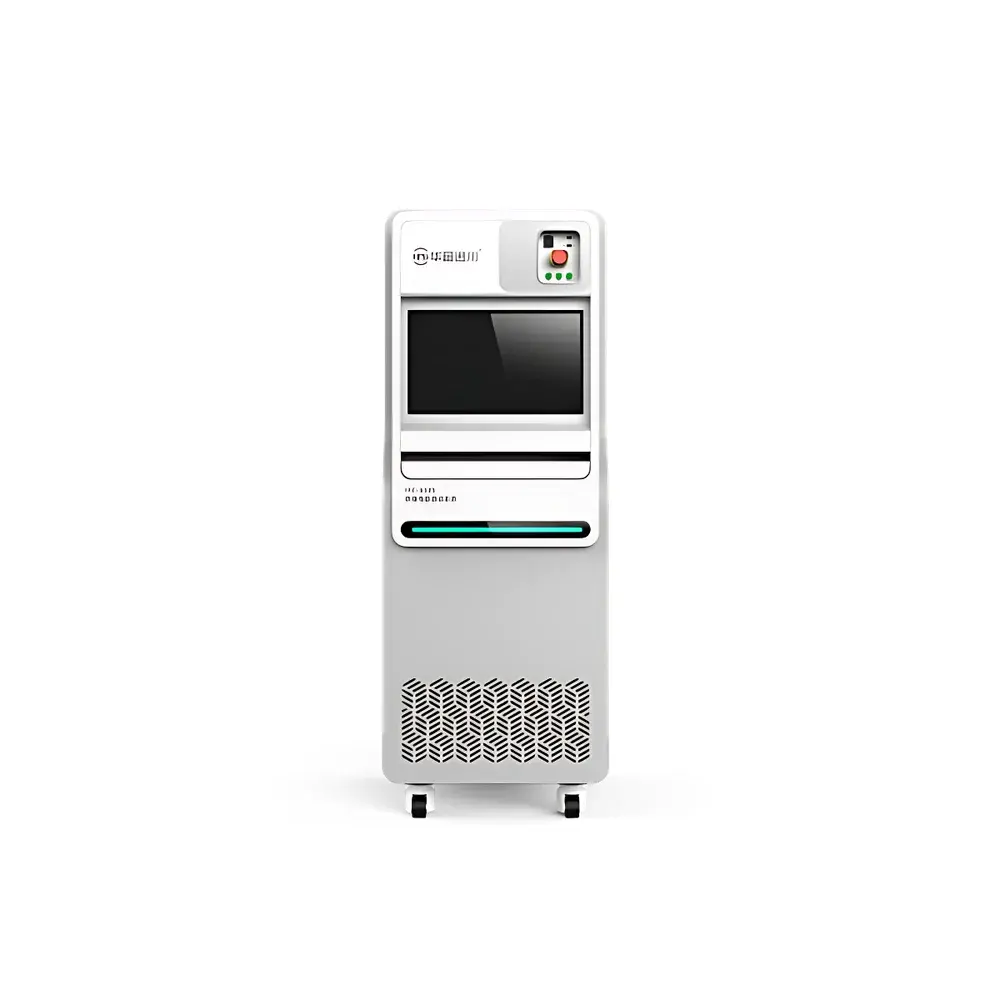
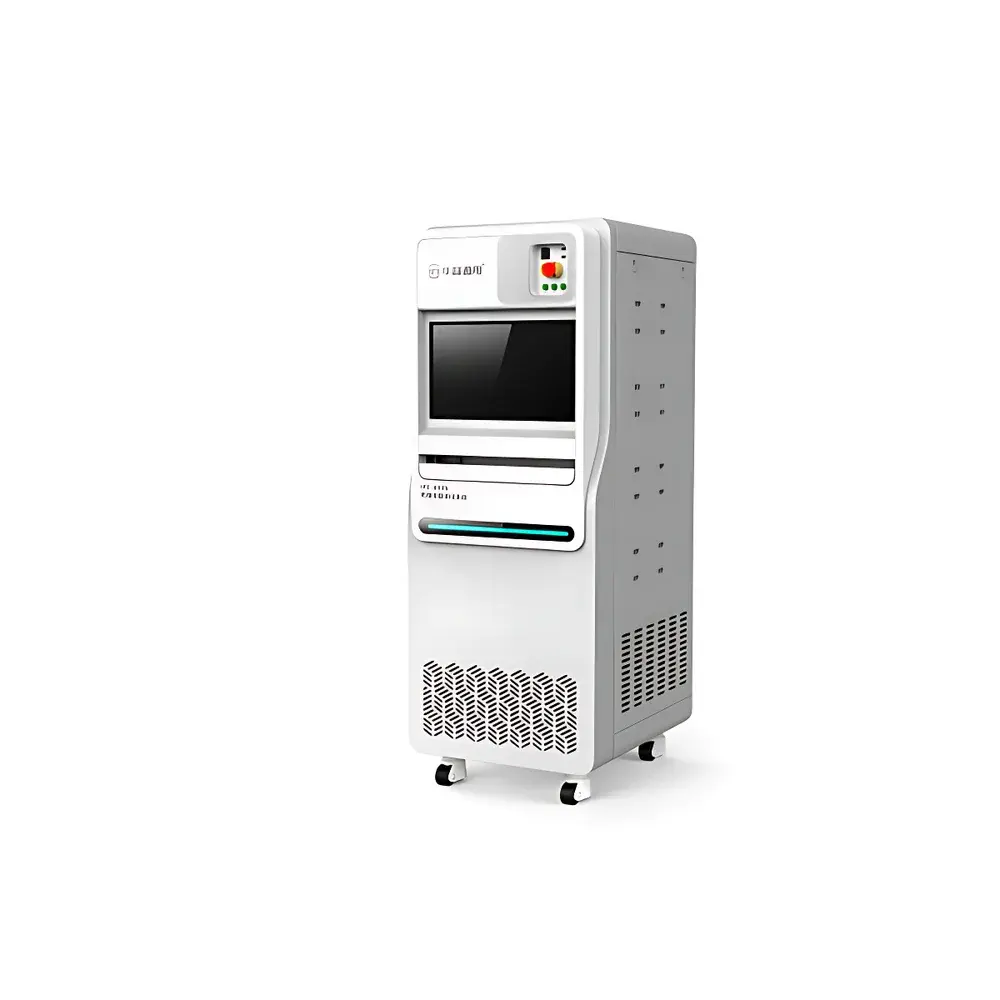
HPG IPC-650S Insulation Resistance Test System
| Brand | HPG |
|---|---|
| Origin | Guangdong, China |
| Model | IPC-650S |
| Voltage Ranges | 1.0–1000 V DC (configurable in 0.01–1.0 V steps) |
| Resistance Range | 1 × 10⁶ – 1 × 10¹³ Ω |
| Resistance Accuracy | ±5.0% (1×10⁶–1×10¹⁰ Ω, at 5 V), ±10% (1×10¹⁰–1×10¹¹ Ω), ±15% (1×10¹¹–1×10¹² Ω), ±20–30% (1×10¹²–1×10¹³ Ω) |
| Current Monitoring | 0.1 µA – 500 µA, up to 10 readings/sec per channel |
| Test Speed | 3.5 s/channel (256-channel full test ≤ 10 min) |
| Bias Voltage Range | –100 V to +1000 V DC with polarity reversal |
| Environmental Groups | 2–4 independent test chambers (64 channels/group) |
| Compliance | IPC-TM-650 2.5.10, 2.6.11, 2.6.3.7, 2.6.14 |
| Software | GLP-compliant, audit-trail enabled, remote monitoring via web interface and mobile app |
| Dimensions | 1800 × 600 × 1000 mm (H × W × D) |
| Weight | ~280–350 kg |
| Input Power | AC 220 V ±10% |
Overview
The HPG IPC-650S Insulation Resistance Test System is a high-precision, multi-channel electrochemical reliability testing platform engineered for quantitative assessment of insulation resistance degradation under controlled environmental stress. It operates on the principle of applying a stable, programmable DC bias voltage across insulated material interfaces—such as solder mask layers, conformal coatings, PCB substrates, or dielectric films—and measuring the resulting leakage current over extended durations (up to 9999 hours). By converting measured current into resistivity values using Ohm’s law, the system enables quantification of surface and bulk insulation performance under thermal-humidity bias (THB), temperature cycling, or dry-bias conditions. Designed specifically for electronics manufacturing quality assurance and advanced packaging R&D, the IPC-650S supports failure mode analysis related to electrochemical migration (ECM), dendritic growth, and moisture-assisted ion conduction—critical parameters in qualification of GBA, CSP, and fine-pitch IC interconnects per IPC and IEC standards.
Key Features
- Modular Multi-Chamber Architecture: Configurable for 2–4 independent environmental test chambers (e.g., climate chambers), each supporting up to 64 measurement channels—enabling parallel evaluation of diverse sample sets under differentiated stress profiles (e.g., 85°C/85% RH vs. 40°C/93% RH).
- Programmable High-Voltage Biasing: Precise DC voltage sourcing from 1.0 V to 1000 V with step resolution down to 0.01 V (≤99.9 V) or 1.0 V (≥100 V); full polarity reversal capability ensures symmetric assessment of anodic/cathodic degradation mechanisms.
- Real-Time Microcurrent Monitoring: Integrated electrometer-grade sensing (0.1 µA–500 µA range) delivers up to 10 sequential current measurements per second per channel, capturing transient ionic flux events associated with early-stage electrochemical migration.
- Adaptive Threshold-Based Fault Detection: Configurable pass/fail logic includes single/multiple threshold breaches, time-under-threshold accumulation, and automatic test termination upon criterion fulfillment—reducing manual oversight and improving repeatability.
- Hardware-Level Safety & Diagnostics: Built-in short-circuit self-test prior to voltage application prevents damage from miswired fixtures; active fault detection triggers SMS alerts and halts test execution if abnormal current draw or open-circuit conditions are detected.
- Robust Physical Design: Shielded coaxial silver-plated copper cabling with PTFE insulation (>10¹⁴ Ω, rated to 380°C); ruggedized 1800 mm tall cabinet with integrated UPS (30-min runtime); KEITHLEY 6514-based measurement core ensures metrological traceability.
Sample Compatibility & Compliance
The IPC-650S accommodates standardized IPC test patterns—including IPC-B-24, IPC-B-25, and custom comb-tooth layouts—as well as discrete components such as capacitors, connectors, and bare-die packages. Its fixture interface supports both IPC-standard test racks and user-defined probe configurations via BNC/nickel-rubber terminations. All operational modes comply with internationally recognized test methodologies: IPC-TM-650 Sections 2.5.10 (Surface Insulation Resistance), 2.6.11 (THB Testing), 2.6.3.7 (Bias Humidity Testing), and 2.6.14 (High-Potential Testing); IEC 61189-5 (Test Methods for Electrical Materials); IEC 1086 (Ceramic Capacitor Standards); and ISO 9455-17 (Flux Residue Resistivity Testing). Data acquisition meets GLP requirements, with timestamped, user-authenticated records suitable for FDA 21 CFR Part 11–aligned validation protocols.
Software & Data Management
The HPG IPC Control Suite is a Windows-based, multi-user application featuring role-based access control, electronic signatures, and full audit-trail logging compliant with ISO/IEC 17025 and ICH-GCP guidelines. Real-time dashboards display live resistance trends, channel status maps, and deviation heatmaps across all active groups. Automated report generation exports CSV, PDF, and XLSX formats with embedded metadata (operator ID, chamber ID, calibration date, firmware version). Remote operation is supported via HTTPS-secured web portal and native iOS/Android applications—enabling live monitoring, parameter adjustment, and emergency stop from off-site locations. All raw data is stored in encrypted SQLite databases with configurable retention policies and optional integration into enterprise LIMS platforms via RESTful API.
Applications
- Qualification of solder mask formulations and curing processes for high-reliability aerospace PCBs
- Evaluation of no-clean flux residue conductivity under humidity bias per J-STD-004
- Accelerated aging studies of conformal coatings (acrylic, silicone, parylene) used in automotive ECUs
- Failure analysis of microvia structures in HDI substrates subjected to potential difference-induced dendrite formation
- Material screening for low-κ dielectrics in advanced packaging substrates (ABF, Ajinomoto Build-up Film)
- Process validation of cleaning efficacy following reflow or wave soldering operations
- Supporting JEDEC JESD22-A121 (Electrochemical Migration) and MIL-STD-883 Method 2019 qualification workflows
FAQ
What environmental standards does the IPC-650S support?
The system natively executes test plans aligned with IPC-TM-650 (2.5.10, 2.6.11, 2.6.3.7, 2.6.14), IEC 61189-5, IEC 1086, and ISO 9455-17. Custom profiles can be defined to match internal corporate specifications or customer-specific qualification requirements.
Can the system operate unattended for extended durations?
Yes. With integrated UPS backup (30-minute runtime), automated fault handling, SMS alerting, and remote supervision capabilities, the IPC-650S supports fully autonomous 24/7 testing cycles up to 9999 hours.
Is calibration traceable to national standards?
All voltage and current measurement subsystems are factory-calibrated against NIST-traceable references. Annual on-site calibration and verification services are included in the standard support package.
How is data integrity ensured during long-term tests?
Each measurement record includes cryptographic hash verification, operator authentication, and immutable timestamps. Audit logs capture every parameter change, start/stop event, and alarm condition—fully compliant with 21 CFR Part 11 Annex 11 requirements.
What maintenance intervals are recommended?
Preventive maintenance is scheduled annually; critical subsystems (electrometer modules, HV relays, chamber sensors) undergo functional verification during each service visit. Spare parts inventory and firmware updates are maintained through HPG’s global service network.



