
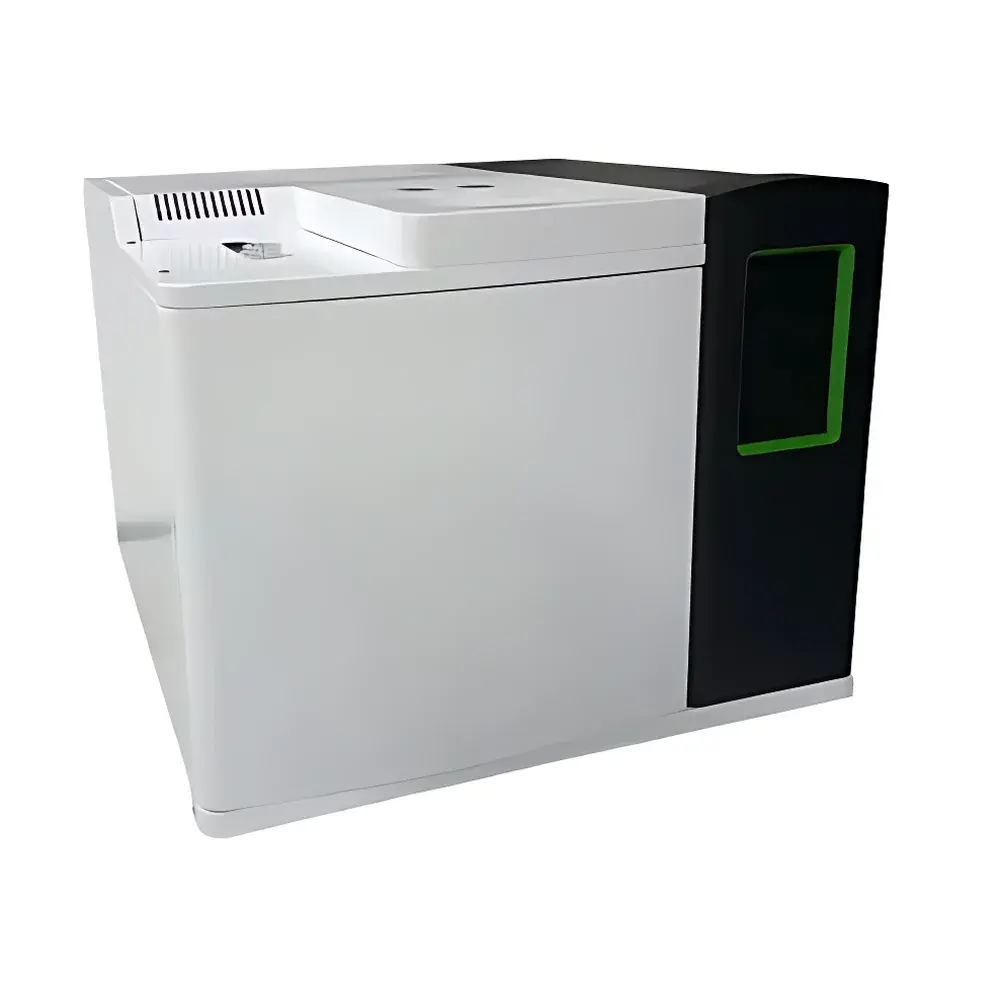
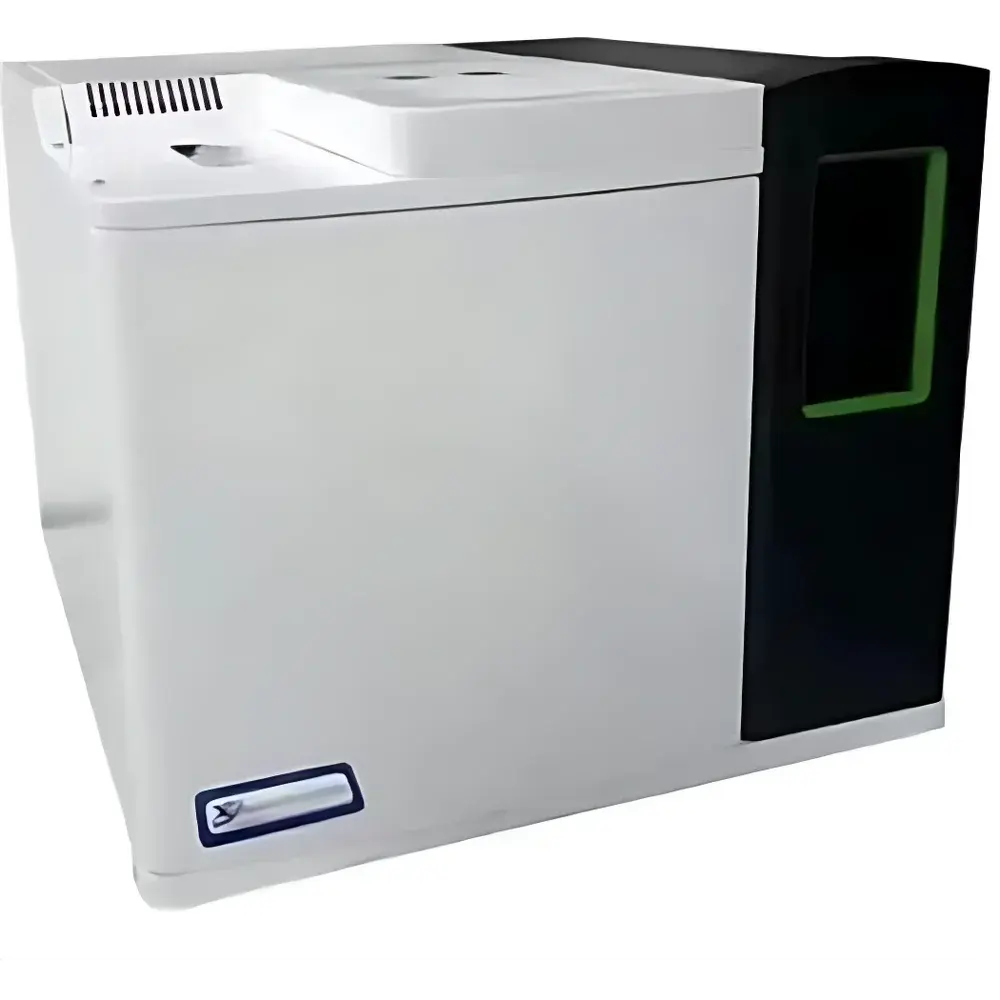
HSPX Natural Gas Comprehensive Analysis Gas Chromatograph
| Brand | HSPX |
|---|---|
| Origin | Beijing, China |
| Manufacturer Type | Direct Manufacturer |
| Instrument Type | Laboratory Gas Chromatograph |
| Application Field | Petrochemical Industry Dedicated |
| Oven Temperature Range | Ambient +5°C to 400°C |
| Oven Ramp Rate | 0.1–40°C/min |
| Oven Cool-down Time | ~6 minutes (from 450°C to 50°C) |
| Carrier Gas Flow Range & Control | 0–1000 mL/min |
| Carrier Gas Pressure Range & Control | 0–970 kPa |
| Injector Maximum Operating Temperature | 400°C |
| Injector Pressure Setting Range | 0–970 kPa |
| Injector Total Flow Setting Range | 0–1000 mL/min |
Overview
The HSPX Natural Gas Comprehensive Analysis Gas Chromatograph is a purpose-engineered laboratory-scale gas chromatograph designed for the quantitative determination of permanent gases, light hydrocarbons, and sulfur-containing compounds in natural gas, liquefied petroleum gas (LPG), and synthetic fuel mixtures. It operates on the principle of differential partitioning of analytes between a mobile phase (inert carrier gas) and stationary phases within packed and capillary columns, enabling high-resolution separation under precisely controlled thermal and flow conditions. The instrument integrates dual packed-column channels and one capillary column channel, coupled with three complementary detectors—Thermal Conductivity Detector (TCD), Flame Ionization Detector (FID), and Flame Photometric Detector (FPD)—to ensure simultaneous detection of non-hydrocarbon species (O₂, N₂, CO₂), saturated hydrocarbons (C₁–C₅⁺), and trace sulfur compounds (e.g., H₂S). This architecture supports full compositional profiling in a single injection cycle, meeting the analytical rigor required for calorific value calculation (higher and lower heating value), Wobbe index, combustion potential, relative density, and gas interchangeability assessment per ISO 6976, ASTM D1945, and GB/T 13610.
Key Features
- Dual independent packed-column inlet system with precision pressure/flow control (0–970 kPa, 0–1000 mL/min), optimized for permanent gas and C₁–C₅ separation using molecular sieve and alumina-based columns.
- Capillary column inlet with split/splitless capability, supporting high-resolution analysis of C₆+ hydrocarbons and aromatic species.
- Triple-detector configuration: TCD for O₂, N₂, CO₂, CH₄; FID for C₁–C₅⁺ hydrocarbons with linear dynamic range >10⁷; FPD tuned for sulfur-selective detection at sub-ppm levels.
- Temperature-controlled oven with programmable ramp rates (0.1–40°C/min) and rapid cool-down (~6 min from 450°C to 50°C), ensuring high sample throughput without thermal memory effects.
- Three independent carrier gas stabilization valves for consistent baseline stability and retention time reproducibility across multi-day analyses.
- Injector temperature up to 400°C with electronic pressure/flow programming, compatible with high-boiling point components and moisture-laden field samples.
Sample Compatibility & Compliance
The system is validated for direct injection of untreated or filtered natural gas, LPG, biogas, and air-diluted synthetic gas mixtures. Sample introduction is compatible with standard gas-tight syringes, pressurized gas loops (0.25–1.0 mL), and optional auto-samplers. All hardware materials meet ASTM E260 and ISO/IEC 17025 requirements for trace-level hydrocarbon analysis. Data acquisition and reporting conform to GLP-compliant workflows, with audit-trail-enabled software supporting 21 CFR Part 11 user authentication, electronic signatures, and change history logging. Method validation packages include repeatability (RSD <1.5% for major components), linearity (r² ≥0.999 over 0.1–100% v/v), and detection limits (e.g., 0.1 ppmv for H₂S via FPD).
Software & Data Management
The dedicated Natural Gas Analysis Workstation provides method-driven acquisition, automated peak integration using retention time locking, and built-in calculation modules for thermodynamic indices—including gross and net calorific value (MJ/m³), Wobbe number (MJ/m³·√density), lambda factor, and combustion velocity index. Raw data are stored in vendor-neutral .cdf format compliant with AIA/ANDI standards. Export options include CSV, PDF analytical reports, and XML for LIMS integration. Software supports multi-user role management, method version control, and scheduled calibration verification per ISO/IEC 17025 clause 7.7.
Applications
- Quality control in LNG terminals and city gate metering stations for compliance with EN 16726 and GB 17820 specifications.
- Gas interchangeability studies for pipeline blending and grid injection of biomethane or hydrogen-enriched natural gas.
- Product certification in appliance manufacturing (e.g., EN 437 test gas classification).
- Regulatory monitoring by national metrology institutes and provincial gas inspection centers.
- Research on combustion kinetics, emission factor modeling, and alternative fuel characterization in academic and industrial laboratories.
FAQ
Does this system support unattended operation for routine pipeline monitoring?
Yes—when integrated with an optional 10-position gas autosampler and scheduled method sequences, the instrument supports 24/7 batch analysis with automatic baseline correction and alarm-triggered recalibration.
Can the FPD detect mercaptans and COS in addition to H₂S?
Yes—the sulfur-specific FPD channel is calibrated for H₂S, CH₃SH, (CH₃)₂S, and carbonyl sulfide (COS) using certified standard blends traceable to NIST SRM 2559.
Is method transfer possible to other GC platforms?
Retention time locking and standardized column dimensions (e.g., 30 m × 0.53 mm ID PLOT Al₂O₃/KCl) enable robust method portability to Agilent, Shimadzu, and Thermo Fisher GC systems.
What maintenance intervals are recommended for long-term reliability?
Carrier gas filters require replacement every 6 months; detector jets and septa every 200 injections; and column trimming every 500 injections or as indicated by peak tailing or resolution loss.
Does the system comply with Chinese national standards for natural gas analysis?
Yes—it fully satisfies GB/T 13610–2014 (gas chromatographic analysis of natural gas composition) and JJG 1055–2009 (verification regulation for gas chromatographs used in natural gas testing).
Related Products




