
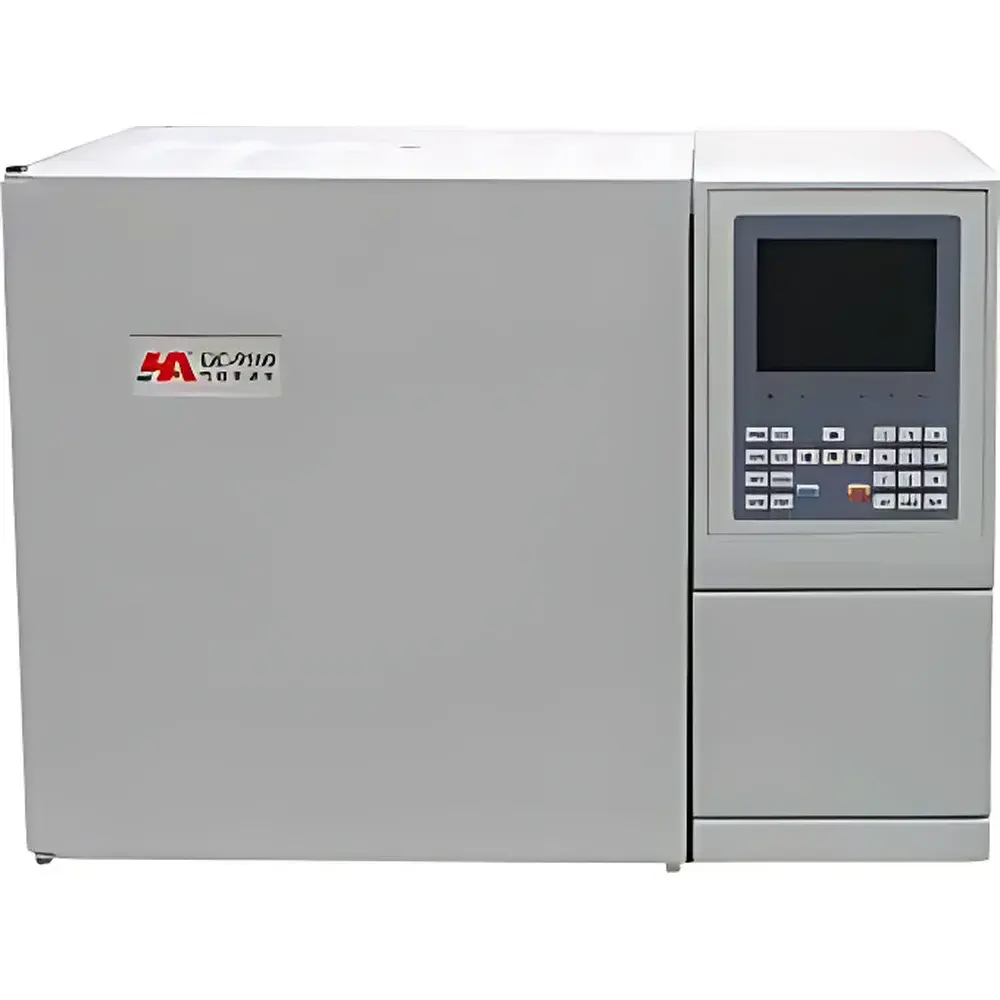
Huaai Fuel Hydrogen Purity and Impurity Analysis System
| Brand | Huaai |
|---|---|
| Origin | Shanghai, China |
| Manufacturer Type | Original Equipment Manufacturer (OEM) |
| Product Category | Domestic (China-Made) |
| Model | Fuel Hydrogen Analysis System |
| Pricing | Upon Request |
Overview
The Huaai Fuel Hydrogen Purity and Impurity Analysis System is a fully integrated, multi-technique analytical platform engineered for compliance with international fuel hydrogen quality standards—including T/CECA-G0015-2017 and ISO 16487-2:2012. Designed specifically for quality assurance in hydrogen refueling stations, PEM fuel cell manufacturing, and green hydrogen production facilities, the system employs orthogonal detection principles across three core modules: gas chromatography (GC), ion chromatography (IC), and optical particle counting—each calibrated and validated to quantify impurities at sub-ppb to ppm levels. The GC module utilizes center-cutting and backflush technology with multi-valve, multi-column configuration to resolve co-eluting light gases (e.g., O₂, N₂, Ar, He, CO, CO₂, CH₄) in high-purity hydrogen matrix without breakthrough or memory effects. The IC module quantifies ionic contaminants—including chloride, fluoride, bromide, and sulfate—as halide equivalents, while the optical scattering particle counter meets ISO 8573-1 Class 2 requirements for particulate mass concentration (≤1 mg/kg). All subsystems operate under strict environmental control (temperature, pressure, humidity) and are housed in a vibration-damped, EMI-shielded enclosure to ensure long-term baseline stability and measurement reproducibility.
Key Features
- Multi-technique architecture: Simultaneous GC–PDD (Pulsed Discharge Detector), IC–CD (Conductivity Detection), and laser light-scattering particle analysis in a single rack-mountable platform
- Center-cutting and backflush GC configuration with imported 10-port switching valves and helium purifier; enables full speciation of 15+ impurities in one injection
- Dual-column oven design: Independent temperature control for each column compartment allows concurrent conditioning of diverse stationary phases (e.g., molecular sieve 5Å, PLOT Al₂O₃/KCl, porous polymer) without physical column removal
- Automated startup protocol (“One-Touch Triple-Start”): Achieves thermal equilibrium and detector stabilization within 60 minutes; standby mode reduces carrier gas consumption by ≥95%
- Trace moisture measurement via ultra-thin alumina capacitive dew point sensor (range: −60 °C to +20 °C DP; accuracy ±2 °C above −60 °C)
- Real-time particle monitoring using 90° light scattering; dynamic range 0.001–400 mg/m³; resolution defined as greater of 0.1% of reading or 0.001 mg/m³
- IC system with suppressed conductivity detection: LOD for Cl⁻ ≤ 0.005 µg/mL; linearity R² ≥ 0.999 over 3 orders of magnitude; column oven stability ≤ 0.1 °C/h
Sample Compatibility & Compliance
The system accepts gaseous hydrogen samples at pressures up to 20 bar (via regulated sampling interface with zero-dead-volume valve) and supports both continuous flow and discrete batch analysis modes. It complies with regulatory frameworks governing hydrogen fuel certification, including but not limited to: ASTM D7652 (Standard Test Method for Determination of Total Sulfur in Gaseous Fuels), ISO 8573-1:2010 (Compressed air — Part 1: Contaminants and purity classes), and EU Regulation (EU) 2019/1258 Annex II (Hydrogen purity requirements for fuel cell vehicles). Data integrity conforms to FDA 21 CFR Part 11 requirements through audit-trail-enabled software, electronic signatures, and secure user role management. All calibration protocols follow GLP-compliant procedures, with traceability to NIST SRMs for gas standards and certified reference materials for anions.
Software & Data Management
The proprietary Huaai Hydrogen Analytics Suite (v3.2+) provides unified control of all analytical modules via time-programmed valve sequencing, real-time chromatogram overlay, and automated impurity quantification against internal standard curves. Raw data files are stored in vendor-neutral .CDF format compliant with ASTM E1946-18. Reporting templates generate ISO-compliant certificates of analysis (CoA) with embedded uncertainty budgets per GUM (JCGM 100:2008). Audit logs record all user actions—including method edits, calibration events, and result approvals—with immutable timestamps and operator IDs. Export options include PDF, CSV, and XML for LIMS integration. Remote diagnostics and firmware updates are supported via TLS 1.2-secured Ethernet connection.
Applications
- Quality release testing of electrolytic, steam-methane-reformed (SMR), and biomass-derived hydrogen prior to compression and dispensing
- Root-cause analysis of PEM fuel cell stack degradation linked to CO, H₂S, NH₃, or particulate fouling
- Validation of hydrogen purification unit performance (e.g., PSA, membrane separation, catalytic methanation)
- Periodic verification of on-site hydrogen storage and delivery infrastructure per ISO/TS 14687-2 surveillance requirements
- Research into impurity tolerance thresholds in next-generation fuel cell membranes and catalysts
FAQ
What standards does this system validate against?
It fully supports T/CECA-G0015-2017 and ISO 16487-2:2012, with configurable method templates for ASTM D7652, ISO 8573-1, and EU Regulation (EU) 2019/1258.
Can the system analyze liquid-phase hydrogen samples?
No—it is designed exclusively for gaseous hydrogen at ambient or elevated pressure; cryogenic liquid sampling requires external vaporization and pressure regulation upstream.
Is remote operation supported?
Yes, via secure web-based interface with role-based access control; full instrument control and data review are available from any authorized workstation.
How often must the GC columns be replaced?
Under routine use with proper sample filtration and helium purification, column lifetimes exceed 18 months; the dual-oven design simplifies preventive maintenance without system downtime.
Does the particle counter meet ISO 8573-1 Class 2 requirements?
Yes—the optical scattering module is factory-calibrated to report mass concentration (mg/kg) equivalent to ISO 8573-1 Class 2 limits for solid particles in compressed gases.





