
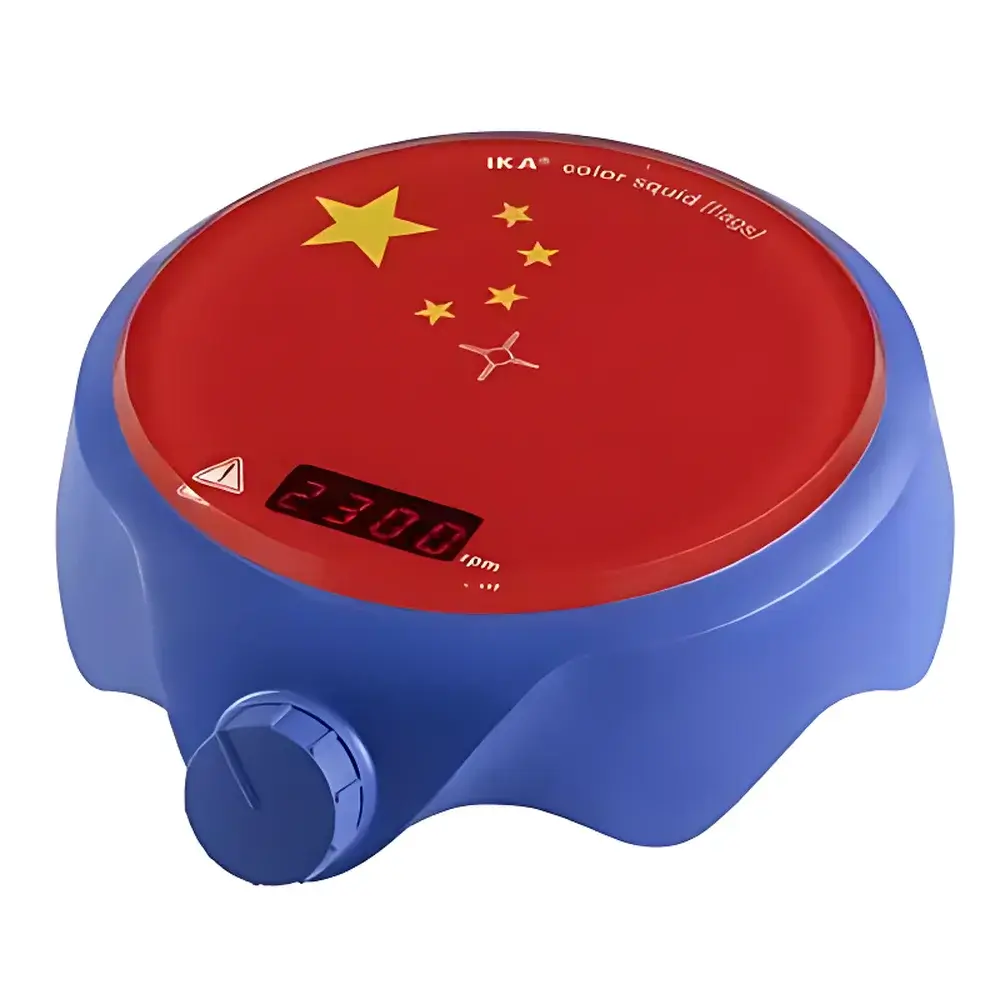
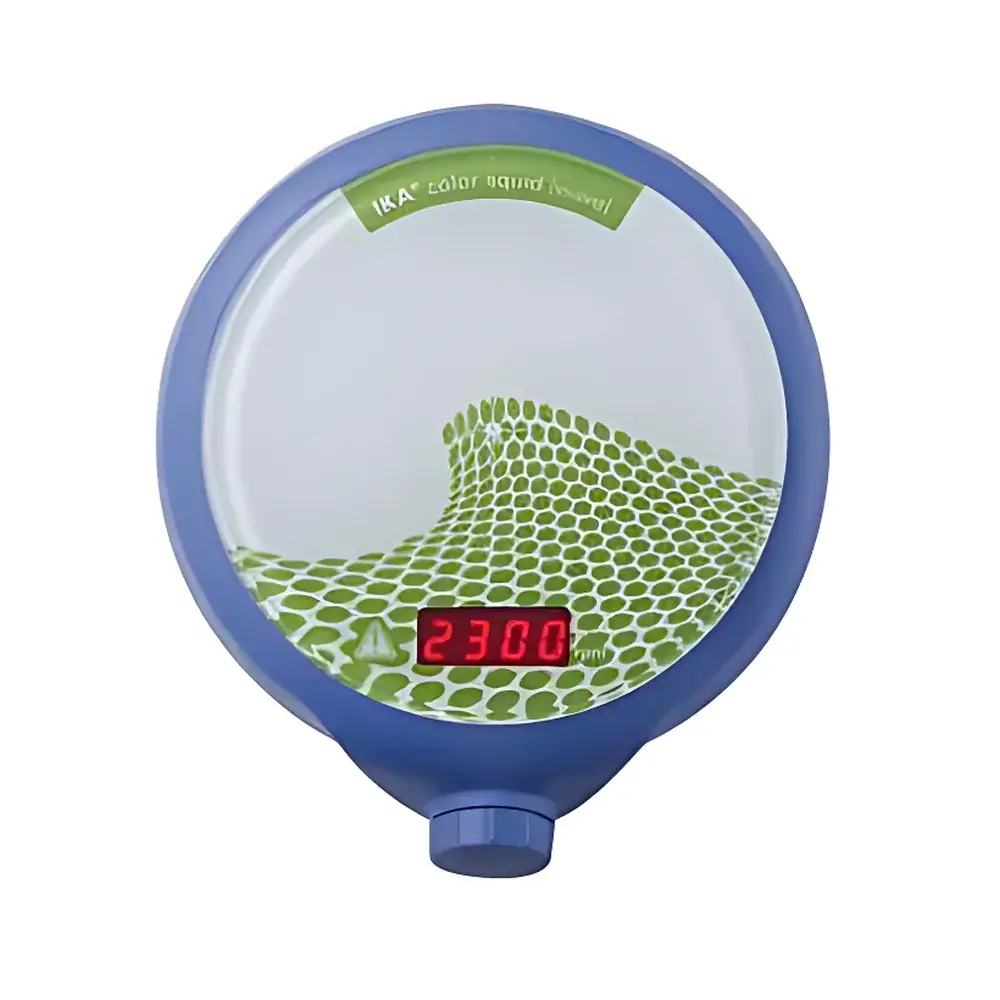
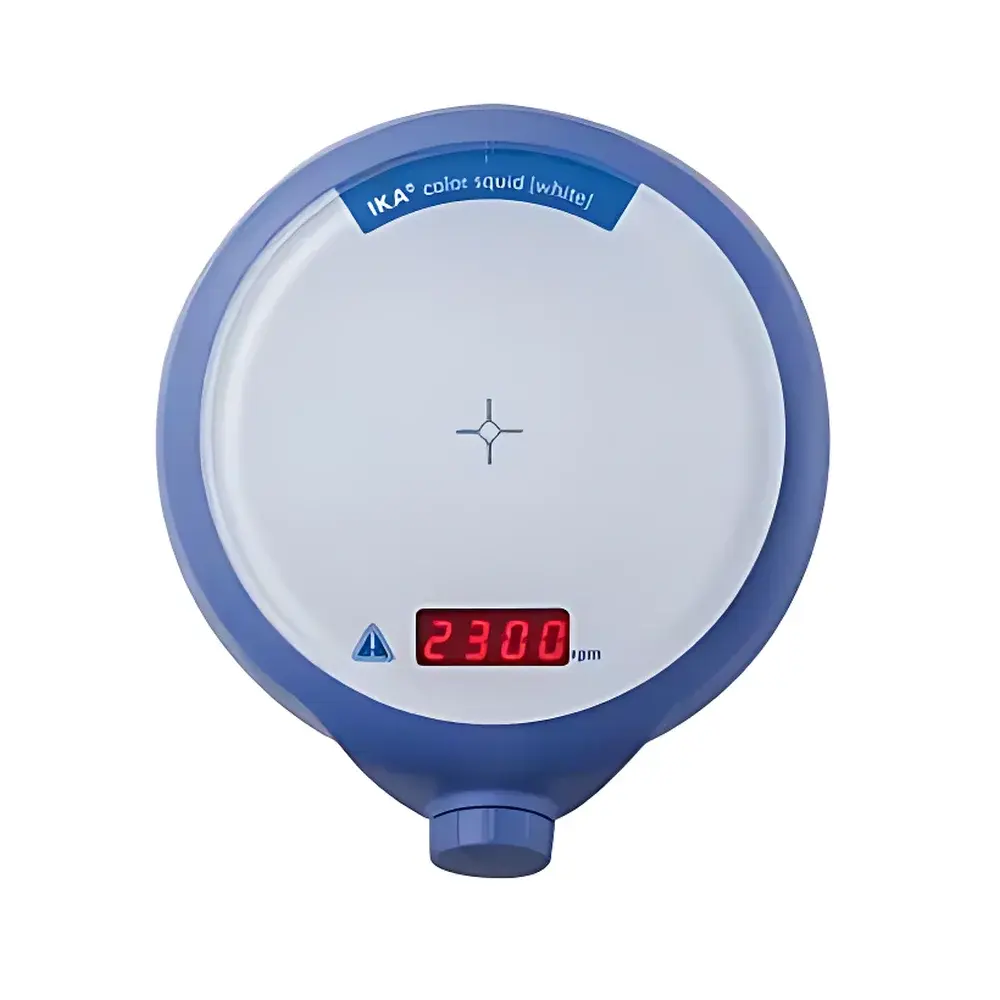
IKA RCT basic Magnetic Stirrer with Glass Ceramic Plate
| Brand | IKA |
|---|---|
| Origin | Germany |
| Model | RCT basic |
| Max. Stirring Volume | 1 L |
| Speed Range | 0–2500 rpm |
| Operating Temperature Range | 5–40 °C |
| Plate Diameter | Ø115 mm |
| Dimensions (W×H×D) | 145 × 45 × 160 mm |
| Weight | 0.54 kg |
| IP Rating | IP54 |
| Power Supply | 100–240 V, 50/60 Hz |
| Input Power | 4 W |
| Motor Output Power | 2 W |
| Stir Bar Max. Length | 30 mm |
| Material | Chemically Resistant Glass Ceramic Plate + TPC-ET Polymer Housing |
| Environmental Humidity Limit | ≤80 % RH |
| Compliance | DIN EN 60529 |
| Display | LED Digital Speed Readout |
| RS232 Interface | No |
| Analog Output | No |
Overview
The IKA RCT basic is a compact, single-position magnetic stirrer engineered for precision mixing in routine laboratory workflows where thermal control is not required. Designed and manufactured in Germany, it operates on the principle of rotating magnetic fields generated by a permanent magnet array beneath a chemically inert glass ceramic plate. This field couples with a magnetic stir bar immersed in the sample vessel, inducing controlled rotational motion without mechanical contact—ensuring contamination-free, low-maintenance operation. Its robust architecture supports continuous duty cycles under ambient conditions (5–40 °C), making it ideal for applications in analytical chemistry, quality control labs, educational settings, and preparative workflows involving aqueous or mildly aggressive solvents. The absence of integrated heating eliminates thermal drift concerns during extended stirring, while the sealed electronics and IP54-rated enclosure provide protection against dust ingress and incidental splashes—meeting essential safety requirements for general-purpose lab use.
Key Features
- Digitally controlled DC motor with LED speed display for real-time rpm verification and repeatable setpoint accuracy
- Glass ceramic top plate offering high chemical resistance to acids, bases, and organic solvents—compatible with standard cleaning protocols including ethanol, acetone, and diluted HNO₃
- TPC-ET polymer housing: recyclable, impact-resistant, and dimensionally stable across operational temperature ranges
- Compact footprint (145 × 45 × 160 mm) and lightweight design (0.54 kg) enabling flexible placement on fume hoods, biosafety cabinets, or benchtops with space constraints
- Wide speed range (0–2500 rpm) optimized for both gentle homogenization of viscous solutions and rapid dispersion of powders in low-viscosity media
- Low power consumption (4 W input, 2 W motor output) supporting energy-efficient operation in multi-unit installations
- DIN EN 60529-compliant IP54 rating ensures reliable performance in typical laboratory environments with moderate humidity (≤80 % RH)
Sample Compatibility & Compliance
The RCT basic accommodates standard laboratory glassware up to 1 L volume, including beakers, Erlenmeyer flasks, and graduated cylinders. It is compatible with common PTFE- or glass-coated stir bars up to 30 mm in length. Due to its non-heated design, it is unsuitable for temperature-sensitive reactions requiring thermal activation but excels in applications where isothermal mixing is preferred—such as buffer preparation, reagent dilution, or suspension stabilization prior to filtration or centrifugation. The device conforms to European safety standards (DIN EN 60529) and carries CE marking. While it does not include features required for GLP/GMP-regulated environments—such as audit trail logging, password-protected parameter locking, or FDA 21 CFR Part 11-compliant electronic records—it meets baseline requirements for ISO/IEC 17025-accredited testing laboratories performing non-critical mixing tasks.
Software & Data Management
The RCT basic operates as a standalone analog instrument with no embedded microprocessor-based software, network connectivity, or digital data export capability. All operational parameters—including speed—are adjusted manually via a calibrated rotary knob; the LED display provides immediate visual feedback but does not store historical values or support external calibration verification. Consequently, it does not feature RS232, USB, or analog output interfaces. This design prioritizes simplicity, reliability, and electromagnetic compatibility in electrically noisy lab environments—eliminating potential sources of signal interference or firmware-related failure modes. For users requiring traceable speed documentation, external tachometer validation at installation and periodic verification per internal SOPs are recommended.
Applications
- Preparation of standard solutions and calibration standards in analytical chemistry labs
- Mixing of culture media and reagents in microbiology and molecular biology workflows
- Homogenization of nanoparticle suspensions prior to DLS or UV-Vis analysis
- Stirring of titration solutions during endpoint detection in volumetric analysis
- Dispersion of catalysts or precipitates in synthetic reaction workups
- Student laboratory exercises emphasizing reproducible technique and equipment familiarity
FAQ
Is the RCT basic suitable for use with corrosive solvents such as concentrated HCl or NaOH?
Yes—the glass ceramic plate exhibits excellent resistance to most common inorganic acids and bases at room temperature; however, prolonged exposure to hot, concentrated oxidizing agents (e.g., >30 % HNO₃ at elevated temperatures) should be avoided.
Can this stirrer be used inside a cold room or incubator?
No—the specified operating temperature range is strictly 5–40 °C; operation below 5 °C may impair motor response and LED readability, while condensation risk increases below dew point thresholds.
Does the unit include a stir bar?
No—stir bars must be selected separately based on vessel geometry and viscosity; IKA recommends PTFE-coated bars up to 30 mm for optimal coupling efficiency.
What maintenance is required?
Routine cleaning of the plate surface with lint-free cloth and isopropanol; no lubrication or recalibration is necessary due to brushless motor design and fixed magnetic coupling geometry.



