
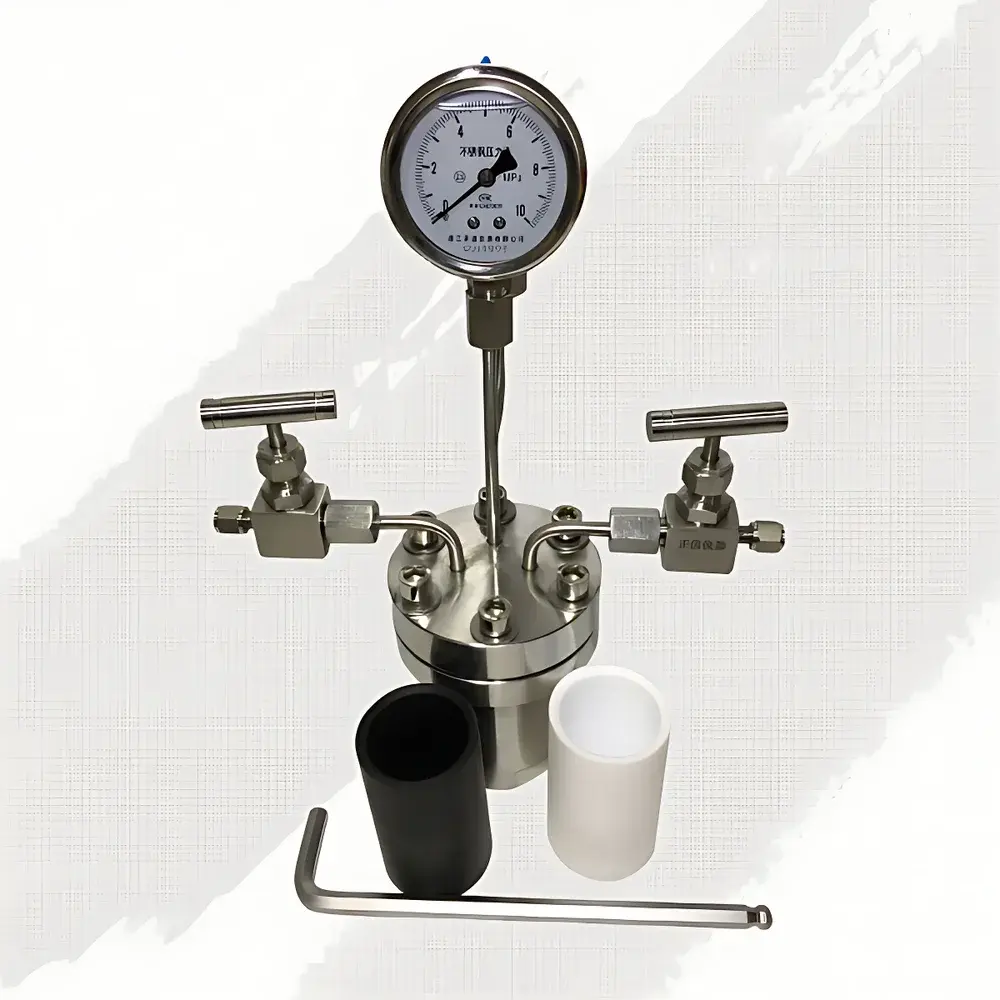
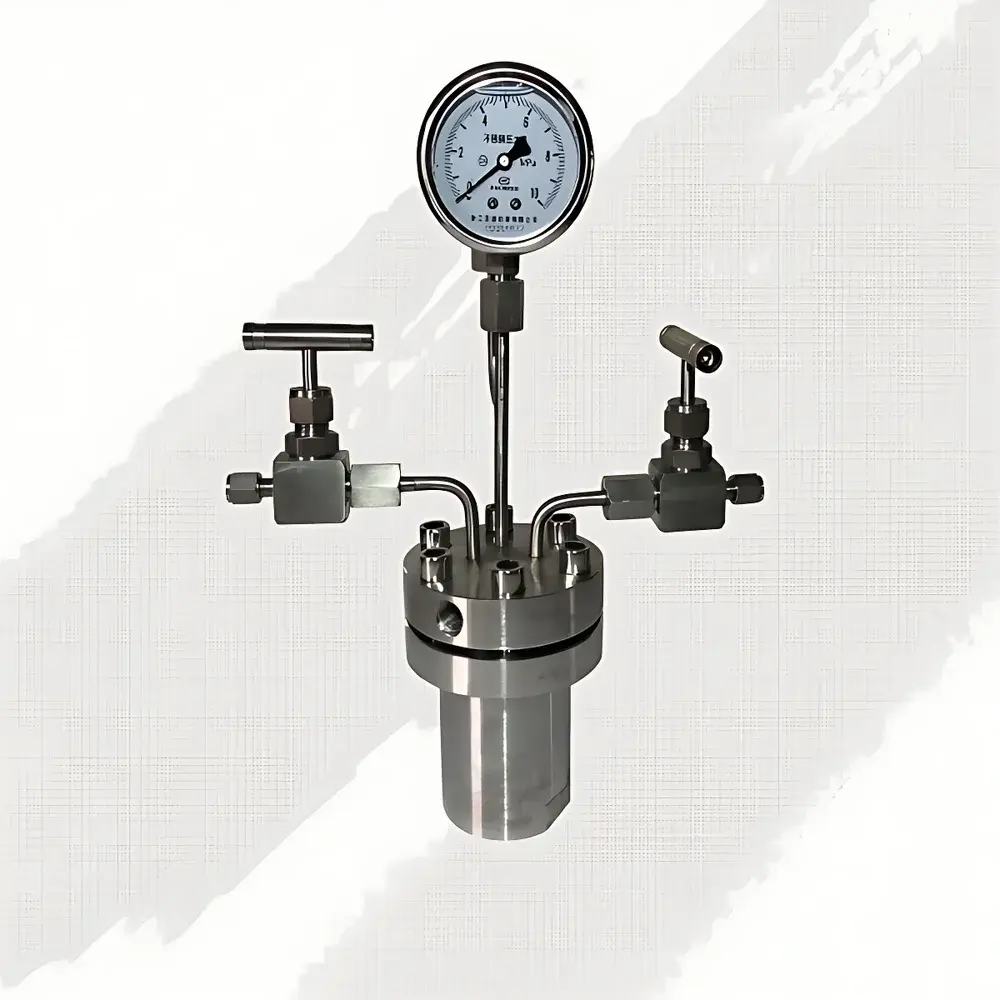
ZXYIQI EP-100ML High-Pressure Digestion Vessel
| Brand | ZXYIQI |
|---|---|
| Origin | Jiangsu, China |
| Manufacturer Type | Authorized Distributor |
| Country of Origin | China |
| Model | EP-100ML |
| Capacity | 100 mL |
| Vessel Material | Stainless Steel (304/316L standard) |
| Operating Pressure Range | –0.1 to 6 MPa |
| Temperature Range | 0–400 °C |
| Vacuum Capability | Up to –0.1 MPa (absolute) |
| Optional Liner Materials | Quartz, Titanium, Hastelloy, Zirconium |
| Optional Accessories | High-Temperature Needle Valves (1/8" & 1/4" Swagelok), Digital Pressure Gauge, PT100 Temperature Sensor, PID LCD Controller (±0.1 °C accuracy), Passive Finned Heat Dissipation, Rupture Disc Safety Relief, Liquid Sampling Tube |
Overview
The ZXYIQI EP-100ML High-Pressure Digestion Vessel is a compact, modular batch reactor engineered for controlled high-temperature, high-pressure chemical digestion, hydrothermal synthesis, and catalytic reaction studies in research and quality control laboratories. Designed around the principles of sealed-vessel pressure containment and thermal equilibrium management, it operates on a static, non-flowing batch configuration where reactants are isolated within a hermetically sealed stainless steel chamber. The vessel leverages ISO-standardized mechanical sealing (dual O-ring + torque-controlled flange closure) and ASME BPVC Section VIII Division 1–informed pressure boundary design to maintain structural integrity under sustained internal pressures up to 6 MPa and temperatures up to 400 °C. Its low-volume geometry (100 mL working capacity) minimizes reagent consumption while enabling rapid thermal response and improved process reproducibility—critical for method development in environmental sample digestion (e.g., EPA Method 3052), geochemical leaching, nanomaterial crystallization, and pharmaceutical intermediate synthesis.
Key Features
- Robust pressure-rated body constructed from ASTM A240 Grade 304 or 316L stainless steel, with optional upgrades to Hastelloy C-276, titanium Grade 2, or zirconium 702 for aggressive halide or fluoride media.
- Modular interface design supporting interchangeable inlet/outlet configurations: 1/8″ and 1/4″ Swagelok-compatible needle valves for precise gas introduction, vacuum evacuation, and inert atmosphere purging.
- Integrated safety architecture featuring dual-layer protection—mechanical rupture disc (set point adjustable between 4–6 MPa) plus passive overpressure venting via calibrated burst pin assembly—compliant with EN 13445-3 Annex C for pressure equipment risk mitigation.
- Thermal management system includes optional finned aluminum heat sinks for passive post-reaction cooling and compatibility with external heating sources including muffle furnaces, sand baths, and programmable heating mantles.
- Standardized 30° conical bottom geometry optimized for complete sample recovery and minimal dead volume; compatible with optional quartz or PTFE-lined inserts for acid-resistant digestion protocols.
- Flange-mounted PT100 Class A sensor port (DIN EN 60751) enables real-time internal temperature monitoring with traceable calibration support per ISO/IEC 17025 requirements.
Sample Compatibility & Compliance
The EP-100ML accommodates solid, liquid, and slurry-phase samples—including soil digests, biological tissues, polymer precursors, and metal oxide suspensions—within its chemically inert internal cavity. When configured with quartz or fluoropolymer liners, it meets ASTM D5511 and USP heavy metal digestion specifications. The vessel’s pressure and temperature rating aligns with ISO 17025 clause 6.4.9 for equipment suitability in accredited testing environments. All metallic components comply with REACH Annex XVII restrictions and FDA 21 CFR 177.1520 for incidental food contact when used with approved liners. Documentation packages include material certifications (EN 10204 3.1), pressure test reports (hydrostatic at 1.5× MAWP), and CE-conformity declarations for laboratory use under Directive 2014/34/EU (ATEX not applicable; non-explosive atmosphere classification).
Software & Data Management
While the base EP-100ML operates as a manually controlled standalone reactor, optional integration with ZXYIQI’s TC-3000 PID controller enables digital logging of temperature and pressure profiles via RS485 Modbus RTU protocol. Data export supports CSV format for downstream analysis in MATLAB, Python (Pandas), or LIMS platforms. The controller firmware incorporates audit trail functionality compliant with FDA 21 CFR Part 11 (electronic signatures, user access levels, change history), supporting GLP/GMP-aligned documentation workflows. Calibration records for integrated sensors are stored internally with timestamped metadata and may be exported for QA review.
Applications
- Environmental analysis: Microwave-free closed-vessel acid digestion of soils, sediments, and plant tissues per EPA 3052 and ISO 11466 protocols.
- Materials science: Hydrothermal growth of MOFs, perovskites, and transition metal dichalcogenides under controlled p–T conditions.
- Pharmaceutical R&D: Solvothermal synthesis of API polymorphs and co-crystals requiring precise solvent vapor pressure control.
- Catalysis research: Screening of heterogeneous catalysts under elevated H₂, CO, or NH₃ partial pressures without continuous flow infrastructure.
- Geochemistry: Simulated diagenetic experiments involving carbonate dissolution and clay mineral transformation at crustal-relevant conditions.
FAQ
Can the EP-100ML be used for hydrogenation reactions under 4 MPa H₂?
Yes—when equipped with 316L body, Hastelloy C-276 valve internals, and appropriate leak-tested Swagelok fittings, the vessel maintains integrity under 4 MPa H₂ at ≤300 °C. Pre-use helium leak testing per ASTM E499 is recommended.
Is third-party calibration certification available for the optional pressure gauge?
Yes—NIST-traceable calibration certificates (ISO/IEC 17025 accredited) can be provided upon request, covering full-scale verification at three points across the 0–6 MPa range.
What is the maximum recommended heating rate during ramp-up to avoid thermal shock?
For optimal seal longevity and liner stability, ZXYIQI recommends a maximum ramp rate of 5 °C/min when operating above 250 °C; slower rates (≤2 °C/min) are advised for quartz-lined configurations.
Does the vessel support automated pressure release via solenoid valve integration?
Not natively—but the 1/4″ outlet port is compatible with externally mounted pneumatic solenoid valves (e.g., Parker 2W series) when paired with a PLC-based safety interlock system meeting IEC 61511 SIL-2 requirements.
Are custom geometries or non-standard volumes (e.g., 75 mL or 150 mL) manufacturable?
Yes—ZXYIQI accepts OEM drawings and dimensional specifications for ASME-stamped custom vessels, subject to minimum order quantity and extended lead time validation per EN 13445 design review procedures.



