
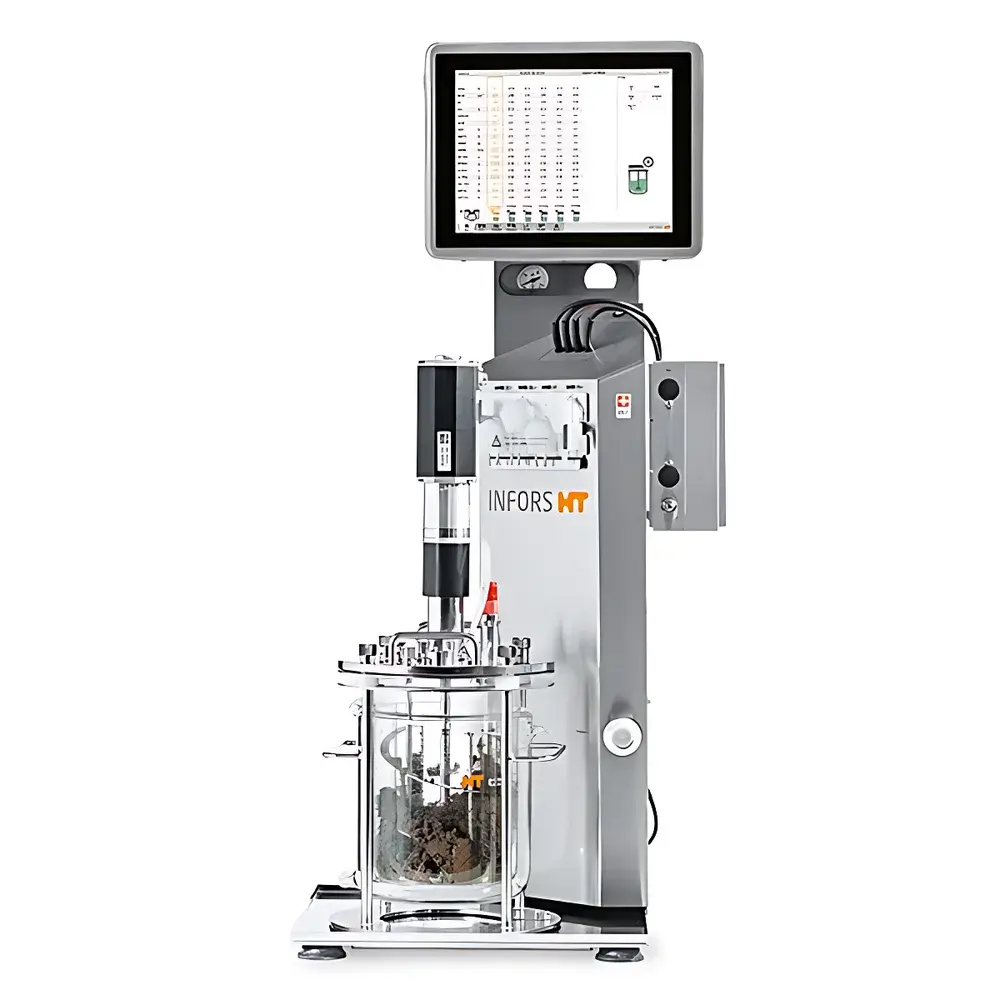
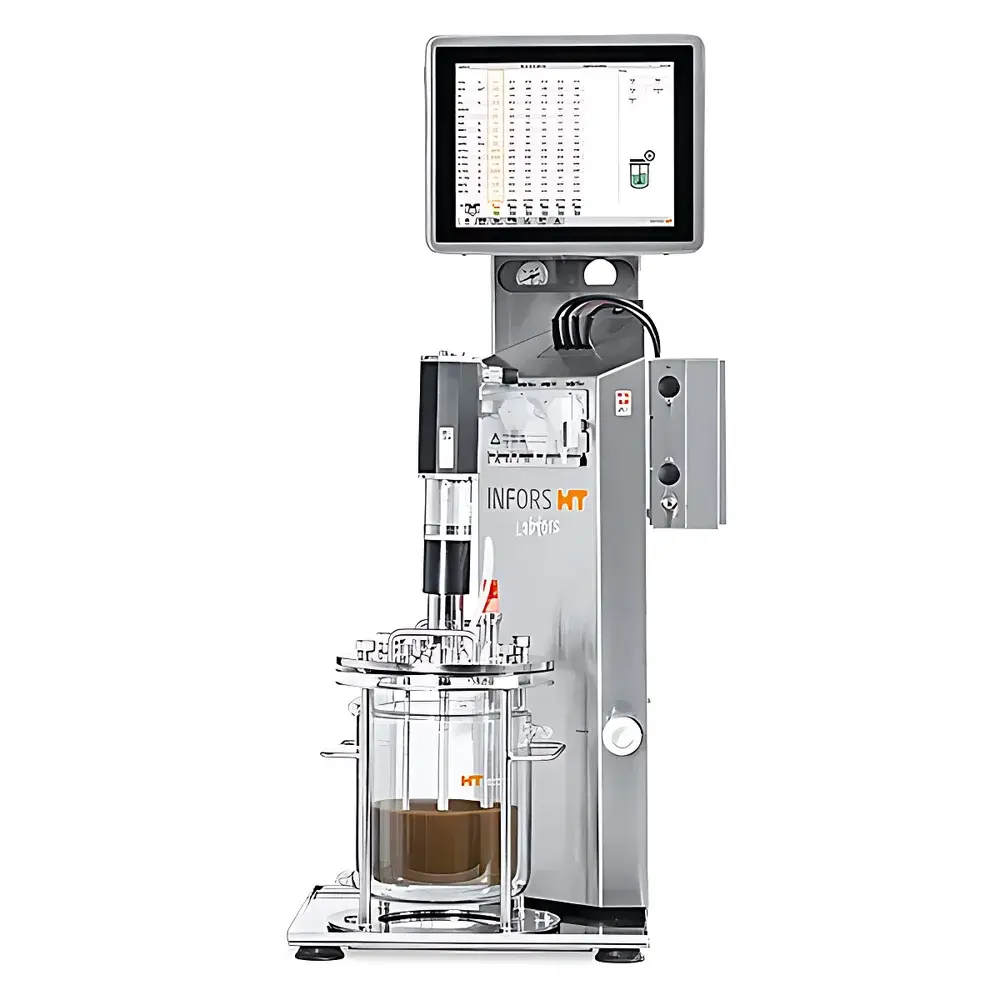
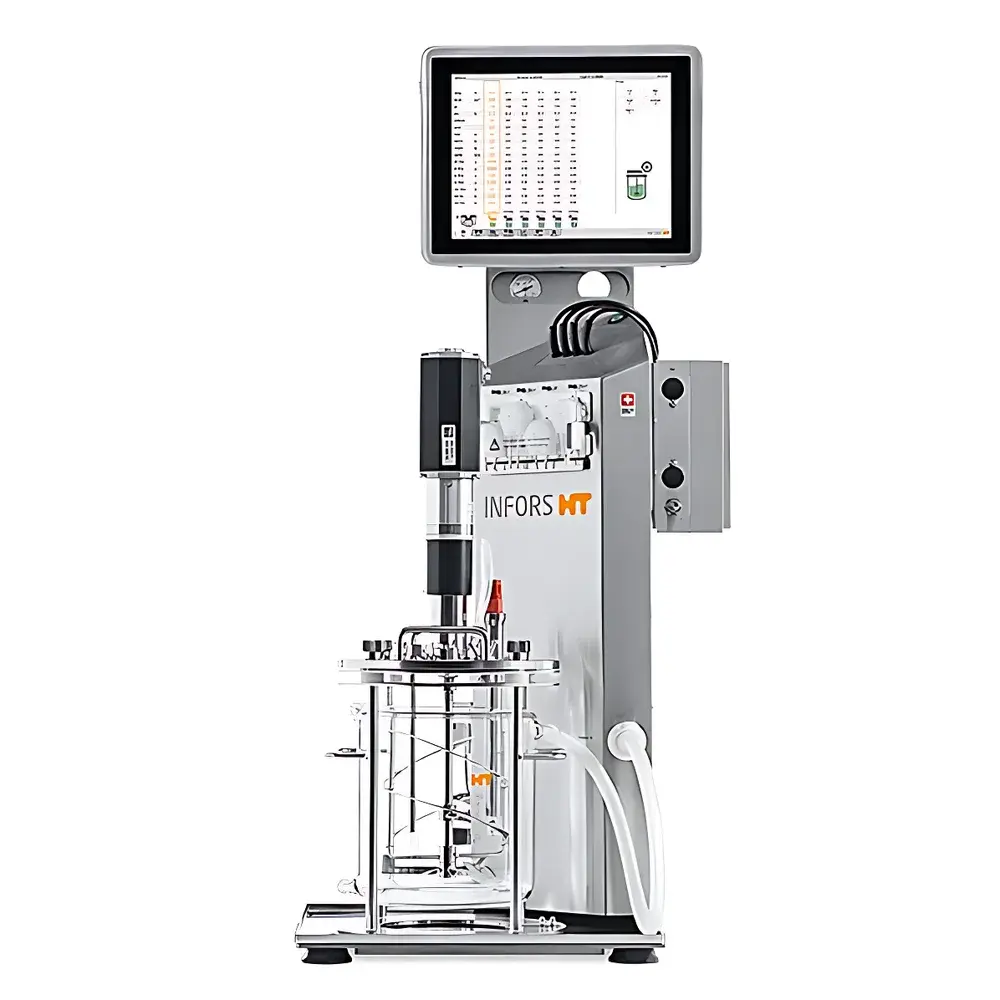
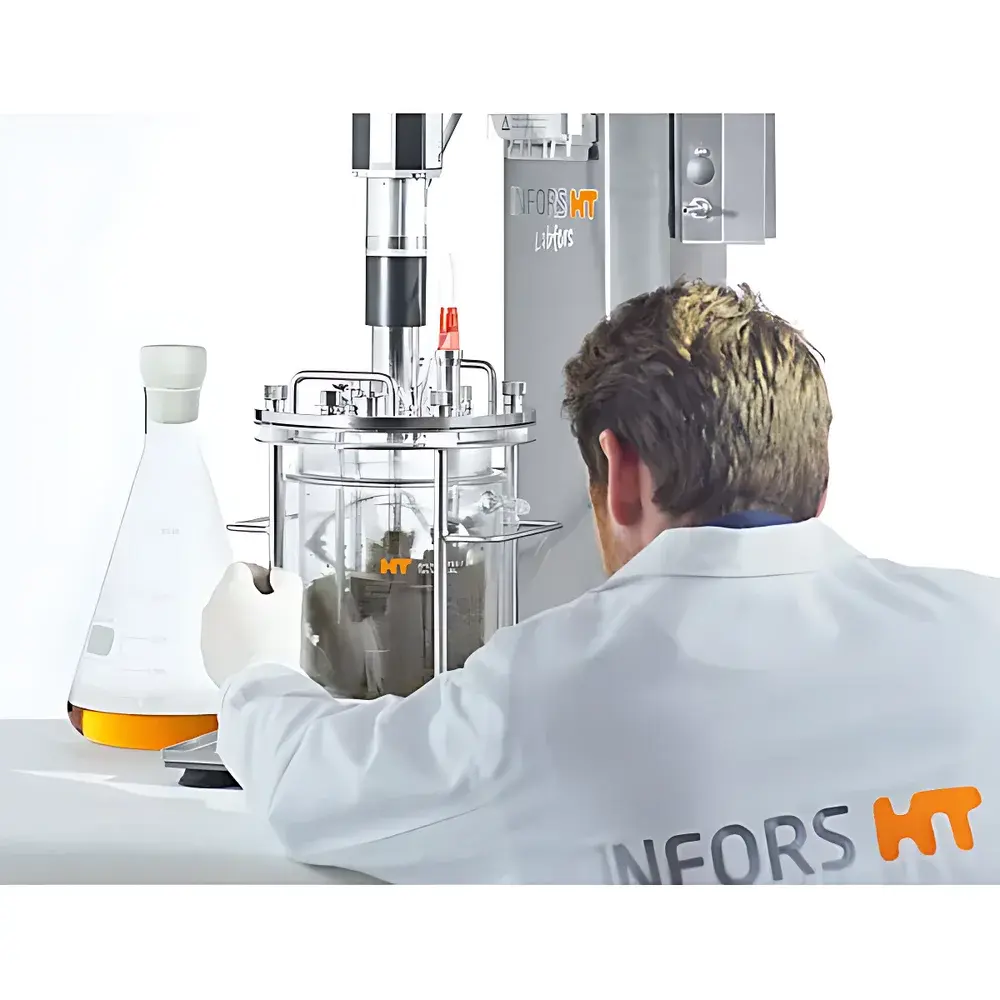
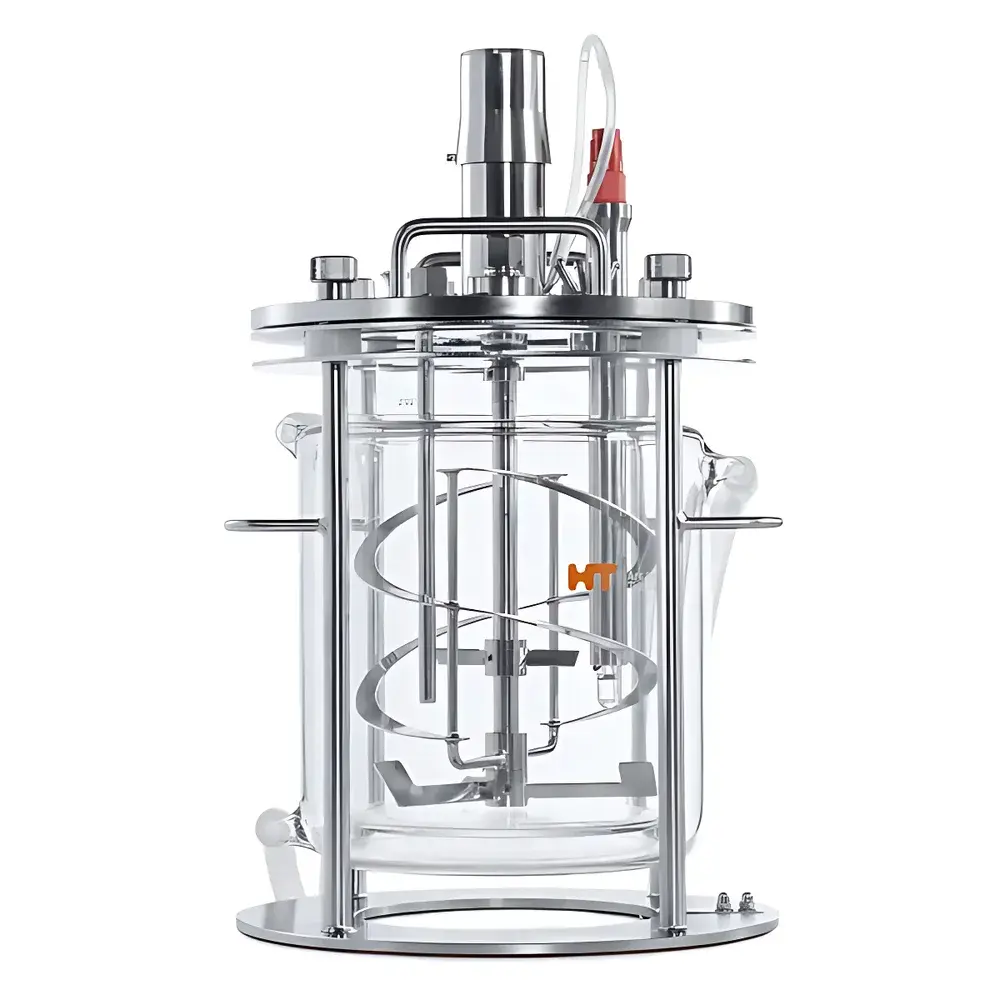
INFORS Labfors BioEtOH Desktop Solid-State Fermenter for Bioethanol Production
| Brand | INFORS |
|---|---|
| Origin | Switzerland |
| Model | Labfors BioEtOH |
| Vessel Total Volume | 3.6 L |
| Working Volume Range | 1.0–2.3 L |
| Temperature Control Range | +5 °C to 60 °C (±0.1 °C accuracy) |
| pH Control Range | 2.00–12.00 (±0.01 accuracy, Mettler Toledo sterilizable electrode) |
| Dissolved Oxygen (pO₂) Control Range | 0–100 % (±0.1 % accuracy, Mettler Toledo sterilizable electrode) |
| Agitation Speed | 0–200 rpm (±1 rpm resolution) |
| In-Situ Probe Integration | Temperature, pH, pO₂, Foam, Optional: Off-Gas CO₂/O₂, Turbidity, Mass, Pressure, Methanol |
Overview
The INFORS Labfors BioEtOH is a purpose-engineered desktop solid-state fermenter designed specifically for integrated saccharification and fermentation (SSF) in bioethanol and advanced biofuel research. Unlike conventional submerged liquid fermenters, the Labfors BioEtOH employs a high-torque top-driven agitation system combined with multi-zone thermal management and precision gas-phase control to maintain optimal enzymatic activity and microbial viability under high-viscosity, semi-solid, or lignocellulosic substrate conditions. Its core architecture follows Couette-type mixing principles adapted for heterogeneous biomass—utilizing hybrid impeller configurations (helical, anchor, bottom-lift, and shear blades) to ensure uniform mass transfer, wall-scraping, and bed homogenization without mechanical attrition. Developed over four decades of bioreactor engineering experience and co-validated with industrial partners including Roche and Novartis in the European Bio Valley, the system meets the stringent reproducibility and traceability requirements of GLP-compliant fermentation development workflows.
Key Features
- Hybrid agitation system: Helical + anchor + bottom-lift + shear blade configuration enables effective mixing across viscosity gradients—from dry solids to slurry-like consistency—while preserving enzyme integrity and minimizing shear-induced cell lysis.
- Dual-point temperature monitoring and control: Independent sensors in both the jacket water circuit and vessel core enable dynamic compensation for thermal lag, ensuring ±0.1 °C stability critical for cellulase and hemicellulase activity retention during SSF.
- Horizontally arranged, quick-release peristaltic pump module: Four sterilizable pumps mounted in parallel reduce cross-contamination risk; modular head design allows simultaneous removal and replacement of all four pump heads in under 90 seconds—minimizing downtime during media exchange or acid/base addition.
- Integrated sterilizable probe suite: Factory-calibrated Mettler Toledo pH and pO₂ electrodes rated for repeated autoclaving (121 °C, 20 min, 1 bar); real-time foam detection via conductivity-based sensor; optional integration of off-gas analyzers (CO₂/O₂), turbidity, mass balance (via analytical balance interface), pressure, and methanol sensors.
- 12.1″ industrial-grade touchscreen controller with embedded Linux OS: Supports OPC UA protocol for lab-wide SCADA integration; configurable cascade logic (e.g., pO₂ → agitation → gas blending); up to six fermenters controlled from one interface with synchronized parameter logging and overlay-capable trend visualization.
Sample Compatibility & Compliance
The Labfors BioEtOH accommodates substrates ranging from pretreated wheat straw and corn stover to sugarcane bagasse and energy sorghum—both in dry (<15 % moisture) and semi-solid (30–60 % moisture) formats. Its 316L stainless steel lid and thick-walled borosilicate glass double-jacketed vessel (3.6 L total volume, 70 % jacket surface coverage) support validated in-place and off-line sterilization protocols compliant with ISO 13408-1 and ASTM E2614. The system supports ASME BPE-compliant fluid path design and includes an integrated inoculation ring kit that minimizes aerosol generation during seed transfer—reducing contamination incidence to <10⁻⁴ per batch under GMP-aligned operation. All control algorithms adhere to FDA 21 CFR Part 11 requirements for electronic records and signatures when paired with INFORS’ optional audit trail and user-role management software module.
Software & Data Management
Control firmware is built on a deterministic real-time kernel with millisecond-level I/O response latency. Process data—including 24 configurable parameters—are timestamped at 100 ms intervals and stored locally in encrypted SQLite databases compliant with ISO/IEC 27001 security benchmarks. Export options include CSV, HDF5, and vendor-neutral ASAM ODS format for downstream analysis in MATLAB, Python (Pandas/NumPy), or commercial bioprocess modeling tools (e.g., SuperPro Designer, gPROMS). The controller supports secure remote access via TLS 1.3 and integrates natively with LIMS platforms through RESTful API endpoints. Audit trails record all parameter changes, user logins, alarm events, and calibration actions with immutable hash signatures—fully supporting regulatory submissions to EMA, FDA, and PMDA.
Applications
- Simultaneous saccharification and fermentation (SSF) of lignocellulosic feedstocks under controlled thermophilic or mesophilic regimes.
- Enzyme kinetics profiling under dynamic pH/pO₂ setpoint modulation—enabling identification of optimal operational windows for commercial cellulase cocktails.
- Strain screening for consolidated bioprocessing (CBP) candidates under realistic rheological stress conditions.
- Process intensification studies evaluating impact of mixing energy input on ethanol yield, glycerol byproduct formation, and inhibitor tolerance.
- Scale-down model validation for pilot- and production-scale solid-state bioreactors used in second-generation biofuel facilities.
FAQ
What substrate moisture ranges are supported?
The system is validated for operation between 15–65 % (w/w) moisture content, covering dry solid-state fermentation (SSF), moist solid-state fermentation (MSSF), and high-solid slurry fermentation.
Is the vessel suitable for repeated autoclaving?
Yes—the borosilicate glass vessel and 316L lid assembly are rated for ≥500 cycles of steam sterilization at 121 °C, 20 min, per DIN EN 285 standards.
Can pO₂ be controlled independently or only via cascade logic?
Both modes are supported: standalone PID control for pO₂, or fully programmable cascade configurations linking pO₂ to agitation speed, air/N₂/O₂ flow ratio, or headspace pressure.
How is foam managed during extended SSF runs?
Foam detection uses a dual-electrode conductivity probe; automated antifoam addition is triggered via peristaltic pump with user-defined threshold hysteresis and dose ramping profiles.
Does the system support PAT (Process Analytical Technology) integration?
Yes—native support for NIR probe interfaces (e.g., Metrohm NearIR), Raman spectrometers, and inline HPLC systems via analog/digital I/O expansion modules and Modbus TCP gateways.
Related Products




