
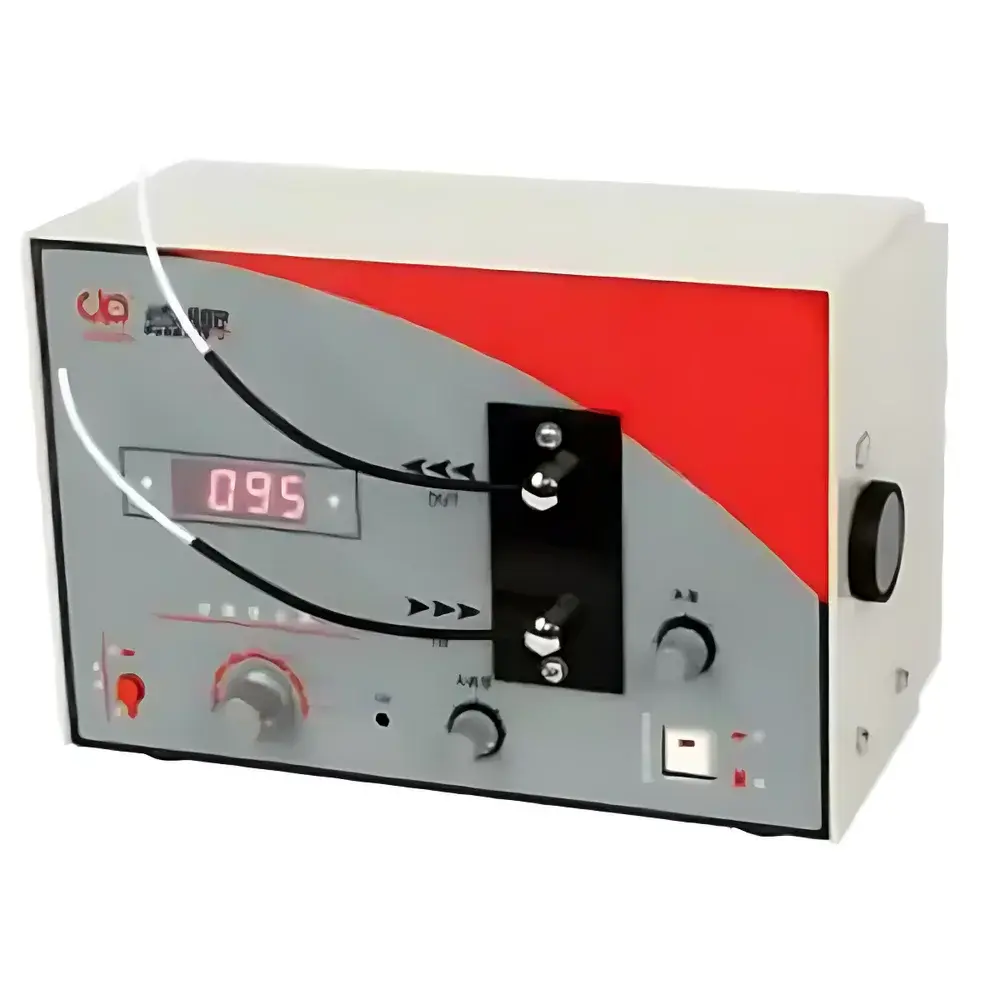
JD-3000 HD-3000 Computer-Controlled Nucleic Acid & Protein UV Detector with Integrated Chromatography Workstation
| Brand | Jiapeng |
|---|---|
| Origin | Shanghai, China |
| Model | HD-3000 |
| Detection Principle | UV Absorbance (214 nm, 254 nm, 280 nm, 340 nm) |
| Optical Path Length | 4 mm |
| Flow Cell Volume | 80 µL |
| Minimum Detectable Concentration | 48 µg/mL (at 280 nm, for BSA) |
| Absorbance Range | 0.05 A to 2 A (6 selectable ranges) |
| Wavelength Accuracy | ±1 nm |
| Data Interface | USB + RS-232 (COM) |
| Software | Proprietary chromatographic data acquisition & analysis suite (Windows XP/7/10 compatible) |
| Column Compatibility | Standard GE Healthcare/AKTA-compatible fittings (1/16" OD tubing, female Luer lock inlet/outlet) |
| Compliance | Designed per ISO/IEC 17025-relevant instrumentation requirements for analytical lab use |
Overview
The JD-3000 HD-3000 Computer-Controlled Nucleic Acid & Protein UV Detector is a benchtop absorbance-based analytical instrument engineered for real-time monitoring of biomolecular elution during liquid chromatography purification workflows. It operates on the principle of ultraviolet absorbance spectroscopy, leveraging fixed-wavelength LED sources at 214 nm (peptide bond), 254 nm (nucleic acid backbone), 280 nm (aromatic amino acids), and 340 nm (reference/background correction) to quantify macromolecules in flowing mobile phase streams. The detector integrates a precision-machined fused silica flow cell (4 mm optical path, 80 µL internal volume) optimized for low dispersion and minimal band broadening—critical for maintaining resolution in fast protein liquid chromatography (FPLC) and ion exchange chromatography (IEX) applications. Unlike standalone analog detectors, the HD-3000 embeds a dedicated microcontroller and native chromatography workstation firmware, enabling autonomous peak detection, baseline correction, and real-time absorbance ratio calculation (e.g., A260/A280) without external PC dependency during acquisition.
Key Features
- Triple-channel simultaneous absorbance readout: displays real-time OD values at three user-selectable wavelengths (e.g., 254 nm + 280 nm + reference), facilitating immediate assessment of sample purity and buffer compatibility
- High-stability optical architecture: imported high-intensity UV LEDs with uniform spectral output and <5-minute thermal equilibration time, minimizing baseline drift (<±0.002 A/h under constant temperature conditions)
- Integrated data acquisition engine: onboard memory stores up to 10,000 data points per run; supports auto-scaling, derivative plotting, and retention time marking directly on the 3.5-inch LED display
- Dual-interface connectivity: USB 2.0 and RS-232 ports enable seamless integration with Windows-based laboratory PCs and legacy control systems; driver-free plug-and-play operation on Windows XP through Windows 10
- AKTA-compatible fluidics interface: standardized 1/16″ stainless steel tubing connections and Luer-lock fittings allow direct coupling to ÄKTA pure, ÄKTA avant, or custom-built IEX/FPLC manifolds without adapters
- Calibration traceability: factory-calibrated using NIST-traceable neutral density filters; optional user-performed wavelength and photometric verification protocols included in software suite
Sample Compatibility & Compliance
The HD-3000 is validated for continuous-flow detection of proteins (including monoclonal antibodies, enzymes, and recombinant fragments), nucleic acids (dsDNA, ssDNA, RNA), and small biomolecules (peptides, cofactors) across physiological and denaturing mobile phases (e.g., NaCl gradients in 20 mM Tris-HCl, pH 7.5–8.5; imidazole gradients in PBS). Its flow cell design accommodates typical FPLC flow rates from 0.1 to 5 mL/min with negligible backpressure (<15 psi at 2 mL/min). While not certified for GMP manufacturing environments, the system meets essential design criteria aligned with ISO 15195:2018 (requirements for reference measurement laboratories) and supports implementation of GLP-compliant workflows when paired with version-controlled software, electronic signature-enabled reporting modules, and periodic performance qualification (PQ) per laboratory SOPs. It is routinely deployed in academic core facilities and R&D labs conducting method development for USP Analytical Instrument Qualification.
Software & Data Management
The bundled chromatography software provides full acquisition, visualization, and post-run analysis capabilities—including peak integration (tangent skim, perpendicular drop), retention time alignment, area normalization, and export to CSV, PDF, or XML formats for LIMS ingestion. All raw signal files (.jda) retain embedded metadata (date/time stamp, wavelength settings, range selection, user ID). Audit trail functionality logs operator actions, parameter changes, and file modifications in chronological order—supporting 21 CFR Part 11 compliance when deployed on domain-joined Windows systems with enabled Group Policy controls. Data backups are automated via configurable network folder synchronization, and software updates are delivered as digitally signed installers with SHA-256 checksum verification.
Applications
- Optimization of ion exchange chromatography (IEX) gradient profiles for antibody purification
- Monitoring elution kinetics during size exclusion chromatography (SEC) of protein aggregates
- Quantitative tracking of DNA plasmid recovery in anion exchange polishing steps
- Real-time assessment of column fouling via baseline noise and drift trends
- Method transfer validation between research-scale and pilot-scale purification systems
- Educational demonstration of Beer-Lambert law application in biomolecular quantification
FAQ
Does the HD-3000 support variable wavelength scanning?
No. It operates at discrete, user-selected fixed wavelengths (214, 254, 280, or 340 nm) to maximize signal-to-noise ratio and photometric stability during continuous flow detection.
Can the flow cell be cleaned with organic solvents such as acetonitrile or methanol?
Yes—the fused silica flow cell and PEEK wetted components are chemically resistant to common HPLC-grade solvents; however, prolonged exposure to >50% TFA or strong oxidizers (e.g., sodium hypochlorite) is not recommended.
Is third-party software (e.g., Chromeleon, Empower) compatible with the HD-3000?
Only via analog voltage output (0–1 V DC corresponding to 0–2 A); native digital communication requires the proprietary software stack due to custom packet protocol and timing constraints.
What is the maximum recommended flow rate before laminar flow disruption occurs?
For optimal peak shape fidelity and minimal extra-column dispersion, maintain flow rates ≤3 mL/min when using standard 1/16″ tubing and the supplied flow cell; higher rates may require recalibration of response factor.
How frequently should wavelength accuracy be verified?
Per ISO/IEC 17025 recommendations, verify annually—or after any physical impact, lamp replacement, or sustained environmental temperature fluctuation exceeding ±5°C—using certified holmium oxide or didymium glass filters.
Related Products



