
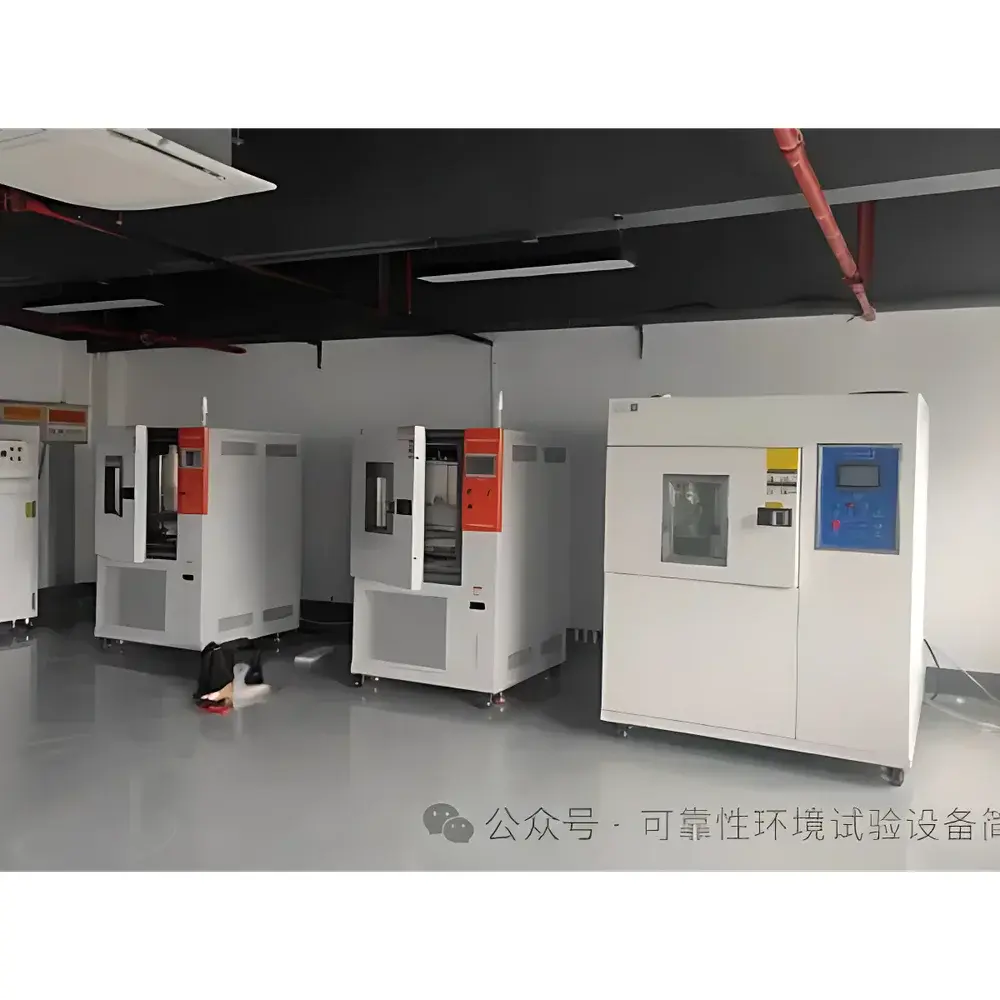
Jianhu JH-Series Rapid-Cooling Ice-Water Thermal Shock Test Chamber
| Brand | Jianhu |
|---|---|
| Origin | Shanghai, China |
| Manufacturer Type | Authorized Distributor |
| Product Category | Domestic |
| Model | JH-Series Rapid-Cooling Ice-Water Thermal Shock Test Chamber |
| Price Range | USD 950 – 95,000 |
Overview
The Jianhu JH-Series Rapid-Cooling Ice-Water Thermal Shock Test Chamber is an engineered environmental reliability testing system designed to perform accelerated thermal shock testing via controlled, high-velocity ice-water impingement combined with rapid low-temperature exposure. Unlike conventional thermal shock chambers relying solely on air-based temperature transitions, this system integrates cryogenic cooling (typically −40 °C to −70 °C) with precisely metered sub-zero aqueous spray—mimicking real-world transient thermal and mechanical stress conditions such as road-spray icing, cold-start fluid ingress, or rapid condensation-induced thermal gradients. Its core architecture employs a dual-stage cascade refrigeration system coupled with programmable high-pressure water delivery, enabling temperature transition rates exceeding 15 °C/min between ambient and cryogenic setpoints. This capability supports accelerated aging protocols compliant with IEC 60068-2-14 (change of temperature), MIL-STD-810H Method 503.6 (temperature shock), and automotive OEM specifications including GMW 3172 and Ford CETP 00.00-L-467.
Key Features
- Multi-stage cascade refrigeration system delivering stable operation down to −70 °C with ≤ ±0.5 °C chamber uniformity (per IEC 60068-3-5)
- Programmable ice-water spray module: adjustable flow rate (0.5–5.0 L/min), impact pressure (0.2–1.2 MPa), and nozzle angle (±15° to ±60°)
- Independent control of thermal and hydraulic subsystems for synchronized or decoupled test profiles
- Touchscreen HMI with embedded test sequence editor supporting up to 999-step cycles, dwell times from 1 s to 999 h, and conditional branching logic
- Stainless steel 316L inner chamber with corrosion-resistant insulation and leak-tested water manifold
- Integrated safety interlocks: overpressure relief, low-refrigerant cut-off, emergency thermal shutdown, and spray-zone door interlock
Sample Compatibility & Compliance
The chamber accommodates specimens up to 600 × 600 × 600 mm (W × D × H) with standardized mounting fixtures for automotive ECUs, brake calipers, optical sensors, and PCB assemblies. It supports testing per ISO 16750-4 (road vehicles — environmental conditions), ASTM D3418 (thermal transitions of polymers), and IPC-9701A (performance requirements for printed board assemblies). All operational logs—including temperature, spray duration, pressure, and cycle count—are timestamped and stored with audit-trail capability compliant with GLP and ISO/IEC 17025 documentation requirements. Optional validation packages include IQ/OQ documentation aligned with FDA 21 CFR Part 11 electronic record controls.
Software & Data Management
Equipped with Jianhu’s proprietary TestMaster™ v4.2 software, the system provides real-time multi-channel monitoring (up to 16 thermocouple inputs + 4 pressure transducers), automated report generation in PDF/CSV/XLSX formats, and secure remote access via TLS 1.2-encrypted Ethernet or optional 4G LTE. Data integrity is ensured through cyclic redundancy checksums, write-once-read-many (WORM) storage mode, and user-role-based permissions (Administrator, Operator, Viewer). Historical data archives are retained for ≥10 years with automatic backup to NAS or cloud storage (AWS S3 or Azure Blob compatible). Software complies with IEEE 1012-2016 (system verification and validation) and supports traceable calibration certificate import per ISO/IEC 17025.
Applications
This test chamber is routinely deployed in R&D and QA labs across automotive Tier-1 suppliers (e.g., Bosch, Continental), aerospace component manufacturers (e.g., Safran, GE Aviation), and medical device firms validating implantable electronics under IEC 60601-1 Clause 11.1 (environmental testing). Specific use cases include: evaluating seal integrity of EV battery enclosures under repeated ice-water冲击; assessing solder joint fatigue in ADAS radar modules subjected to −40 °C soak followed by 5 °C/s ramp and 30 s ice-water jet; verifying thermal shock resistance of fiber-optic connectors exposed to arctic maritime conditions; and qualifying polymer housing materials for outdoor telecom cabinets per Telcordia GR-3108. Its flexibility extends to academic research in materials science, where it enables controlled study of phase-change-induced microcracking in composite laminates.
FAQ
What temperature range does the chamber support during ice-water thermal shock cycles?
Standard operating range: −70 °C to +150 °C for thermal zones; ice-water spray delivered at −2 °C to −10 °C (adjustable via chiller setpoint).
Can the system be integrated into an existing lab automation framework?
Yes—equipped with Modbus TCP, OPC UA, and RS-485 interfaces; SDK available for Python/C++ custom integration.
Is third-party calibration and certification supported?
Factory calibration includes NIST-traceable thermocouples and pressure transducers; full UKAS/DAkkS-accredited calibration services available upon request.
How is water purity managed to prevent nozzle clogging?
Integrated deionized water filtration (0.2 µm membrane + UV sterilization); optional reverse-osmosis pre-treatment package for extended maintenance intervals.
Does the system meet CE marking requirements for electromagnetic compatibility?
Yes—certified to EN 61326-1:2013 (EMC for laboratory equipment) and EN 61000-6-3:2011 (emission limits).



