
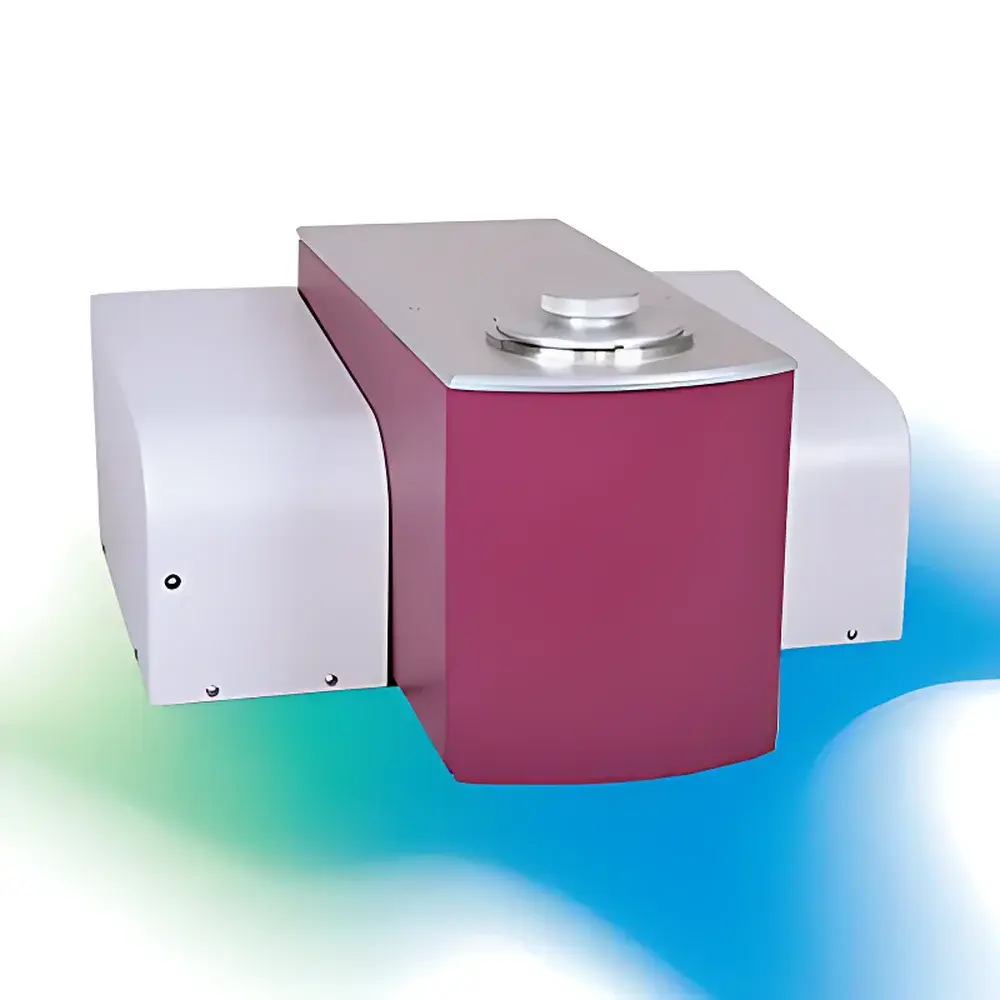
JWGB DSC600 Differential Scanning Calorimeter
| Brand | JWGB |
|---|---|
| Origin | USA |
| Manufacturer Type | Original Equipment Manufacturer (OEM) |
| Product Category | Imported Instrument |
| Model | DSC 600 |
| Sample Capacity | Single-sample |
| Instrument Type | Differential Scanning Calorimeter |
| Temperature Range | −150 °C to 600 °C |
| Temperature Accuracy | ±0.1 °C |
| Heating/Cooling Rate | 0.1–200 °C/min |
| Temperature Precision | ±0.1 °C |
Overview
The JWGB DSC600 Differential Scanning Calorimeter is a high-precision thermal analysis instrument engineered for quantitative measurement of heat flow differences between a sample and an inert reference as a function of temperature or time. It operates on the principle of heat-flux DSC, utilizing a symmetrical, dual-sensor micro-fabricated platform to detect minute thermal events with exceptional baseline stability and signal-to-noise ratio. Designed for rigorous laboratory environments—including QC/QA labs, R&D centers, and academic thermal physics facilities—the DSC600 delivers reproducible data for thermodynamic and kinetic characterization across a broad operational range (−150 °C to 600 °C). Its architecture integrates fundamental calorimetric theory with modern electronics: the 24-bit high-resolution analog-to-digital conversion system ensures sub-microW sensitivity, while the USB-native interface enables deterministic data acquisition timing and seamless integration into automated lab networks.
Key Features
- High-sensitivity heat-flux sensor platform with dual symmetric thermopile arrays, optimized for low-drift, high-reproducibility thermal event detection.
- Ultra-low thermal mass furnace constructed from high-purity silver, enabling rapid thermal response (<1.5 s time constant), excellent temperature homogeneity (±0.05 °C across sample zone), and superior thermal conductivity for precise rate control.
- Pre-heated purge gas delivery system—gas is conditioned to within ±0.5 °C of setpoint prior to entering the furnace chamber—to eliminate thermal shock and ensure consistent atmosphere control during dynamic scans.
- Modular furnace geometry with minimal footprint (W × D × H: 320 × 380 × 410 mm), facilitating benchtop deployment in space-constrained analytical laboratories.
- Optional cryogenic cooling modules: liquid nitrogen (LN₂) cooling for rapid quenching to −150 °C and mechanical refrigeration unit (MRU) for stable, maintenance-free sub-ambient operation down to −80 °C.
- Integrated sample containment accessories including crimp-seal press for hermetic aluminum pans, reducing volatilization artifacts and improving repeatability in volatile or hygroscopic samples.
Sample Compatibility & Compliance
The DSC600 accommodates standard 40 µL and 100 µL aluminum crucibles (hermetically sealed or vented), platinum crucibles for aggressive chemistries, and custom-designed high-pressure cells (up to 10 bar). It supports solid polymers, pharmaceutical actives and excipients, inorganic salts, energetic materials, composites, and biological macromolecules. The instrument complies with ASTM E794 (melting point), ASTM E1356 (glass transition), ISO 11357 series (plastics thermal behavior), and USP (thermal analysis of pharmaceuticals). Data integrity protocols align with FDA 21 CFR Part 11 requirements via Infinity Pro software audit trails, electronic signatures, and immutable raw-data archiving.
Software & Data Management
Controlled exclusively by Infinity Pro™—a Windows-based, GxP-ready application—the DSC600 supports method-driven workflows, real-time baseline correction, multi-step temperature programs (including isothermal holds, modulated DSC, and step-scan protocols), and automated peak deconvolution using Gaussian-Lorentzian fitting algorithms. All raw thermograms are stored in vendor-neutral .DSC binary format with embedded metadata (operator ID, instrument serial, calibration timestamp, atmospheric conditions). Export options include ASCII CSV, Excel-compatible .XLSX, and PDF reports compliant with GLP documentation standards. Software validation packages (IQ/OQ/PQ) and electronic record retention modules are available for regulated environments.
Applications
- Determination of enthalpy of fusion (ΔHfus) and crystallinity in semi-crystalline thermoplastics (e.g., PE, PP, PET).
- Characterization of glass transition temperature (Tg) and enthalpic relaxation in amorphous polymers and pharmaceutical glasses.
- Quantitative purity assessment via van’t Hoff analysis of melting point depression.
- Thermal stability profiling of catalysts, battery electrode materials, and nuclear fuel simulants under inert or oxidative atmospheres.
- Reaction kinetics modeling (e.g., epoxy curing, phenolic resin crosslinking) using isoconversional methods (Friedman, Ozawa-Flynn-Wall).
- Specific heat capacity (Cp) measurement using sapphire calibration and quasi-isothermal scanning protocols.
FAQ
What calibration standards are recommended for routine verification?
Indium, zinc, tin, and lead are certified reference materials per ASTM E967 and ISO 11357-1; calibration includes onset temperature, peak temperature, and enthalpy accuracy checks.
Can the DSC600 perform modulated DSC (MDSC®)?
Yes—Infinity Pro software supports both conventional and temperature-modulated DSC modes with user-defined amplitude/frequency parameters for reversing/non-reversing heat flow separation.
Is the instrument compatible with inert, oxidative, and reducing atmospheres?
Standard configuration includes dual-gas manifold with MFC-controlled N₂, O₂, and Ar; optional gas-switching module enables automatic atmosphere change during a single run.
How is data traceability maintained in regulated laboratories?
All acquisitions generate time-stamped, digitally signed audit logs; raw files are write-protected upon save and linked to user credentials and calibration history.
What maintenance intervals are specified for optimal long-term performance?
Furnace sensor linearity verification every 6 months; purge gas filter replacement quarterly; full system IQ/OQ every 12 months per manufacturer’s service manual.



