
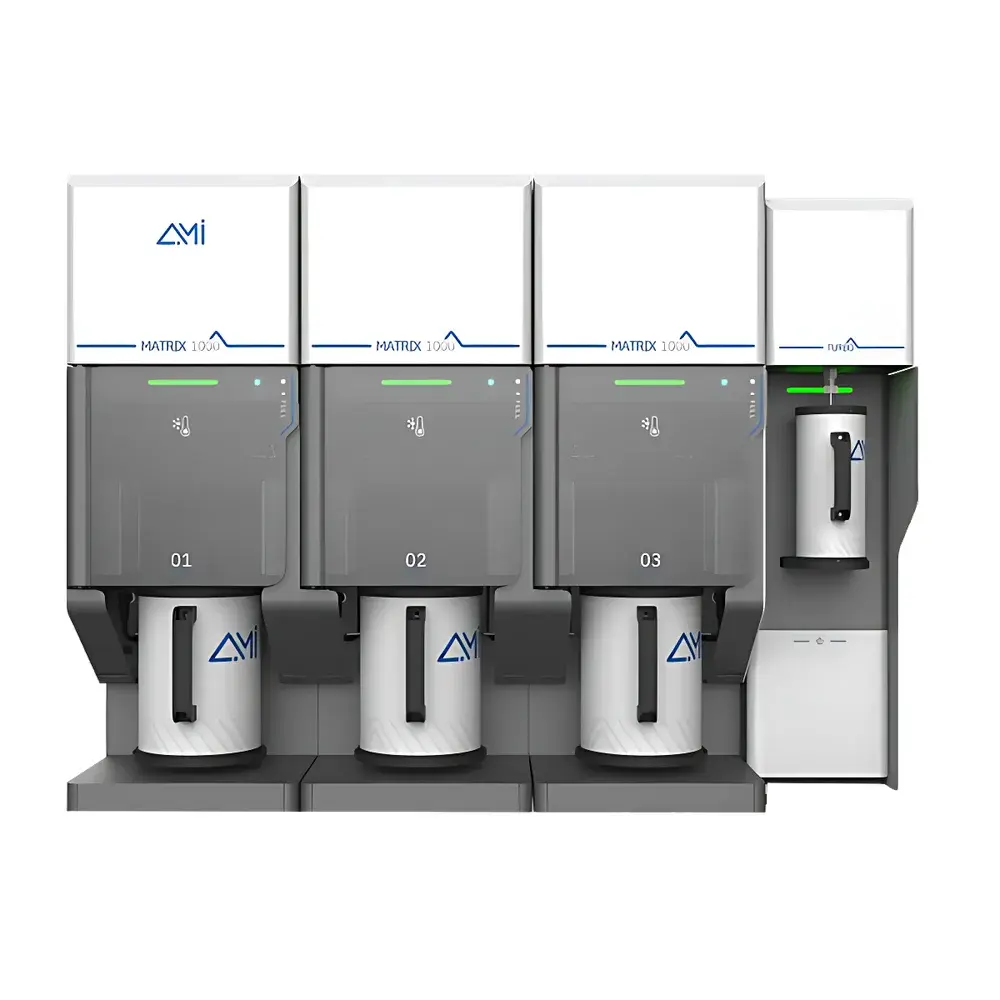
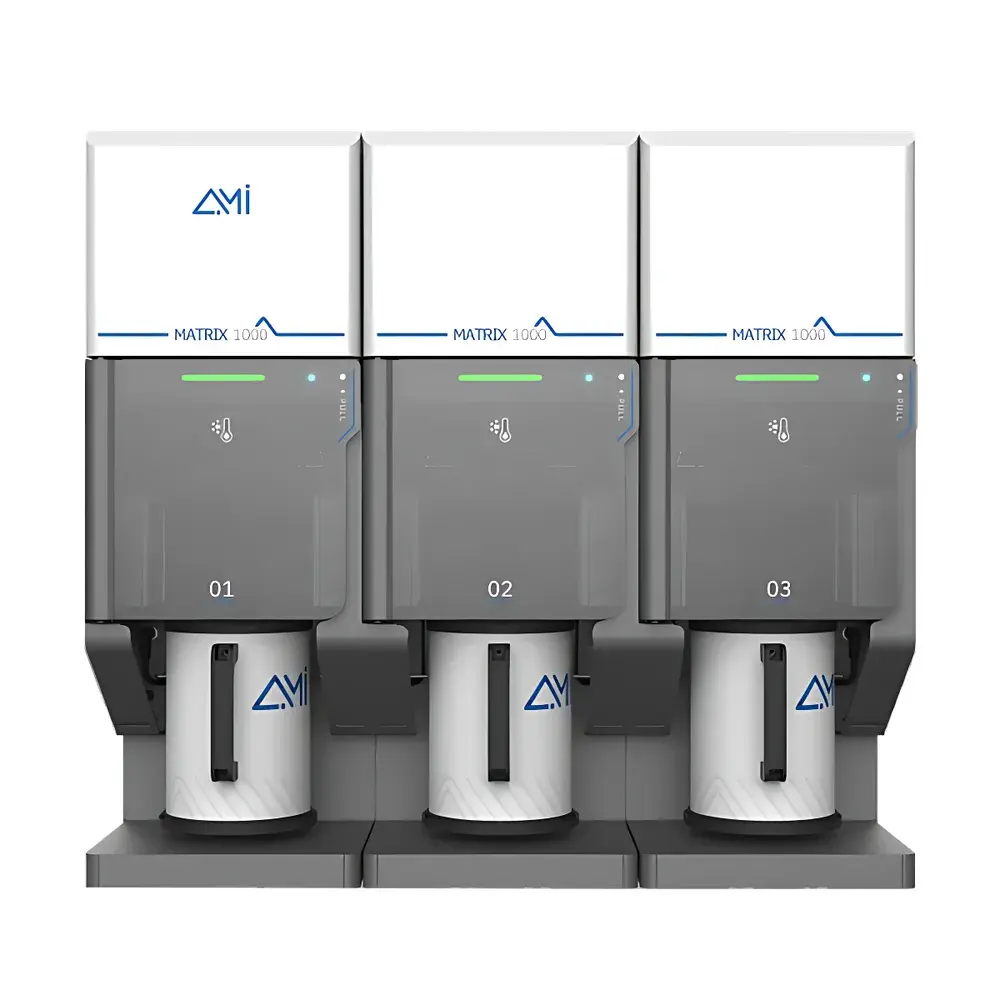
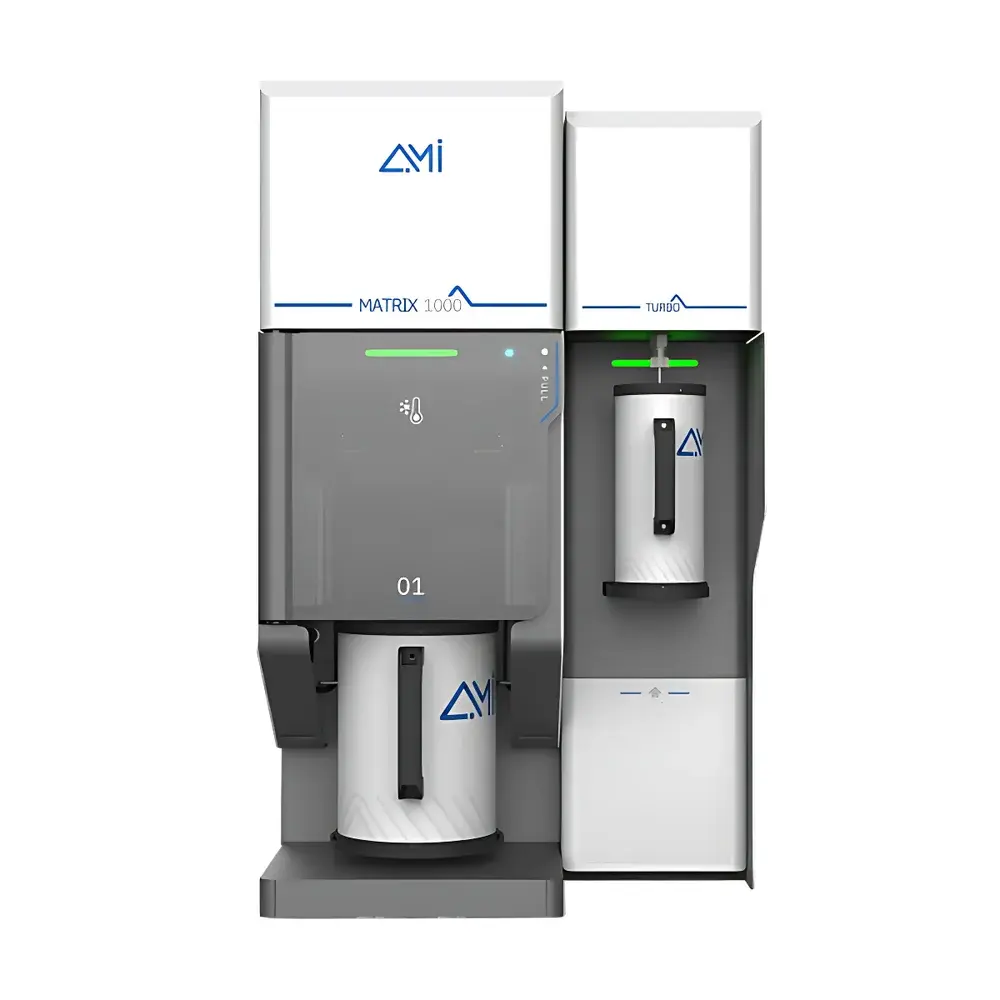
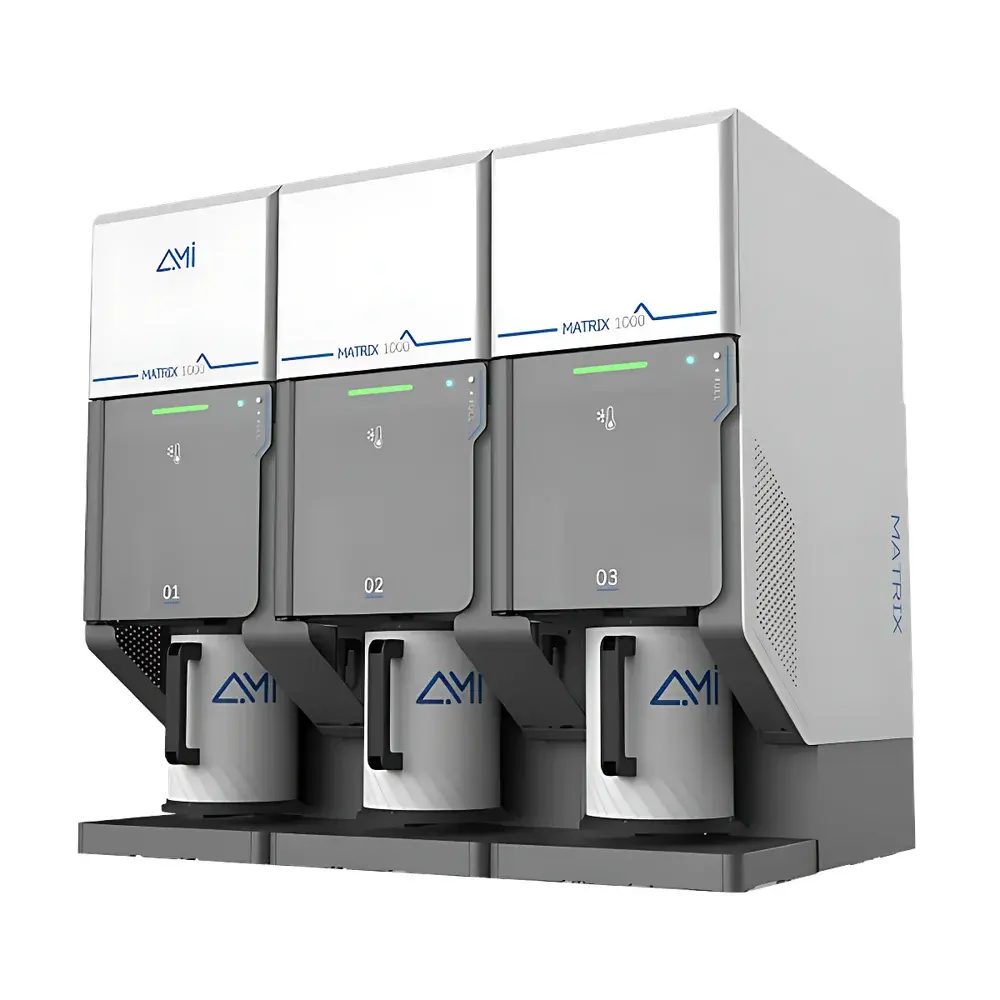
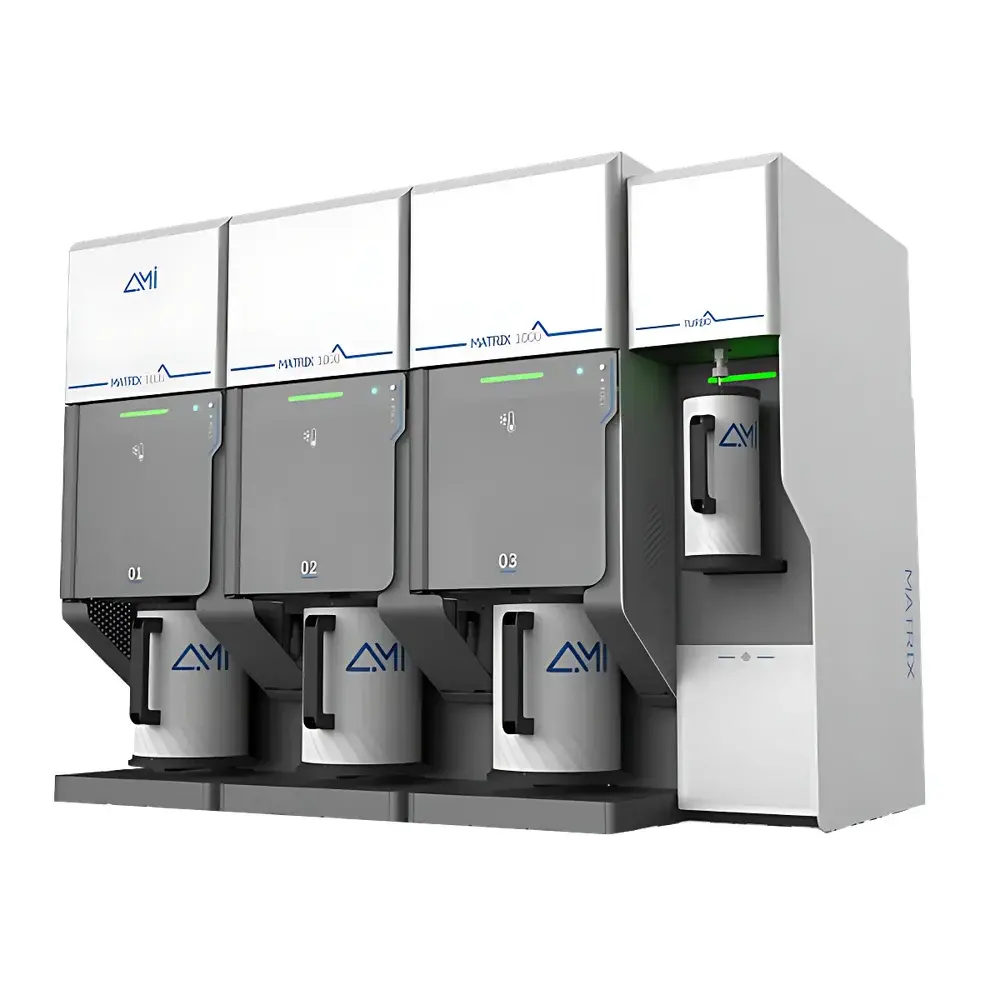
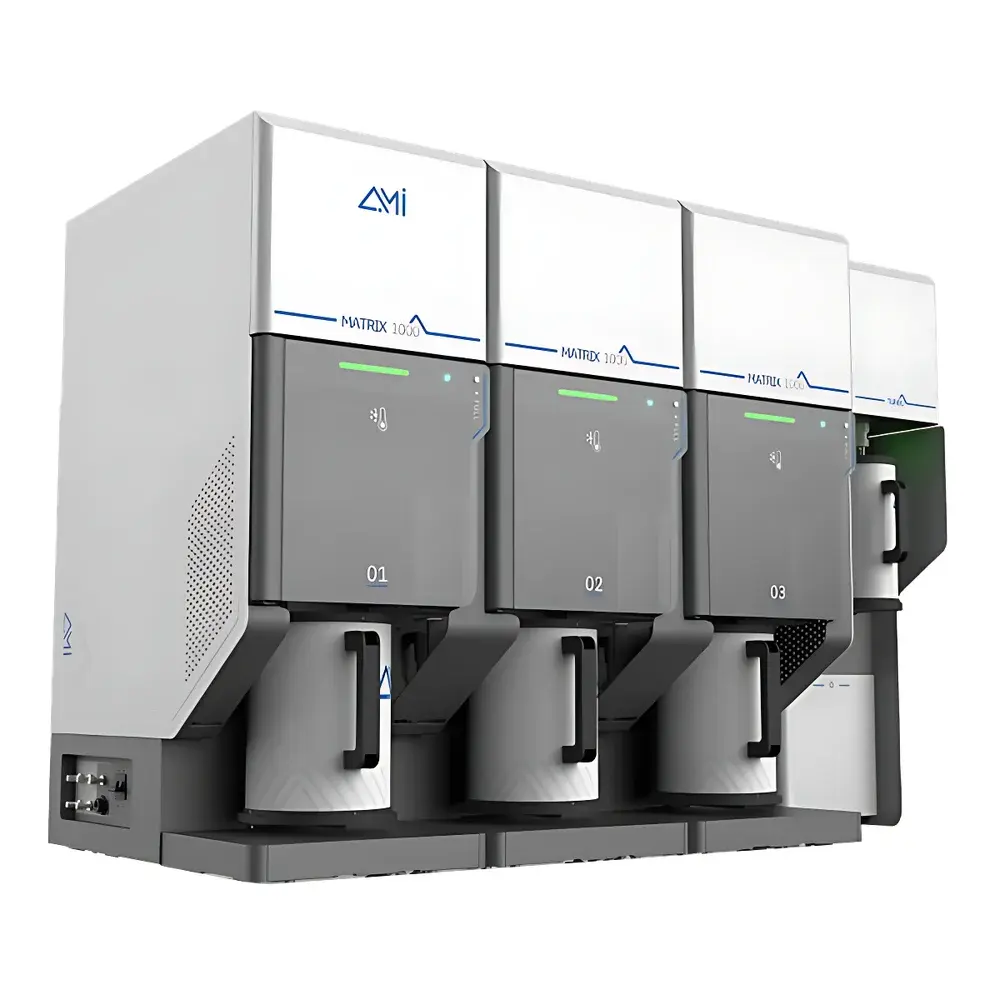
JWGB Matrix 1000 Series High-Performance Specific Surface Area and Pore Size Analyzer
| Brand | JWGB |
|---|---|
| Origin | Beijing, China |
| Manufacturer Type | Direct Manufacturer |
| Instrument Type | Specific Surface Area and Pore Size Analyzer |
| Model | Matrix 1000 Series |
| Analysis Stations | 12 |
| Pore Size Range | 0.35 – 500 nm |
| Pressure Range | 10⁻⁸ – 0.998 atm |
| Theoretical Models | HK, SF, BJH, MP, t-plot, DR, DA, DFT/NLDFT |
| Ambient Temperature Range | 15 – 40 °C |
| Ultimate Vacuum | 10⁻⁸ Pa |
| Adsorption Gases | N₂, Ar, Kr, CO₂, CH₄, C₂H₄, C₂H₆, H₂O, benzene, toluene, xylene, NH₃, SO₂, H₂S |
| Degassing Temp Range | RT – 400 °C (±0.1 °C) |
| Pressure Sensors | 1000 Torr (0.05% F.S.), optional 10/1/0.1 Torr for micropore resolution |
| Thermal Stability | ±0.1 °C valve box temperature control |
| Corrosion Protection | FFKM seals + fluoropolymer-coated gas path |
Overview
The JWGB Matrix 1000 Series is a high-precision, multi-station specific surface area and pore size analyzer engineered for rigorous physical adsorption characterization across academic, industrial, and regulatory environments. It operates on the static volumetric principle—measuring equilibrium gas uptake at controlled pressures using high-accuracy pressure transducers and ultra-high vacuum integrity (10⁻⁸ Pa). This architecture enables quantitative determination of specific surface area (via BET, Langmuir), micropore volume (MP, t-plot, DR, DA), meso/macropore size distribution (BJH, HK, SF), and full-range pore structure modeling (DFT/NLDFT). Designed for reproducibility-critical applications—including catalyst development, battery electrode optimization, MOF/COF validation, and pharmaceutical excipient qualification—the system delivers traceable, GLP-compliant data under ISO 9277, ASTM D3663, and USP guidelines.
Key Features
- Modular 1–3 unit configuration supporting up to 12 parallel analysis stations—scalable throughput without hardware reconfiguration.
- Dual-range pressure sensing per station: standard 1000 Torr sensor (0.05% F.S.) with optional 10/1/0.1 Torr micro-pressure modules for sub-nanometer pore resolution.
- Integrated vapor source housed within the thermostatically stabilized valve manifold (±0.1 °C), eliminating condensation artifacts in water and organic vapor adsorption (e.g., H₂O, benzene, toluene).
- Corrosion-resistant gas path: all wetted surfaces feature fluoropolymer coating; FFKM elastomer seals ensure compatibility with NH₃, SO₂, H₂S, and other aggressive adsorbates.
- Automated degassing module with programmable heating (RT–400 °C, ±0.1 °C) and active cooling (400 → 50 °C in ~24 min), enabling standardized thermal pretreatment per IUPAC recommendations.
- “LOAD” one-click sample tube locking mechanism reduces handling time by 70%, minimizes breakage risk, and ensures repeatable sealing integrity.
- Independent multi-gas inlet system—expandable to 18 adsorbate channels—enabling automated sequential or competitive multi-gas experiments (N₂/Kr/CO₂/CH₄/C₂H₄).
Sample Compatibility & Compliance
The Matrix 1000 accommodates diverse solid-state materials including zeolites, activated carbons, metal–organic frameworks (MOFs), silica gels, clays, catalysts, battery cathodes/anodes, and pharmaceutical powders. Its validated operation supports IUPAC-recommended protocols for physisorption isotherm acquisition and reporting. For regulated environments, the system meets essential elements of FDA 21 CFR Part 11 (audit trail, electronic signature support, user access control) and facilitates GMP/GLP documentation through structured project-based data archiving. All calibration procedures are traceable to NIST-certified standards, and pressure sensor auto-zeroing routines maintain long-term metrological stability.
Software & Data Management
Control and analysis run on two independent software modules: JWGB Control Suite (real-time instrument orchestration) and JWGB Analyze Pro (model-driven post-processing). The interface provides live visualization of isotherms, pressure decay curves, and temperature profiles across all stations. Advanced analytical capabilities include isosteric heat of adsorption calculation (via Clausius–Clapeyron), kinetic modeling of uptake rates, multi-component competitive adsorption simulation, and DFT/NLDFT kernel selection based on material class (carbon, silica, alumina). Data export supports PDF/Excel report generation with customizable templates compliant with journal submission and internal QA review requirements. All raw and processed datasets are stored in a centralized, versioned repository with timestamped metadata and operator attribution.
Applications
- Catalyst R&D: Quantifying active surface area, pore confinement effects, and acid site accessibility via probe molecule (NH₃, CO₂) adsorption.
- Energy storage: Characterizing hierarchical porosity in Li-ion/Si-anode composites and solid-state electrolyte fillers.
- Environmental science: Assessing SO₂/H₂S capture capacity and regeneration kinetics in functionalized sorbents.
- Pharmaceuticals: Validating excipient surface uniformity, moisture sorption hysteresis, and amorphous content via water vapor isotherms.
- Materials synthesis: Benchmarking synthetic fidelity of templated mesoporous silicas and carbon replicas against theoretical models.
FAQ
What adsorption theories are implemented in the software?
BET (single/multi-point), Langmuir, MP, t-plot, DR, DA, BJH (adsorption/desorption), HK, SF, and DFT/NLDFT with material-specific kernel libraries.
Can the system perform fully automated vapor adsorption without manual intervention?
Yes—integrated vapor generation, thermostatic control, and pressure feedback enable unattended water and organic vapor isotherm acquisition per ISO 15901-2.
Is compliance with 21 CFR Part 11 supported out-of-the-box?
Audit trail logging, role-based access control, and electronic signature workflows are embedded; validation documentation packages are available upon request.
How is vacuum integrity verified during micro-pore analysis?
Real-time pressure decay monitoring combined with cold-trap integrity checks ensures background gas contribution remains below 0.1% of total uptake signal.
What is the minimum detectable surface area and its repeatability?
Detection limit: 0.0005 m²/g; repeatability (RSD) <1% for reference materials certified by NIST SRM 1990 and 2088.



