
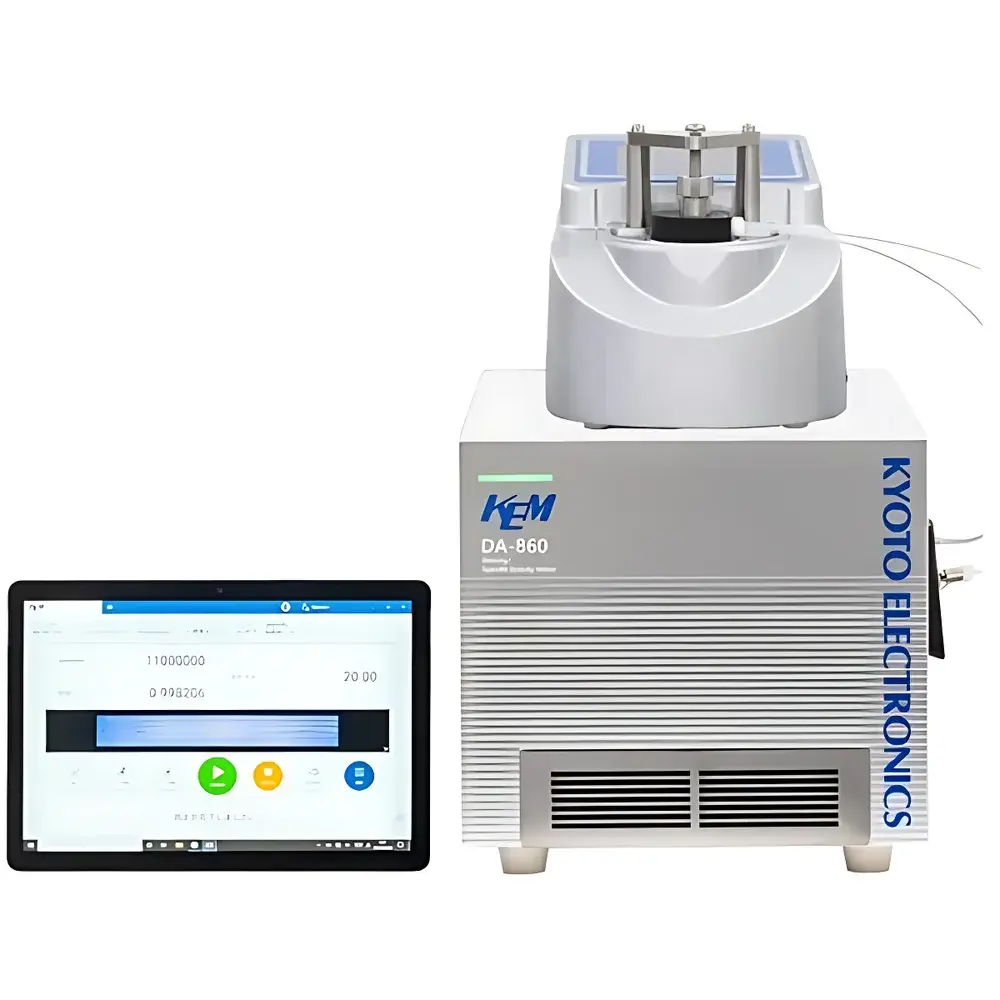
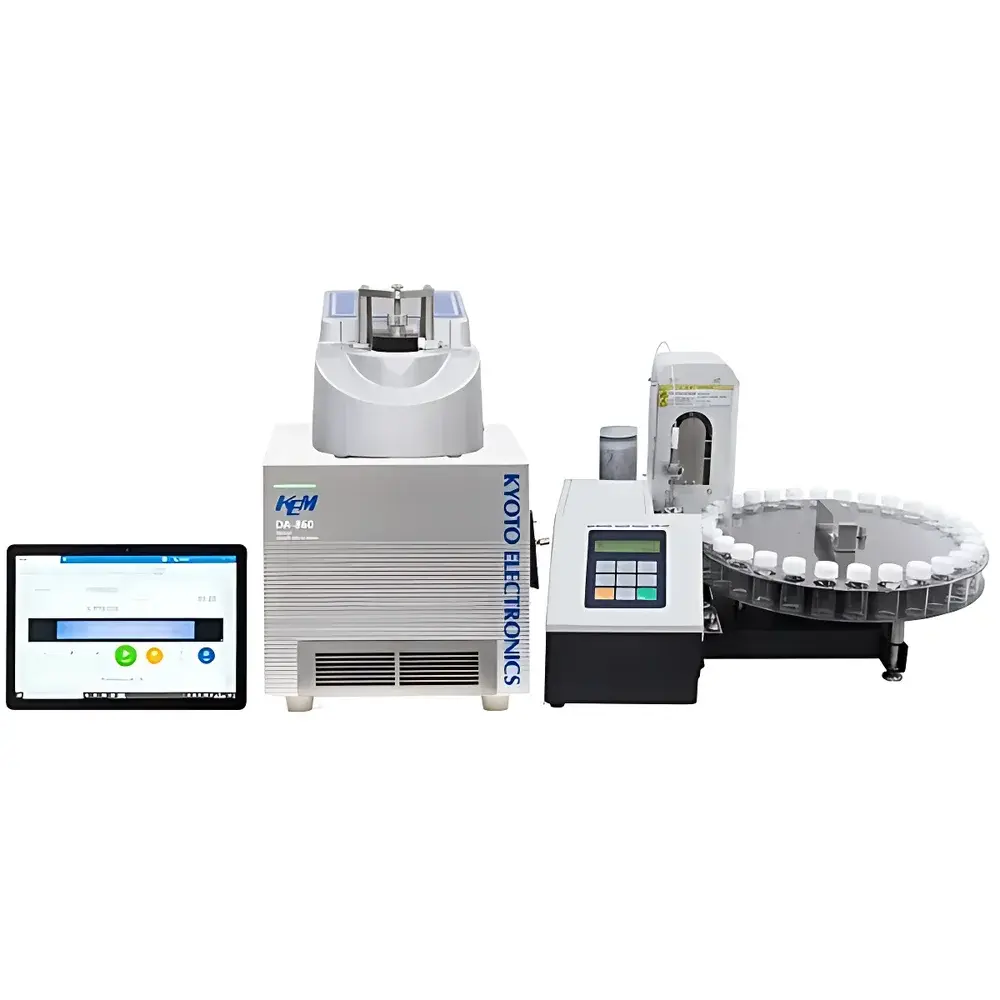
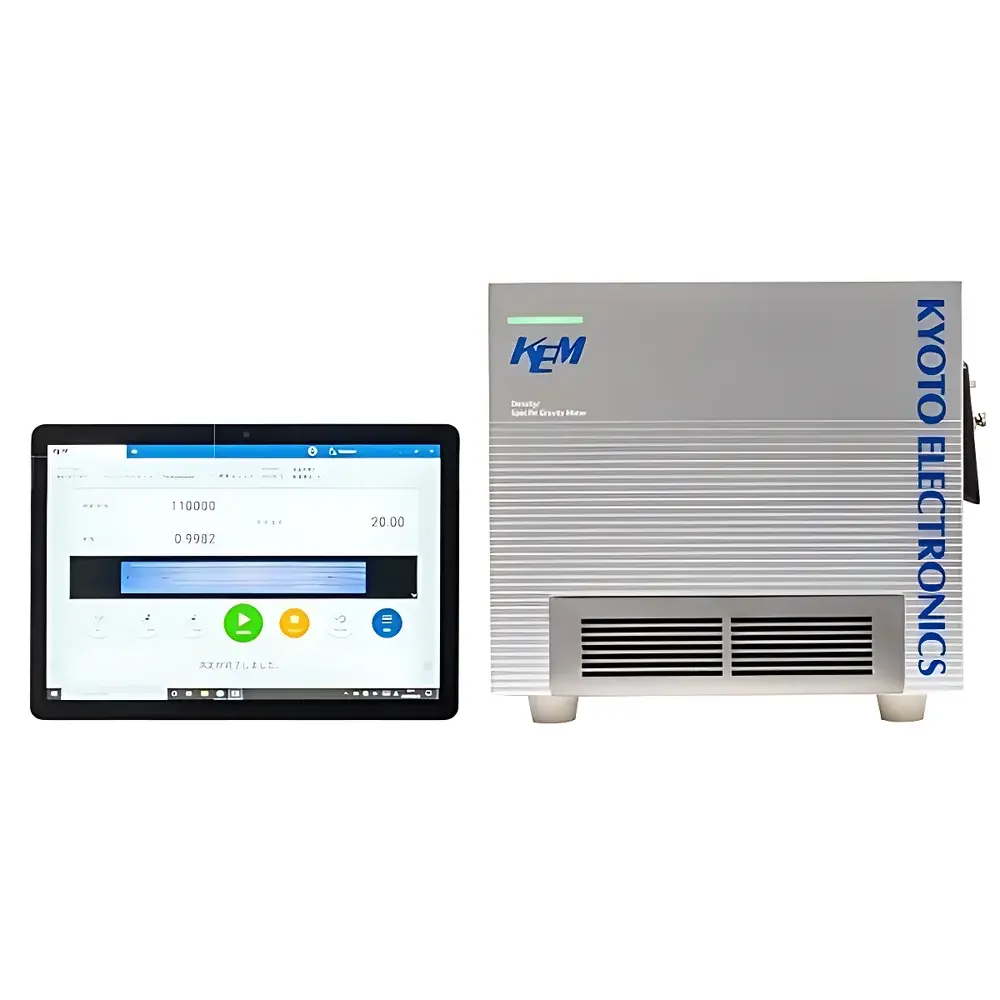
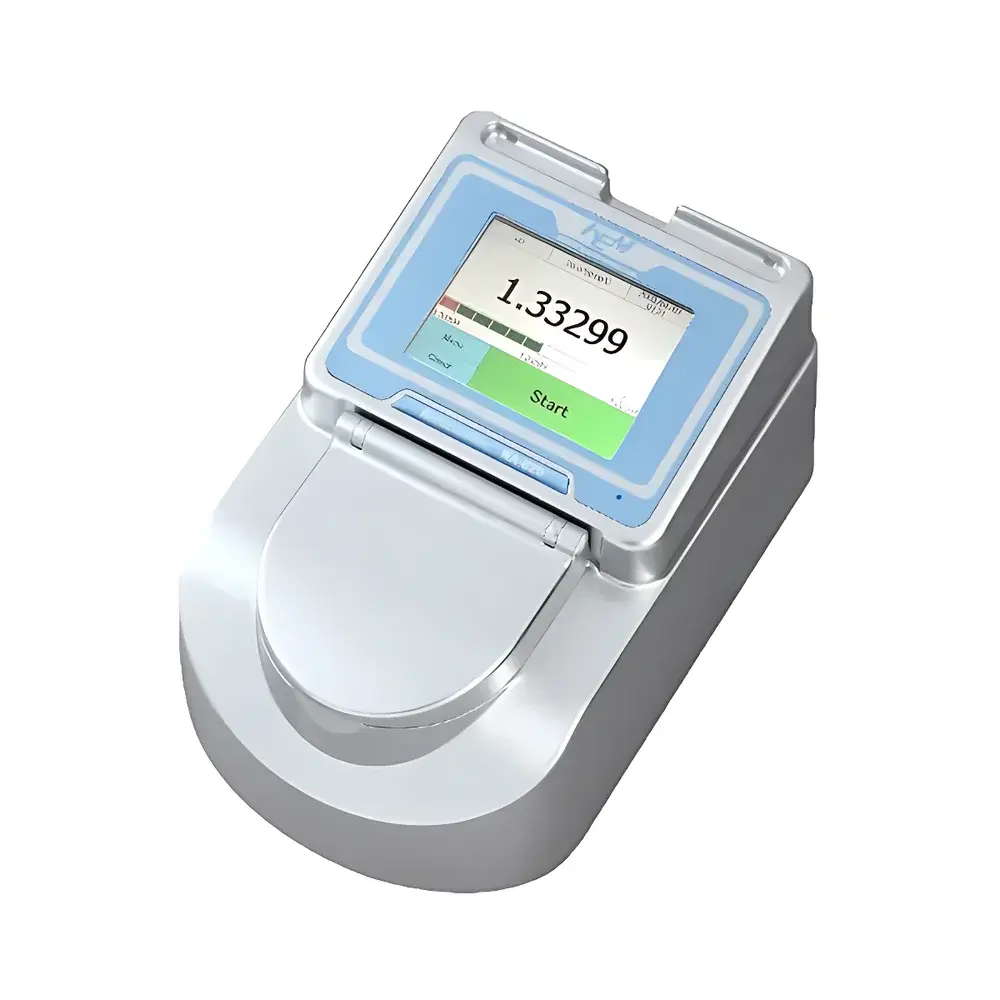
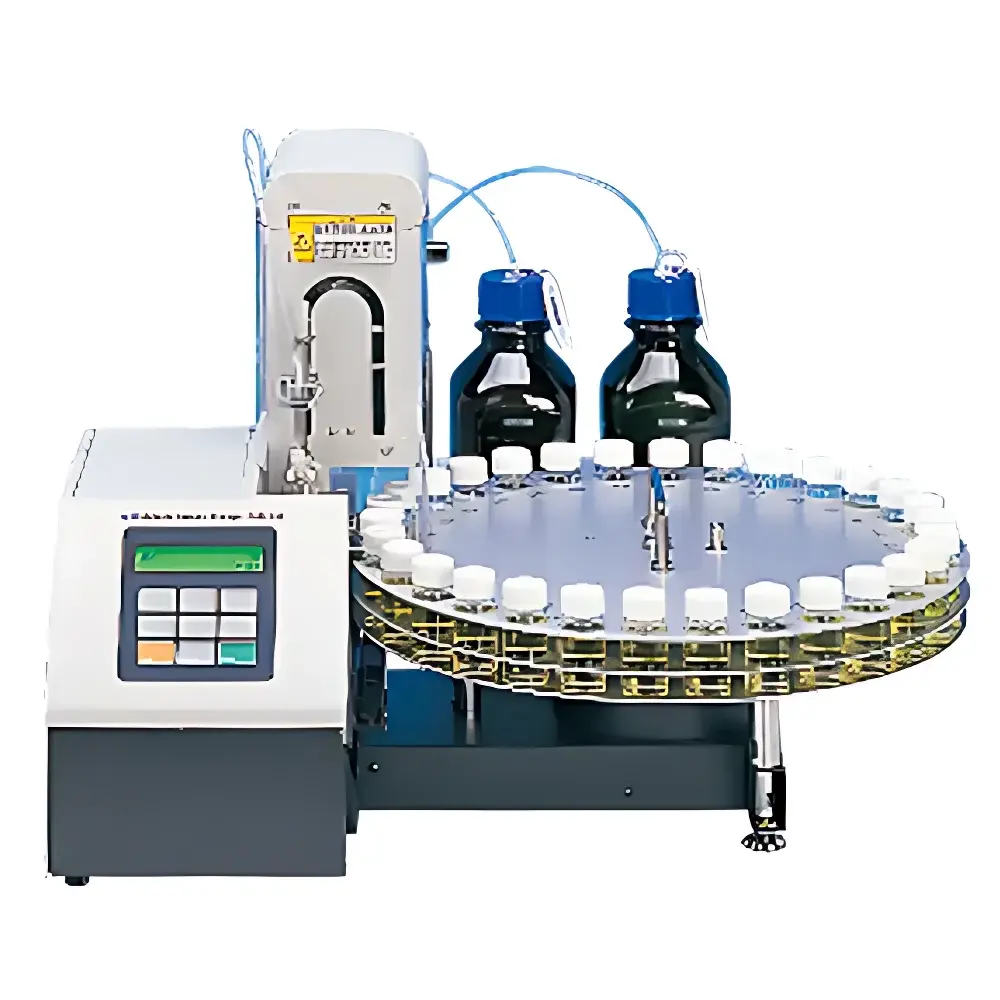
KEM DA-8 Series + RA-6 Series Benchtop Density and Refractometer
| Brand | KEM (Kyoto Electronics Manufacturing) |
|---|---|
| Origin | Japan |
| Manufacturer Type | Original Equipment Manufacturer (OEM) |
| Origin Category | Imported |
| Model | DA-8 Series + RA-6 Series |
| Instrument Type | Oscillating U-tube Densimeter & Automatic Digital Refractometer |
| Form Factor | Benchtop Laboratory Instrument |
| Sample Type | Liquid Only |
| Density Range | 0–3 g/cm³ |
| Refractive Index Range | 1.32000–1.7000 nD |
| Temperature Control Range | 0–100°C (density), 5–75°C (refractometry) |
| Temperature Stability | ±0.001°C (DA-860), ±0.01°C (DA-850/DA-840, RA-620), ±0.1°C (RA-600) |
| Density Accuracy | ±0.000003 g/cm³ (DA-860), ±0.00001 g/cm³ (DA-850), ±0.00005 g/cm³ (DA-840) |
| Refractive Index Accuracy | ±0.00002 nD (RA-620), ±0.0001 nD (RA-600) |
| Repeatability | ±0.000001 g/cm³ (DA-860), ±0.000005 g/cm³ (DA-850), ±0.00005 g/cm³ (DA-840) |
| Integrated Peltier Thermostat | Yes |
| Viscosity Compensation | Yes (automated correction for high-viscosity liquids) |
| Auto-sampling Pump | Standard |
| Dryness Detection | Yes |
| Compliance | ASTM D1250, ASTM D4052, ISO 12185, ISO 2859, USP <841>, JIS K 0061, JIS K 2248 |
Overview
The KEM DA-8 Series + RA-6 Series Benchtop Density and Refractometer is an integrated analytical platform engineered for simultaneous, high-precision measurement of density and refractive index in liquid samples. It combines oscillating U-tube densimetry—based on the fundamental relationship between sample mass, volume, and resonant frequency—with digital Abbe-type refractometry using a high-resolution CCD detector and temperature-stabilized prism assembly. This dual-parameter architecture eliminates sequential analysis, reducing turnaround time while ensuring thermodynamic consistency between measurements. The system operates under strict thermal control via integrated Peltier elements, enabling user-defined setpoints from 0 to 100°C for density and 5 to 75°C for refractometry with micro-degree stability. Designed for routine QC laboratories and R&D environments, it delivers traceable, GLP-compliant data without manual interpolation or operator-dependent calibration.
Key Features
- Modular benchtop integration: RA-6 series refractometer mounted directly above DA-8 series densimeter, minimizing footprint and inter-unit thermal coupling.
- Simultaneous dual-parameter acquisition: Single sample injection yields synchronized density (g/cm³) and refractive index (nD) values at identical temperature conditions.
- Peltier-controlled thermostatic cells: Independent temperature regulation for both measurement chambers, supporting rapid equilibration (<2 min) and long-term stability (±0.001°C for DA-860).
- Viscosity compensation algorithm: Automatically corrects density readings for non-Newtonian or high-viscosity fluids (e.g., glycerol, essential oils, polymer solutions) based on damped oscillation decay analysis.
- Automated fluid handling: Integrated peristaltic pump enables programmable sample aspiration, rinse cycles, air purge, and moisture detection–triggered drying sequence.
- Digital display and audit-ready output: Real-time parameter visualization, timestamped results export (CSV, PDF), and full electronic record retention compatible with 21 CFR Part 11 requirements when deployed with validated software configuration.
Sample Compatibility & Compliance
The instrument accommodates a broad spectrum of industrial liquids—including hydrocarbons, aqueous electrolytes, organic solvents, edible oils, fragrance concentrates, pharmaceutical excipients, and cosmetic emulsions—without requiring dilution or phase separation. Its measurement range (0–3 g/cm³ density; 1.32000–1.7000 nD refractive index) covers applications from light hydrocarbons (e.g., aviation fuel, ethanol blends) to viscous natural extracts (e.g., oleoresins, terpene-rich distillates). Regulatory alignment includes ASTM D4052 (density of crude oil and liquid petroleum products), ASTM D1250 (petroleum measurement tables), ISO 12185 (crude oil and petroleum products—determination of density by digital density meters), ISO 2859 (sampling procedures for inspection by attributes), and USP (refractive index). All models comply with JIS K 0061 (general rules for physical testing) and JIS K 2248 (petroleum products—determination of refractive index).
Software & Data Management
KEM’s proprietary WinCT-Density/Refracto software provides centralized instrument control, method storage, and raw-data traceability. Each measurement session logs instrument ID, operator ID, sample ID, temperature setpoint, actual chamber temperature, oscillation period, refractive angle, viscosity correction factor, and pass/fail status against user-defined specification limits. Audit trails are immutable and time-stamped, satisfying GLP/GMP documentation requirements. Data export supports LIMS integration via ODBC or direct file transfer (UTF-8 encoded CSV, XML, or PDF reports with embedded digital signatures). Optional 21 CFR Part 11 compliance package includes electronic signature workflows, role-based access control, and secure user authentication.
Applications
This system serves as a primary analytical tool across regulated and high-throughput sectors. In flavor & fragrance manufacturing, it verifies batch-to-batch consistency of essential oils and synthetic aroma chemicals via correlated density/refractive index fingerprints. In petrochemical QA, it determines API gravity, sulfur content surrogates, and blending ratios in gasoline, diesel, and biofuels. Food and beverage labs use it for sugar concentration (Brix) validation, alcohol content estimation, and authenticity screening of olive oil or maple syrup. Pharmaceutical formulation units apply it for solvent identity verification, excipient purity assessment, and stability-indicating assays where density drift signals degradation. Tobacco product developers rely on it for precise characterization of casing agents and top-note delivery systems.
FAQ
What standards does this instrument support for regulatory reporting?
It natively supports ASTM D4052, ISO 12185, USP , and JIS K 2248, with calibration certificates traceable to NIST SRMs.
Can the system measure viscous samples like honey or syrups without manual dilution?
Yes—the DA-8 series applies real-time viscosity compensation during oscillation analysis, eliminating the need for dilution while maintaining accuracy within ±0.00005 g/cm³.
Is temperature control independent for density and refractive index modules?
Yes—each module features its own Peltier thermostat and PID controller, allowing concurrent operation at different setpoints (e.g., 20°C for density, 25°C for refractometry).
How is cleaning and drying automated?
The built-in peristaltic pump executes configurable sequences: rinse with solvent, air purge, then activates humidity sensors to confirm dryness before next analysis.
Does the software support multi-user environments with permission levels?
Yes—WinCT-Density/Refracto offers three-tier access (Operator, Supervisor, Administrator) with password protection and activity logging per user ID.



