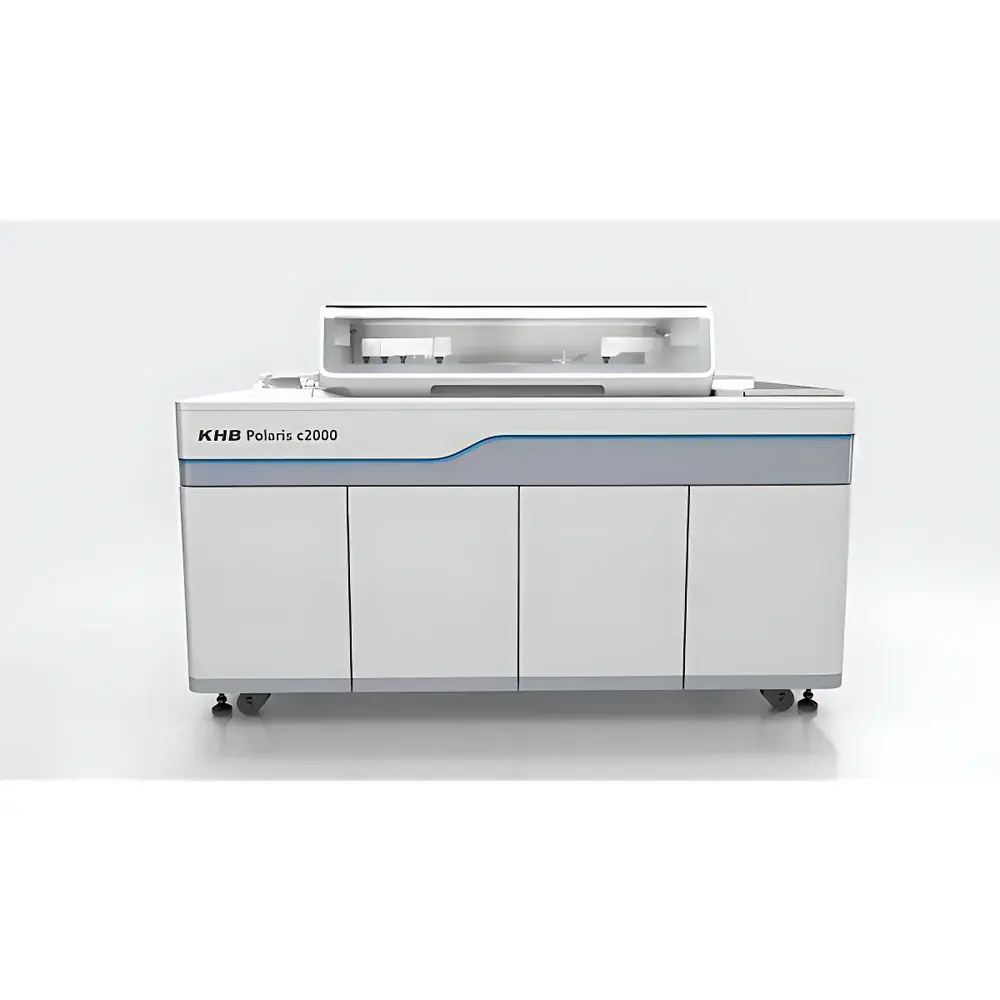
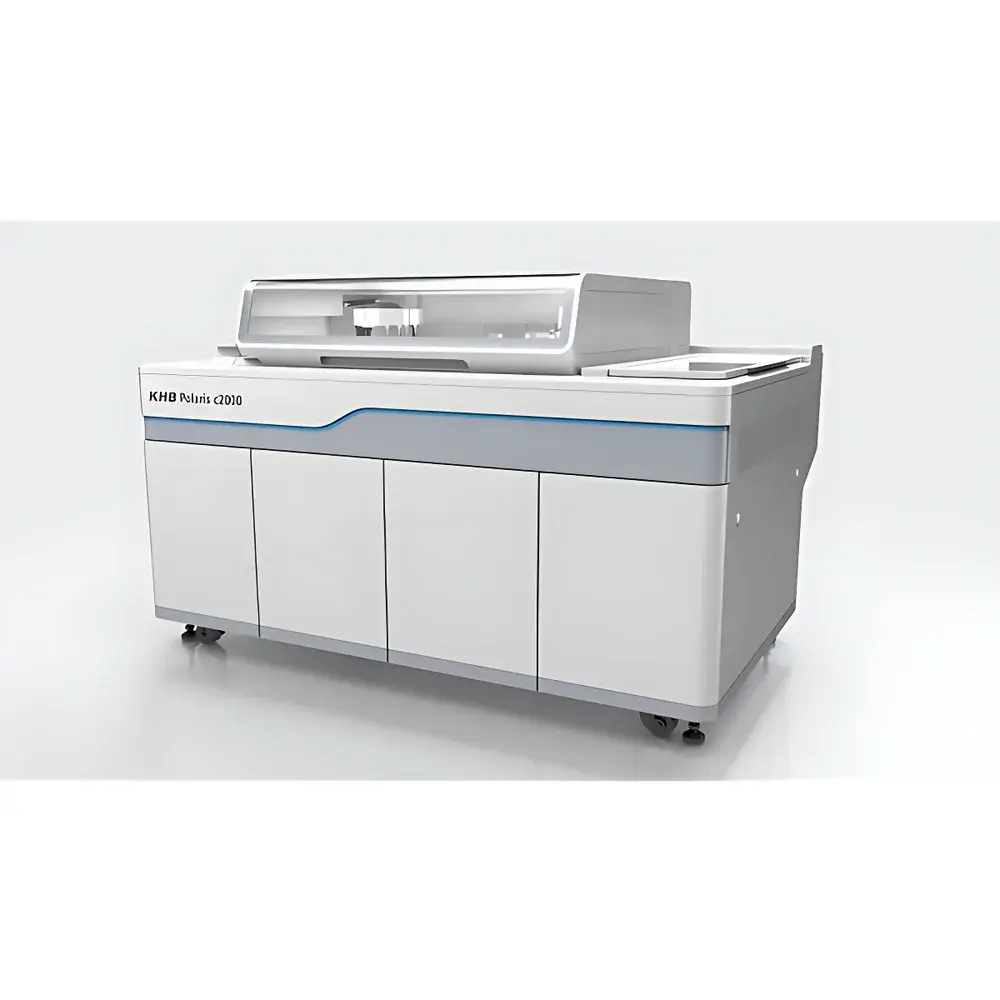
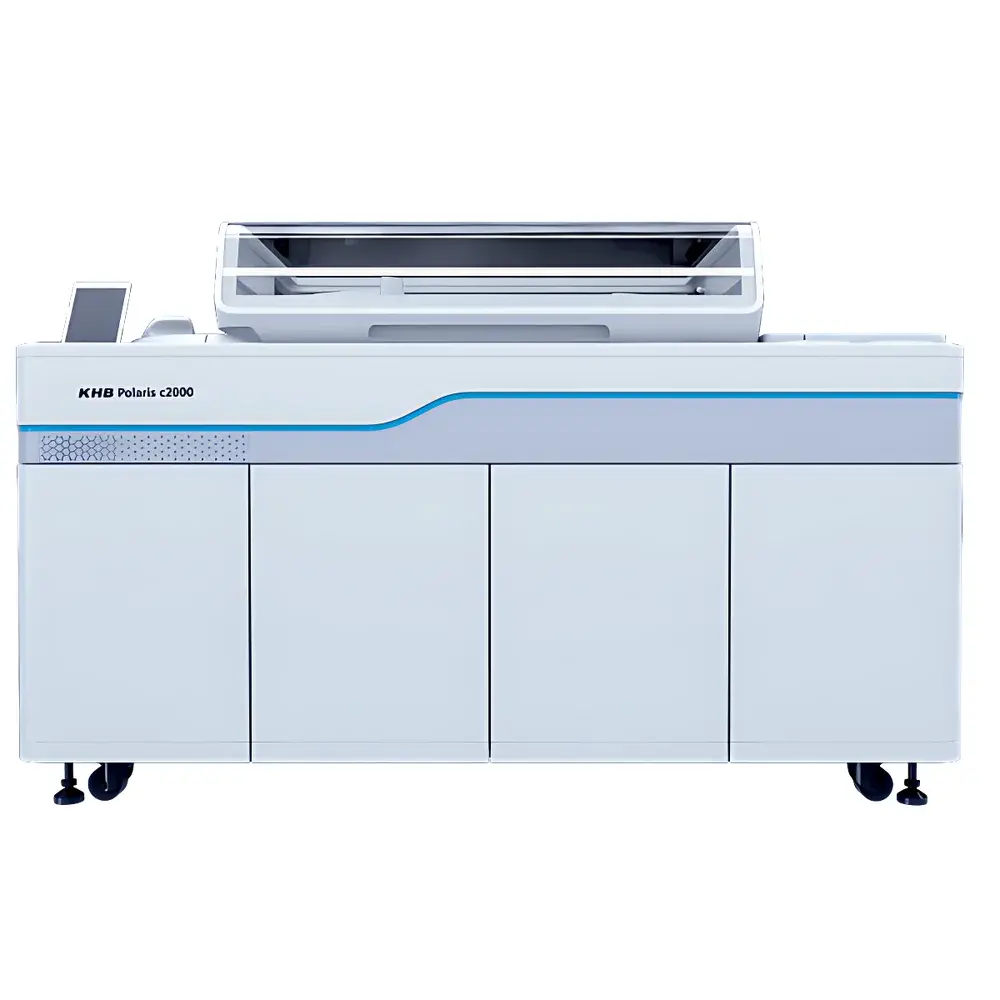
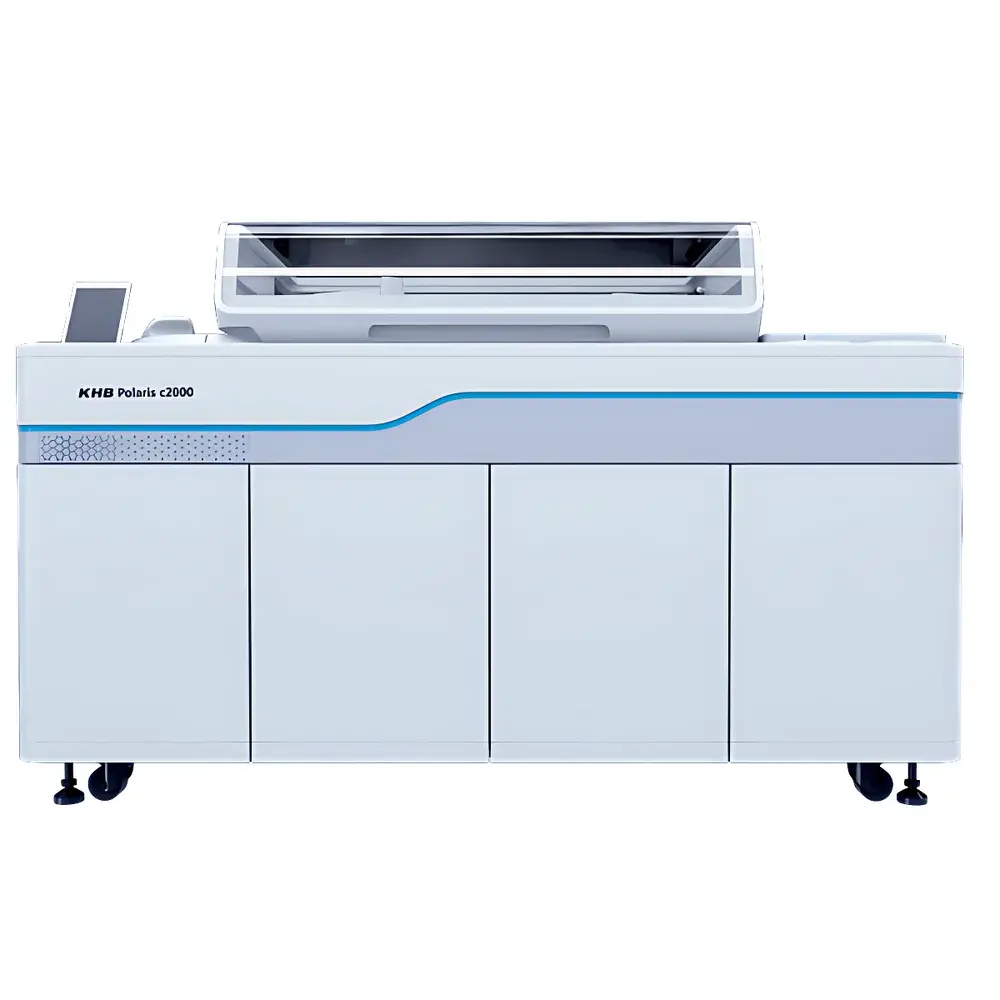
KHB Polaris c2000 Fully Automated Modular Clinical Chemistry Analyzer
| Brand | KHB |
|---|---|
| Origin | Shanghai, China |
| Manufacturer Type | Authorized Distributor |
| Country of Origin | China |
| Model | Polaris c2000 |
| Price Range | USD 95,000–136,000 (FOB) |
| Instrument Type | High-throughput Fully Automated Analyzer (1000–2000 tests/hour) |
| Reagents | KHB-licensed in vitro diagnostic reagents only |
| Sample Types | Serum, Plasma, Urine, Whole Blood, Cerebrospinal Fluid (CSF) |
| Throughput | Constant-speed mode: 2000 tests/hour |
| Stat Emergency (SE) mode | 600 tests/hour (optional) |
Overview
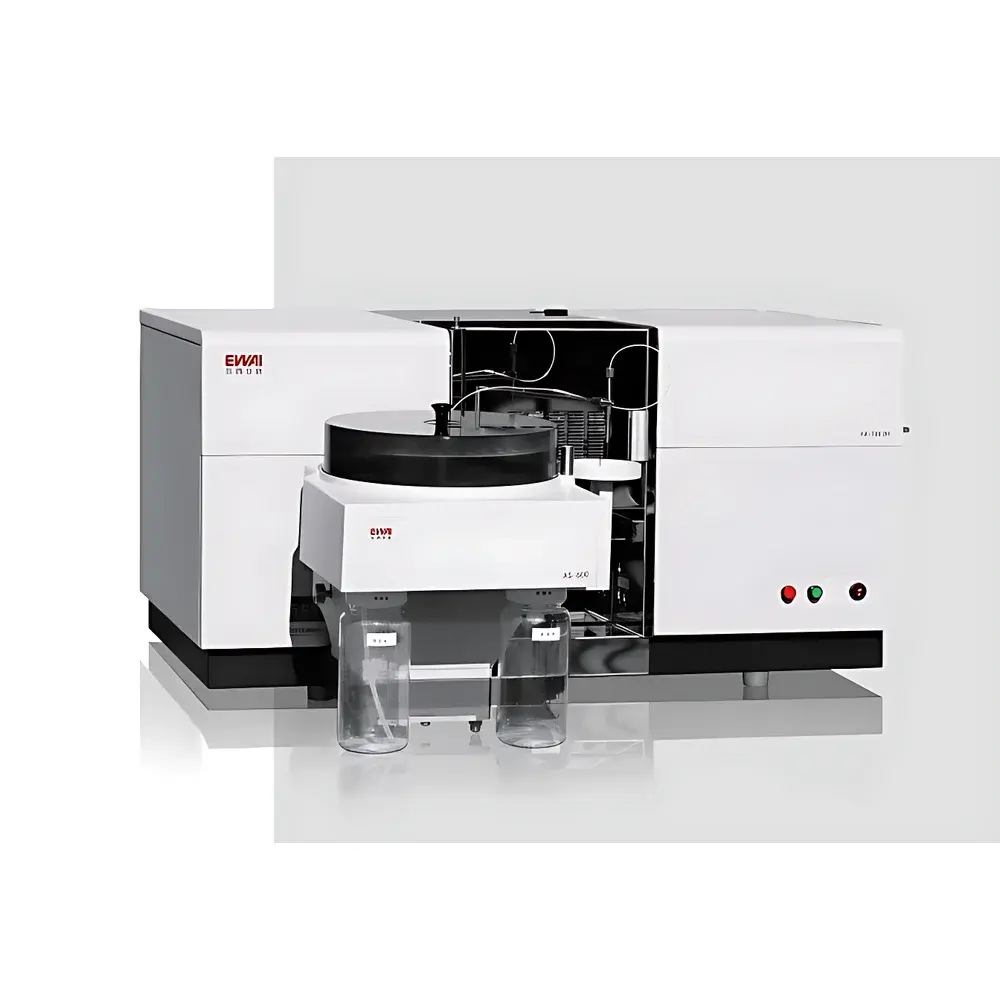
The KHB Polaris c2000 is a fully automated, modular clinical chemistry analyzer engineered for high-volume core laboratories and integrated hospital diagnostic centers. It employs photometric measurement principles—based on absorbance detection across UV–visible wavelengths (340–800 nm)—to quantify enzymatic, colorimetric, and turbidimetric reactions in human biological samples. Designed to meet ISO 15189 and CLIA-equivalent operational rigor, the system integrates sample handling, reagent management, reaction incubation, optical detection, and data reporting into a single compact footprint. Its dual-disk reagent architecture, 405-sample capacity with priority-track emergency processing, and 104 simultaneous assay capability enable continuous, unattended operation across shifts—supporting routine biochemistry, therapeutic drug monitoring, and metabolic panel testing under GLP-compliant workflows.
Key Features
- Throughput flexibility: 2000 tests/hour in continuous mode; 600 tests/hour in stat-emergency (SE) mode with dedicated priority track—enabling rapid turnaround for critical care specimens.
- Modular scalability: Supports seamless integration with KHB immunoassay platforms (e.g., Maglumi series) via standardized LIS/HIS interfaces, enabling unified biochemical–immunological workflow orchestration.
- Dual-disk refrigerated reagent system: 216 total positions (2–8 °C), permitting concurrent loading of primary and backup reagent lots, online reagent replacement without cycle interruption, and traceable lot-level usage tracking.
- Advanced optics: Dual-aperture, dual-focal-point photometric system with permanent glass cuvettes (5 mm light path), minimizing carryover and ensuring long-term wavelength stability per ASTM E275 and CLSI EP15-A3 guidelines.
- Sample integrity assurance: Liquid-level sensing, real-time volume tracking, collision avoidance, and optional clot/fiber detection ensure precise aspiration across viscosity-variable matrices—including hemolyzed serum and CSF.
- Ultra-low reaction volume: Minimum 80 pL reaction volume reduces reagent consumption and waste generation while maintaining analytical sensitivity for low-abundance analytes.
Sample Compatibility & Compliance
The Polaris c2000 accepts native tubes (13 × 75 mm, 16 × 100 mm) and microtubes with barcode scanning (Code 128, QR, DataMatrix). Validated sample types include serum, lithium-heparin or EDTA plasma, random and 24-hour urine, whole blood (for glucose and lactate), and cerebrospinal fluid—each processed using programmable dilution, pre-wash, and extended incubation protocols where clinically indicated. The system complies with IEC 61010-1 (safety), IEC 61326-1 (EMC), and meets essential requirements of EU IVDR 2017/746 Annex I for in vitro diagnostic medical devices. All calibration and QC materials are traceable to NIST SRMs or JCTLM-listed reference measurement procedures, fulfilling ISO 17511 requirements for metrological traceability.
Software & Data Management
Running on embedded Linux-based firmware with KHB’s proprietary LabLink™ software suite, the Polaris c2000 supports full audit trail functionality compliant with FDA 21 CFR Part 11 (electronic signatures, user-level permissions, immutable event logs). Data export formats include HL7 v2.5.1, ASTM E1381, and CSV for LIMS integration. Remote diagnostics, over-the-air firmware updates, and predictive maintenance alerts are delivered via encrypted TLS 1.2 cloud channels. Built-in QC tools include Westgard multi-rules, Levey-Jennings trending, and automated Sigma-metric evaluation per CLSI EP23-A—enabling real-time performance verification without external software.
Applications
The analyzer delivers quantitative results for liver function (ALT, AST, GGT, ALP, TBIL), renal markers (CREA, UREA, UA), lipid profiles (TC, TG, HDL-C, LDL-C), cardiac biomarkers (CK-MB, LDH, AST), electrolytes (Na⁺, K⁺, Cl⁻ via indirect ISE), glucose metabolism (GLU, HbA1c prep), and acute-phase proteins (CRP, ALB). Its kinetic assay engine supports enzyme activity measurements (e.g., CK, LDH, AMY) with temperature-controlled (37 °C ± 0.1 °C) reaction kinetics and variable lag-phase definition. Method flexibility includes endpoint, fixed-time, rate, and two-point rate modes—validated per CLSI EP05-A3 and EP10-A3 protocols.
FAQ
Does the Polaris c2000 support bidirectional LIS communication?
Yes—it implements HL7 v2.5.1 ADT and ORU messages with configurable ACK/NACK handling and retry logic for mission-critical environments.
What is the maximum allowable carryover rate between sequential samples?
Cross-contamination is ≤ 0.08% for high-concentration analytes (e.g., bilirubin, creatinine), verified per CLSI EP10-A3 using worst-case matrix interference protocols.
Can third-party reagents be used on this platform?
No—the system operates exclusively with KHB-manufactured, CE-IVD marked reagents and calibrators to maintain traceability, validation integrity, and regulatory compliance.
Is remote software update capability available without on-site technician support?
Yes—cloud-initiated firmware updates require only network connectivity and administrator approval; rollback functionality ensures system recoverability.
How is calibration traceability documented for accreditation audits?
Each calibration batch includes digitally signed certificates linking instrument response to KHB’s master calibrators, which are themselves certified against JCTLM-recognized reference methods and NIST-traceable standards.