
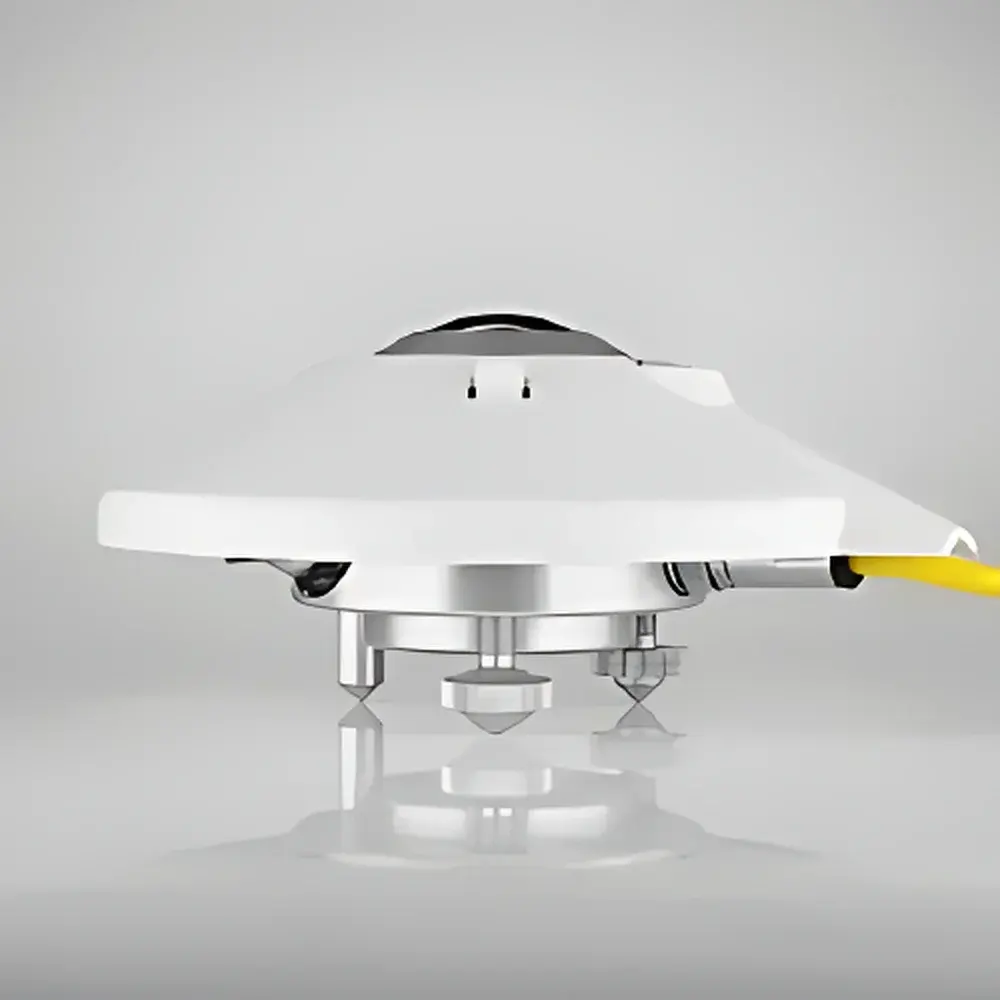
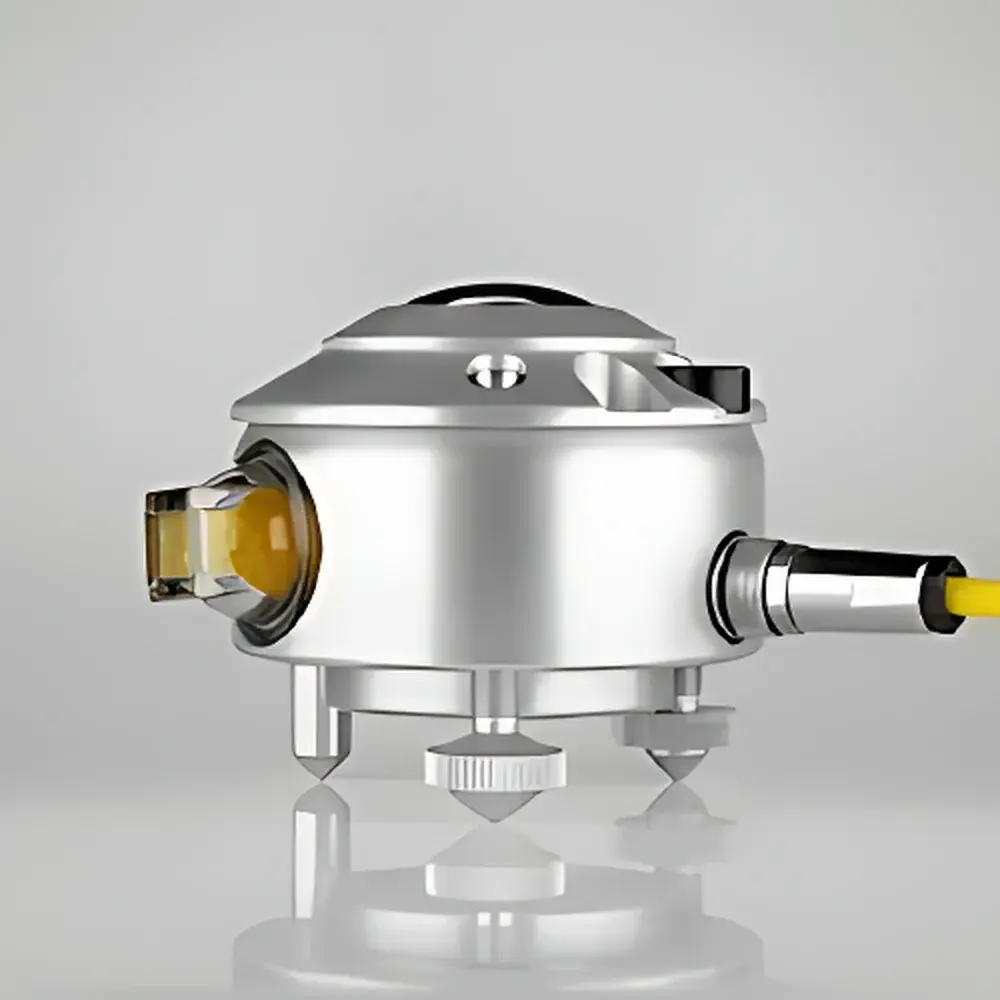
Kipp & Zonen CGR4 Pyrgeometer
| Brand | Kipp & Zonen |
|---|---|
| Origin | Imported |
| Manufacturer Type | Authorized Distributor |
| Model | CGR4 |
| Pricing | Upon Request |
Overview
The Kipp & Zonen CGR4 pyrgeometer is a high-precision, thermopile-based radiometric sensor engineered for continuous measurement of downwelling longwave infrared radiation (4–50 µm spectral range) under all atmospheric conditions. It operates on the principle of differential thermoelectric detection: incident longwave radiation heats a blackened thermopile detector surface, generating a voltage proportional to the net radiant flux, while internal temperature compensation corrects for instrument body emission and thermal gradients. Designed to meet the stringent performance criteria of the World Meteorological Organization’s Baseline Surface Radiation Network (BSRN), the CGR4 delivers traceable, low-drift measurements with minimal zero-offset drift—critical for climate monitoring, surface energy balance studies, and validation of satellite-derived radiation products.
Key Features
- 180° hemispherical field of view enabled by a precision-ground, fused-silica hemispherical dome with integrated hard carbon anti-reflective coating—ensuring uniform spectral transmittance across the 4–50 µm longwave band and enhanced mechanical durability.
- Optimized thermal design eliminates dome heating artifacts: unlike conventional pyrgeometers requiring dome temperature correction or shading, the CGR4’s low-thermal-mass dome and symmetrical geometry reduce thermal offsets to negligible levels—even without active ventilation—thereby simplifying calibration protocols and reducing maintenance overhead.
- Integrated 10 kΩ thermistor (standard) with optional Pt-100 RTD for high-accuracy instrument body temperature measurement; individual unit-specific temperature response characterization provided over –20 °C to +50 °C in 10 °C intervals, enabling precise real-time thermal offset correction per ISO 9060:2018 Class A specifications.
- Hermetically sealed, compact stainless-steel housing (Ø 62 mm × 70 mm height) with IP67 ingress protection—suitable for permanent outdoor deployment in agricultural, ecological, and urban meteorological stations without enclosure dependency.
- Low power consumption (< 1 mW standby), passive operation (no internal heating required), and compatibility with standard analog (mV) and digital (RS-485 Modbus RTU) output interfaces facilitate seamless integration into existing data acquisition systems including Campbell Scientific CR-series, Delta-T DL6, and custom SCADA platforms.
Sample Compatibility & Compliance
The CGR4 is compatible with natural atmospheric longwave irradiance environments—including clear-sky, overcast, foggy, and precipitation-prone conditions—without degradation in signal fidelity. Its optical design inherently rejects solar shortwave radiation (280–3000 nm) via a proprietary thin-film interference filter deposited directly on the inner dome surface, eliminating the need for external shading devices or ventilated housings in most operational configurations. The instrument conforms to IEC 61724-1:2021 (photovoltaic system monitoring), meets WMO/BSRN recommended practices for pyrgeometer deployment, and supports compliance with ISO/IEC 17025:2017 requirements when used within an accredited calibration framework. Traceable factory calibration is performed against a NIST-traceable blackbody source at multiple temperatures and reported with expanded uncertainty (k = 2) ≤ ±1.5 W/m² in the 0–600 W/m² range.
Software & Data Management
Raw thermopile output (µV) and internal temperature readings are processed using Kipp & Zonen’s open-source Pyrgeometer Correction Algorithm, which implements the standard Stefan-Boltzmann equation with dynamic dome emission correction based on real-time thermistor data. Output can be logged via third-party software such as LoggerNet, Edlog, or Python-based data pipelines using Modbus TCP/RTU libraries. All calibration coefficients—including sensitivity (µV/(W/m²)), thermal offset parameters, and spectral responsivity curves—are embedded in device-readable EEPROM memory and accessible via serial query. For regulatory environments, the CGR4 supports audit-trail-capable data logging when paired with Part 11-compliant DAQ systems; full metadata tagging (time stamp, temperature, status flags) ensures alignment with GLP/GMP documentation standards.
Applications
- Surface energy balance modeling in eddy covariance flux towers (e.g., AmeriFlux, ICOS networks)
- Long-term climate observatories requiring BSRN-grade radiation continuity
- Agricultural microclimate monitoring for evapotranspiration estimation and irrigation scheduling
- Urban heat island studies and building energy performance benchmarking
- Validation of numerical weather prediction (NWP) model outputs and satellite-derived LWR products (e.g., CERES, GERB)
- Calibration transfer reference for secondary-standard pyrgeometers in metrology labs
FAQ
Does the CGR4 require a ventilation unit?
No—its optimized dome geometry and low thermal inertia minimize heating-induced offsets. Ventilation may be added for ultra-high-accuracy applications (e.g., BSRN primary stations), but it is not mandatory for routine use.
Can the CGR4 measure upwelling longwave radiation?
Yes, when inverted and mounted on a leveled, reflective surface (e.g., aluminum plate), following WMO guidelines for upward-facing configuration.
Is the CGR4 compatible with solar radiation sensors in a single mounting platform?
Yes—it shares mechanical footprint and orientation conventions with Kipp & Zonen’s CMP series pyranometers, enabling co-location on dual-axis trackers or fixed tilt mounts without interference.
What is the recommended recalibration interval?
Kipp & Zonen recommends laboratory recalibration every two years for research-grade deployments and every three years for operational monitoring networks, contingent upon environmental exposure and data quality review.
Does the CGR4 include a desiccant cartridge?
Yes—a replaceable silica-gel desiccant capsule is integrated into the base housing to prevent internal condensation; visual indicator window shows saturation status.
Related Products







