
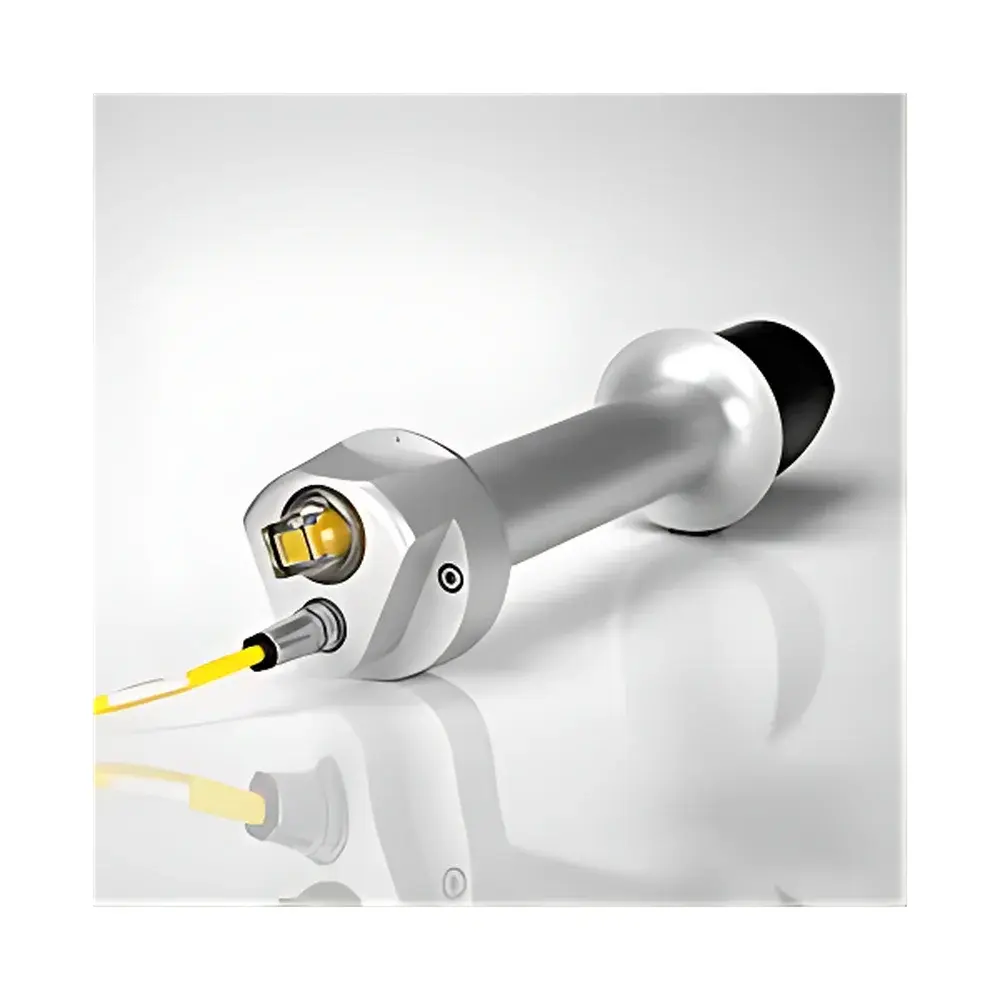
Kipp & Zonen CHP1 and SHP1 Direct Solar Radiometers
| Brand | Kipp & Zonen |
|---|---|
| Origin | Netherlands |
| Model | CHP1 / SHP1 |
| Spectral Range | 200–4000 nm |
| Sensitivity | 7–14 µV/W/m² |
| Response Time (63%) | < 5 s (CHP1), < 0.7 s (SHP1) |
| Response Time (95%) | < 2 s (SHP1) |
| Zero Offset (5 K/h temp. change) | < 1 W/m² |
| Temperature Dependence of Sensitivity | < 0.5 % (-20 to +50 °C for CHP1 |
| Field of View | 5 ± 0.2° |
| Operating Temperature | -40 to +80 °C |
| Non-linearity Error | < 0.2 % |
| Maximum Irradiance | 4000 W/m² |
| ISO 9060 | 2018 Classification: Secondary Standard, Spectral Responsivity Class B |
| Output Options | CHP1 — 10 kΩ thermistor + Pt-100 |
| Power Supply | 5–30 VDC (SHP1), polarity-reversal protected |
| Internal Heating | Low-power, non-interfering with detector thermal stability |
Overview
The Kipp & Zonen CHP1 and SHP1 Direct Solar Radiometers are secondary-standard instruments engineered for high-accuracy, continuous measurement of Direct Normal Irradiance (DNI)—the solar irradiance component incident on a surface perpendicular to the sun’s rays, excluding diffuse sky radiation. Both models operate on the thermopile principle: absorbed solar radiation heats a blackened thermopile junction, generating a voltage proportional to the incident power per unit area (W/m²). The CHP1 serves as a field-proven reference-grade instrument widely deployed in meteorological networks, solar resource assessment campaigns, and CSP (Concentrated Solar Power) plant performance monitoring. The SHP1 builds upon the CHP1’s optical and thermal architecture but integrates intelligent signal conditioning, real-time temperature compensation, and dual-mode analog/digital output—enabling seamless integration into industrial automation systems while maintaining full traceability to ISO 9060:2018 Class B spectral responsivity requirements.
Key Features
- Quartz dome with broadband transmission from 200 nm to 4000 nm, compliant with ISO 9060:2018 spectral classification B for direct irradiance measurement
- Precision 5° full-angle field of view (±0.2° tolerance), optimized to reject off-axis sky radiation and ensure strict collimation alignment with solar trackers such as the SOLYS series
- Integrated Pt-100 and thermistor (CHP1) or embedded digital temperature sensor with polynomial correction algorithm (SHP1), enabling post-acquisition or real-time compensation for sensitivity drift across -40 °C to +80 °C
- Screw-in desiccant cartridge design facilitates rapid moisture control maintenance without disassembly of the optical housing
- SHP1-specific enhancements: low-power internal heater (< 0.5 W), polarity-reversal protected 5–30 VDC input, and Modbus® RTU over 2-wire RS-485 for remote configuration, diagnostics, and status reporting
- Interchangeable analog outputs (0–1 V or 4–20 mA) calibrated to identical DNI range; no re-scaling required after recalibration—critical for long-term data continuity in SCADA and PLC environments
Sample Compatibility & Compliance
These radiometers are designed exclusively for outdoor, unobstructed exposure under clear-sky or partially cloudy conditions when mounted on a high-precision solar tracker. They are not intended for indoor, reflected, or diffused radiation measurements. Each unit is supplied with individual calibration certificates traceable to the World Radiometric Reference (WRR) maintained by PMOD/WRC (Physikalisch-Meteorologisches Observatorium Davos / World Radiation Center). Compliance includes adherence to IEC 61724-1:2021 (Photovoltaic system performance monitoring), ASTM E892 (Standard Test Method for Spectral Match of Solar Simulators), and ISO 9060:2018 (Solar energy — Specification and classification of instruments for measuring hemispherical and direct solar and terrestrial radiation). The SHP1’s digital interface supports audit-ready logging per FDA 21 CFR Part 11 requirements when used with validated data acquisition platforms.
Software & Data Management
Kipp & Zonen provides SmartExplorer™—a free Windows-based application supporting firmware updates, sensor configuration (e.g., output scaling, Modbus address, polling interval), live data visualization, and time-synchronized logging. All SHP1 devices expose register maps via Modbus RTU, allowing direct integration with industry-standard HMI/SCADA systems (e.g., Siemens Desigo, Schneider EcoStruxure, Ignition SCADA) without custom driver development. Data streams include raw mV output, compensated DNI value, internal temperature, heater status, desiccant humidity flag, and calibration expiration date. For GLP/GMP-aligned operations, SmartExplorer enables export of CSV files with embedded metadata (UTC timestamps, instrument ID, calibration ID, operator notes), satisfying documentation integrity requirements for solar farm commissioning reports and bankable energy yield assessments.
Applications
- Baseline DNI monitoring for utility-scale concentrated solar power (CSP) plant site selection and operational performance ratio (PR) analysis
- Validation of satellite-derived solar irradiance products (e.g., NASA POWER, Solargis, CAMS Radiation Service)
- Calibration transfer between reference stations and secondary-class pyrheliometers in national meteorological networks
- Long-term climate research requiring multi-decade stability (CHP1 units routinely demonstrate <0.5 % annual degradation when maintained per manufacturer guidelines)
- Real-time DNI feedback control in heliostat field aiming algorithms and molten salt receiver thermal management systems
- IEC 62817-compliant testing of solar concentrator optics and selective absorber coatings under natural illumination
FAQ
What is the difference between CHP1 and SHP1 in terms of calibration traceability?
Both models are calibrated against the WRR and issued with individual certificates. The SHP1’s digital compensation algorithm does not alter traceability—it applies a documented, reversible correction based on NIST-traceable Pt-100 characterization.
Can the SHP1 replace an existing CHP1 without hardware modification?
Yes—the SHP1 shares identical mechanical footprint, mounting interface, and thermal mass. Analog output versions maintain identical signal scaling; only wiring for RS-485 and power supply must be added.
Is regular recalibration required, and how often?
Kipp & Zonen recommends recalibration every two years for critical applications (e.g., bankable PPA reporting) and every three years for routine monitoring, aligned with ISO/IEC 17025-accredited laboratories.
Does the SHP1 require external temperature sensors for accurate DNI calculation?
No—the integrated temperature sensor and factory-characterized polynomial eliminate dependency on external probes, reducing installation complexity and uncertainty sources.
How is zero-offset drift managed during rapid ambient temperature changes?
The SHP1’s active thermal stabilization and dynamic offset compensation reduce transient zero-shift to <1 W/m² even under 5 K/h ambient ramp rates—verified per ISO 9060 Annex E test protocols.







