
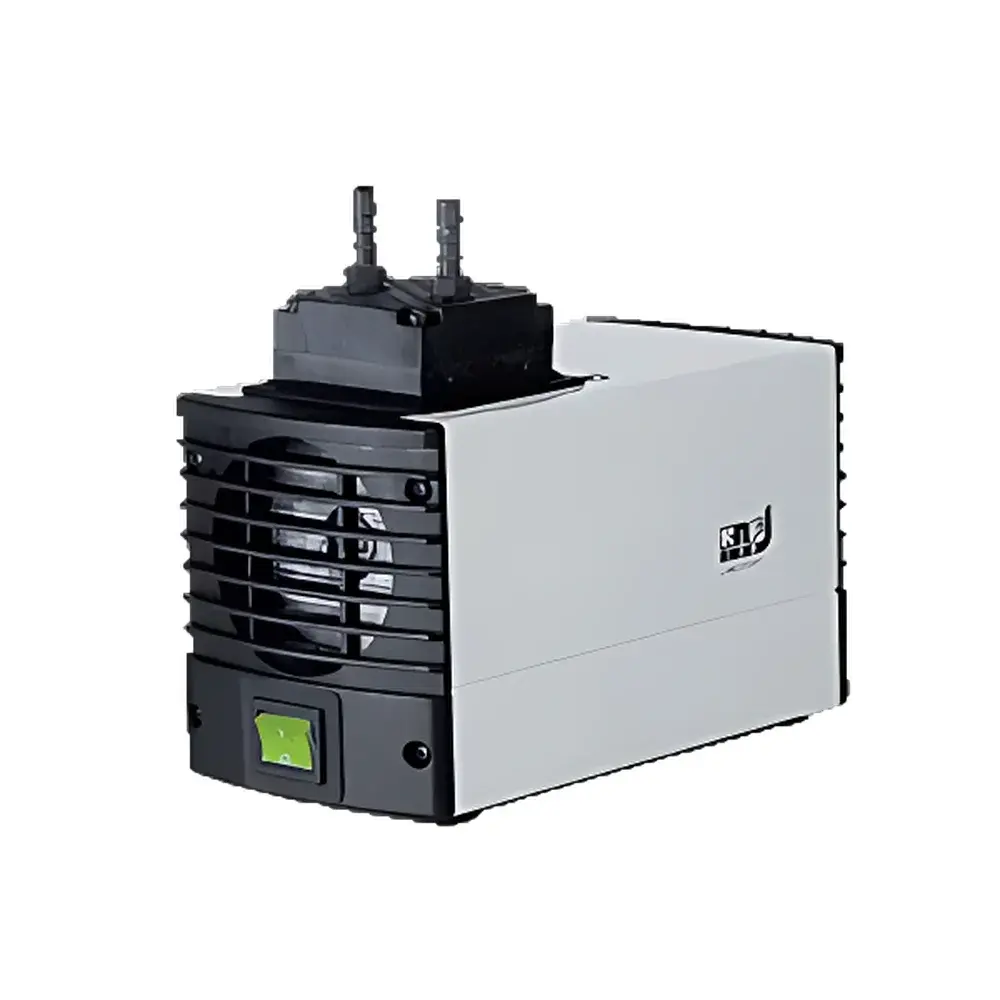
KNF N86KT.18 Oil-Free Diaphragm Vacuum Pump for Laboratory Filtration
| Brand | KNF |
|---|---|
| Origin | Germany |
| Pump Type | Oil-Free Diaphragm Vacuum Pump |
| Model | N86KT.18 |
| Ultimate Vacuum | 160 mbar |
| Flow Rate | 5.5 L/min |
| Pressure Output | 2.5 bar (g) |
| Inlet/Outlet Port | 4 mm |
| Dimensions (L×H×W) | 164 × 141 × 90 mm |
| Weight | 1.9 kg |
| Motor Supply | 220 V AC |
| Diaphragm & Valve Material | PTFE-coated PPS / FFPM |
| Housing Material | PPS |
Overview
The KNF N86KT.18 is a compact, oil-free diaphragm vacuum pump engineered for reliable, continuous-duty operation in analytical and preparative laboratory workflows. Utilizing a precision-machined, corrosion-resistant PPS housing and chemically inert PTFE-coated diaphragm and FFPM (perfluoroelastomer) valve components, this pump delivers stable vacuum generation without lubricants or hydrocarbon contamination—making it ideal for solvent-sensitive applications such as vacuum filtration, degassing, rotary evaporation support, and solvent recovery. Its sealed, brushless motor design enables uninterrupted 24/7 operation with no thermal shutdown risk, eliminating workflow interruptions common with thermally limited alternatives. The pump operates on standard 220 V AC power and complies with IEC 61000-6-3 (EMC emission) and IEC 61000-6-2 (immunity) standards, ensuring electromagnetic compatibility in shared lab environments.
Key Features
- Oil-free operation ensures zero risk of sample contamination—critical for HPLC mobile phase preparation, pharmaceutical filtration, and analytical chemistry workflows.
- Chemically resistant wetted path: PTFE-coated PPS pump head and FFPM valves tolerate exposure to common organic solvents (e.g., acetone, methanol, ethyl acetate), dilute acids (e.g., HCl ≤10%, HNO₃ ≤5%), and alkaline vapors (e.g., NaOH ≤5%).
- Compact footprint (164 × 141 × 90 mm) and lightweight construction (1.9 kg) enable benchtop integration—even in space-constrained fume hoods or modular lab carts.
- Low acoustic emissions (<50 dB(A) at 1 m) and minimal mechanical vibration ensure compatibility with sensitive instrumentation (e.g., balances, microscopes, mass spectrometers) located nearby.
- Integrated pressure regulation capability supports dual-mode operation: vacuum generation (down to 160 mbar abs) and positive-pressure delivery (up to 2.5 bar g), enabling flexible use in filtration, purging, and gas transfer applications.
- No routine maintenance required—no oil changes, filter replacements, or valve servicing over typical service intervals exceeding 10,000 hours under normal load conditions.
Sample Compatibility & Compliance
The N86KT.18 is validated for use with aqueous, polar aprotic, and moderately aggressive organic media when paired with appropriate inline filtration (e.g., PTFE membrane filters, particulate traps). It meets material compatibility requirements outlined in ASTM D471 (rubber property testing) and ISO 22866 (vacuum equipment for chemical laboratories). While not intrinsically rated for Class I Div 1 hazardous locations, its spark-free diaphragm actuation and absence of lubricants reduce ignition risk in controlled solvent-handling environments. For GLP/GMP-regulated labs, the pump supports audit-ready documentation through optional analog vacuum/pressure gauge integration and traceable calibration protocols aligned with ISO/IEC 17025 guidelines.
Software & Data Management
The N86KT.18 is a standalone analog device with no embedded firmware or digital interface. However, it is fully compatible with third-party vacuum control systems via 0–10 V or 4–20 mA analog signal inputs (when equipped with optional pressure/vacuum transducer modules). When integrated into automated platforms—such as those compliant with FDA 21 CFR Part 11—the pump’s operational status (on/off, pressure setpoint deviation) can be logged via external PLCs or SCADA systems. All mechanical performance data (flow vs. vacuum curves, pressure decay rates) are documented in KNF’s certified technical datasheets, supporting IQ/OQ validation packages per GAMP 5 principles.
Applications
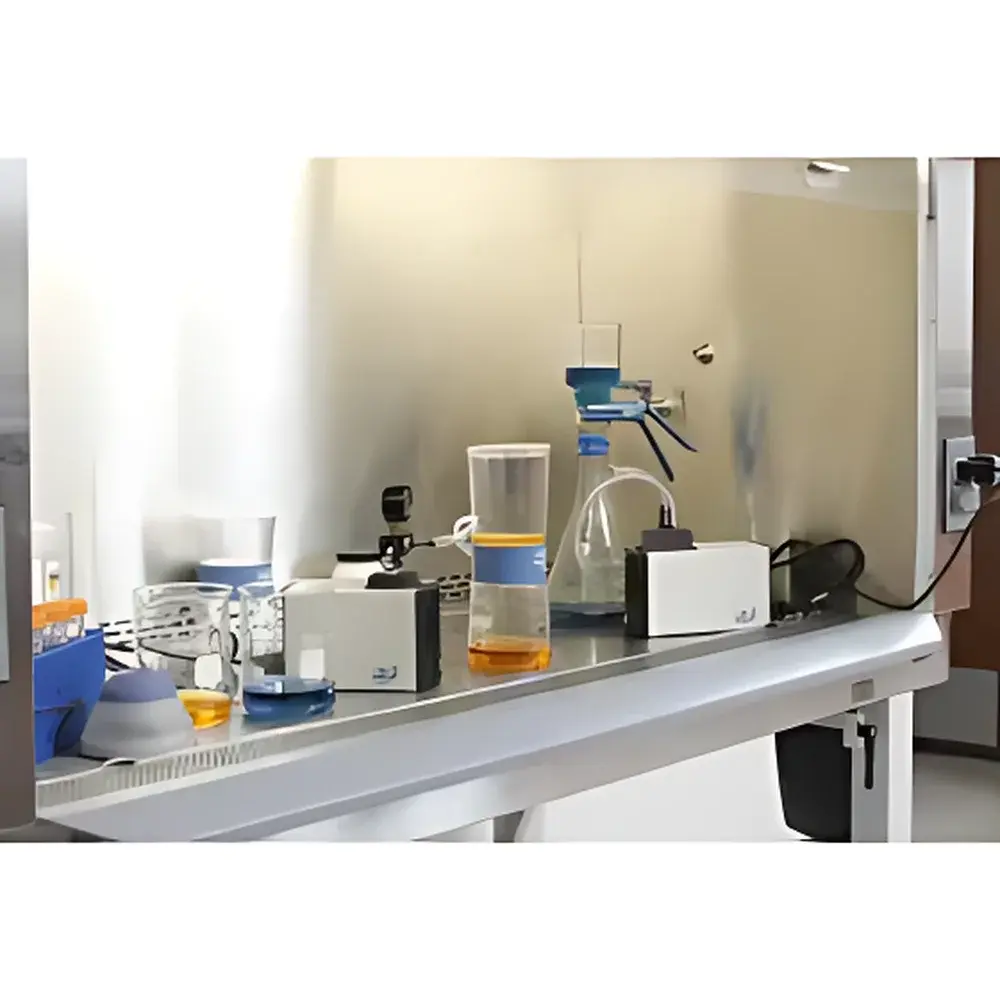
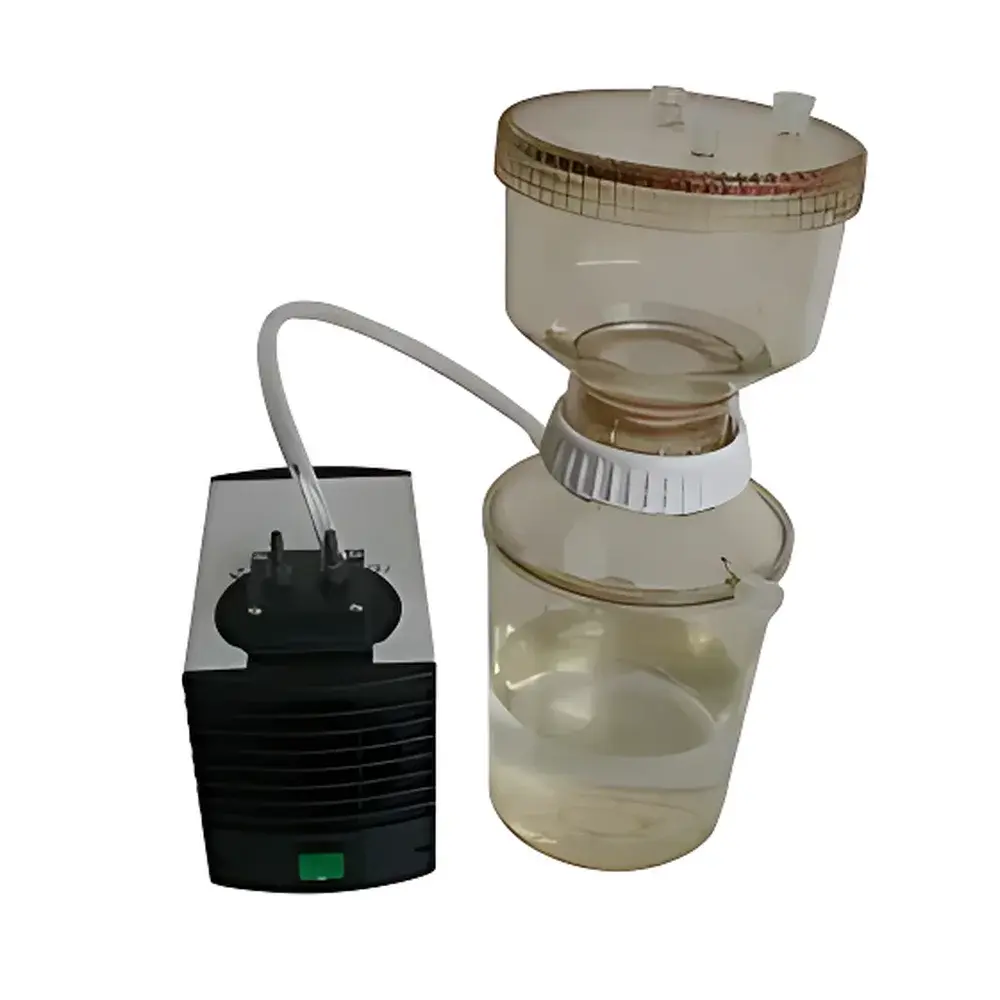
- Vacuum-assisted gravity filtration using Büchner funnels or solvent-resistant filtration assemblies (e.g., 1000 mL thick-walled filter flasks, Midisart 2000 PTFE particulate traps).
- Solvent degassing prior to HPLC, GC, or spectroscopic analysis to eliminate dissolved O₂ and CO₂ interference.
- Low-pressure solvent recovery from reaction mixtures using condenser-equipped receivers—particularly effective with low-boiling-point organics (bp < 100°C).
- Supporting rotary evaporators requiring stable vacuum below 200 mbar, especially where oil-backstreaming must be avoided (e.g., API purification).
- Positive-pressure purging of gloveboxes, reactors, or sample vials with inert gases (N₂, Ar) when operated in reverse pressure mode.
FAQ
Can the N86KT.18 handle chlorinated solvents such as chloroform or DCM?
Yes—when used with PTFE/FFPM wetted materials and paired with a PTFE particulate trap, the pump is compatible with short-term exposure to dichloromethane and chloroform; prolonged continuous duty with these solvents is not recommended without additional vapor condensation upstream.
Is the pump suitable for use with corrosive acid vapors (e.g., HCl fumes)?
It tolerates intermittent exposure to ≤10% aqueous HCl vapor when equipped with a PTFE-coated inlet filter and operated within ambient temperature limits (15–30°C); continuous duty above 5% concentration requires dedicated acid-scrubbing pre-filtration.
Does KNF provide calibration certificates or IQ/OQ documentation?
Yes—factory-issued performance verification reports (including flow rate and ultimate vacuum measurements per ISO 5801) are available upon request; full IQ/OQ templates compatible with GMP environments can be supplied by authorized distributors.
What is the expected service life under continuous operation?
Rated for >10,000 hours MTBF (mean time between failures) at 80% of maximum vacuum load; actual lifetime depends on duty cycle, ambient temperature, and inlet gas composition.
Can the pump be mounted vertically or inverted?
No—it must be operated in the orientation specified in the manual (base-down, vent ports upward) to ensure proper diaphragm flexure dynamics and thermal dissipation.



