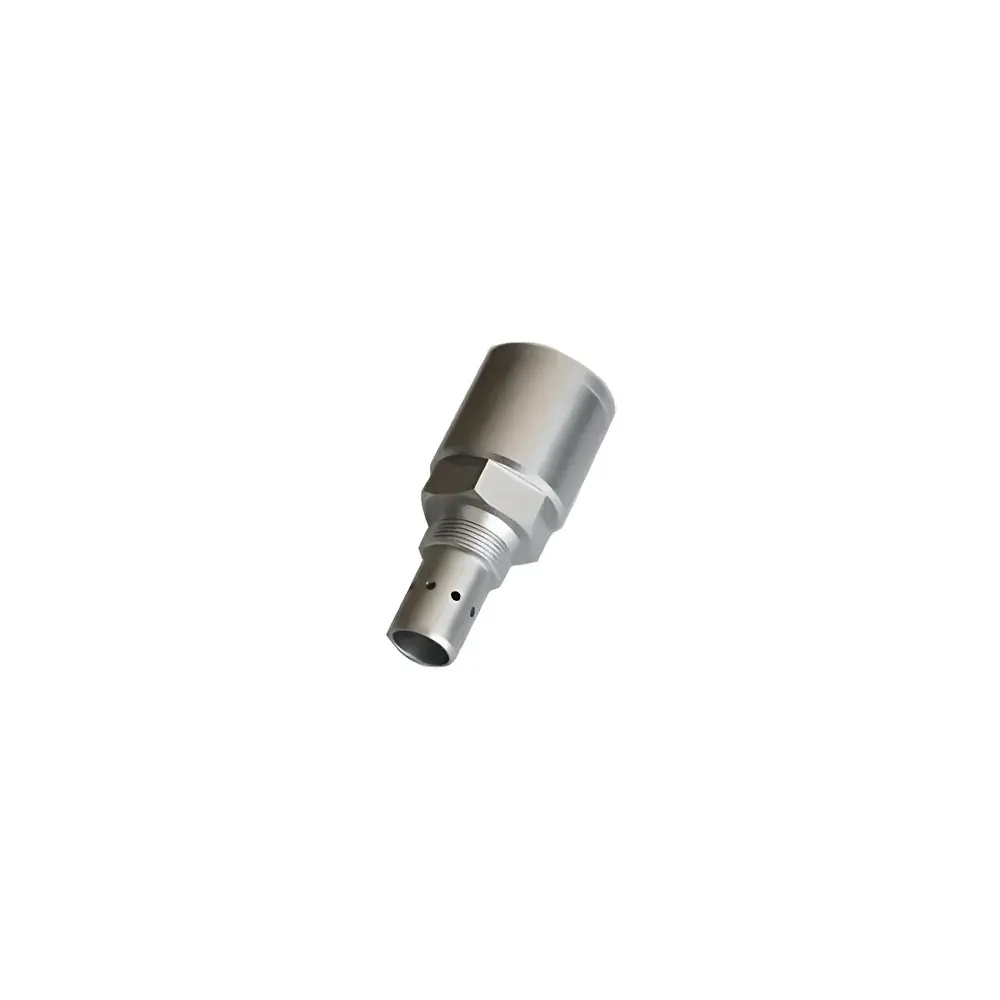
KRI Kaufman Ion Source EH1020F
| Brand | KRI (Kaufman & Robinson, Inc.) |
|---|---|
| Origin | USA |
| Model | EH1020F |
| Type | End-Hall Ion Source (Ungridded Hall-Effect Ion Source) |
| Beam Current Range | 0.1–2.5 A (adjustable) |
| Operating Voltage | 50–150 V (DC) |
| Gas Compatibility | Ar, O₂, N₂, Xe, or mixed gases |
| Typical Anode Power | 50–300 W |
| Cooling | Conduction-cooled (water-cooling optional) |
| Flange Interface | CF-63 or CF-100 (customizable) |
| Lifetime | >10,000 hours (under nominal operating conditions) |
| Compliance | CE-marked, RoHS-compliant, compatible with UHV and HV vacuum systems (≤1×10⁻⁷ mbar base pressure) |
Overview
The KRI Kaufman Ion Source EH1020F is a robust, ungridded end-Hall ion source engineered for precision surface modification, ion-assisted deposition (IBAD), and in-situ substrate pre-treatment in high-vacuum and ultra-high-vacuum (UHV) thin-film systems. Based on the foundational Kaufman discharge principle—utilizing a radial magnetic field and axial electric field to confine electrons and sustain a stable, low-temperature plasma—the EH1020F generates a broad-beam, high-current ion flux without thermionic filaments or accelerating grids. This eliminates grid erosion, thermal drift, and beam divergence issues common in gridded ion sources, enabling long-term operational stability and reproducible ion energy distribution (typically <15 eV full width at half maximum). Designed for integration into PVD, optical coating, and analytical instrumentation platforms, the EH1020F operates continuously under DC discharge conditions and supports reactive gas chemistries (O₂, N₂, Ar/O₂ mixtures) essential for oxide/nitride film growth and surface activation.
Key Features
- End-Hall configuration with permanent magnet array ensuring uniform magnetic confinement and stable plasma ignition down to 1×10⁻⁴ mbar
- Filament-free operation: no cathode degradation, no replacement cycles, and no risk of filament breakage or contamination
- Adjustable ion current (0.1–2.5 A) and discharge voltage (50–150 V) via external power supply control, enabling fine-tuned ion energy (≈70–90% of anode voltage)
- Conduction-cooled anode assembly with optional water-jacketed housing for sustained high-power operation (>200 W)
- CF-63 or CF-100 ISO-K vacuum flange interface; modular design facilitates retrofitting into existing evaporation, sputtering, or MBE systems
- Low-energy, high-flux beam profile optimized for gentle surface cleaning, densification of optical coatings, and stoichiometric control in reactive deposition
Sample Compatibility & Compliance
The EH1020F is routinely deployed in optical thin-film manufacturing for anti-reflective (AR), infrared (IR), and dichroic filter production, where it enhances adhesion, refractive index homogeneity, and environmental durability of SiO₂, Ta₂O₅, TiO₂, and Al₂O₃ layers. It is compatible with substrates ranging from fused silica and CaF₂ to flexible polymer films and semiconductor wafers (up to 200 mm diameter). The ion source meets CE safety directives and RoHS material restrictions. Its vacuum compatibility extends to ≤1×10⁻⁷ mbar base pressure when paired with turbomolecular pumping systems (e.g., Pfeiffer HiPace series), and its electromagnetic emissions comply with EN 61326-1 for laboratory-grade instrumentation. For GMP-regulated optical component manufacturing, the EH1020F supports audit-ready process documentation when integrated with programmable power supplies featuring analog/digital I/O and timestamped parameter logging.
Software & Data Management
While the EH1020F operates as a hardware-integrated subsystem, its performance is fully controllable via KRI’s standard 0–10 V analog interface or optional RS-485/Modbus RTU protocol. When coupled with industrial PLCs or LabVIEW-based vacuum system controllers, real-time monitoring of anode current, discharge voltage, and gas flow enables closed-loop process stabilization. KRI provides comprehensive technical documentation—including IEC 61508-aligned functional safety notes for interlock integration—and supports FDA 21 CFR Part 11 compliance through third-party SCADA systems that enforce electronic signatures, audit trails, and user-access hierarchies. No proprietary software is required; all operational parameters are accessible via industry-standard 4–20 mA or 0–10 V signal conditioning.
Applications
- Ion-assisted electron-beam evaporation (IBAD-Evap) for high-laser-damage-threshold optical coatings
- In-situ substrate cleaning prior to deposition (ISSP) to remove hydrocarbon monolayers and native oxides
- Densification of porous sol-gel and thermal evaporated films, improving moisture resistance and spectral stability
- Surface activation of polymers and low-surface-energy materials prior to metallization or adhesive bonding
- Controlled ion etching for maskless patterning in R&D-scale micro-optics fabrication
- Plasma diagnostics support: used as calibrated ion flux reference in Langmuir probe and mass spectrometer calibration setups
FAQ
What vacuum level is required for stable EH1020F operation?
Stable plasma ignition requires ≥5×10⁻⁵ mbar; optimal beam uniformity and lifetime are achieved at ≤1×10⁻⁶ mbar with turbomolecular pumping.
Can the EH1020F operate with reactive gases like oxygen without cathode oxidation?
Yes—the filament-free design eliminates oxidation-prone thermionic emitters; oxygen-compatible anode and pole-piece materials (e.g., high-purity graphite or molybdenum) ensure stable operation in O₂ and O₂/Ar mixtures.
Is water cooling mandatory for continuous-duty use?
Not mandatory for ≤150 W average power; conduction cooling suffices. Water cooling is recommended for >200 W or >8-hour uninterrupted operation to maintain thermal equilibrium and extend magnet life.
How is beam current measured and calibrated?
Beam current is inferred from anode current (with correction for electron current fraction, typically 10–15%) and validated using Faraday cup arrays traceable to NIST standards; KRI provides factory calibration reports with uncertainty budgets.
Does the EH1020F require periodic maintenance beyond gas line filtration?
No scheduled maintenance is required. Recommended practices include quarterly inspection of insulator cleanliness and annual verification of magnetic field strength using a gaussmeter; typical mean time between unscheduled interventions exceeds 12,000 operating hours.