
Q-LAB CRH Series Cyclic Corrosion Test Chamber
| Brand | Q-LAB |
|---|---|
| Origin | USA |
| Model | CRH600-HSC / CRH1100-HSC |
| Salt Fog Deposition Rate | Adjustable via precision peristaltic pump and air pressure regulation |
| Temperature Range | 10°C to 70°C (operational), with rapid transition capability |
| Relative Humidity Control | 10% to 95% RH, ±2% RH accuracy (at 25°C) |
| Chamber Capacity | 640 L (CRH600-HSC) or 1103 L (CRH1100-HSC) |
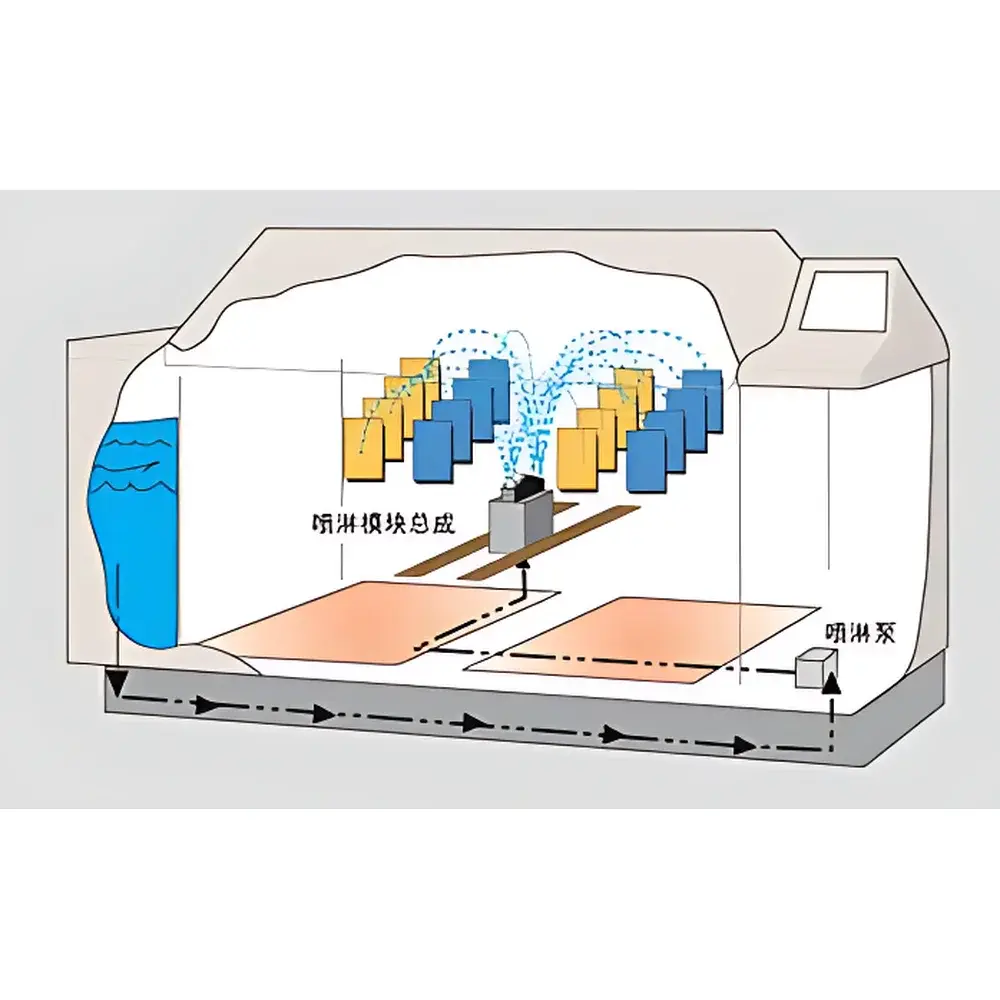
| Spray Nozzle System | Self-cleaning, modular, DI-water compatible |
| Internal Solution Reservoir | 120 L, with level sensor and particulate filtration |
| Compliance | Designed to meet GMW 14872, SAE J2334, ISO 11997, ASTM B117 (modified), VW PV1210, Ford CETP, Renault D17 2025, GB/T 24135–2009, and other automotive & industrial cyclic corrosion standards |
Overview
The Q-LAB CRH Series Cyclic Corrosion Test Chamber is an engineered solution for accelerated laboratory simulation of atmospheric corrosion mechanisms under dynamically controlled environmental conditions. Unlike conventional static salt spray chambers governed solely by ASTM B117, the CRH platform implements a multi-phase, programmable exposure cycle—integrating salt fog, high-humidity conditioning, drying, and optional spray phases—to replicate real-world corrosion kinetics observed in outdoor service environments. Its core innovation lies in the integrated air pre-conditioning system: ambient air is thermally and hygroscopically regulated upstream of the test chamber using dedicated heating/cooling coils and saturated steam humidification, enabling precise, stable, and repeatable relative humidity control (10–95% RH, ±2% RH accuracy at 25°C) independent of chamber temperature. This architecture eliminates thermal mass limitations inherent in water-jacketed designs, allowing sub-5-minute transitions between test phases—including low-humidity (<20% RH) drying cycles enabled by auxiliary air heaters and high-efficiency desiccant-cooled blowers.
Key Features
- Patented air pre-conditioning module ensures traceable, stable RH control across full operational temperature range (10–70°C)
- Dual-mode aerosol generation: fine-mist salt fog (via compressed-air atomization) and coarse-spray rinse (via independent nozzle array with adjustable flow rate and timing)
- Self-cleaning spray nozzles with automated purge cycle prevent crystalline clogging—a common failure mode in legacy systems
- 120 L internal deionized water reservoir with particulate filtration, low-level alarm, and 7+ day autonomy for standard test cycles
- Rapid thermal response: chamber temperature shifts ≤5°C/min due to direct-resistance chamber heaters and high-CFM cooling fans
- Intuitive Q-FOG controller with touchscreen interface, built-in diagnostics, scheduled maintenance alerts, and audit-trail-capable event logging (GLP/GMP-ready)
- Modular design: spray module mounts/removes without tools; viewing window with LED illumination enables real-time sample observation
Sample Compatibility & Compliance
The CRH series accommodates flat-panel specimens up to 75 mm × 150 mm (160 positions in CRH600-HSC; 240 in CRH1100-HSC), with low-profile access door and ergonomic loading height. All wetted components—including reservoirs, tubing, and nozzles—are constructed from corrosion-resistant PVDF, CPVC, and 316 stainless steel to ensure long-term chemical compatibility with NaCl, CuCl₂, and acidic or alkaline test solutions. The system is validated for compliance with internationally recognized automotive corrosion protocols including GMW 14872 (Cyclic Corrosion Testing), SAE J2334 (Laboratory Corrosion Test Procedure), ISO 11997-1/2 (Cyclic Corrosion Tests), VW PV1210, Ford CETP 00.00-L-467, Renault D17 2025, and Chinese national standard GB/T 24135–2009. RH and temperature sensors are user-calibratable every six months using NIST-traceable reference instruments—fully supporting ISO/IEC 17025 laboratory accreditation requirements.
Software & Data Management
The embedded Q-FOG controller runs deterministic real-time firmware with non-volatile memory for ≥100 custom test programs. Each program defines time-scheduled sequences of up to eight distinct phases (e.g., 2 h salt fog → 4 h RH 95% @ 40°C → 2 h dry @ 60°C → 1 h spray rinse). All phase parameters—including temperature setpoint, RH target, spray duration, solution flow rate, and air pressure—are independently adjustable. Event logs record timestamped chamber temperature, RH, door status, pump operation, and fault codes with millisecond resolution. Exportable CSV files support post-test statistical analysis in MATLAB, JMP, or Minitab. Optional Ethernet connectivity enables remote monitoring, centralized fleet management, and integration into LIMS or MES platforms compliant with FDA 21 CFR Part 11 (electronic signatures, audit trails, and data integrity controls).
Applications
Primary use cases include qualification testing of automotive body panels, fasteners, coatings, and galvanized substrates; validation of corrosion inhibitors and pretreatment chemistries; comparative evaluation of cathodic protection systems; and R&D of weathering-resistant polymers and composites. The CRH’s ability to decouple fog deposition rate from droplet size—and independently control RH ramp rates—makes it uniquely suited for studying moisture-driven electrochemical degradation mechanisms such as crevice corrosion, filiform corrosion, and chloride-induced pitting. It is routinely deployed in Tier-1 supplier labs, OEM engineering centers, and ISO 17025-accredited materials testing facilities worldwide.
FAQ
What deionized water resistivity is required for CRH operation?
Minimum 1 MΩ·cm resistivity (≤1 µS/cm conductivity) is mandatory to prevent nozzle scaling and sensor drift.
Can the CRH perform ASTM B117-compliant salt spray tests?
Yes—when configured in “continuous fog” mode with calibrated deposition rate (1.0–2.0 mL/80 cm²/h) and chamber temperature held at 35°C ±2°C.
Is the RH sensor calibration traceable to NIST standards?
Yes—user-performed calibration uses a NIST-traceable reference hygrometer and saturated salt solution standards per ISO 17025 Annex A.
How often does the internal filter require replacement?
Under normal use with DI water, the 5 µm particulate filter requires replacement every 6 months or after 2000 hours of operation.
Does the CRH support third-party software integration for automated reporting?
Yes—via Modbus TCP or ASCII serial protocol; API documentation and driver libraries available upon request for LabVIEW, Python, and .NET environments.



