
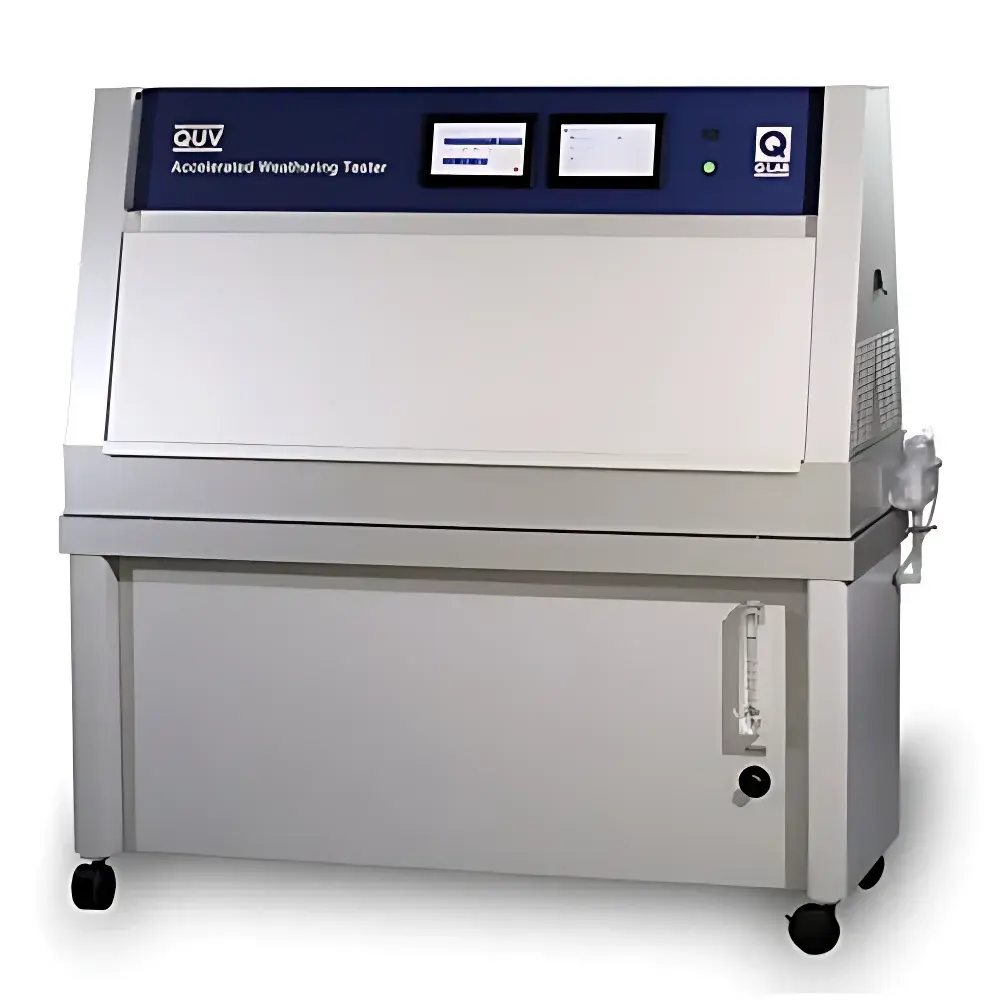
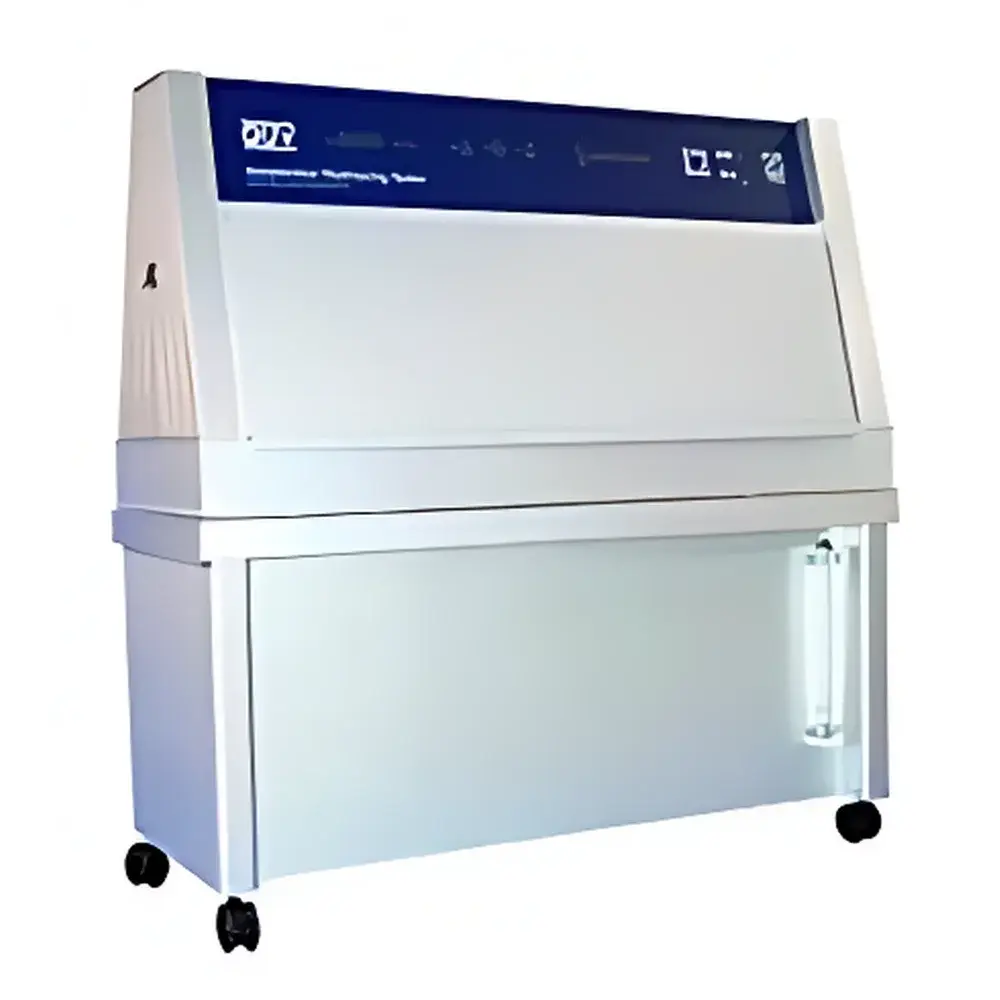
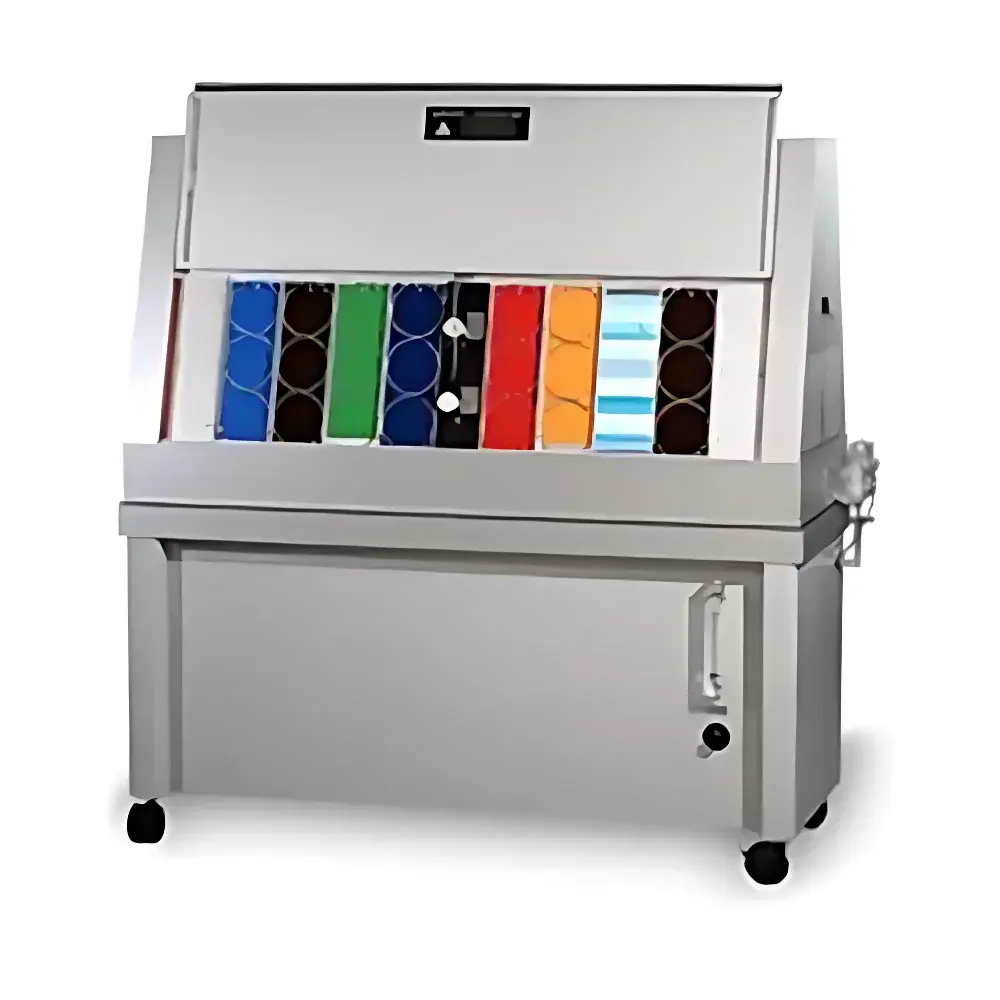
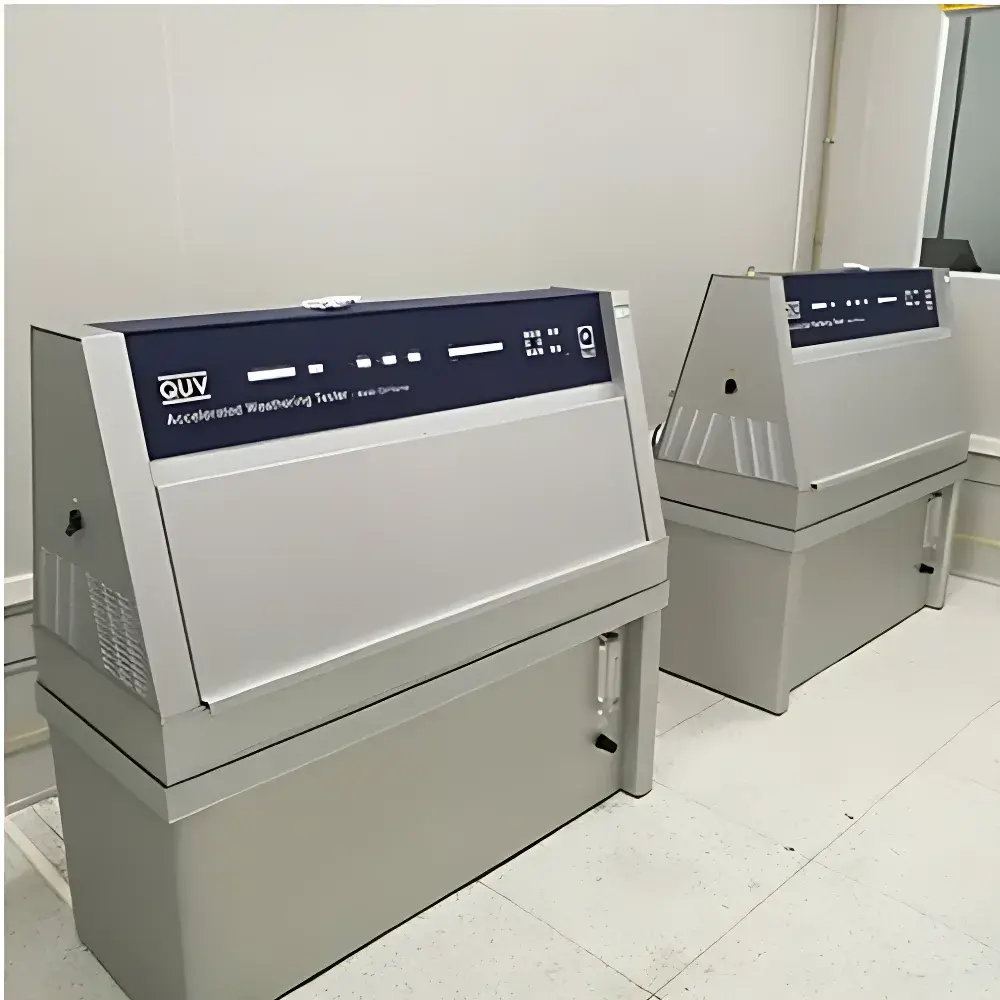
Q-LAB QUV/basic UV Aging Test Chamber
| Brand | Q-LAB |
|---|---|
| Origin | USA |
| Model | QUV/basic |
| Test Duration | 1–5000 h |
| Humidity Range | 0–95% RH |
| Black Panel Temperature Range | 45–80 °C |
| UV Wavelength | 340 nm |
| Lamp Type Compatibility | UVA-340, UVA-351, UVB-313 |
| Irradiance Control | None (no SOLAR EYE sensor) |
| Sample Capacity | Up to 48 specimens (75 mm × 150 mm) |
| Compliance | ASTM G154, ISO 4892-3, JIS D0205, SAE J2020, GB/T 14522 |
Overview
The Q-LAB QUV/basic UV Aging Test Chamber is an entry-level, cost-optimized accelerated weathering instrument engineered for reliable simulation of short-wave ultraviolet (UV) radiation and condensation-induced moisture stress. It operates on the principle of fluorescent UV lamp irradiation coupled with controlled condensation cycles—mimicking the two dominant degradation drivers in outdoor exposure: solar UV photons (particularly below 365 nm) and dew-driven hydration. Unlike xenon arc or carbon arc systems, the QUV/basic leverages stabilized fluorescent UV lamps whose spectral power distribution (SPD) remains virtually invariant over extended service life (up to 5,000 hours), ensuring high inter-test reproducibility without spectral drift. This stability eliminates a major source of variability inherent in broadband light sources and supports consistent evaluation of photodegradation mechanisms—including polymer chain scission, pigment bleaching, surface oxidation, chalking, gloss loss, microcracking, embrittlement, and adhesion failure.
Key Features
- Fluorescent UV lamp architecture optimized for spectral fidelity and long-term output stability—no SPD shift over lamp lifetime
- Dedicated condensation system utilizing deionized or tap water (no external humidification required)
- Fixed-intensity UV exposure: no irradiance feedback control (SOLAR EYE absent); lamp positioning requires periodic manual adjustment
- Black panel temperature control range of 45–80 °C, enabling precise thermal stress management during UV exposure
- Relative humidity control from 0–95% RH during condensation phases, supporting realistic moisture cycling protocols
- Standard sample capacity for up to 48 specimens (75 mm × 150 mm), accommodating common ASTM/ISO specimen formats
- Compliance-ready design aligned with core international standards: ASTM G154 (Cycle A1–A5), ISO 4892-3 (Method A), JIS D0205, SAE J2020, and GB/T 14522
Sample Compatibility & Compliance
The QUV/basic accommodates flat, rigid, or semi-rigid specimens within defined dimensional limits, including coatings, plastics, automotive trim, architectural sealants, textiles, and packaging films. Its fixed-spectrum lamp options—UVA-340 (sunlight-cutoff simulation), UVA-351 (window-filtered UV), and UVB-313 (accelerated, non-realistic UV)—allow method-specific selection based on end-use environment and regulatory requirements. While UVB-313 is not recommended for correlation to natural exposure, it remains valuable for QC screening of highly durable materials. All lamp types are manufactured to Q-LAB’s proprietary specifications, subject to rigorous batch testing for spectral consistency and radiometric output. The chamber’s mechanical and thermal design meets GLP-aligned operational rigor, with traceable calibration paths for black panel temperature sensors and humidity transducers per ISO/IEC 17025 guidelines.
Software & Data Management
The QUV/basic operates via intuitive front-panel controls with programmable exposure and condensation cycle timing (1–5000 h total). Though it lacks integrated data logging or PC connectivity, its operation is fully compatible with external recording systems (e.g., data loggers interfaced via analog outputs or relay triggers). For laboratories requiring audit trails, the unit supports manual logbook documentation aligned with FDA 21 CFR Part 11 principles when paired with controlled procedural SOPs. Q-LAB provides comprehensive test method documentation—including lamp replacement schedules, calibration verification procedures, and maintenance checklists—to support ISO 17025 accreditation and internal quality audits.
Applications
- Accelerated durability screening of automotive interior and exterior components under simulated Florida or Arizona exposure conditions
- Quality control of architectural coatings and elastomeric sealants per ASTM D4587 and ISO 11507
- R&D evaluation of UV stabilizers, HALS additives, and pigment systems in polyolefins and PVC compounds
- Correlation studies between accelerated QUV data and field exposure outcomes using established acceleration factors (AFs)
- Regulatory submission support for medical device packaging (ISO 11607) and pharmaceutical secondary packaging (ICH Q1B)
- Material qualification for aerospace composites and avionics housings exposed to high-altitude UV environments
FAQ
Does the QUV/basic support irradiance calibration or real-time intensity monitoring?
No. The QUV/basic does not include the SOLAR EYE irradiance control system. Lamp output is fixed; users must rely on scheduled lamp replacement intervals (typically every 1,600–2,000 h for UVA-340) and manual black panel temperature verification.
Can I use UVA-351 or UVB-313 lamps interchangeably with the QUV/basic?
Yes—mechanically and electrically compatible—but lamp selection must align with test objectives and standard requirements. UVB-313 is restricted to non-correlative QC applications per ASTM G154 Annex A3.
What maintenance is required to ensure long-term repeatability?
Routine tasks include quarterly cleaning of lamp reflectors and condensate trays, biannual verification of black panel sensor accuracy against NIST-traceable references, and strict adherence to Q-LAB’s lamp aging schedule.
Is the QUV/basic suitable for ISO 17025-accredited testing laboratories?
Yes—provided documented procedures for lamp handling, temperature/humidity verification, and environmental monitoring are implemented and maintained per ILAC-G8 and ISO/IEC 17025:2017 Clause 7.7.
How does the QUV/basic compare to xenon arc testers in terms of spectral relevance?
The QUV/basic excels in replicating short-wave UV damage mechanisms but does not reproduce visible or near-infrared radiation. Xenon arc systems provide full-spectrum simulation but suffer from greater spectral drift and higher operational complexity—making QUV/basic preferred for UV-dominated degradation pathways.



