
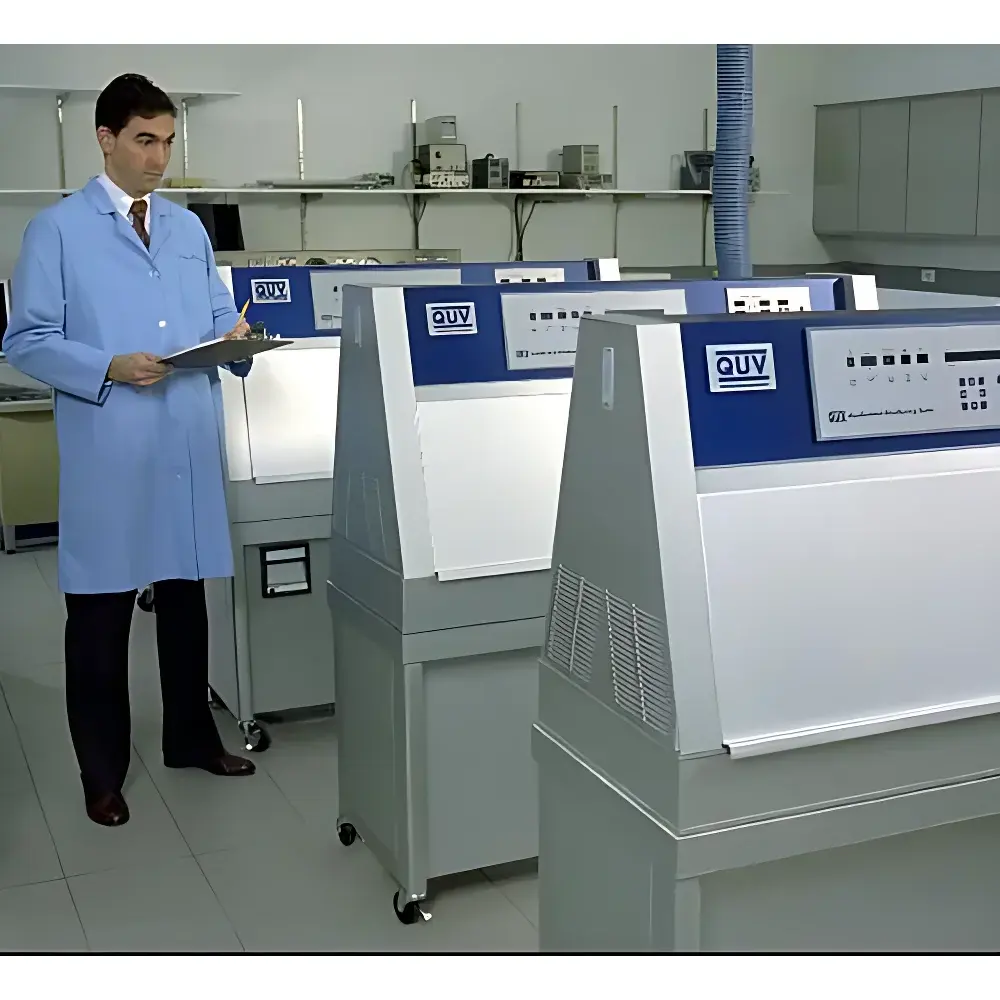
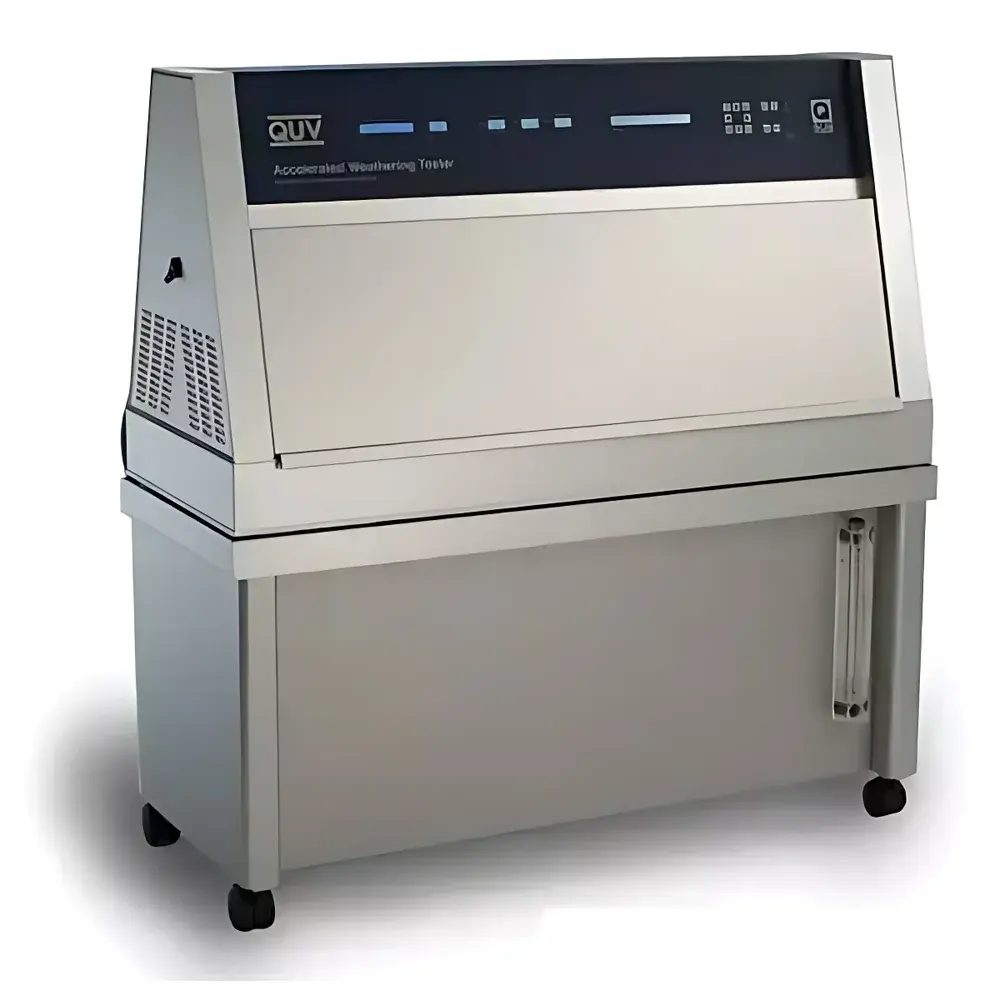
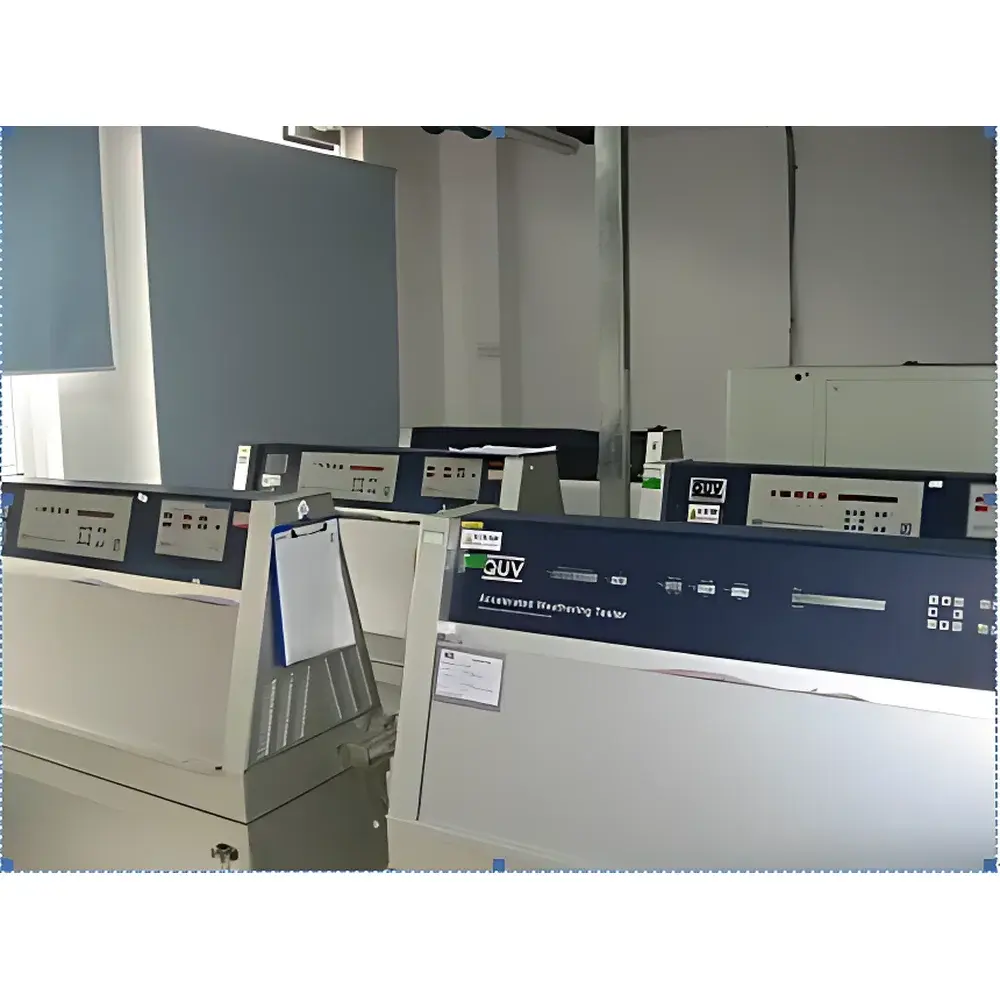
Q-Lab QUV/se UV Accelerated Weathering Tester
| Brand | Q-LAB |
|---|---|
| Origin | USA |
| Model | QUV/se |
| UV Wavelength Range | 280–400 nm |
| Sample Capacity | 24 pieces of 75 mm × 300 mm specimens or 48 pieces of 75 mm × 150 mm specimens |
| Lamp Options | UVB-313 (for aggressive, high-intensity UV stress) and UVA-340 (spectrally matched to terrestrial solar UV, 295–365 nm) |
| Compliance | ASTM G154, ASTM G151, ISO 4892-3, ISO 11507, JIS K 5600-7-8, SAE J2020, DIN 53384, GB/T 14522, and other international weathering standards |
| Condensation Capability | Yes, for realistic moisture cycling simulation |
| Irradiance Control | Solar Eye® closed-loop feedback system calibrated per ISO/IEC 17025-accredited procedures |
| Chamber Construction | Stainless steel interior, corrosion-resistant housing, precision-engineered UV reflector geometry |
Overview
The Q-Lab QUV/se UV Accelerated Weathering Tester is an industry-standard benchtop chamber engineered for reproducible, high-fidelity simulation of short-wavelength ultraviolet (UV) radiation exposure under controlled thermal and hygrothermal conditions. Unlike full-spectrum xenon arc systems, the QUV/se operates on the scientifically validated principle that UV photons in the 280–400 nm range—particularly the 295–365 nm band replicated by UVA-340 lamps—are the dominant drivers of photochemical degradation in polymers, coatings, adhesives, and architectural materials exposed outdoors. Its design prioritizes metrological rigor: the Solar Eye® irradiance control system continuously monitors and adjusts lamp output in real time, ensuring compliance with ISO/IEC 17025 traceable calibration protocols. The chamber integrates a condensation cycle that mimics nocturnal dew formation—a critical factor in hydrolytic degradation pathways—thereby enabling accelerated yet physically representative aging sequences aligned with ASTM G154 and ISO 4892-3 methodologies.
Key Features
- Solar Eye® Irradiance Control: Closed-loop feedback system maintains ±5% irradiance stability across the UVA-340 or UVB-313 spectral bands; recalibration supported by NIST-traceable reference sensors.
- Dual-Lamp Architecture: Interchangeable UVB-313 (peak at 313 nm, high-energy output for rapid QC screening) and UVA-340 (spectral match to solar cutoff at 295 nm, ideal for comparative polymer stability studies).
- Condensation Humidity Simulation: Non-pressurized water reservoir generates uniform condensate layer on specimen surfaces during dark cycles—critical for evaluating blistering, delamination, and hydrolysis in coatings and composites.
- Precision Black Panel Thermometry: Integral black panel sensor (BPT) tracks surface temperature response under UV load, enabling correlation with real-world substrate heating profiles per ASTM D4799 and ISO 20340.
- Robust Chamber Design: 304 stainless steel interior, quartz UV-transmissive lamp housings, and optimized reflector geometry ensure long-term optical consistency and minimal spectral drift over lamp lifetime.
- Modular Specimen Racking: Adjustable trays accommodate standardized test panels (75 × 150 mm or 75 × 300 mm); maximum capacity supports statistically significant sample sets per ICH Q5C and ASTM D4329 guidelines.
Sample Compatibility & Compliance
The QUV/se accommodates rigid flat specimens up to 6 mm thickness—including painted metal substrates, extruded plastic profiles, roofing membranes, automotive trim, and fiber-reinforced composites. Its test methodology satisfies regulatory and quality assurance requirements across multiple sectors: automotive (SAE J2020, GM 9125P), aerospace (MIL-STD-810H Method 506.6), construction (ISO 20340, ANSI/RMA IPR-1-1990), and pharmaceutical packaging (USP photostability screening). All operational parameters—including irradiance setpoints, temperature ramp rates, and condensation dwell times—are fully programmable and audit-ready for GLP/GMP environments. Data logs comply with FDA 21 CFR Part 11 requirements when paired with Q-Lab’s optional Q-Support software suite.
Software & Data Management
While the QUV/se operates via intuitive front-panel controls, integration with Q-Lab’s Q-Support software enables comprehensive test method definition, remote monitoring, and automated report generation. Each test run records timestamped irradiance, BPT temperature, chamber ambient temperature, and cycle phase metadata. Export formats include CSV and PDF compliant with ISO/IEC 17025 documentation standards. Calibration certificates, lamp usage logs, and maintenance history are stored within a secure relational database—supporting internal audits and external accreditation reviews per ISO/IEC 17025 and ISO 9001.
Applications
- Evaluation of UV stabilizers and HALS additives in polyolefins and PVC formulations
- Comparative ranking of acrylic, polyester, and fluoropolymer topcoats per ASTM D4587
- Accelerated qualification of sealants and structural adhesives (ASTM C1442, ASTM D904)
- Weathering validation of photovoltaic encapsulants and backsheet materials (IEC 61215-2 MQT10)
- Corrosion resistance testing of pretreated steel and aluminum substrates (ASTM D1654)
- Stability assessment of medical device polymer housings under ISO 10993-12 simulated environmental stress
FAQ
How does the QUV/se differ from xenon arc weathering testers?
The QUV/se isolates the UV portion (280–400 nm) of solar radiation—the primary contributor to bond scission in organic materials—whereas xenon arc systems replicate the full solar spectrum (295–800 nm), including visible and infrared energy. This makes QUV/se more cost-effective and thermally stable for UV-dominated failure modes.
What is the significance of UVA-340 vs. UVB-313 lamp selection?
UVA-340 lamps emit a spectrum closely matching terrestrial sunlight down to 295 nm, making them suitable for predictive outdoor correlation. UVB-313 lamps emit shorter, more energetic UV (peak 313 nm) and are used for rapid screening or highly UV-resistant materials where accelerated failure is required.
Does the QUV/se meet ISO 4892-3 requirements for laboratory light exposure?
Yes—the QUV/se’s UVA-340 configuration satisfies Clause 6.2 (UV fluorescent lamp method) of ISO 4892-3, including spectral distribution, irradiance control tolerance, and black standard thermometer specifications.
Can test data from the QUV/se be used for regulatory submissions?
When operated under documented SOPs, with calibrated instrumentation and maintained audit trails, QUV/se data is routinely accepted by regulatory bodies including the EPA, FDA, and EMA for material safety and durability dossiers.
What maintenance intervals are recommended for optimal performance?
Lamp replacement every 1,500–2,000 hours (UVA-340) or 500–1,000 hours (UVB-313); quarterly verification of irradiance sensor response; annual calibration of black panel thermometer per ISO/IEC 17025-accredited service provider.



