
Q-LAB QUV/se UV Aging Test Chamber
| Brand | Q-LAB |
|---|---|
| Origin | USA |
| Manufacturer Type | Authorized Distributor |
| Product Category | Imported Instrument |
| Model | QUV/se |
| Price | Upon Request |
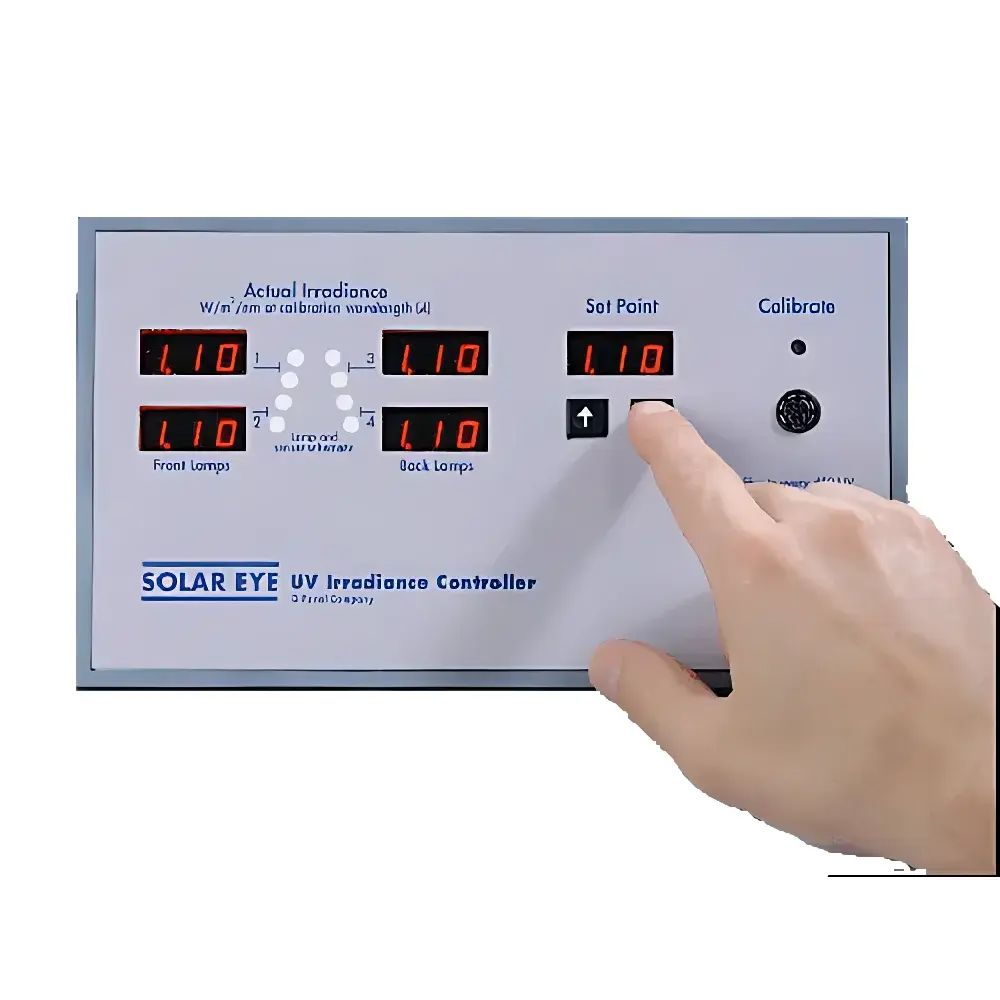
| UV Irradiance Control | SOLAR EYE Feedback System |
| UV Lamp Types | UVA-340, UVA-351, UVB-313, QFS-40, Cool White (QUV/se/cw only) |
| Black Panel Temperature Range | 35–80 °C |
| Chamber Temperature Range | 25–80 °C |
| UV Wavelength Range | 295–400 nm (lamp-dependent) |
| Test Chamber Dimensions (L×W×H) | 114 × 51 × 42 cm |
| Sample Capacity | Up to 48 specimens (75 mm × 150 mm) |
| Condensation Mechanism | Distilled-water-equivalent cold condensation using tap water |
| Compliance | ASTM G154, ISO 4892-3, JIS D0205, SAE J2020, GB/T 14522, MIL-STD-810, FDA 21 CFR Part 11 (with optional software) |
Overview
The Q-LAB QUV/se UV Aging Test Chamber is an industry-standard accelerated weathering instrument engineered for precision simulation of solar ultraviolet radiation, condensation moisture, and controlled thermal exposure. It operates on the principle of fluorescent UV irradiation—utilizing proprietary low-pressure mercury vapor lamps with phosphor-coated envelopes to emit narrow-band UV spectra that replicate critical photochemical stressors found in natural sunlight. Unlike xenon arc or carbon arc systems, the QUV/se does not require optical filters; its spectral output is intrinsically defined by lamp chemistry and geometry. The chamber cycles between UV irradiation (at user-defined intensity and wavelength) and dark condensation periods—mimicking diurnal outdoor exposure where dew formation—not rainfall—is the dominant source of moisture-induced degradation. This physically accurate condensation mechanism employs evaporative purification: as ambient air cools against the sample surface, distilled-quality water condenses from tap water in the reservoir, eliminating mineral deposits and ensuring consistent humidity dynamics without external deionized water supply.
Key Features
- SOLAR EYE irradiance control system: Closed-loop feedback sensor continuously monitors UV intensity (typically at 340 nm or 313 nm) and dynamically adjusts lamp power to maintain ±3% setpoint stability over time.
- Patented AUTOCAL calibration interface: Enables rapid, traceable sensor recalibration in under 90 seconds without disassembly or third-party service.
- Black panel temperature control: Precision thermocouple-regulated black panel sensor ensures reproducible surface heating conditions across test specimens (35–80 °C range).
- Robust chamber architecture: Stainless steel interior, insulated double-wall construction, and corrosion-resistant hardware support continuous unattended operation for up to 10,000 hours per cycle.
- Intuitive touchscreen controller: Features real-time display of irradiance, temperature, humidity phase, elapsed exposure time, and diagnostic status codes.
- Ethernet connectivity standard: Enables remote monitoring, data logging, and integration with LIMS or enterprise QA/QC platforms.
Sample Compatibility & Compliance
The QUV/se accommodates flat sheet specimens up to 20 mm thick via adjustable rack mounts; optional custom fixtures support 3D components, lenses, automotive trim, and coated substrates. Its design conforms to internationally recognized standards including ASTM G154 (Standard Practice for Operating Fluorescent Ultraviolet (UV) Lamp Apparatus for Exposure of Non-Metallic Materials), ISO 4892-3 (Plastics — Methods of Exposure to Laboratory Light Sources — Part 3: Fluorescent UV Lamps), and JIS D0205 (Automotive Paint Weathering). When configured with optional validation packages and audit-trail-enabled software, it satisfies GLP and GMP requirements per FDA 21 CFR Part 11 for regulated industries. All lamp types are certified to NIST-traceable spectral power distribution (SPD) profiles, with documented lot-to-lot consistency verified through Q-Lab’s internal photometric calibration laboratory.
Software & Data Management
The standard controller logs all operational parameters—including irradiance setpoint, measured UV flux, black panel temperature, chamber air temperature, and cycle phase—at user-configurable intervals (minimum 1-minute resolution). Optional “Virtual Strip Chart” PC software enables real-time graphing, automated report generation (PDF/CSV), and scheduled email transmission of test logs to designated recipients—including Q-Lab Technical Support for remote diagnostics. Data integrity is preserved via timestamped, non-erasable records with electronic signatures available under Part 11-compliant configurations. Firmware updates are delivered via secure HTTPS and include version-controlled change logs compliant with IEC 62304 medical device software lifecycle requirements.
Applications
The QUV/se is widely deployed in R&D laboratories and quality assurance departments across coatings, polymers, automotive interiors, architectural glazing, packaging films, and photovoltaic encapsulants. Typical failure modes accelerated and quantified include chalking, gloss loss, color shift (ΔE*), embrittlement (tensile strength reduction), microcracking, delamination, and yellowing index increase. UVA-340 lamps simulate full-spectrum terrestrial UV for outdoor durability assessment; UVA-351 replicates filtered sunlight behind window glass for indoor applications; UVB-313 provides aggressive short-wave UV for rapid screening of highly stable materials; QFS-40 remains specified in legacy OEM automotive test methods; Cool White lamps (QUV/se/cw only) model retail lighting environments. Each lamp type delivers repeatable SPDs validated across >5,000 operating hours—ensuring long-term inter-laboratory comparability.
FAQ
What UV lamp types are compatible with the QUV/se?
UVA-340, UVA-351, UVB-313, QFS-40, and Cool White (the latter only on QUV/se/cw models).
Does the QUV/se require deionized or distilled water for condensation?
No—tap water is sufficient. The condensation process inherently purifies water through phase-change distillation.
How often must the SOLAR EYE sensor be calibrated?
Annually under normal use, or after lamp replacement or physical impact; AUTOCAL reduces calibration time to <90 seconds.
Can test data be exported for regulatory submission?
Yes—when equipped with Part 11-compliant software, all raw data, audit trails, electronic signatures, and calibration records meet FDA and EU Annex 11 requirements.
Is the QUV/se suitable for testing painted metal substrates?
Yes—its black panel temperature control and uniform irradiance distribution ensure representative aging of coated metals per ASTM D7869 and SAE J2020 protocols.



