
Q-LAB QUV/se UV Weathering Test Chamber
| Brand | Q-LAB |
|---|---|
| Origin | USA |
| Model | QUV/se |
| UV Wavelength Range | 295–400 nm (UVA-340), 280–360 nm (UVB-313) |
| Black Panel Temperature Range | 30–75 °C |
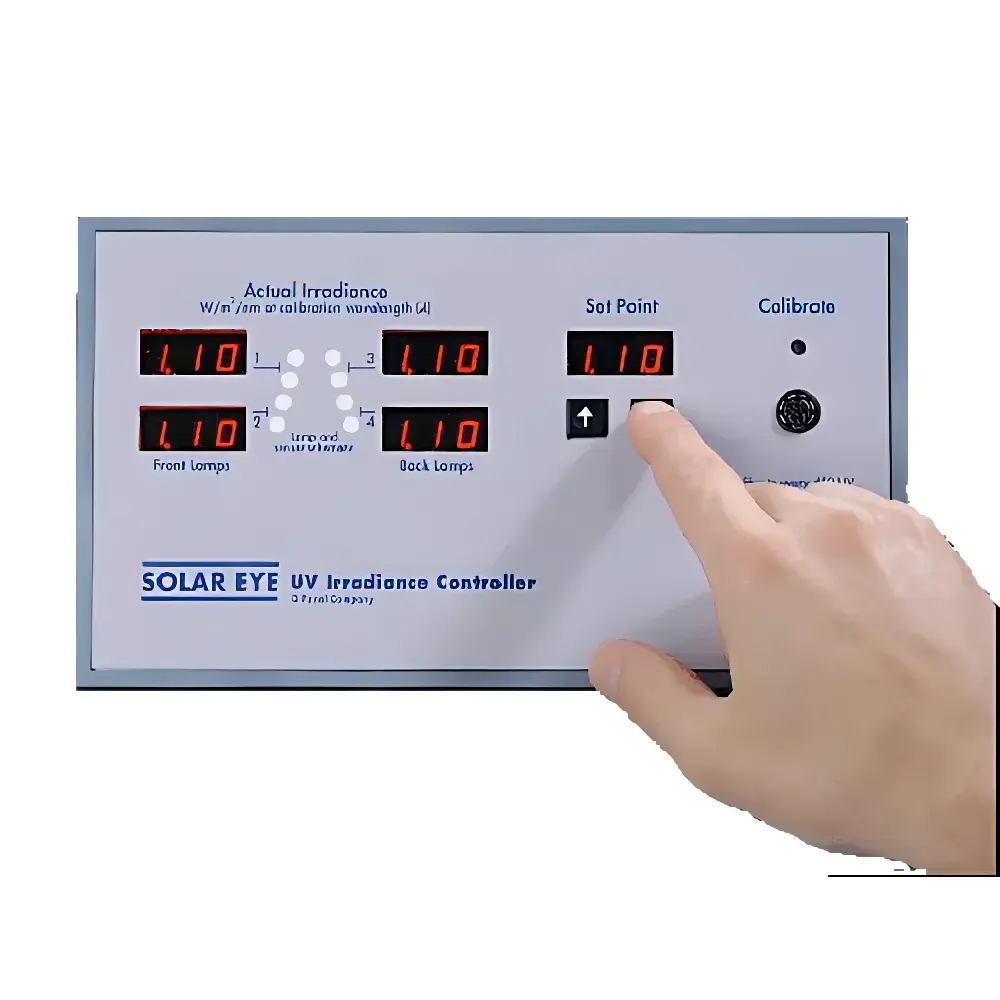
| Irradiance Control | SOLAR EYE® Closed-Loop Radiometric Feedback System |
| Condensation Mechanism | Water Jacket Heating with 100% RH Saturation |
| Compliance | ASTM G154, ISO 4892-3, JIS D0205, SAE J2020, GB/T 14522, FDA 21 CFR Part 11 (via optional audit trail software) |
| Sample Capacity | Configurable per standard chamber dimensions (standard internal volume: 45 L) |
Overview
The Q-LAB QUV/se UV Weathering Test Chamber is an industry-standard accelerated weathering instrument engineered for precision simulation of solar ultraviolet radiation, thermal cycling, and condensation-driven moisture exposure. As the original developer of fluorescent UV-based accelerated aging technology, Q-LAB designed the QUV platform to replicate the dominant degradation mechanisms affecting polymeric, coating, automotive, and architectural materials under real-world outdoor conditions. Unlike broad-spectrum xenon arc or carbon arc testers, the QUV/se relies on calibrated fluorescent UV lamps—primarily UVA-340 and UVB-313—to deliver spectrally defined irradiance within the 280–400 nm range, where photon energy most directly drives photochemical bond scission in organic matrices. Its operational principle centers on controlled photolysis: UV photons induce free radical formation, initiating chain scission, crosslinking, and chromophore degradation—processes validated against decades of field correlation data across ISO, ASTM, and OEM specifications.
Key Features
- SOLAR EYE® Radiometric Control System: A closed-loop, microprocessor-driven feedback mechanism that continuously monitors UV irradiance at specimen level using a calibrated photodiode sensor. Automatically adjusts lamp power output to maintain user-specified irradiance setpoints (e.g., 0.68 W/m² @ 340 nm), ensuring test repeatability across lamp aging cycles.
- Condensation-Only Moisture Simulation: Employs bottom-water-jacket heating to generate saturated water vapor, maintaining 100% relative humidity at elevated black panel temperatures (up to 75 °C). This replicates nocturnal dew formation—the dominant moisture stressor in outdoor exposure—without introducing uncontrolled rain or spray variables.
- Thermal Stability Architecture: Precision-controlled black panel temperature sensors (calibrated traceable to NIST standards) regulate chamber ambient and specimen surface temperature independently from UV intensity, enabling ISO-compliant cyclic protocols (e.g., 4 h UV @ 60 °C / 4 h condensation @ 50 °C).
- Lamp Flexibility & Spectral Selectivity: Supports interchangeable lamp types—including UVA-340 (sunlight-spectrum match down to 295 nm), UVB-313 (enhanced short-wave acceleration), UVA-351 (window-filtered indoor spectrum), and legacy QFS-40—each with documented spectral power distribution (SPD) and radiometric calibration certificates.
- Robust Mechanical Design: Stainless steel interior, corrosion-resistant hardware, and sealed lamp compartments ensure long-term stability in high-humidity UV environments. Front-access lamp replacement minimizes downtime and operator exposure.
Sample Compatibility & Compliance
The QUV/se accommodates flat-panel specimens up to 152 mm × 76 mm × 13 mm (standard rack configuration), with optional multi-tier racks supporting higher throughput. It meets or exceeds requirements for material qualification under ASTM G154 (Standard Practice for Operating Fluorescent Ultraviolet (UV) Lamp Apparatus for Exposure of Non-Metallic Materials), ISO 4892-3 (Plastics — Methods of Exposure to Laboratory Light Sources — Part 3: Fluorescent UV Lamps), JIS D0205 (Automotive Paint Durability), and SAE J2020 (Accelerated Exposure of Automotive Exterior Materials). All irradiance calibrations are traceable to ISO/IEC 17025-accredited laboratories; SOLAR EYE® system validation includes annual recalibration per ISO 17025 guidelines. For regulated environments, optional software modules provide 21 CFR Part 11-compliant electronic records, audit trails, and user access controls aligned with GLP/GMP documentation standards.
Software & Data Management
The integrated Q-LAB UV Control Software (v5.0+) provides full protocol definition, real-time monitoring of irradiance, black panel temperature, and cycle timing. It supports automated data logging at user-defined intervals (minimum 1-minute resolution), export to CSV or XML, and graphical trend analysis. Optional IQ/OQ/PQ documentation packages facilitate installation and operational qualification in pharmaceutical, aerospace, and medical device manufacturing settings. All calibration events—including CR10 radiometer verification—are digitally recorded with timestamp, operator ID, and deviation flags. Firmware updates preserve backward compatibility with legacy test methods and historical datasets.
Applications
- Automotive OEMs validating paint clearcoat durability, plastic trim resistance to chalking and gloss loss, and headlamp lens yellowing per GMW14872 or Ford CETP.
- Coating manufacturers assessing UV resistance of architectural acrylics, fluoropolymers, and industrial primers against ASTM D4587.
- Polymer compounders evaluating stabilizer package efficacy in PP, PE, and PVC formulations exposed to subtropical climates.
- Photovoltaic module encapsulant R&D, correlating QUV/se results with IEC 61215 damp heat + UV sequence testing.
- Government and third-party labs performing ISO 11341-compliant evaluation of printing inks, textiles, and adhesives.
FAQ
What UV spectral ranges does the QUV/se support?
The QUV/se operates with standardized fluorescent UV lamps: UVA-340 (295–365 nm), UVB-313 (280–360 nm), UVA-351 (320–400 nm), and QFS-40 (280–360 nm). Spectral output is certified per CIE 85 and NIST-traceable reference standards.
How is irradiance calibrated and maintained over time?
Using the CR10 radiometer and SOLAR EYE® feedback loop, irradiance is verified before each test run and adjusted automatically during operation. Annual recalibration of the CR10 unit is recommended per ISO/IEC 17025.
Can the QUV/se simulate rain or water spray?
No. The QUV/se models moisture exclusively via condensation. For combined UV/rain testing, Q-LAB’s Q-SUN xenon weathering tester is recommended.
Is black panel temperature measurement required for compliance?
Yes. ASTM G154 and ISO 4892-3 mandate black panel temperature monitoring as the primary thermal control parameter—not chamber air temperature—due to its direct correlation with specimen surface heating.
What documentation is provided for regulatory submissions?
Factory-installed IQ/OQ documentation, calibration certificates for CR10 and black panel sensors, lamp spectral reports, and optional 21 CFR Part 11 software validation packages are available upon request.



