
Q-LAB QUV/Spray UV Aging Test Chamber
| Brand | Q-LAB |
|---|---|
| Origin | USA |
| Model | QUV/Spray |
| UV Wavelength Range | 280–400 nm |
| Sample Capacity | Up to 48 specimens (75 mm × 150 mm) |
| Lamp Life | 5,000 hours |
| Compliance | ASTM G154, ISO 11507, ASTM D4587, JIS D0205, SAE J2020, AATCC TM186, ISO 4892-3 |
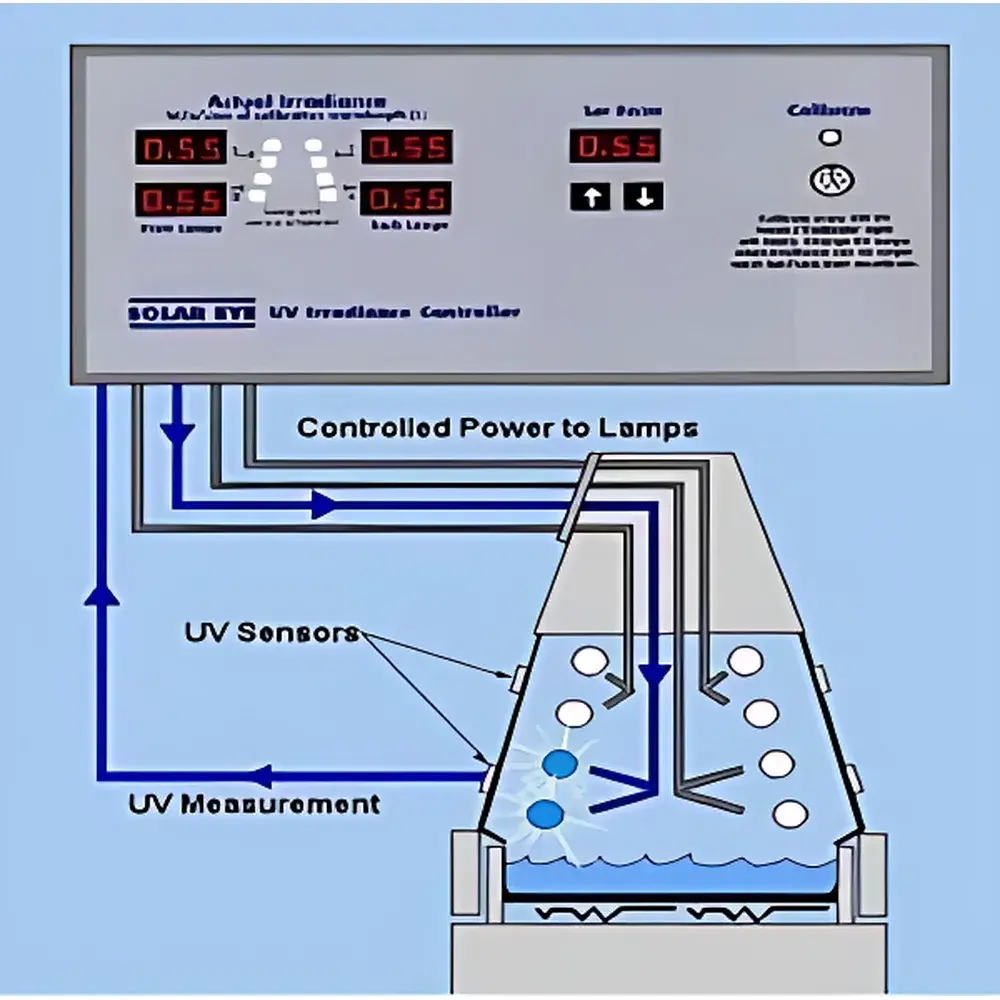
| Control System | SOLAR EYE irradiance feedback control with AUTOCAL calibration |
| Humidity Simulation | Condensation + Water Spray (deionized water recommended) |
| Temperature Control | Black panel and chamber air temperature regulation |
| User Interface | Multilingual (English, French, Spanish, Italian, German) |
| Connectivity | Ethernet-enabled for data logging and remote diagnostics |
Overview
The Q-LAB QUV/Spray UV Aging Test Chamber is an industry-standard accelerated weathering instrument engineered for precision simulation of solar ultraviolet radiation, moisture condensation, and thermal cycling—key environmental stressors responsible for photodegradation in polymeric, coating, automotive, aerospace, and architectural materials. Unlike broad-spectrum xenon arc or carbon arc testers, the QUV/Spray employs fluorescent UV lamps to deliver highly reproducible, spectrally stable irradiance within the critical 280–400 nm range—the most damaging portion of sunlight for organic materials. Its core architecture follows the principles of controlled photochemical aging: UV photons initiate bond scission and free radical formation; concurrent condensation replicates nocturnal dew deposition, promoting hydrolytic degradation; and optional water spray introduces thermal shock and mechanical erosion—mimicking real-world rain exposure. This tri-modal exposure profile enables correlation with field performance under diverse climatic conditions while maintaining high test repeatability across global laboratories.
Key Features
- Tri-functional exposure system: UV irradiation (UVA-340 or UVB-313 lamp options), condensation humidity, and programmable water spray
- SOLAR EYE irradiance monitoring and closed-loop feedback control ensures consistent spectral power output throughout lamp life
- Patented AUTOCAL system enables rapid, traceable recalibration without external sensors or service visits
- Black panel temperature control (BPT) and chamber air temperature regulation support precise thermal management per ASTM G151 and ISO 11507 protocols
- Robust stainless-steel chamber construction with corrosion-resistant components for long-term operational integrity
- Self-diagnostic firmware with real-time error logging, maintenance alerts, and automatic safety shutdown
- Intuitive touchscreen controller supporting five languages (English, French, Spanish, Italian, German) and full parameter programming
- Ethernet interface standard for integration into LIMS, GLP/GMP audit trails, and remote technical support via Q-Lab’s diagnostic portal
Sample Compatibility & Compliance
The QUV/Spray accommodates up to 48 flat specimens measuring 75 mm × 150 mm on adjustable sample racks, with maximum specimen thickness of 20 mm. Optional fixtures—including textile clamps, lens holders, 3D part mounts, and vial adapters—extend compatibility to non-planar and specialty geometries. All configurations maintain uniform irradiance distribution per ASTM D4329 Annex A1 and ISO 4892-3 Annex B. The system is validated for conformance with over 50 international standards, including ASTM G154 (practice for fluorescent UV exposure), ISO 11507 (paints and varnishes), ASTM D4587 (coatings), AATCC TM186 (textiles), and SAE J2020 (automotive exterior materials). Its design supports FDA 21 CFR Part 11-compliant data integrity when paired with Q-Lab’s optional “Virtual Strip Chart” software, enabling electronic signatures, audit trails, and secure data export.
Software & Data Management
The embedded controller records all exposure parameters—including UV irradiance (W/m²), black panel temperature (°C), chamber temperature (°C), condensation duration, and spray cycle timing—with timestamped resolution at one-minute intervals. Data are stored internally and accessible via Ethernet for export to CSV or XML formats. The optional Virtual Strip Chart PC software provides real-time graphical monitoring, automated report generation, and scheduled email transmission of test logs directly to Q-Lab’s engineering support team. For regulated environments, the system supports user-level access controls, electronic signature capture, and immutable audit logs—fully aligned with GLP and GMP documentation requirements.
Applications
The QUV/Spray is routinely deployed in R&D, quality assurance, and regulatory compliance testing across sectors where UV stability dictates product lifetime. Typical use cases include evaluating pigment fade resistance in automotive clearcoats (per GM 9125P), hydrolytic stability of polyurethane elastomers (ASTM D5208), gloss retention in roofing membranes (ASTM D4799), adhesion durability of pressure-sensitive tapes (ASTM D904), and yellowing resistance of optical lenses (ISO 20340). Its ability to decouple UV intensity from thermal load makes it particularly valuable for screening UV stabilizers and HALS additives prior to outdoor exposure validation.
FAQ
What UV lamp types are compatible with the QUV/Spray?
The system supports UVA-340 lamps (best spectral match to terrestrial sunlight below 360 nm) and UVB-313 lamps (accelerated testing for severe degradation scenarios). Lamp selection must align with the target standard (e.g., ASTM D4587 specifies UVB-313; ISO 4892-3 permits either).
Is deionized water mandatory for the spray function?
Yes—Q-Lab mandates deionized or distilled water for all spray operations to prevent mineral deposits on specimens and optical surfaces, ensuring measurement fidelity and chamber longevity.
How does the QUV/Spray differ from the QUV/se model?
The QUV/Spray adds a programmable water spray subsystem to the QUV/se’s UV + condensation + irradiance control capabilities, enabling thermal shock and mechanical erosion simulation not possible with condensation alone.
Can test cycles be customized beyond standard protocols?
Yes—the controller supports user-defined multi-step programs with independent control of UV intensity, temperature setpoints, condensation duration, and spray frequency/duration, facilitating proprietary aging methodologies.
What maintenance is required for long-term reliability?
Routine tasks include quarterly lamp replacement (rated for 5,000 hours), monthly chamber cleaning, annual calibration verification using the AUTOCAL system, and biannual inspection of spray nozzles and condensate drain lines.



