
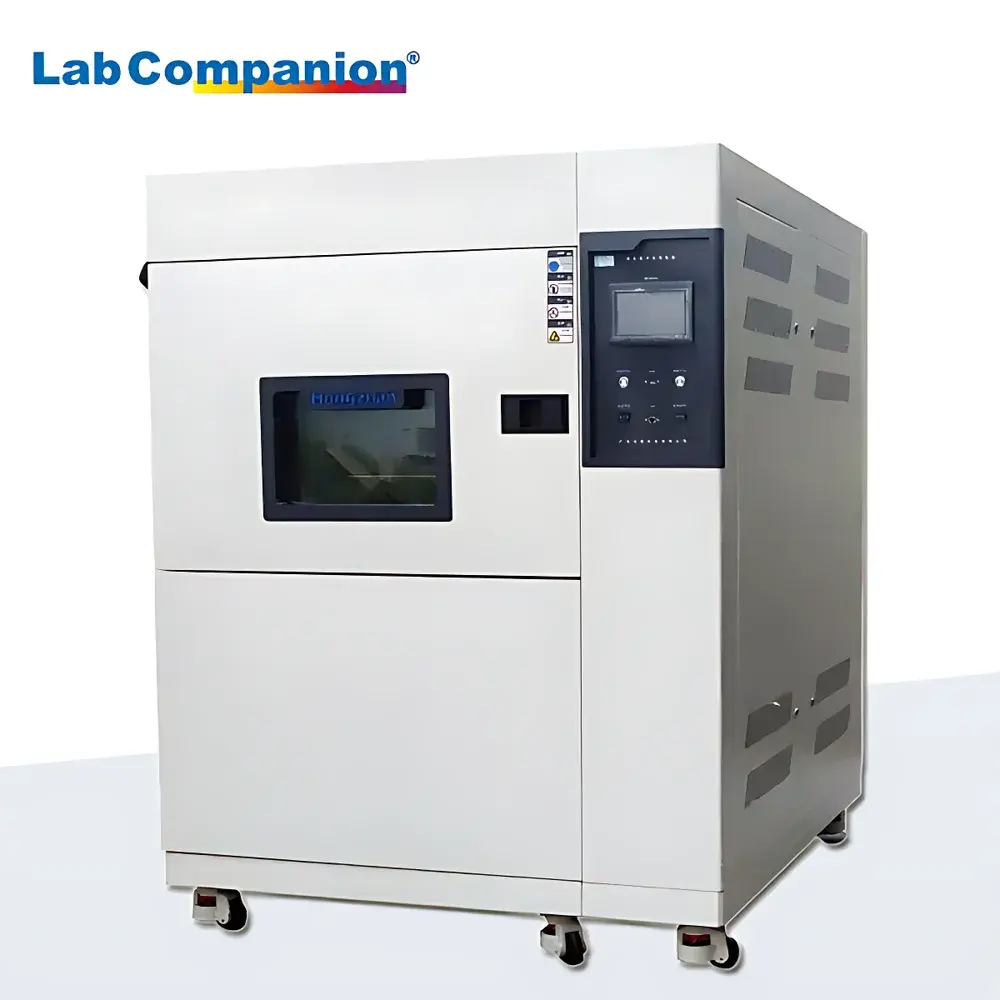
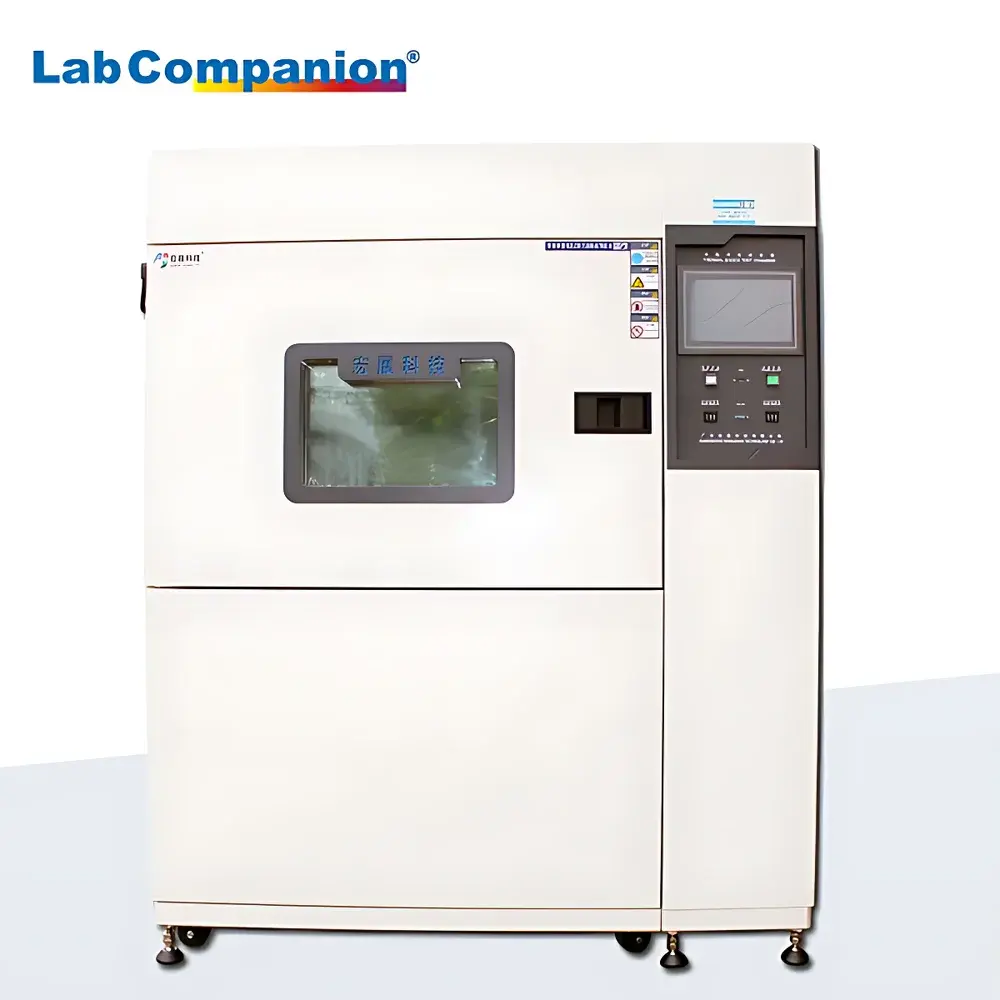
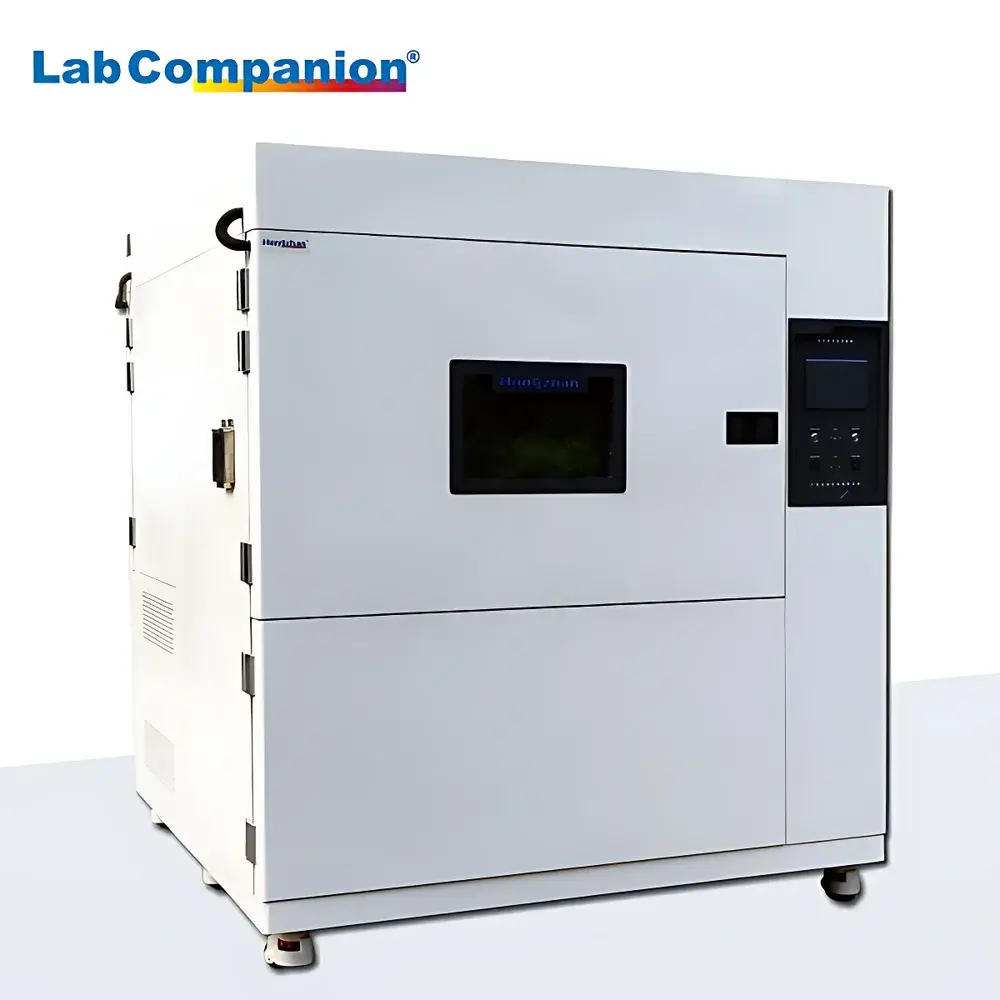
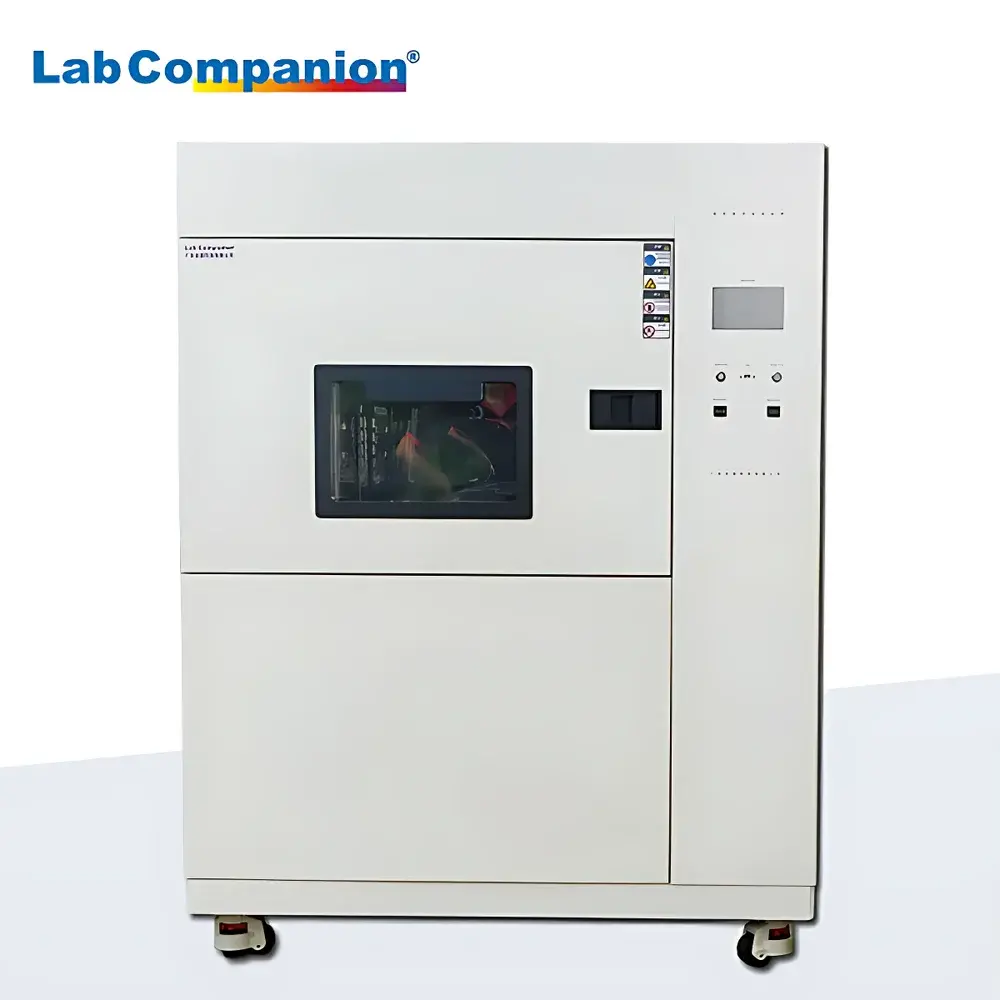
LabCompanion TSL-150A Thermal Shock Test Chamber
| Brand | LabCompanion |
|---|---|
| Origin | Guangdong, China |
| Manufacturer Type | Direct Manufacturer |
| Model | TSL-150A |
| High-Temperature Range | +60 °C to +200 °C |
| Low-Temperature Range | −78 °C to 0 °C |
| Thermal Shock Range | −40 °C to +150 °C |
| Temperature Stability | ±2 °C |
| Heating Rate | +60 °C to +200 °C ≤ 20 min |
| Cooling Rate | RT to −70 °C ≈ 60 min |
Overview
The LabCompanion TSL-150A Thermal Shock Test Chamber is an engineered environmental test system designed for rapid, repeatable evaluation of material and component reliability under extreme temperature transitions. It operates on a two-zone (hot/cold) pneumatic door-switching architecture—eliminating thermal mass interference from a single-chamber design—to deliver precise, high-fidelity thermal shock profiles per IEC 60068-2-14, MIL-STD-810H Method 503.5, and JESD22-A104. The chamber subjects test specimens to abrupt transfers between independently controlled high- and low-temperature zones, simulating real-world thermal stress conditions encountered during automotive electronics deployment, aerospace avionics lifecycle validation, and semiconductor packaging qualification. Its robust stainless-steel construction, insulated dual-zone chamber walls, and closed-loop PID-controlled refrigeration/heating subsystems ensure long-term operational stability and measurement repeatability across thousands of thermal cycles.
Key Features
- Two-zone pneumatic door transfer mechanism enabling sub-5-second specimen transition between hot and cold chambers
- Independent temperature control: hot zone (+60 °C to +200 °C), cold zone (−78 °C to 0 °C), with programmable shock range from −40 °C to +150 °C
- Temperature uniformity maintained within ±2 °C across the working volume during steady-state operation
- Heating rate: +60 °C to +200 °C in ≤20 minutes (chamber-only, no load); cooling rate: room temperature to −70 °C in ≈60 minutes (no load)
- Internal dimensions: 600 W × 500 H × 500 D mm (150 L usable volume); external footprint: 1560 W × 1940 H × 1600 D mm
- Load capacity: 30 kg maximum shelf loading; recommended specimen mass ≤7.5 kg for optimal thermal response fidelity
- Integrated safety interlocks including over-temperature cutoff, refrigerant pressure monitoring, and door position verification
Sample Compatibility & Compliance
The TSL-150A accommodates PCB assemblies, molded plastic IC packages, MEMS sensors, battery modules, and automotive ECUs—provided specimens conform to maximum dimensional limits (550 mm × 450 mm × 450 mm) and non-outgassing material specifications. All thermal shock profiles comply with traceable calibration per ISO/IEC 17025-accredited procedures. The system supports audit-ready documentation for GLP and GMP environments, including full temperature logging with timestamped event markers (door actuation, zone stabilization, cycle completion). It meets essential requirements of ASTM D5229/D5229M (low-temperature impact resistance), IPC-9701A (thermal cycling performance classes), and JEDEC J-STD-020 (moisture sensitivity level reflow simulation preconditioning).
Software & Data Management
Equipped with LabCompanion’s TC-Link™ control software (Windows-based, USB/Ethernet interface), the TSL-150A enables full-cycle programming—including dwell time, transfer delay, number of cycles, and ramp profiling—with real-time graphical monitoring of both zone temperatures and specimen surface thermocouple inputs (optional K-type probe integration). Data export is compliant with CSV and Excel formats; audit trails include user login records, parameter change logs, and calibration history—all supporting FDA 21 CFR Part 11 electronic signature readiness when deployed with validated domain authentication. Remote monitoring via Modbus TCP or optional OPC UA gateway enables integration into centralized MES or LIMS platforms.
Applications
- Qualification testing of solder joint integrity in lead-free PCBAs per IPC-A-610 Class 3 criteria
- Evaluation of coefficient-of-thermal-expansion (CTE) mismatch failure modes in stacked-die packages
- Validation of conformal coating adhesion under cyclic thermal stress (IPC-CC-830B)
- Reliability screening of EV battery module housings exposed to desert-to-alpine ambient gradients
- Accelerated aging of optical lens adhesives used in ADAS camera systems
- Process capability assessment for reflow oven profile development in SMT lines
FAQ
What is the standard temperature recovery time after specimen transfer?
Temperature recovery to ±2 °C tolerance within the hot or cold zone occurs within 5 minutes post-transfer, verified at center-point location using NIST-traceable PT100 sensors.
Does the system support three-zone (hot/ambient/cold) configurations?
The TSL-series is optimized for two-zone operation; LabCompanion offers the TSU and TSS variants for extended low-temperature ranges (down to −65 °C), but true three-zone functionality requires the separate TSX platform.
Can the chamber be integrated into an automated test cell?
Yes—digital I/O ports (24 VDC, opto-isolated) and Ethernet-based command protocol (TCP/IP SCPI subset) enable seamless coordination with robotic handlers and data acquisition systems.
Is calibration certification included with shipment?
Each unit ships with a factory calibration report covering zone temperature uniformity, transition timing accuracy, and controller linearity—valid for 12 months from date of installation.
What refrigerant is used in the cryogenic system?
The low-temperature zone employs environmentally compliant R507A (zeotropic blend), certified under EU F-Gas Regulation (EU) No 517/2014 and EPA SNAP Program acceptable substitutes list.



