
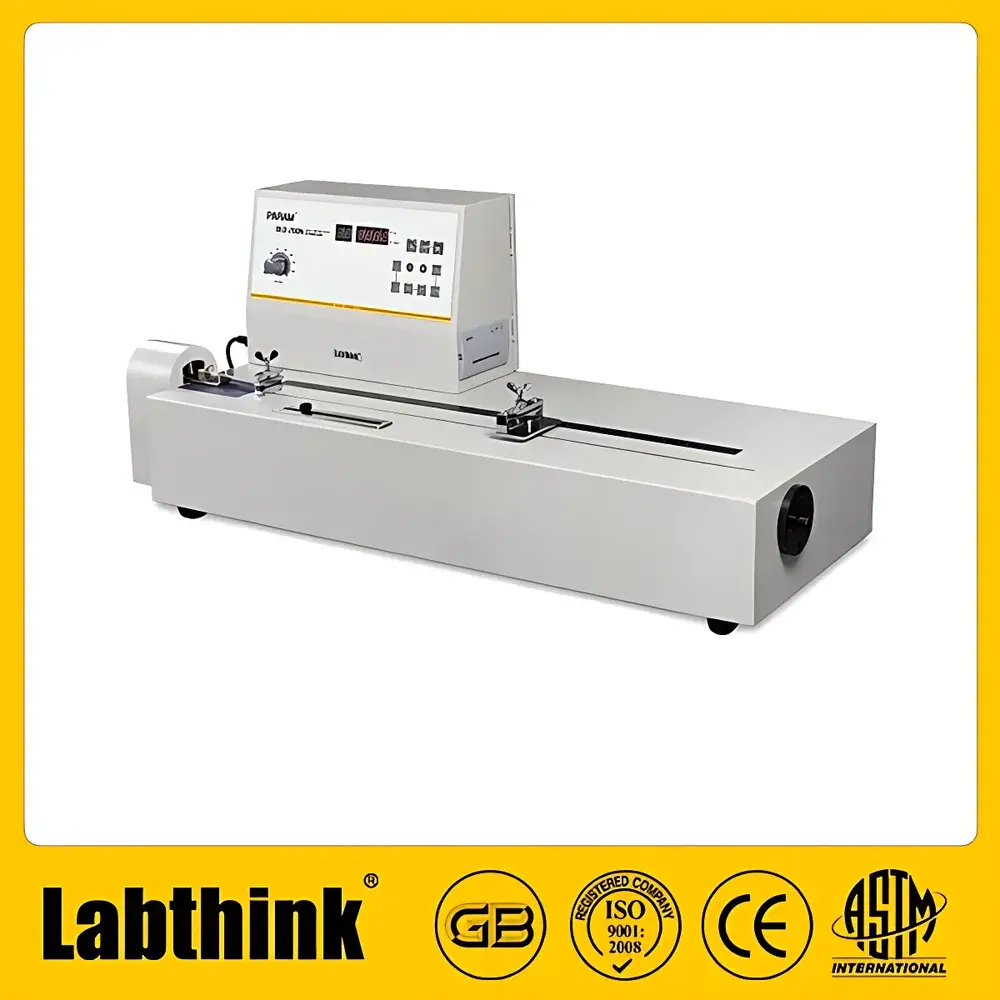
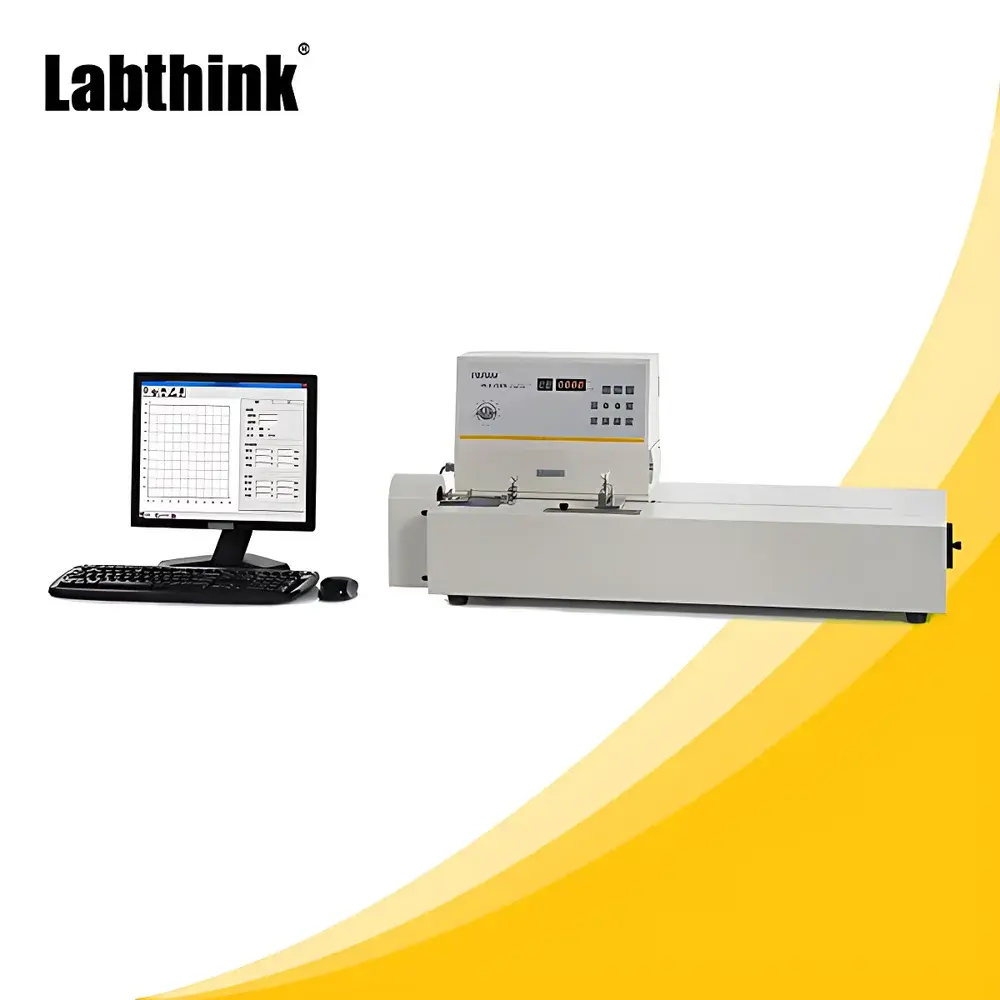
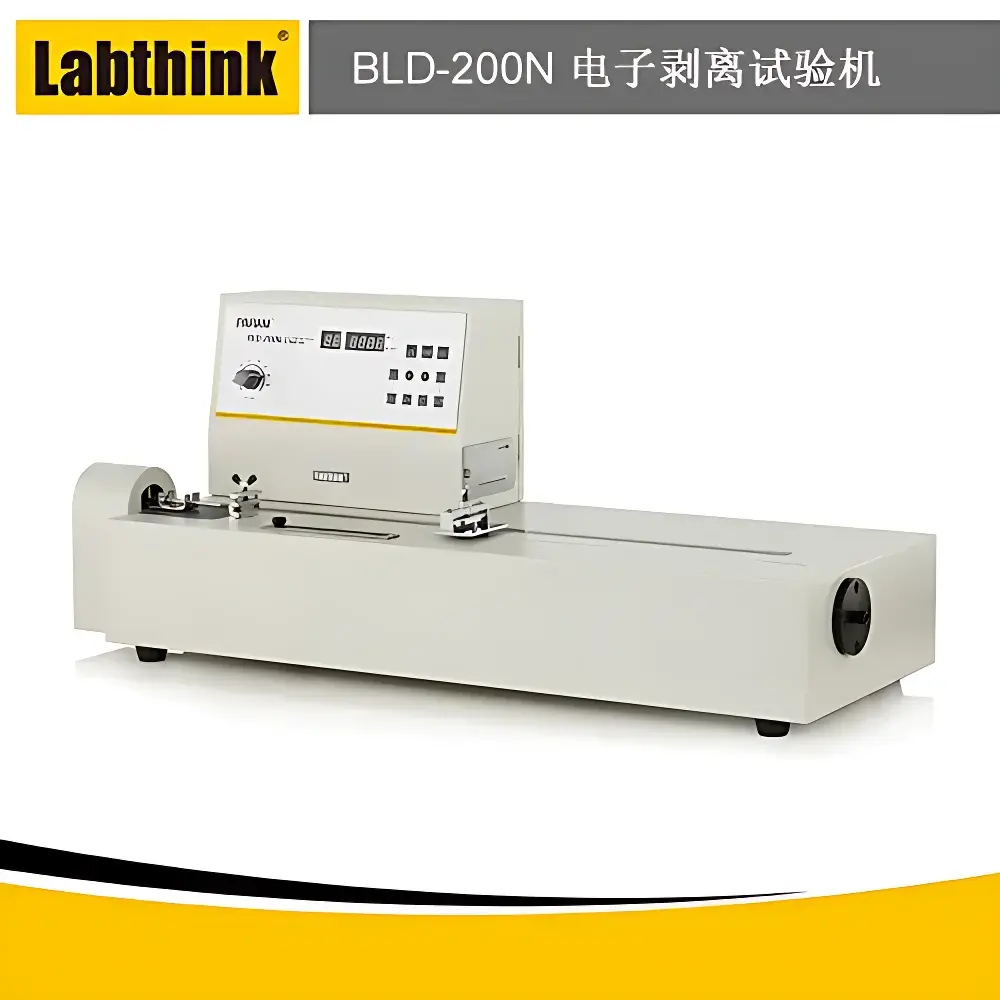
Labthink BLD-200N Carrier Tape Peel Strength Tester
| Brand | Labthink |
|---|---|
| Model | BLD-200N |
| Load Capacity | 0–200 N (optional ranges: 30 N, 50 N, 100 N) |
| Accuracy Class | Class 1 |
| Resolution | 0.01 N |
| Test Speeds | 7 preset speeds (50, 100, 150, 200, 250, 300, 500 mm/min) |
| Specimen Width | ≤30 mm |
| Travel Distance | 500 mm |
| Power Supply | AC 220 V, 50 Hz |
| Dimensions (L×W×H) | 1000 × 370 × 400 mm |
| Net Weight | 27 kg |
| Compliance | Supports ASTM D903, ISO 8510-2, GB/T 2790–1995, GB/T 2791–1995, GB/T 2792–2014 |
Overview
The Labthink BLD-200N Carrier Tape Peel Strength Tester is a precision-engineered mechanical testing instrument designed specifically for quantitative evaluation of peel adhesion performance in surface-mount technology (SMT) carrier tapes and complementary cover tapes. It operates on the fundamental principle of controlled tensile separation—applying a defined force at a standardized angle (typically 90° or 180° per ISO 8510-2 and ASTM D903) to separate the cover tape from the carrier tape under specified speed and environmental conditions. This measurement directly correlates with functional reliability during automated pick-and-place operations, where consistent, non-destructive delamination is essential to prevent component misalignment, damage, or feed interruption. The system conforms to internationally recognized test methodologies for pressure-sensitive adhesive systems and laminated flexible packaging materials, making it applicable not only to electronics packaging but also to quality assurance workflows across medical device packaging, pharmaceutical labeling, and functional film manufacturing.
Key Features
- Microprocessor-based control architecture with LED digital display and intuitive PVC membrane keypad for real-time parameter monitoring and manual operation
- Dual-mode testing capability: configurable for both peel strength (90°/180°) and tensile strength measurements via interchangeable fixtures and calibration protocols
- Seven pre-programmed crosshead speeds (50–500 mm/min), enabling compliance with multiple standard test methods requiring distinct separation rates
- High-resolution load cell (0.01 N resolution) with optional range configurations (30 N, 50 N, 100 N, 200 N) to optimize signal-to-noise ratio across low- and high-force applications
- Integrated safety mechanisms including mechanical limit switches, overload protection, automatic zero-reset, and diagnostic error alerts
- Calibrated linear scale for direct measurement of specimen elongation during peel or tensile events
- Onboard thermal printer and RS232 serial interface for immediate hardcopy output and legacy system integration
- Native compatibility with Lystem™ Laboratory Data Management System for centralized result archiving, report generation, and audit-ready traceability
Sample Compatibility & Compliance
The BLD-200N accommodates specimens up to 30 mm in width and 500 mm in travel length, supporting standard SMT carrier tape formats (e.g., 8 mm, 12 mm, 16 mm widths) as well as narrow-width specialty films and laminates. It meets essential regulatory and industry requirements for test instrumentation used in GMP-aligned environments, including full support for ASTM D903 (Peel Resistance of Adhesives), ISO 8510-2 (Adhesives — Determination of Peel Resistance — Part 2: 90° Peel Test), and Chinese national standards GB/T 2790–1995 (Peel Strength of Adhesive Bonds), GB/T 2791–1995 (Tensile Strength of Pressure-Sensitive Adhesive Tapes), and GB/T 2792–2014 (Peel Strength of Pressure-Sensitive Adhesive Tapes). Its data acquisition architecture supports ALCOA+ principles—ensuring data Attributable, Legible, Contemporaneous, Original, Accurate—and facilitates 21 CFR Part 11-compliant electronic records when deployed with validated Lystem™ software.
Software & Data Management
The instrument operates standalone or integrates seamlessly into networked laboratory infrastructures via Lystem™, Labthink’s proprietary enterprise-grade data management platform. Lystem™ provides role-based user access control, electronic signature support, automated report templates (PDF/Excel), version-controlled method storage, and full audit trail functionality—including timestamps, operator ID, instrument calibration status, and raw sensor data logs. All test results are stored with metadata such as ambient temperature/humidity (when paired with optional environmental sensors), test speed, fixture type, and specimen identification. Export options include CSV, XML, and HL7-compliant formats for interoperability with LIMS and ERP systems.
Applications
- Quantitative validation of cover tape peel force consistency across SMT carrier tape production batches
- Quality control of pressure-sensitive adhesives used in medical transdermal patches and wound dressings
- Evaluation of release liner adhesion in silicone-coated papers and fluoropolymer films
- Characterization of interlayer bond integrity in multilayer barrier films for food and pharmaceutical packaging
- Verification of label adhesion durability on plastic, glass, and metal substrates per ISTA and ASTM D3330
- R&D screening of novel adhesive formulations under variable humidity and temperature conditions
FAQ
What peel angles does the BLD-200N support?
The instrument is configured for standardized 90° and 180° peel tests per ISO 8510-2 and ASTM D903, with dedicated fixtures available for each geometry.
Can the BLD-200N be calibrated to national metrological standards?
Yes—it accepts third-party calibration using NIST-traceable force standards and includes built-in calibration verification routines compliant with ISO/IEC 17025 requirements.
Is the system compatible with GLP/GMP documentation requirements?
When operated with Lystem™ under validated configuration, it satisfies GLP audit criteria and supports FDA 21 CFR Part 11 electronic record and signature compliance.
Does the tester meet environmental testing prerequisites?
While the base unit operates at ambient conditions, it can be installed inside temperature- and humidity-controlled chambers (e.g., 23°C ±2°C / 50% RH ±5%) to perform tests under regulated environmental profiles.
How is specimen alignment ensured during peel testing?
Precision-machined guide slots and adjustable clamping jaws maintain consistent specimen positioning and edge registration, minimizing lateral deviation and ensuring reproducible peel front propagation.



