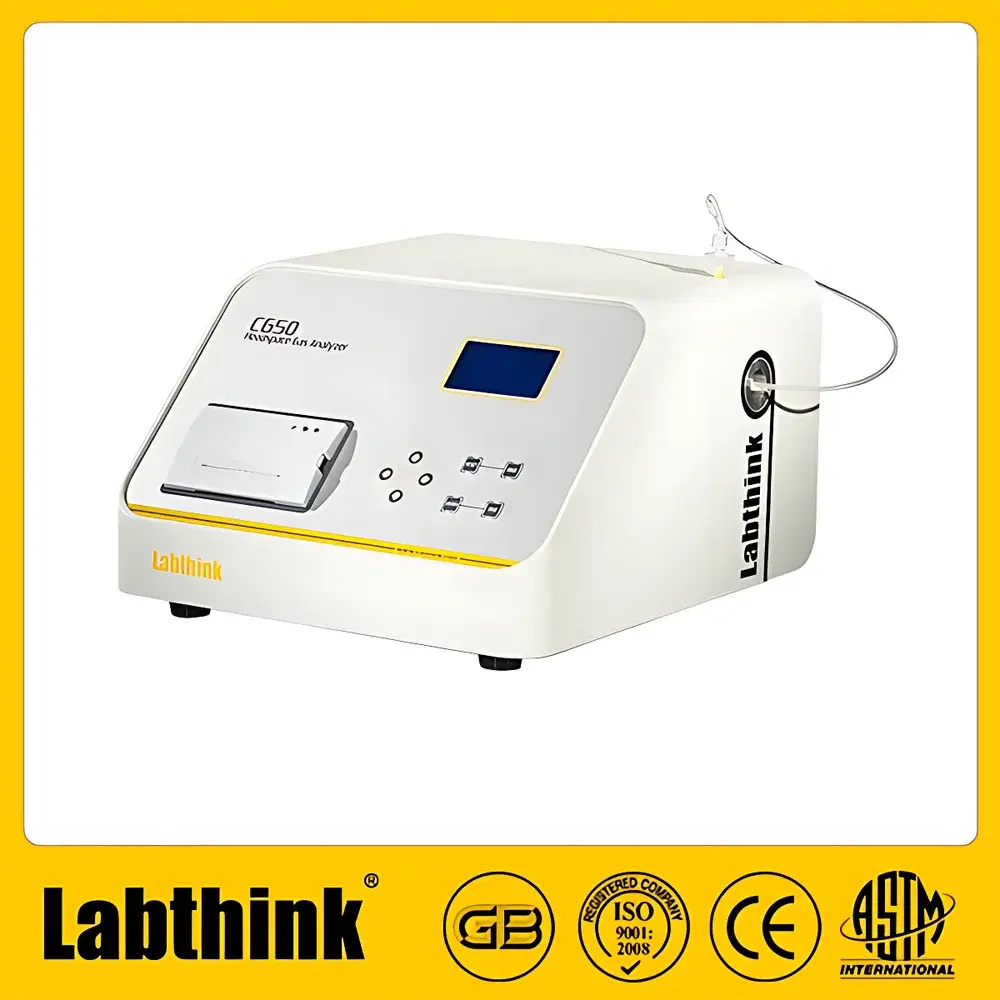
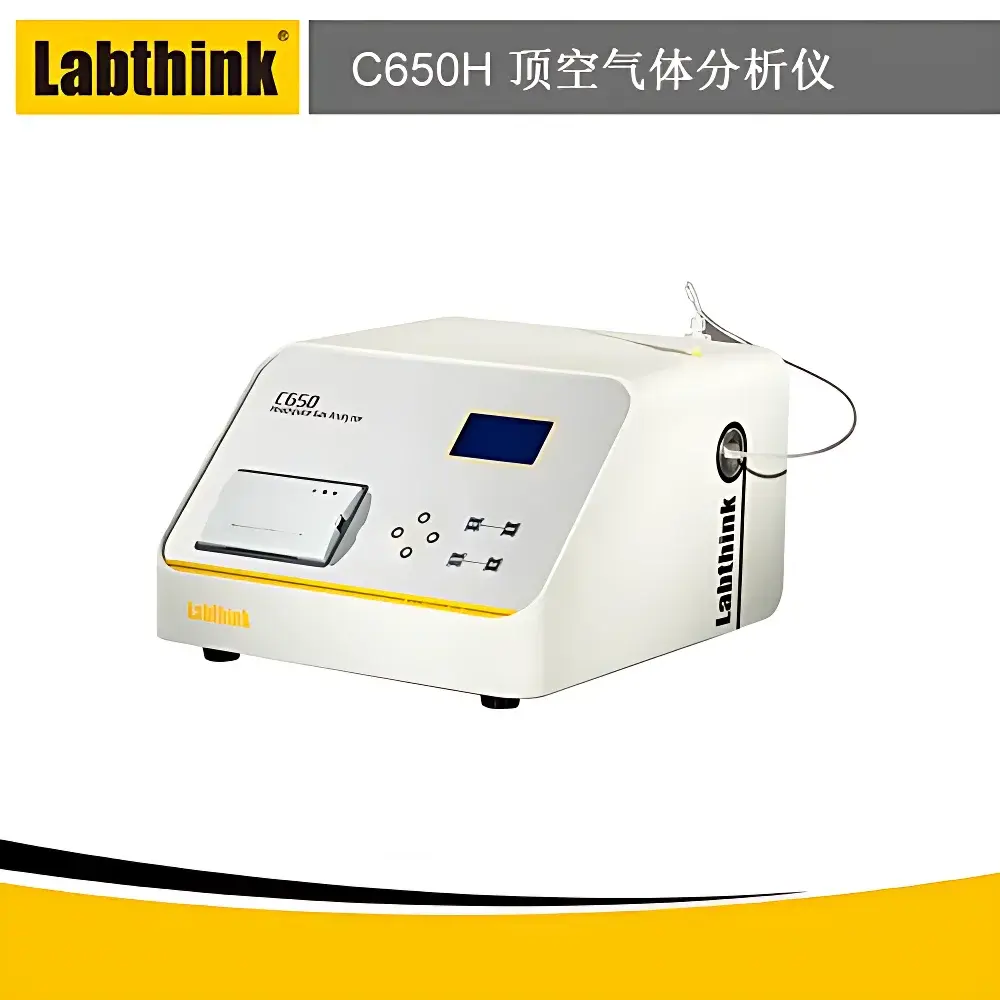
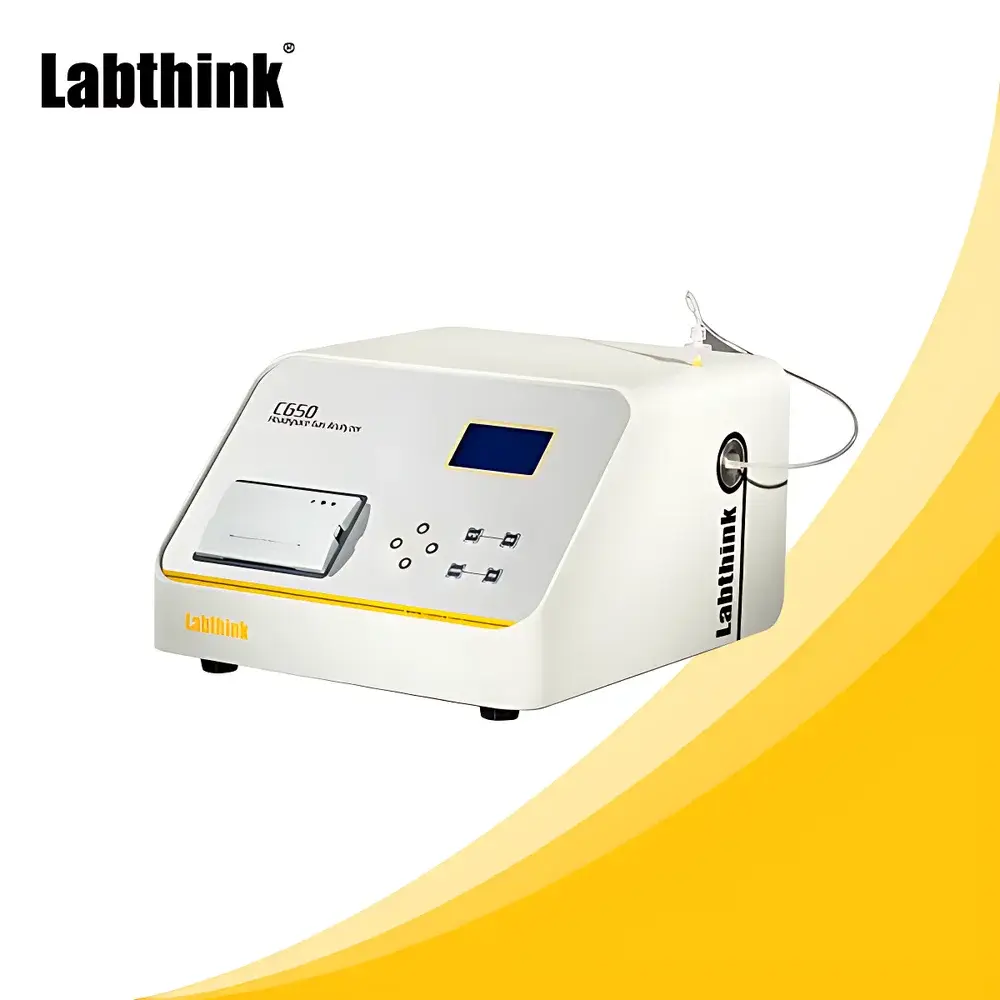
Labthink C650H Headspace Oxygen Analyzer for Pharmaceutical Vials and Lyophilized Powder Containers
| Brand | Labthink |
|---|---|
| Model | C650H |
| Origin | Shandong, China |
| Manufacturer Type | OEM Manufacturer |
| Regional Category | Domestic (China) |
| Price Range | USD 1,400 – 7,000 |
| Measurement Gases | O₂ (standard), CO₂ (optional) |
| O₂ Range | 0.2–21% vol |
| O₂ Accuracy | ±0.2% vol |
| CO₂ Range | 2–100% vol |
| CO₂ Accuracy | ±2% vol |
| Sample Volume | ≥5 mL (O₂), ≥20 mL (CO₂) |
| Dimensions | 350 × 330 × 200 mm (L×W×H) |
| Weight | 5.5 kg |
| Power | 220 VAC 50 Hz / 120 VAC 60 Hz |
| Interface | RS232 |
| Display | LCD with bilingual (EN/CN) menu interface |
| Sensor Type | Non-consumable ceramic electrochemical O₂ sensor |
| Data Storage | Internal memory (high-capacity) |
| Output | Thermal mini-printer, PC software export |
Overview
The Labthink C650H Headspace Oxygen Analyzer is a precision-engineered instrument designed specifically for quantitative analysis of residual oxygen (O₂) and optional carbon dioxide (CO₂) in the headspace of sealed pharmaceutical primary packaging—particularly glass ampoules, lyophilized vials, and powder-filled containers. It operates on the principle of electrochemical gas sensing, utilizing a proprietary non-consumable ceramic O₂ sensor that delivers high stability, long-term calibration retention, and minimal drift over extended operational cycles. Unlike optical or paramagnetic methods, this electrochemical architecture ensures robust performance in low-flow, low-volume headspace sampling scenarios typical of small-volume parenteral containers. The system extracts headspace gas via vacuum-assisted aspiration through a sterile sampling needle, delivering it directly to the sensor chamber under controlled pressure and flow conditions. Real-time analog current/voltage signals from the sensor are digitized, linearized, and converted into concentration values using factory-calibrated algorithms traceable to NIST-standard reference gases. The analyzer meets functional requirements for routine QC release testing under cGMP environments and supports process validation activities aligned with ICH Q5C and USP <1207> guidelines for container closure integrity and headspace composition control.
Key Features
- Non-consumable ceramic electrochemical O₂ sensor with >24-month operational lifespan and <±0.2% vol absolute accuracy across 0.2–21% range
- Optional CO₂ sensing module (electrochemical, 2–100% vol, ±2% accuracy) for dual-gas headspace profiling in modified atmosphere packaging (MAP) and lyophilization monitoring
- Integrated microprocessor-based control system with real-time data acquisition, automatic endpoint detection, and statistical calculation (mean, SD, CV%) per test sequence
- Bilingual (English/Chinese) LCD interface with intuitive menu navigation, password-protected method editing, and audit-ready parameter logging
- Onboard thermal mini-printer and internal flash memory supporting ≥10,000 test records with timestamp, operator ID, sample ID, and environmental metadata (ambient T/P)
- RS232 serial interface compliant with ASTM E2656-22 for external data transfer; compatible with Labthink’s certified PC software for 21 CFR Part 11-compliant electronic records and signature workflows
- Portable benchtop form factor (5.5 kg, 350 × 330 × 200 mm) optimized for use in cleanroom ISO Class 7/8 environments, QC labs, and line-side verification stations
Sample Compatibility & Compliance
The C650H accommodates a broad spectrum of pharmaceutical and food-grade packaging formats without requiring destructive modification. Standard operation supports ampoules (2–20 mL), vials (2–50 mL), blister cavities, sachets, and rigid plastic/aluminum pouches. Optional accessories—including stainless-steel hard-pack sampling probes, underwater sampling kits for volatile-sensitive samples, and sterilizable PTFE-coated needles—extend applicability to aseptic processing lines and lyophilization cycle endpoint verification. All wetted parts comply with USP Class VI biocompatibility standards. The instrument’s measurement protocol adheres to ISO 11671:2021 (determination of oxygen in headspace of sealed packages) and supports alignment with FDA guidance on container closure integrity testing (CCIT) and EU Annex 1 requirements for sterile product manufacturing. Calibration verification procedures include documented traceability to NIST-certified gas standards (e.g., Air Products O₂/N₂ mixtures).
Software & Data Management
Labthink’s proprietary C650H Control Software (v3.2+) provides full remote instrument control, method library management, and automated report generation in PDF/XLSX formats. The software implements ALCOA+ principles: attributable, legible, contemporaneous, original, accurate, complete, consistent, enduring, and available. Audit trail functionality logs all user actions—including method changes, calibration events, and result overrides—with timestamps and digital signatures. Data export complies with 21 CFR Part 11 requirements when configured with electronic signature modules and role-based access controls. Raw sensor output files (.csv) retain unprocessed voltage/time series for retrospective reanalysis. Batch-level summary dashboards support trend analysis across multiple production lots, enabling proactive O₂ excursion detection and CAPA initiation.
Applications
- Residual O₂ quantification in Type I borosilicate glass ampoules post-filling and sealing (critical for oxidation-sensitive biologics and antibiotics)
- Headspace gas verification of lyophilized powder vials prior to rubber stopper crimping and aluminum overseal application
- In-process monitoring of inert gas purging efficiency (N₂/Ar) during vial filling operations
- Stability study support: periodic headspace analysis of accelerated/real-time storage samples per ICH Q1 guidelines
- QC release testing of MAP pharmaceutical blisters (e.g., solid oral dosage forms) where O₂ ingress impacts API degradation kinetics
- Validation of vacuum-sealing equipment performance in secondary packaging lines
FAQ
What sample volume is required for reliable O₂ measurement in a 2-mL ampoule?
A minimum of 5 mL of headspace gas is drawn under vacuum; for small-volume containers, this is achieved by sequential multi-point aspiration or integration with a pressure-balanced sampling manifold to avoid negative pressure artifacts.
Can the C650H be used for helium or argon quantification?
No—the instrument is calibrated exclusively for O₂ and optionally CO₂. Inert gas concentrations must be inferred by difference (100% – [O₂ + CO₂ + moisture]) and validated separately via GC or TCD.
Is sensor recalibration required after each test?
No. The ceramic O₂ sensor is factory-calibrated with zero/span verification performed every 90 days per IQ/OQ documentation; field recalibration uses certified span gas (e.g., 10.0% O₂ in N₂).
Does the system meet GLP/GMP documentation requirements?
Yes—when operated with validated software, printed reports include instrument ID, calibration status, operator credentials, and digital signature fields meeting GLP Annex III and EU GMP Annex 11 expectations.
How is contamination risk managed during repeated ampoule testing?
All gas pathways employ disposable PTFE filters (0.2 µm), autoclavable stainless-steel needles, and programmable purge cycles between samples to prevent cross-contamination.