
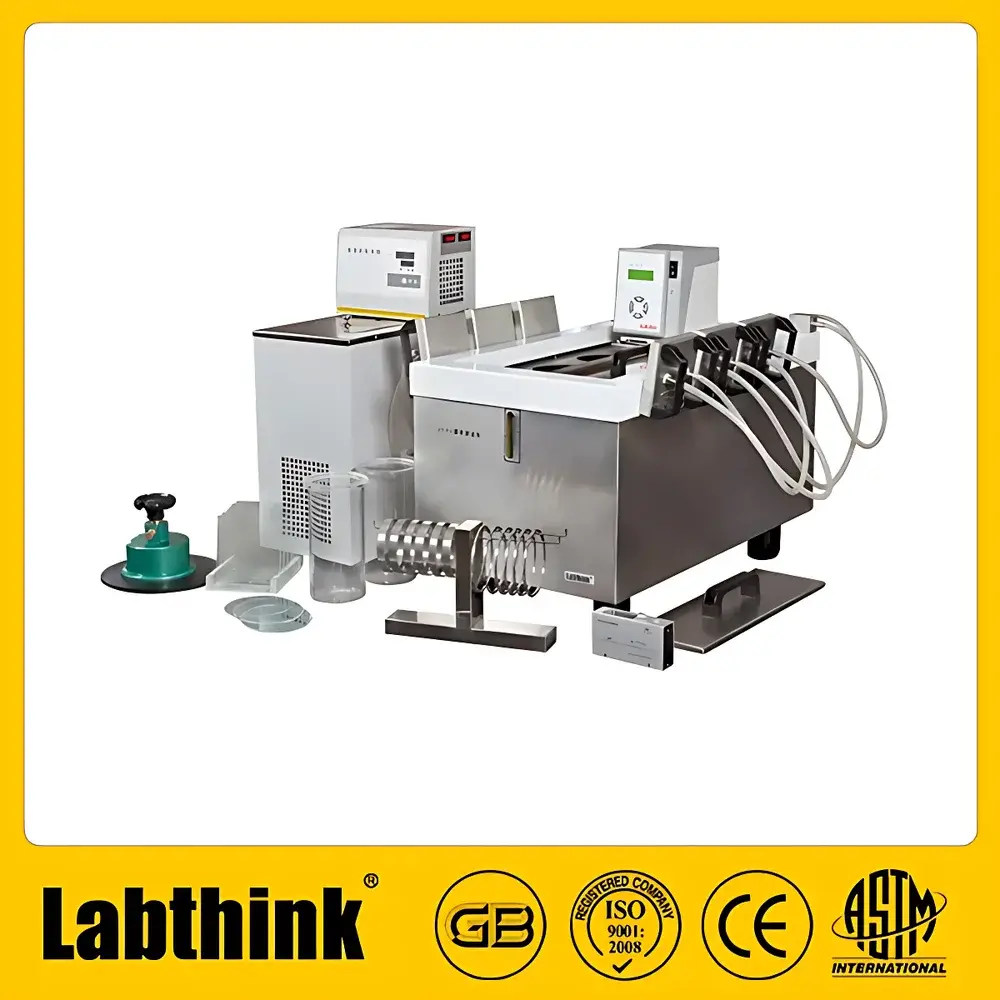
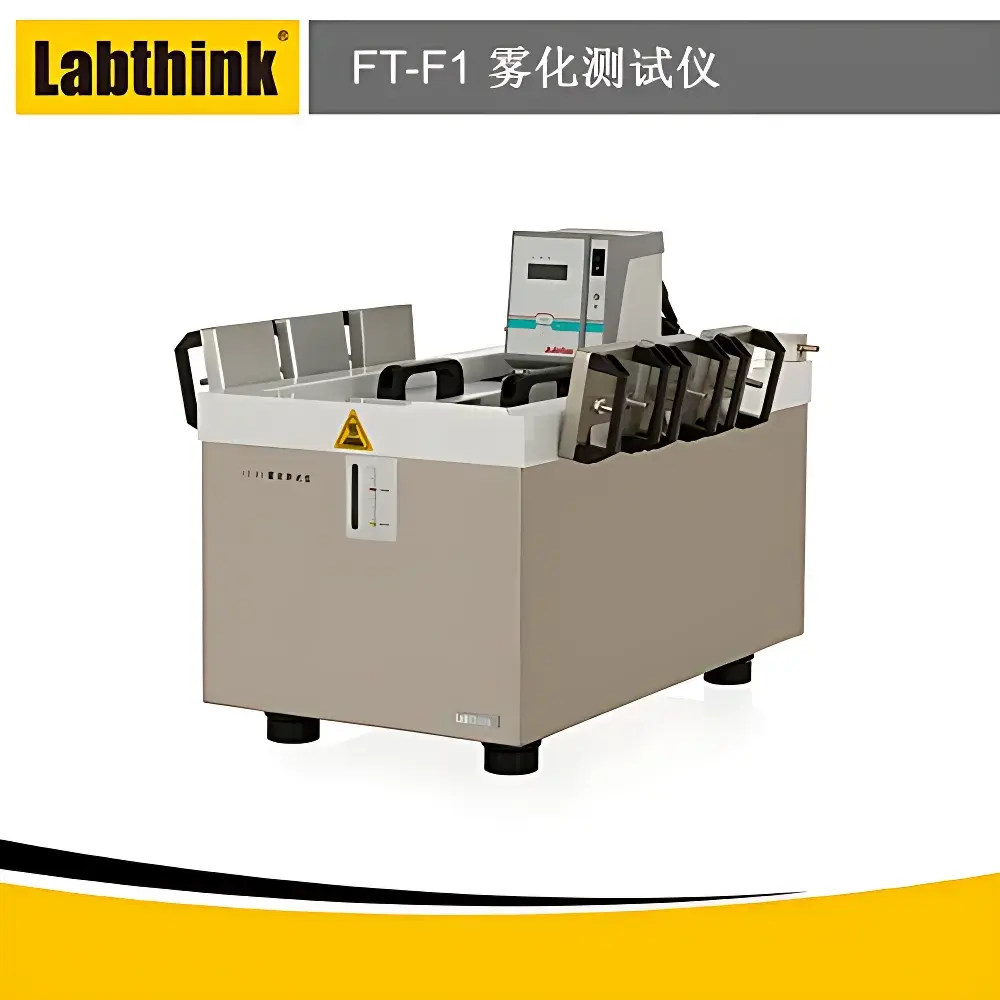
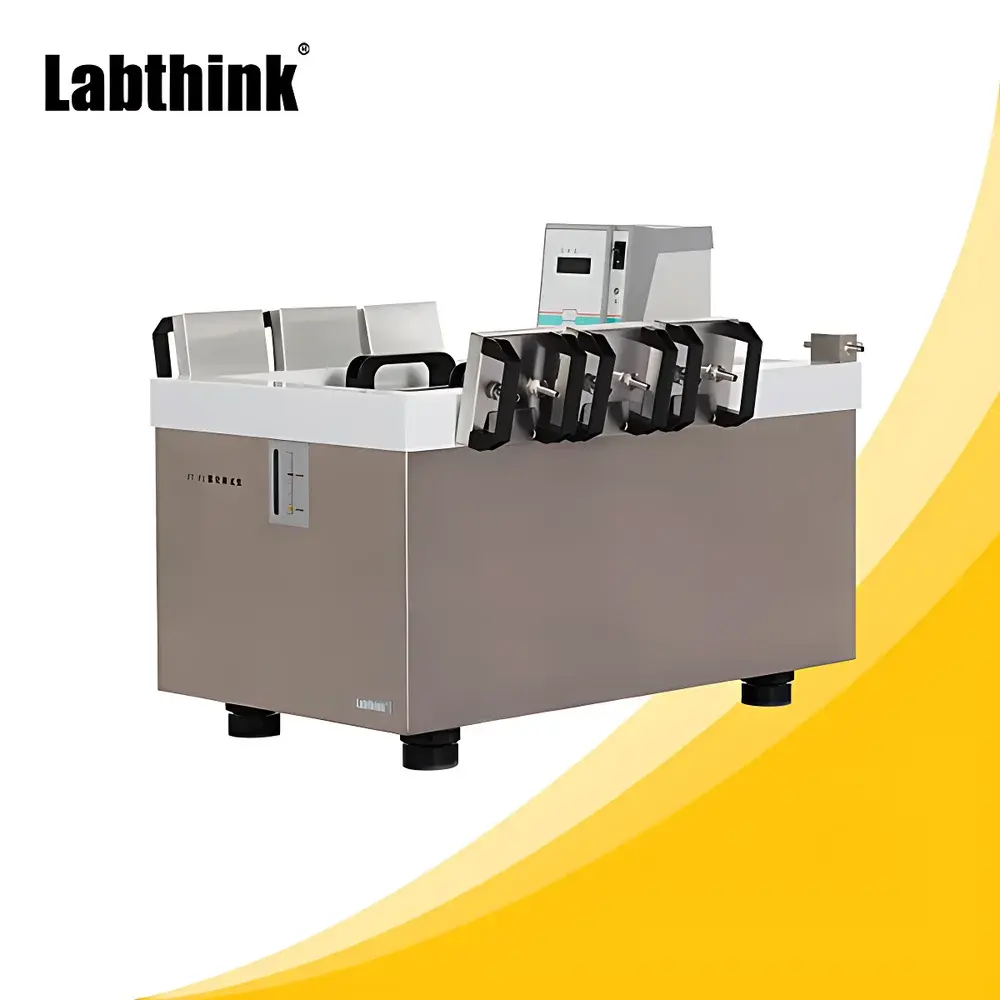
Labthink FT-F1 Automotive Interior Fogging Tester
| Brand | Labthink |
|---|---|
| Origin | Shandong, China |
| Manufacturer Type | Direct Manufacturer |
| Model | Labthink FT-F1 |
| Temperature Range (Hot Chamber) | Ambient to 150 °C (optional up to 280 °C) |
| Hot Chamber Temperature Stability | ±0.1 °C at 150 °C |
| Cold Chamber Temperature Range | 0–100 °C |
| Cold Chamber Temperature Stability | ±0.1 °C |
| Hot Chamber Dimensions (L×W×H) | 670 × 490 × 540 mm |
| Cold Chamber Dimensions (L×W×H) | 400 × 220 × 520 mm |
| Test Stations | 6 (simultaneous sample + blank testing) |
| Compliance | ASTM D5330, ISO 6452, DIN 75201, SAE J1756, GB/T 27630 |
Overview
The Labthink FT-F1 Automotive Interior Fogging Tester is an engineered solution for quantitative assessment of volatile condensable emissions from interior automotive materials under controlled thermal stress. It operates on the principle of thermal desorption followed by cold-surface condensation—a standardized physical separation method widely adopted in OEM and Tier-1 supplier laboratories. During testing, a conditioned specimen (e.g., PVC, leather, nonwoven fabric, rubber compound, or synthetic upholstery) is placed in a sealed heating chamber and elevated to a defined temperature (typically 100 °C, 105 °C, or 140 °C per specification). Volatile organic compounds (VOCs) and semi-volatiles migrate from the sample matrix, travel through a defined vapor path, and condense onto a chilled optical substrate—either a polished glass plate or aluminum foil—mounted in a thermally isolated cold chamber maintained at a precise sub-ambient temperature (commonly 22 °C or lower). The resulting condensate is then quantified via either photometric haze measurement (fogging value, %) or gravimetric analysis (condensate mass, mg), enabling direct correlation with material formulation stability and cabin air quality risk.
Key Features
- Six independent test stations support concurrent evaluation of up to five samples plus one blank control—enhancing throughput while maintaining statistical rigor and eliminating inter-run variability.
- Dual-zone precision temperature control: hot chamber (ambient to 150 °C, optional 280 °C) and cold chamber (0–100 °C), both stabilized to ±0.1 °C at setpoint—critical for repeatability across ISO 6452 and DIN 75201 protocols.
- Modular substrate interface accommodates both square glass plates (for haze-based fogging value per DIN 75201-A) and circular aluminum foils (for gravimetric mass gain per DIN 75201-B and ASTM D5330).
- Integrated thermal architecture minimizes cross-chamber thermal drift; heated oil bath ensures uniform heat distribution across sample cups, reducing edge effects and improving reproducibility.
- Robust mechanical design includes fluororubber sealing rings, stainless steel sample holders, and calibrated torque-assisted clamping—ensuring leak-tight operation over thousands of thermal cycles.
- Compliance-ready configuration supports GLP documentation workflows: all temperature logs, run timestamps, and operator IDs are timestamped and exportable in CSV format.
Sample Compatibility & Compliance
The FT-F1 accommodates a broad spectrum of interior trim materials including polyvinyl chloride (PVC), thermoplastic elastomers (TPE), polyurethane (PU) foams, natural and synthetic leathers, needle-punched nonwovens, polyester and polypropylene textiles, and silicone-based gaskets. Its operational envelope meets the technical requirements of major global automotive standards: ISO 6452 (Road vehicles — Determination of volatiles condensable on glass surfaces), DIN 75201 (Fogging characteristics of interior materials), ASTM D5330 (Standard Test Method for Fogging of Interior Automotive Materials), SAE J1756 (Fogging Test Procedure for Interior Trim Materials), and China’s GB/T 27630 (Guidelines for Evaluation of In-Car Air Quality). All test methods require strict adherence to specimen conditioning (23 °C / 50% RH, 24 h), defined sample mass (10.00 ± 0.01 g), and fixed exposure geometry—parameters enforced via included fixtures and calibration tools.
Software & Data Management
The FT-F1 operates as a standalone instrument with embedded digital PID controllers and real-time temperature monitoring. While no proprietary software is required for basic operation, Labthink provides optional data acquisition modules compatible with Windows-based PCs for automated logging of chamber temperatures, dwell times, and user-entered metadata (sample ID, lot number, test standard). Exported datasets comply with 21 CFR Part 11 audit trail requirements when used with validated third-party LIMS or ELN systems. Calibration certificates for integrated temperature sensors (traceable to NIST or CNAS-accredited labs) and reference materials (e.g., certified DIDP and DOP standards) are available upon request to support GMP-aligned validation protocols.
Applications
- Pre-release screening of new interior material formulations for fogging propensity prior to vehicle integration.
- Root-cause analysis of windshield or instrument panel haze incidents during durability or climate chamber testing.
- Supplier qualification and incoming inspection of leather, foam, and composite trim components against OEM-specific fogging limits (e.g., ≤2.0% haze or ≤0.5 mg condensate).
- Regulatory compliance verification for markets requiring VOC emission reporting (e.g., China’s GB/T 27630, EU REACH SVHC screening).
- Accelerated aging studies correlating fogging behavior with thermal history and oxidative degradation pathways.
FAQ
What standards does the FT-F1 support?
The instrument fully complies with ISO 6452, DIN 75201 (Methods A and B), ASTM D5330, SAE J1756, and GB/T 27630.
Can it be used for headlamp fogging evaluation?
Yes—the FT-F1 is routinely employed to simulate and quantify high-temperature outgassing from xenon lamp housings and reflector assemblies per OEM-specific internal procedures.
Is gravimetric or photometric measurement more accurate?
Gravimetric analysis (aluminum foil method) offers superior sensitivity for low-emission materials (<0.1 mg), while photometric haze measurement (glass plate method) provides better discrimination for optically active condensates such as plasticizers and silicone oils.
Are calibration services available internationally?
Labthink partners with ISO/IEC 17025-accredited calibration providers in North America, Europe, and APAC regions; on-site verification and IQ/OQ documentation packages are available.
What maintenance is required for long-term reliability?
Routine tasks include quarterly verification of temperature sensor accuracy, annual replacement of fluororubber seals, and biannual cleaning of optical substrates and heating oil reservoirs using solvent-grade isopropanol.



